Why Unions Matter by Michael D. Yates
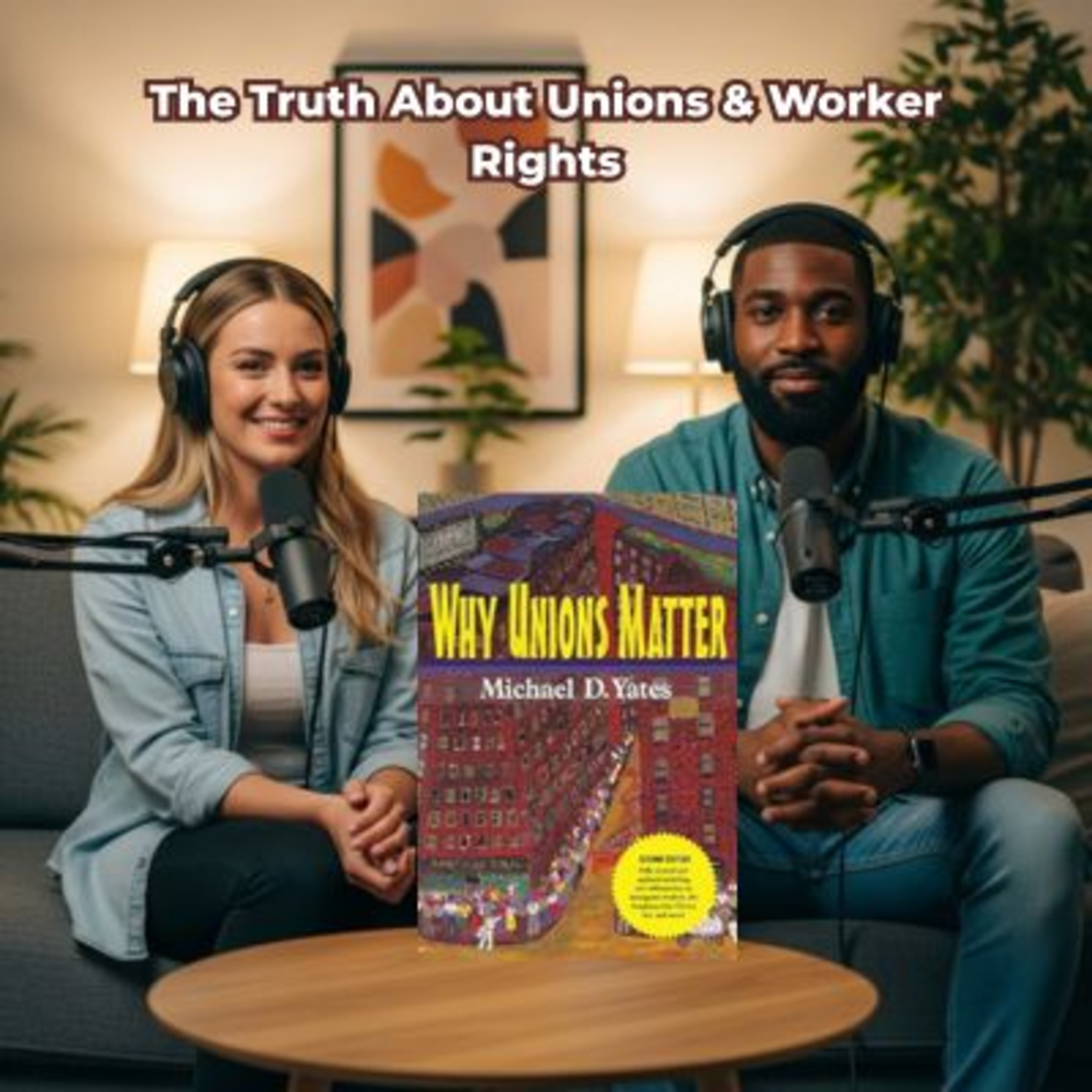
In this new edition of Why Unions Matter, Michael D. Yates shows why unions still matter. Unions mean better pay, benefits, and working conditions for their members; they force employers to treat employees with dignity and respect; and at their best, they provide a way for workers to make society both more democratic and egalitarian. Yates uses simple language, clear data, and engaging examples to show why workers need unions, how unions are formed, how they operate, how collective bargaining works, the role of unions in politics, and what unions have done to bring workers together across the divides of race, gender, religion, and sexual orientation. The new edition not onlyupdates the first, but also examines the record of the New Voice slate that took control of the AFL-CIO in 1995, the continuing decline in union membership and density, the Change to Win split in 2005, the growing importance of immigrant workers, the rise of worker centers, the impacts of and labor responses to globalization, and the need for labor to have an independent political voice. This is simply the best introduction to unions on the market.
This episode highlights the indispensable role of labor unions in securing fair treatment and economic stability for workers. By fostering collective bargaining power, these organizations enable employees to move beyond individual struggles to achieve higher wages, improved safety standards, and robust benefits. Beyond financial gains, unions are depicted as vital instruments for preserving human dignity and building a sense of solidarity and community within the workplace. The source also emphasizes that organized labor serves as a powerful force for social justice, historically advocating for civil rights and broader legislative reforms. Ultimately, the material argues that despite modern challenges and declining membership, unions remain a necessary check on corporate power to ensure a more equitable future.
#LaborUnions #WorkersRights #WorkplaceJustice #UnionStrong #EconomicJustice #CollectiveBargaining #WorkplaceCulture #EmployeeRights #SocialJustice #LaborMovement #BookSummary #BusinessEthics #FutureOfWork #EconomicEquality #WorkerPower
So imagine for a second that you step onto a giant playground seesaw. OK, I'm picturing it. But resting on the other side of this board is this massive multi ton boulder, right? You jump onto your end, you put, I mean, you throw your entire body weight into it and absolutely nothing happens. Yeah, you're completely weightless compared to the Rock. Exactly. The physics are entirely against you. It's a fundamentally asymmetrical relationship where your individual presence simply does not register at all.
Well, you haven't changed the weight of the boulder, and realistically, you never will. The only way to alter that specific equation is to, you know, fundamentally change the leverage on your side of the fulcrum. And that image of the seesaw of altering the equation is really the absolute core of what we are unpacking today. It really is. Welcome to today's Deep Dive, everyone. We are cutting through the noise to explore the mechanics of workplace power, human dignity and collective action. It's a massive.
Topic it is and our road map for this is a detailed summary of Michael D Yates is highly influential book why unions matter. Which is a fantastic foundational text. Yeah. So our mission today is to look at how numerical strength actually alters the power dynamic between employees and management. And we'll also examine the broader societal impacts of organized labor as Yates describes them in the source. Right, We'll be looking at both the historical context and the modern hurdles that workers are facing right now.
OK, let's unpack this, because we aren't just going to give you a dry economics lecture. Thankfully. Right. We are looking at the structural realities of Labor through a series of human stories, starting with the most basic transition of all, which is moving from an individual plea to a collective demand. Yeah, and the phrase Yates uses for this numerical strength, it's really the mechanical foundation of every labor movement in history. How so? Well, in an unorganized workplace, an individual worker negotiates their own conditions.
Economically speaking, unless that worker possesses a highly specialized, incredibly scarce skill, their leverage, their weight on that seesaw is virtually 0. Because they're just one person. Exactly. I mean, the legal framework of employment often treats the corporation and the individual worker as 2 equals entering into a contract. But Yates points out that this is basically a legal fiction. The employer holds a near monopoly on the capital required to sustain the worker's life. Which is a huge power imbalance and the source actually illustrates this disparity with Sarah who is a factory worker.
Right. Sarah's story. Yeah. So according to Yates's framework, Sarah and her Co workers were dealing with mandatory overtime and stagnating wages and whenever Sarah brought this up, management simply ignored her. She was yelling at the boulder. Exactly. She's yelling at the boulder, but when the factory floor unionized, the dynamic instantly shifted. Because they spoke as a single, unified entity, management had to listen. They had no choice. Right, and the result was better pay, capped hours and Sarah actually getting her weekends back.
Because management can safely ignore 1 Sarah, right? They can easily replace 1 Sarah. They cannot, however, replace the entire factory floor of Sarah's all at once without grinding production to an absolute catastrophic halt. It would ruin them, yeah. The union operates by creating a temporary monopoly on the labor supply, so the threat of withholding that labor collectively is what forces the employer to the negotiating table. It's like it's like trying to push a stalled car up a hill by yourself while the driver ignores you versus getting 50 people to push the car.
It's a great way to look. At it, suddenly the driver has to acknowledge the engine is off, right? You can't ignore 50 people. What's fascinating here is how the Union flips the script from begging for a favor to negotiating a binding contract. When Sarah asks for her weekends back alone, she is essentially asking management to grant her a concession out of their own benevolence, right? Like going against their own profit incentive. Which rarely happens. Exactly. But when you have 50 people withholding their labor, you are no longer relying on charity.
You are transforming A fundamental vulnerability, which is being a single replaceable worker, into an undeniable leverage point that alters the structural reality of the business. So they've secured a seat at the table, but conversation naturally has to shift to what they are actually bargaining for once they sit down. Which is crucial. Because I think it's easy to assume this is entirely about securing a larger slice of the financial pie, you know, just wages. But Yates makes a compelling case that it's often a matter of literal physical survival.
Hazard reduction, exactly. We're talking about hazard reduction. Right. The material conditions of the work environment itself are intensely contested because an employer's primary directive in a free market is to minimize operational costs and maximize output. To satisfy shareholder demands. Or just general profit margins? Yeah. So safety protocol, specialized gear, comprehensive training, all of that slows down output and increases cost in the short term. Right. It hurts the bottom line initially.
So without collective pressure, the inherent economic incentive for the employer is to cut corners on safety. And the text highlights this harsh reality with the story of John, a warehouse worker. Yeah, John's situation is very common today. It is John is dealing with a modern high turnover environment. You know, think dangerous equipment, minimum wage, and this intense algorithmic management tracking his every move. Which pushes him to work at unsafe speeds. Exactly. But by unionizing, John's team didn't just secure a few extra dollars an hour.
They won enforceable safety protocols, new protective gear and a salary raise that finally allowed him to save for his family. They forced the company to internalize the cost of worker safety. Yeah, which they wouldn't have done otherwise. Because the union introduces A crucial counter incentive to the employer's drive for efficiency, right? Suddenly, the financial cost of ignoring safety, like facing a collective strike or a work stoppage, becomes significantly higher than the cost of just implementing the safety measures.
So it completely reshapes the employers risk reward matrix. It does. But the source notes are really fascinating detail here. This idea of a spillover benefit, Yes. Yates argues that union games like John's health insurance, sick leave and safety standards actually raise the bar for non union employees in the surrounding area too. Yeah, economists refer to this as the threat effect. But wait, let me push back on this a little bit. Sure, if non union workers get the benefit, that's just because the union raised the industry standard.
Doesn't that make the union members the unsung heroes paying the price for everyone else's safety? It's a valid question. I mean John and his Co workers take on the immense risk of organizing. They pay union dues out of their paychecks and the non union warehouse down the street gets the wage bump for free. That dynamic is exactly why labor economics is so complex. It introduces what's known as the free rider problem, which is heavily debated in Labor policy. I can imagine. But looking at the macro level, unions act as structural pillars in an economy.
They are essentially the rising tide that lifts all boats. OK, so how does that work in John's case? Well, if John's unionized warehouse secures A baseline wage and safety standard, the non union warehouse down the street suddenly has to compete for the exact same labor pool. Oh I see, because if the non union shop refuses to offer the better safety gear or the higher pay, their most competent workers will just jump ship and apply to John's warehouse. Exactly, and beyond just retaining staff, non union employers will voluntarily raise their standards to prevent their own workforce from feeling the need to unionize.
Hence the threat effect, right? The union presence effectively puts a floor under the entire local labor market. It prevents this race to the bottom, where companies compete solely by degrading worker conditions. Wow, that drastically shifts how you view the localized impact of a single workplace contract. It really does. It's structural. It's not an isolated agreement at all, it's an economic anchor for the whole community. Exactly. But you know, start having a warehouse shift is just the baseline.
What keeps people from burning out psychologically? That's the next layer. Yeah, Yates transition from highly measurable metrics like safety gear and hourly wages to a completely invisible yet equally vital benefit, which is human dignity. Right. So we are moving from the material conditions of Labor to the psychological and social conditions of Labor. OK. In sociology, the concept of alienation is frequently used here. Alienation. Yeah. When a worker is treated as easily replaceable when their labor is just reduced to a mirror line item on a corporate budget, it is deeply dehumanizing.
You feel like a machine part. Exactly, you lose your sense of agency and self worth within the context of your daily life. And the text illustrates this alienation through Maria, a hotel housekeeper. Yeah, her story is really powerful. It is Maria was dealing with erratic scheduling, intense physical demands, and supervisors who treated her as entirely disposable, right. The hotel operated like this massive machine and she was treated like a broken, replaceable cog. Just another expense, yeah. But forming a union shifted the workplace from a lonely one person battle for survival into a cohesive community.
It forced management to implement grievance procedures which inherently required them to respect her as a human being with actual rights. Because defending that dignity is just as paramount as negotiating the wages. Oh absolutely. The grievance procedure you mentioned is vital. In a non union shop, employment is typically at will, meaning you can be fired for almost any. Which is terrifying. Right, but a union contract typically introduces a just cause standard, which requires management to prove they have a legitimate reason for discipline.
That legal framework limits arbitrary management power. OK, here's where it gets really interesting, though. OK, Is this sense of dignity just a psychological byproduct of having that legal just cause backing? Or is the solidarity itself the actual weapon that keeps management in check? That's a great distinction. I mean, is the dignity the result of the contract, or is the dignity the engine that makes the contract work in the first place? That distinction cuts to the very heart of Labor organizing, and based on the mechanics Yates analyzes, the solidarity is the mechanism.
The solidarity itself. Yes, without the community actively watching out for one another, legal backing is just ink on paper. That makes sense. You can have a contract that legally entitles you to a 15 minute rest break, but if you are too terrified of subtle retaliation to actually take it, the contract is essentially void. Because management can still isolate and pressure you individually, right? Exactly. They can schedule you for the worst shifts or micromanage your performance until you quit.
Right. The psychological shift from alienation to unity is the only thing that sustains the Union's power over time. So they have each other's backs. Yeah, the feeling of dignity comes from the reality that if a supervisor harasses Maria, they aren't just taking on Maria, right? They are picking a fight with the entire housekeeping staff, the kitchen staff and the front desk. That solidarity transforms a hostile, atomized environment into a mutually supportive community. Oh wow. So if solidarity creates respect and power inside a single hotel or a warehouse, what happens when that organized group looks outside the building?
That's when things get really structural. Yeah, because Yates takes this micro level workplace dispute and scales it up to massive national movements. Well, the transition from micro to macro is a logical progression really. Once you have built an apparatus to negotiate power and pool resources in the workplace, that same apparatus can be aimed at broader societal structures and legislation. And Yates? Is very explicit about this, stating that unions are historically essential to political and social justice?
Absolutely. They fight against discrimination and inequality in society at large, backing civil rights protections and fair Labor Standards that cover everyone, not just their members. If we connect this to the bigger picture, organizing a workplace is essentially a rigorous training ground for organizing A democracy. That's a. Strong statement, but it's. True, the organizational infrastructure of a union, the communication networks, the democratic voting processes for leadership, the collection of dues, all of that creates a highly disciplined civic body and the.
Source gives us a truly powerful historical anchor for this the brotherhood of sleeping car porters, yes. A very famous example for those who. Might not know this was a labor union composed almost entirely of African American workers who service train cars. And Yates points out that they didn't just fight the Pullman company for better earnings and reasonable hours, right They used their organizational strengths to campaign for racial equality. They became an absolute cornerstone of the broader civil rights movement in the United States.
Because when? Those workers formed the Brotherhood. They were learning how to strategize against deeply entrenched, well funded power structures. Yeah, they were building independent financial resources. A Philip Randolph, who led the union, utilized that exact infrastructure to help organize the March on Washington. Wow. So they took the tools of collective bargaining and basically applied them to civil rights lobbying. Precisely. By pooling their. Resources workers suddenly gained a loud, amplified voice in the political sphere, advocating for anti discrimination laws that extended far beyond the train cars they worked in.
They moved. The macro boulders they used. Their leverage on the seesaw to move massive societal boulders. It's dog It demonstrates that being a member of a union historically connects individuals to a larger mechanism for meaningful societal change, which is. Incredibly inspiring, but I have to pause here. OK, we need to address the glaring reality outside our windows. If unions are historically this powerful, if they raise the economic floor for everyone, if they provide human dignity and Dr. civil rights, are they struggling?
Right. Why is the modern worker struggling so much today? Why isn't everyone in a union right now? Well, the. Source does not shy away from the severe headwinds facing organized labor. Yeah. Yates gets into it. He does. The structural power of corporations has consolidated immensely over the last several decades, and the legal landscape has shifted dramatically to favor capital over labor. Yates details modern battlefield where unions are facing dwindling membership and severe anti union legislation.
It's an uphill battle against unfettered corporate power it. Is. To ground this, Yates introduces Alex, a fast food worker. Alex works in a modern franchise system, dealing with erratic scheduling and minimal pay. Very common. Today, right? And when Alex and his Co workers try to unionize, the corporation didn't just passively accept it, the company actively resisted deploying aggressive tactics to divide the workers and stall the entire process because the. Fast food franchise model itself is heavily utilized to insulate parent corporations from labor organizing.
How does that? Well, the. Parent company claims they aren't the direct employer, which shifts the legal burden to the individual franchise owner. Oh wow. And when workers like Alex do attempt to organize, companies utilize what are called captive audience meetings, I've heard. That term. What exactly does that look like on the ground? A captive. Audience meeting is a mandatory paid meeting where management brings in specialized, highly paid union avoidance consultants basically. Union Buster's essentially.
Yes, and their goal is to systematically dismantle the workers solidarity they highlight the cost of union dues, imply that the business might have to close and emphasize that a union is an outside third party interfering in the workplace family they. Use the family angle constantly. They understand the seesaw analogy perfectly, and they will spend millions to prevent workers from getting on the board together. So what does this all mean for you, the listener navigating today's corporate landscape, whether you work on a factory floor in a bustling hospital or just from a laptop in your living room?
Well, this. Raises an important question about whether society is taking the blood, sweat and tears of past organizers for granted. What do you mean? The weekend? The 8 hour work day? The end of child labor? Basic workplace safety standards. These were not gifts handed down by benevolent corporations. They were hard won concessions forced by intense collective action. The Boulder. Is constantly trying to roll back down the hill. Exactly. And the corporate drive to maximize shareholder value will constantly exert downward pressure on labor costs.
It's just the. Physics of the market, yes. And Yates argues that without ongoing active collective pressure, corporate power remains unchecked and those historical gains can and will be slowly eroded, like through. New laws, yeah. Through legislation like Right to work laws which intentionally exacerbate that free rider problem we discussed earlier to bleed unions of funding. Wow. So it requires constant maintenance. It does. We've covered a massive amount of ground today. We really have. We started with the fundamental math of collective members.
You know, giving Sarah her weekends back by creating a labor monopoly. We looked at the literal physical safety of John's warehouse and how unions alter the employer's risk reward metric reduction. And then we explored how solidarity demands human dignity, shifting Maria from a replaceable cog to a respected community member. Overcoming. Alienation. Exactly. And we saw how those same organizational tools fueled massive societal shifts like the civil rights work of the sleeping car porters, before hitting the very real friction faced by modern workers like Alex.
Right. Because ultimately, it is about recognizing the inherent structural reality of employment and understanding exactly how leverage is generated and destroyed in the modern economy for you. Listening, Understanding the mechanics of unions isn't just an abstract history lesson. It's a critical lens through which to view your own value and your own vulnerabilities in whatever work you do. It really is. It's about recognizing how collective voices are the only proven mechanism to hold unchecked power accountable.
Absolutely. But I want to leave you with a final lingering thought to Mull over. Yates shows us how workers in physical spaces like factories, hotels and train cars overcame deliberate corporate division to unite. They saw each other sweat. They talked in the break room. They stood shoulder to shoulder on the picket line. Physical. Solidarity, right? But as we accelerate into an increasingly remote and digital future where your coworkers might just be avatars on a screen scattered across entirely different time zones and legal jurisdictions, well, that's a.
Huge shift. How will the? Workers of tomorrow build that essential, deeply human solidarity when they never actually cross paths. Because if you're trying to lift that massive boulder on the seesaw, you need to know without a doubt that your friends are actually standing on the board with you. It really. Is the defining labor question for the modern digital era. Keep asking. Questions Keep interrogating the forces shaping your world, and we'll catch you next time on the deep dive.
 Apple Podcasts
 Castbox
 Castro
 Goodpods
 Moon FM
 Overcast
 Pocket Casts
 Podbean
 Podcast Addict
 Podcast Republic
 Spotify