What Color Is Your Parachute? by Richard N. Bolles | Your Guide to a Lifetime of Meaningful Work and Career Success
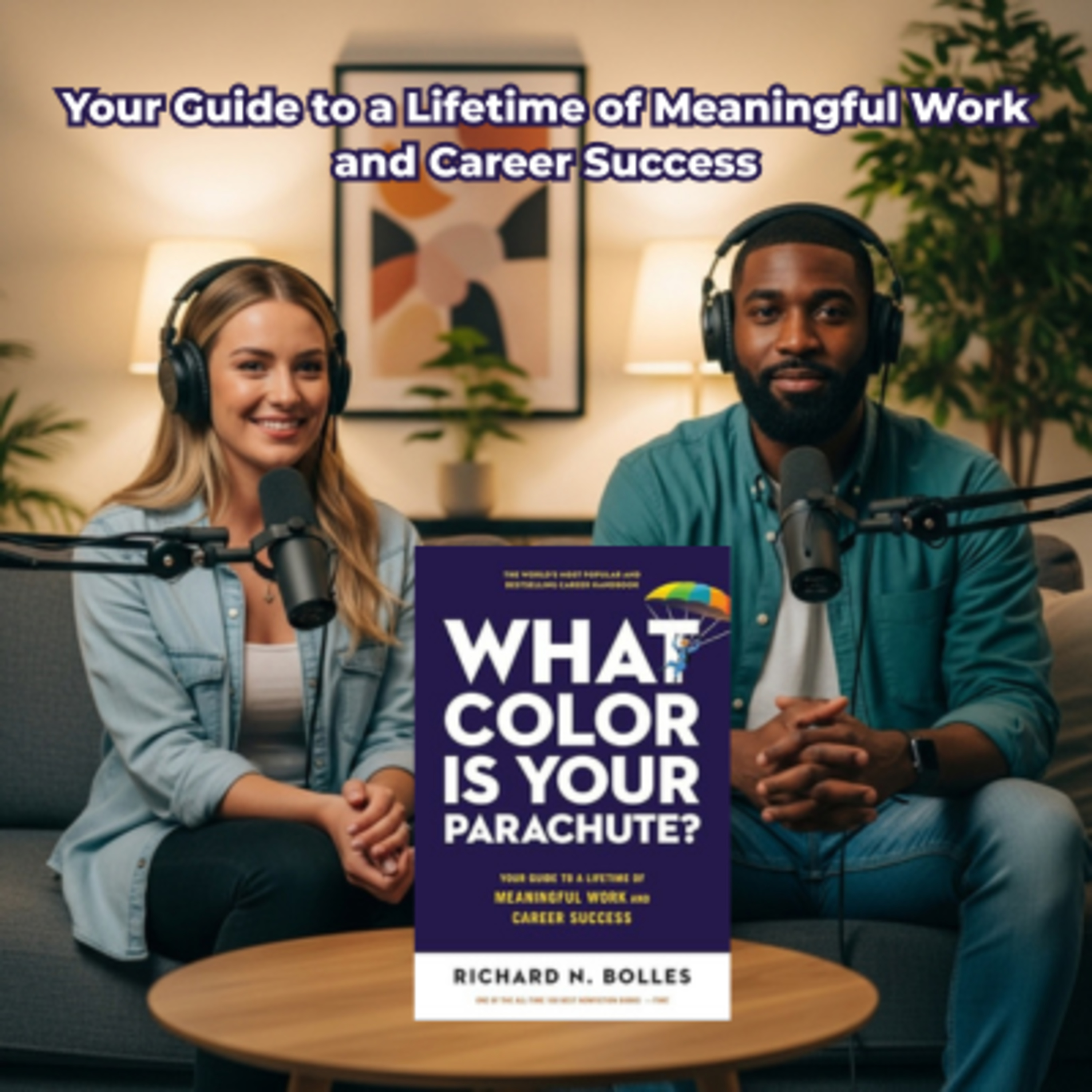
For more than fifty years, What Color Is Your Parachute? has transformed the way people think about job hunting. Whether searching for that first position, recovering from a layoff, or dreaming of a career change, What Color Is Your Parachute? has shown millions of readers how to network effectively, compose impressive resumes and cover letters, interview with confidence, and negotiate the best possible salary—while discovering how to make their livelihood part of authentic living.
More than a job-hunting book, Richard N. Bolles’s timeless wisdom and famed self-assessment exercise clarifies seven key dimensions, so you can uncover your greatest passions, most valued traits, and transferable skills to design a life that enables you to flourish.
With the job market in constant flux, people everywhere have found that understanding who they are—what they care about, where and how they do their best work, and the most effective way to express their abilities—is the best compass to navigating an ever-changing and challenging professional landscape. It is also how their work can become part of a life filled with passion and purpose.
Using the trailblazing advice and enduring guidance of What Color Is Your Parachute?, job-hunters and career changers will have the tools to discover—and land—the work, and life, most meaningful to them.This source provides a comprehensive overview of the career development strategies found in Richard Bolles' renowned book, What Colour Is Your Parachute?. It emphasises the importance of self-awareness through tools like the Flower Exercise, which helps individuals identify their core values and skills before entering the market. The text highlights that modern job hunting requires a robust online presence and a proactive approach to networking to uncover unadvertised opportunities. Readers are encouraged to remain adaptable to technological shifts while maintaining authenticity during interviews and confidence during salary negotiations. Ultimately, the material serves as a practical guide for finding meaningful employment by aligning personal strengths with the right corporate culture. Through daily actionable steps, it transforms a daunting job search into a structured journey of career fulfilment.#WhatColorIsYourParachute
#RichardBolles
#CareerSuccess
#CareerDevelopment
#CareerGrowth
#CareerAdvice
#CareerPlanning
#MeaningfulWork
#ProfessionalDevelopment
#JobSearch
So what if I told you that spending like 40 hours a week meticulously tweaking your resume, optimizing all those little keywords? Oh yeah, the keywords stuffing. Right. And then just firing off applications to online job boards is statistically one of the absolute worst ways to actually get hired. It sounds totally counterintuitive. It really does. I mean, especially when the entire modern hiring apparatus is basically built around, you know, clicking that easy apply button on LinkedIn. Exactly.
It's too easy. But if you constantly feel like you are just throwing your credentials into this digital black hole and getting like nothing but automated rejection emails in return, right, well, there is a reason for that. A very mathematically sound reason, yeah. So welcome to today's deep Dive. We are really treating this as a highly personalized strategy session just for you, the listener, because today our mission is to extract the core game plan from Richard Bola's legendary framework. In What color is your parachute?
Such a classic. It is, and we are not just looking at like basic cover letter templates here. No, we are looking for a structural shortcut to meaningful work that actually fits the parameters of your life. And setting the stage for this material, I mean, requires A fundamental shift in how we view the economic landscape as a whole. The source introduces this framing that really just changes the paradigm entirely. It says the job market is not a static pond where you, you know, cast a line and just sit there and wait.
It's a flowing river. It is constantly shifting, constantly moving and generating these entirely new currents all the time. Which is terrifying, but also kind of liberating. Totally, because think about it, a few decades ago survival just meant printing a chronological history of your work on the like, really heavy nice paper. Oh man, the expensive card *. Right. And then you just waited for the phone to ring. But today, because of AI screening, the globalization of remote work, these rapid industry shift survival requires continuous adaptation.
What worked to secure a position even just three years ago? Might actively get you screened out today. Exactly. It might actually disqualify you before a human even sees your name. OK, let's unpack this because before we can ask you to navigate this external rushing river of a job market, we have to figure out exactly what kind of vessel you are actually steering. You need a boat. Right. And the text makes it really clear that we had to start with inward reflection. There is this core tenet here which is basically know yourself 1st.
And the author uses this great restaurant analogy to illustrate the friction of this process. Imagine walking into a restaurant, the server walks up to your table and you just shrug and say bring me food. Which is crazy. You are handing complete control over your entire experience to a literal stranger who has zero idea what your preferences are or you know, your allergies. Yeah, and the odds are incredibly high that you were going to end up with, I don't know, a plate of steamed Brussels sprouts when you really wanted a medium rare steak, right?
If you refuse to define what you want to order, you are going to end up with a meal you resent. And that logic applies directly to your career trajectory. It's a perfect one to one comparison. If you enter the job market without a defined understanding of your own strength, your intrinsic passions, and your non negotiable values, you are essentially asking a chaotic economic system to just hand you a random 40 hour a week. Meal and the system does not care if you like the taste of it. Exactly. You have to define the parameters first to ensure the job actually suits your psychological and financial needs.
And what's great is that the source moves this from a, you know, vague philosophical concept into a very tangible framework. They call it the flower exercise. The famous flower exercise. Yes, it serves as a personal blueprint. The visual is literally of a flower where each petal represents the distinct critical dimension of your professional identity. OK, so breakdown the petals for me. Well, you have one petal dedicated to your transferable skills, another for your core interests, one for your ideal physical remote work environment, and crucially, a petal for your concrete salary expectations.
Which people always avoid talking about. Always. But the function of this exercise is to move you away from just guessing what you might be good at, and toward visualizing the exact specific coordinates of your ideal role. Right, and the text provides a clear example of how these isolated petals interact to create a map. Like. Let's say you map this out, and the data reveals that you require a highly flexible schedule, you are deeply energized by being outdoors, and your strongest skill is leading small teams through complex tasks.
OK, when you look at those specific indicators synthesized together, they act as a compass pointing toward a sector. You might never have actively searched for something like, I don't know, environmental project management or field operations. Exactly because it narrows the infinite expanse of that river down to a highly specific navigable channel, you stop looking at 90% of the job market. Which is exhausting anyway. Totally exhausting and instead you focus all your energy on the 10% where you actually have a statistical advantage.
I do want to push back on the mechanics of this though. Lay it on. Me. Because I'm listening to this breakdown and it sounds remarkably like building a character in a role-playing video game before you start the main quest. Oh, I see where you're going with. This right like you sit at a screen and you allocate 10 points to outdoorsy, 5 points to teamwork and then you like lower your salary slider to boost your flexibility stats. Right, right. But human beings are messy. We're contradictory. Realistically, how does a listener avoid getting completely paralyzed by trying to perfectly define every single one of these existential pedals all at once?
Yeah, the friction you were describing is a very well known psychological barrier attempting to define your entire professional identity in one sitting. It triggers massive cognitive overload. Oh 100%, it's terrifying. Which leads directly to paralysis, but the source addresses this by prescribing highly actionable compartmentalized steps. The mechanism to bypass that overwhelm is pacing. So you don't just sit down for five hours on a Sunday. No, you do not tackle the entire flower at once. You take 10 minutes on a Tuesday to fill out the skilled pedal.
That's it. You don't factor in money, you don't worry about job titles. You just list what you are mechanically good at. OK, then on Wednesday, you spend 10 minutes defining your ideal environment by breaking the existential dread of, you know, what should I do with my life into isolated microtasks, you trick your brain's defense mechanisms. That is so smart. Yeah, because in a week you have constructed A nuanced, complete picture of your professional self without ever triggering that paralyzing stress response.
So you are essentially micro dosing the self discovery process. I love that phrasing. Yes, micro dosing self discovery. OK, so once you have that flower mapped out, the immediate question becomes what to actually do with it. You had to take this internal blueprint to the external world to find where it actually belongs. You have to bridge the gap. Right, and the source dives into the mechanics of networking here, but it bases its strategy on the premise that the highest quality jobs are hidden. Yes, the hidden job market.
Right, They aren't just sitting on public job boards waiting for a click. And understanding the why behind the hidden job market fundamentally changes how you apply. From an employer's perspective, hiring an unknown variable from a stack of 500 resumes is a massive risk, both financially and culturally. I mean, a bad hire costs what, 10s of thousands of dollars? Easily 10s of thousands in lost productivity onboarding training. Therefore, hiring managers naturally try to mitigate that risk by relying on trusted internal networks.
First that. Makes sense? Right. A recommendation from a known entity dramatically lowers the perceived risk, and the source uses an agricultural metaphor here that I think is really helpful. Networking is not hunting, it is planting seeds. OK, you do not push a seed into the dirt and just scream at it to turn into an apple tree by the afternoon. Which is what people do on LinkedIn all the time. Hi, nice to connect, give me a job. Exactly. You have to respect the compounding timeline of relationships.
Yeah, and the example in the text illustrates this beautifully. Say you are at an industry conference and you strike up a conversation with someone who works at an organization you really admire. You do not hand them a resume and ask for a job. You simply establish a connection. You water the seed by staying in touch asynchronously over time. Then like 6 months down the line when a specialized position opens up, you receive an invitation to apply before human resources even drafts the public listing.
And the underlying mechanism making that possible is selectivity. While you are cultivating these connections, the source really stresses that the vetting process is a two way St. Oh, this is where the values pedal comes in. Exactly the values pedal of your flower is critical here. If environmental sustainability is a non negotiable core value of yours accepting a high paying role at a company with a track record of ecological damage, it will inevitably create cognitive dissonance. Yeah, you'll be miserable.
Misalignment between your internal values and your employer's external actions is actually the fastest documented track to professional burnout. You have to evaluate the company's ethics just as rigorously as they are evaluating your competencies. Which brings us to how we signal our own value in a digital ecosystem. Because in today's landscape, long before you get the chance to interview them about their values, they are screening yours. Oh, without a doubt. Your digital footprint operates as your proactive resume.
Hiring managers are going to run your name through search engines and professional networks. They will Google you. They will absolutely Google you, and the text argues that you have to curate this presence deliberately. If you are pursuing a role in digital marketing. Your profile cannot just be a boring chronological list of your past employment dates, it. Needs to be alive. Right, it needs to be a curated feed of industry analysis. Case studies may be shared in Insights. Because you are leveraging asymmetric information by publicly sharing your knowledge, you prove your competence to the employer before you ever initiate a formal conversation.
It's like you're building an inbound marketing funnel for your own career. That's exactly what it is. Let me bring this back to the practical application of planting those seeds though. Sure, if a listener is trying to build this network, how do they keep watering these seeds without becoming a nuisance? The fear of bothering people, yeah. Because there is a very thin, very awkward line between staying in touch and being that desperate person who constantly pings people's inboxes asking for favors.
Well, the text provides A structural safeguard against that exact scenario. You avoid becoming a pest by entirely removing desperation from the equation. You remove desperation by operating at scale with consistency. The specific recommendation is to engage with just one person in your network a week. Just one that seems manageable. Very manageable, and the mechanism of engagement shouldn't be a request, it should be an offering of value. Like what? It could be sending a brief message, reacting to an article they recently published, or forwarding a piece of research that's highly relevant to their specific industry.
Oh I see. When you offer genuine engagement, slowly and consistently the relationship develops organically. You are building social capital, you know, not just spending. It OK, so assuming the listener has mapped their internal landscape, they've cultivated their network without being desperate, and they've curated a digital presence that flags them as a top tier candidate. The pre work is done the. Pre work is done, the hidden market works, and suddenly they're in the room sitting across from the hiring manager.
The interview. The interview How do you actually close the deal? The advice in the framework heavily emphasizes showing up as your authentic self. Yeah, and while be yourself is probably one of the most repeated cliches in career advice. It's on a lot of throw pillows. Right, but the psychological mechanics behind it in an actual interview setting are critical. Interviewers are highly attuned to artificiality. They can smell it. Exactly. If they detect that a candidate is delivering perfectly rehearsed robotic answers that are designed solely to appease them, it triggers A baseline level of distrust.
Because they aren't just evaluating your hard skills. No, they are trying to determine if they can tolerate sitting in a room with you for 40 hours a week. Authenticity is the fastest way to establish mutual trust. And the source illustrates this with a really specific scenario about weaknesses. Let's say your flower exercise revealed that you thrive in collaborative teamwork, but you suffer from severe anxiety regarding public speaking. A. Very common fear. Super common. The prescribed advice here is to explicitly share that weakness when asked, but immediately pivot to the proactive steps you are taking to mitigate it.
You acknowledge the growth area, which proves self-awareness right? And then you demonstrate the initiative to improve it, which proves value. OK, here's where it gets really interesting though, because I have to challenge the logic of the strategy. Being authentic sounds noble, but isn't there a massive danger in being like, too transparent? In what way? Well, if a boss needs someone who can occasionally present to clients, how does explicitly highlighting a flaw like bad public speaking actually position you as a stronger candidate than the person who just lies and says their biggest weakness is being a perfectionist?
The perfectionist answer. OK, so if we look at the psychology of the interview dynamic, owning a legitimate flaw actually signals supreme confidence. Really. Yes. A candidate who claims they have no real weaknesses is universally perceived by hiring managers as either profoundly lacking in self-awareness or actively deceptive. They know you're lying of. Course they do. By owning a specific flaw, you demonstrate that you are coachable and realistic. However, and this is a big however, the framework includes a crucial mechanism to ensure this strategy doesn't backfire.
OK, what is it? The delivery The source insists that you must practice your answers to these vulnerable questions out loud, repeatedly. Not to memorize them though, but to normalize them. Precisely when you discuss a personal vulnerability, your human nervous system naturally initiates a stress response. Right, your palm sweat. Your voice tightens, you speak faster, you look defensive. But practicing the answer out loud daily decouples that panic response from the vulnerability. The delivery itself becomes your shield.
Because you have said it 50 times in your living room. Exactly. So when you admit you struggle with public speaking in the actual interview, your heart rate remains steady, your tone remains grounded, and that's supreme confidence. That is what the interviewer actually remembers. Wow, that reframes the entire concept of interview prep. It's powerful. OK, now let's look at what is arguably the most stress inducing rapid in this entire river the salary negotiation. Yes. The money The source lays out specific data-driven rules to ensure you are compensated fairly.
First, you must know the empirical industry average for the role. Non negotiable. Second, you engineer the conversation so the employer makes the initial financial offer. And 3rd, you have to evaluate the compensation package holistically. You factor in benefits, remote flexibility, healthcare. Because negotiation is fundamentally an exercise in information asymmetry. The company has an entire human resources department. They have access to vast amounts of market data. And the applicant is usually an army of one relying on guesswork.
Exactly. And if you enter the negotiation without empirical data, emotion takes over. The natural human instinct to avoid conflict usually results in leaving thousands of dollars on the table. Because you just want the awkward conversation to end. Yes, knowing exactly what the market dictates allows you to approach the conversation objectively. You can look at an offer and calculate whether a robust health insurance policy mathematically offsets a slightly lower base. Salary Data removes the emotion.
So the theory is air kite and the mindset shift is incredibly valuable, but a framework is useless if it just sits on a shelf. Right execution is everything. How does a listener actually operationalize this? Starting Monday morning, let's translate this philosophy into the daily routine the source prescribes, because it breaks down into a specific checklist of micro habit designed to keep you buoyant in the river. Yeah, the routine focuses on continuous small scale inputs, so first dedicate exactly 10 minutes a day to reading industry trends or specialized newsletters.
Just 10 minutes. Just 10 this build your pattern recognition for where the market is flowing. 2nd implement a morning reflection where you write down 1 distinct skill or professional value you are proud of. Which actively builds your baseline self efficacy. Exactly. It keeps your confidence up. 3rd, take 5 minutes to deeply research a company's corporate mission and recent news before you click Apply, just ensuring you aren't utilizing a shotgun approach, right? And finally, set a recurring weekly calendar reminder to audit your social media presence, scrub anything unprofessional, and update your profiles with your latest project outcomes.
It's a solid checklist. It is, but now, listening to this regimented list, it sounds a bit like an athletic training montage. You know, 10 minutes of reading, 5 minutes of research. Cue the 80s synth music. Exactly, but I specifically want to zero in on the salary tip embedded in this routine. The source suggests looking up average market salaries for your current role on a monthly basis, even if you are perfectly happy and not actively applying for jobs. Yes. Does passively scrolling through salary data really change your psychological posture that much?
I would argue it is the most powerful psychological tool in the entire framework. Really. Consider the alternative. You're working comfortably and suddenly your boss calls you into an unexpected performance review, or a recruiter from a rival firm messages you with an immediate, lucrative opportunity. OK, if you haven't been tracking the market, your brain instantly floods with cortisol. You panic, you panic, you guess your worth, and you almost always undersell yourself because you just want to resolve the immediate tension.
But by checking the data monthly, you build an internal anchor. You are steadily calibrating your brain to your objective value. So when the unexpected moment arrives, you don't have to guess right. You already have a deeply ingrained fair number in your head. It allows you to negotiate from a position of relaxed readiness rather than desperate improvisation. You are systematically removing the shock from the system. Precisely. So what is this this all mean for you, the listener? Let's trace the arc of the strategy we've pulled from Bulls framework today.
Let's review. You begin by mapping your internal coordinates, deconstructing your flower so you aren't relying on a chaotic market to dictate your value, right? Then you bridge the gap by planting external seeds through consistent value driven networking and curating a digital presence that proves your competence. Watering those seeds. Exactly. Finally, you bypass the rehearsed robot trap by showing up authentic, using prepared delivery to shield your vulnerabilities. And you negotiate your true worth, backed by relentless, objective data collection.
And the ultimate take away from this material? It goes way beyond just scoring a paycheck. Oh. Absolutely. Engaging with this process is a declaration of intentional control. It is a refusal to be a passive object tossed around in the currents of a shifting economy. By implementing these specific micro habits, you are actively engineering a professional environment that aligns with your internal wiring and that generates a level of sustainable fulfillment that is mathematically impossible to achieve if you just leave your career up to chance.
Which leaves us with a final lingering question to ponder as we wrap up. If we accept the core premise of the source, that the job market is truly a constantly flowing river, and it is, and that you as an individual are constantly evolving, right? Developing new skills, discovering new petals on your flower. Is the cultural concept of a single permanent dream job actually obsolete? Oh, that's a big question, right? Maybe the ultimate goal isn't searching for the perfect job just once and locking yourself in forever.
Maybe true career security is simply mastering the skill of continuously building new parachutes for every new stage of your life. It is a profound shift in perspective, Yeah, you stop fearing the current because you have become a master navigator. You have the map, you know how to build the parachute, Now it's time to start the work.
 Apple Podcasts
 Castbox
 Castro
 Goodpods
 Moon FM
 Overcast
 Pocket Casts
 Podbean
 Podcast Addict
 Podcast Republic
 Spotify