Understanding and Overcoming Class Bias in the Workplace | What's Your Zip Code Story? by CJ Gross
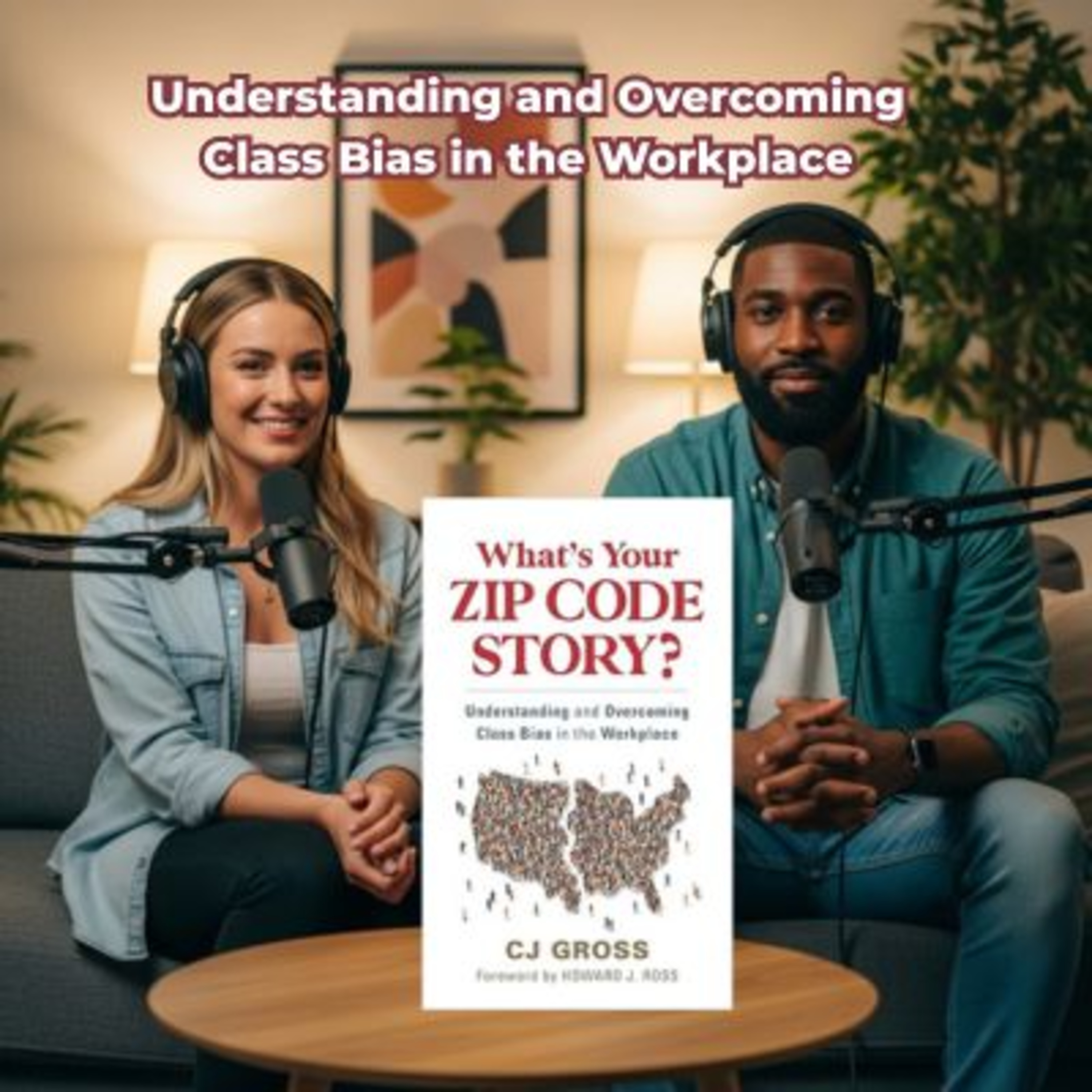
This episode explores how socioeconomic backgrounds and class bias silently influence professional environments, often dictating how employees are perceived and promoted. It highlights the concept of the "Zip Code Story," suggesting that personal narratives regarding upbringing and education can create invisible barriers to career advancement. To combat these prejudices, the author advocates for managerial self-awareness and the implementation of inclusive policies like blind hiring and mentorship programs. By prioritizing individual skills over social origins, organizations can foster a sense of belonging and unlock greater creative potential. Ultimately, the source serves as a guide for dismantling class-based discrimination to build more equitable and high-performing teams.The renewed focus on class, race and equality in the workplace and beyond is making an indelible mark on society. This clarion call for change is sweeping inequality from every corner of the nation, including law enforcement, schools, and businesses. And within the past five years, diversity and inclusion, as well as unconscious bias, have been the main drivers of organizational training, politics, and community engagement.
What’s Your Zip Code Story helps clarify the intersection of class bias and racial disparity in the workplace and arms organizations with the knowledge to not only have productive discussions, but also adopt effective solutions. Gross instructs class-migrants―whether college students, recent graduates, or overlooked employees―on how to climb the career lattice and transform themselves from undervalued employees to respected leaders. The book tackles challenges that class-migrants encounter when navigating the workplace and provides operative practices that can be utilized to hone new professional skills and drive positive change in workplace culture. It is a powerful tool that will inspire marginalized employees who are hungry for personal and professional growth, as well as give insight to business leaders seeking a new way to engage their teams. Through the lived experiences of the author and research-based strategies, readers will find insights on how to increase workplace engagement and business performance.
#WorkplaceCulture #Leadership #CareerGrowth #WorkplacePsychology #InclusiveLeadership #ClassBias #FutureOfWork #ProfessionalDevelopment #OrganizationalCulture #EmployeeEngagement #BusinessPodcast #SocialMobility #PeopleLeadership #WorkplaceInclusion #BookSummary
Imagine logging on to a Zoom call for a job interview and instead of you know your professional name and title displayed below your video feed, it says something totally different. Right. Like it just completely outs you. Exactly. Your screen name automatically lists the neighborhood you grew up in, the high school you attended, and exactly what your parents did for a living. Which is a terrifying thought for a lot of people. Oh, absolute terrifying. I mean, how fast do you think the people on the other side of that screen would change the way they interact with you?
Instantly, I mean the tone of their questions would completely shift. Right, with their assumptions about your competence. Just, you know, rewrite the whole interview before you even said hello. Yeah, they absolutely would. Well, welcome to the deep dive. Today we are unpacking a really remarkable book by CJ Gross. It's called What's your zip code story? Yes, and the mission for this deep dive is to really explore the deeply ingrained kind of hidden ways that class bias infiltrates the modern workplace.
Because it is everywhere, even if we don't see it. Exactly. You want to instill these insights so you, the listener, can recognize these invisible dynamics, understand the psychology driving them, and actually help build a fairer environment. Which is so needed right now. It really is. OK, let's unpack this. Have you ever wondered how much of your career trajectory might be secretly dictated by the zip code where you were born? It is. It's a fundamentally uncomfortable question because we are all heavily invested in this idea that the modern workplace is, you know, a strict meritocracy.
Right. We want to believe that the smartest, hardest working people rise to the top. Exactly. But the foundational premise that CJ Gross establishes right away is that class bias is pervasive, and it operates almost completely undetected. It's just running in the background. Like a bad operating system? Yeah, I mean how you are perceived by leadership, the kinds of stretch assignments you get. Or don't get. Right, or don't get. And ultimately, who gets hired and promoted are intensely influenced by social class and place of origin.
It's a dynamic operating quietly in the background of almost every single corporate interaction. I think we really need to start by understanding the mechanics of how this actually plays out on an individual level. Yeah, that's crucial. Because before we can fix a massive systemic issue, we have to look at the micro interactions, right? Absolutely gross uses this specific term, the zip code story. What exactly goes into a zip code story and why does it carry so much weight? So a zip code story is essentially the culmination of your personal narrative, but specifically viewed through the lens of socioeconomic markers.
So it is not just the literal physical address of your childhood home. Though I imagine that plays a part. Oh, a massive part. The demographics of that area play a huge role, but it's really an umbrella term. It encompasses the prestige of your educational background, the cultural vocabulary you grew up with, interesting, and heavily heavily your parents occupation. Like, did you grow up here in corporate jargon at the dinner table? Exactly. Or did you grow up in a household where work meant physical labor and hourly wages?
All of these elements fuse together to shape your worldview, right? But in a professional context, what really matters is how these elements shape the way other people perceive your value. Right. So it is the lens through which I view the world, but more importantly, it is the filter through which my colleagues and bosses are actively assessing me. Yes. To make this really visceral for you listening, I kind of think of it this way. It's as if everyone walks into the office wearing this invisible floating resume.
I love that analogy. Right. And this floating resume? It doesn't list your Python coding skills or, you know, that massive marketing campaign you just crushed. No, it lists your childhood neighborhood. Your parents tax bracket. Yeah, the kind of vacations you took growing up. Exactly. And without anyone ever saying a single word, everyone around you is just instinctively grading you on that invisible resume. And. What's fascinating here is the underlying psychology of why we do this. Why do our brains even bother?
Well, human brains are incredibly resource intensive. To save energy, they rely on heuristics. Those cognitive shortcuts, right? When a manager meets someone new, their brain doesn't have the time or energy to process every single nuance of that person's character. They're too busy. Way too busy. So it grabs onto these class markers. We hear where someone went to school or we notice the specific way they pronounce a word. Just an accent, just an accent, and our brains instantly, automatically start filling in the blanks.
We project this whole profile of that person's competence, their reliability, whether they are a quote UN quote, cultural fit, entirely based on an unconscious extrapolation of their zip code story. Which is incredibly dangerous because the brain is essentially hallucinating a personality based on a hometown it. Really is hallucinating, yeah. So how does Gross suggest we actually break that heuristic? Like how do you stop your brain from making those massive unconscious? Leaps, well, Gross points out that you cannot simply turn off a cognitive shortcut.
Because it's hardwired. Right, it's hardwired, but you can override it with high quality data. OK, how? The immediate remedy on a personal level is active, structured curiosity. We have to purposefully pause and ask ourselves the really uncomfortable questions. Like checking ourselves in real time. Exactly like am I assuming this junior analyst lacks strategic vision just because of their regional accent? Wow, yeah. Are my expectations of them rooted in their actual work output or in the zip code story I have mentally constructed for?
Them. That requires a lot of self-awareness. It does, and the only way to replace those assumptions with facts is to engage in deeper, intentional dialogue. OK, so just talking to people more. But intentionally Gross highlights this example of a team leader who actively structures time to understand their team's actual histories. So not just water cooler small talk. No, not just how was your weekend? Truly understanding their sources of motivation and the specific socio economic obstacles they've navigated to get there.
I imagine that fundamentally changes the power dynamic on a team. Oh, completely. Because if you are a manager and you actually take the time to understand the friction someone has overcome just to get to the starting line of that job, right, you aren't just building empathy, right? You are gathering critical Intel on their resilience and problem solving skills. Exactly. You're seeing their actual capability, and the result is profound trust. Makes sense? When individuals feel that their full background is understood rather than judged through this weird unconscious filter, they stop expending mental energy on hiding their background.
They stop pretending. Right. And that energy is redirected into their actual work. Communication improves drastically and the team just becomes highly cohesive. OK. So that handles the interpersonal dynamic. If a manager does the work, they can build a great culture for their direct reports. Yes, on a micro level. Right, but the logic there relies on getting those diverse candidates onto the team in the first place. Which is a huge hurdle. It brings up a major friction point. Let's look at structural decision making like hiring, screening, the initial sorting of candidates.
The pipeline. Yeah, the pipeline. Yeah. If this bias is as deeply unconscious as the psychology suggests, I have to kind of push back on the idea that individual awareness is enough. I agree completely. Right, because think about a hiring manager during a massive recruitment Sprint. Oh, it's chaos. It is. They're reviewing hundreds of resumes. They have back-to-back interviews. They're operating on like three hours of sleep in pure caffeine. Just trying to survive the day. Right. How can we possibly expect them to police their own subconscious biases while trying to hire the best person as fast as possible?
I mean, willpower alone just seems like a terrible strategy. It is a terrible strategy, relying on an individual's willpower to overcome deeply ingrained cognitive bias during a high stress scenario. Not going to work. It is a guaranteed recipe for failure. When the human brain is under pressure, it clings to its heuristics even harder, right? Defaults to what's easy. Exactly. It defaults to the safest, most familiar patterns. A manager in that scenario might genuinely believe they are making a purely objective decision based on merit.
Even though they aren't. Right. Completely oblivious to the fact that their working definition of merit is heavily tangled up in class markers and pedigree. Here's where it gets really interesting, because Gross doesn't just offer platitudes about trying harder to be unbiased. No, not at all. The focus shifts entirely to structural engineering. Yeah. You don't just ask the manager to police their brain, you physically alter the process so the brain doesn't even have the opportunity to be biased.
Precisely. If we connect this to the bigger picture, you have to design systems that anticipate human flaws. Gross points to several structural interventions, but the most impactful is the implementation of blind hiring procedures. OK, let's dig into that. This is where a business fundamentally alters its resume review process by stripping away all identity information before a human evaluator ever sees the application. So they just delete things. Yeah, they remove the names, the graduation years, and critically, the physical addresses and zip codes.
Let's explore the mechanics of that. When a hiring committee receives a stack of these redacted resumes, it. Looks totally different. Yeah, No names, no zip codes, maybe even no university names. Yeah. How does that actually change the conversation in the room? It completely derails the brain's ability to use those cognitive shortcuts we talked about earlier. Because the data isn't there. Right. Without the traditional markers of origin or pedigree, the hiring team is forced into a state of cognitive strain.
They actually have to think. They do. They can no longer look at a prestigious zip code and automatically assume high competence. They have to actually read the bullet points about the candidates project management experience. They have to critically evaluate the actual skills. So by removing the shortcut, you force the brain to evaluate the actual data. Exactly. And when companies actually commit to this structural change, what does the data show? I mean, does it actually move the needle or is it just a feel good HR exercise?
Oh, the outcomes are radically different. Really. Yeah, companies that implement true blind hiring consistently discover exceptionally gifted individuals who would have absolutely been filtered out in the 1st 5 seconds under the old system. Because of the invisible resume. Exactly, they end up hiring a much wider, more unorthodox mix of skills. Wow. And because you are bringing in people who approach problems from entirely different socio economic realities, these companies often experience a massive surge in innovation.
Because they stop hiring carbon copies of themselves. Exactly, You stop hiring carbon copies of the current leadership team. So blind hiring basically gives them the key card to get into the lobby, right? It bypasses that initial gatekeeping bias. But here's the next logical hurdle, right? A blind resume only protects you until your first day on the job. Oh yeah, that's where things get complicated. Right, because once you walk into the boardroom, the blindfold comes off. The secret is out. Yeah, you open your mouth, you share your weekend plans, and suddenly your zip code story is visible again.
Everyone sees it. So how do companies prevent the bias from just, you know, kicking right back in three months later? That is the crucial pivot from mere awareness to active. Belonging. OK, belonging. Yeah, Gross makes a very clear distinction here. Getting diverse talent through the door is just recruitment, right? Ensuring they thrive is retention, and retention demands class conscious policies. What does that look like in practice? Well, if you bring someone from a working class background into a really rigid upper middle class corporate culture and you provide no structural support, they're.
Going to crash. They are going to feel isolated and they will eventually leave. Combating this requires integrating diverse socio economic perspectives directly into the company's power structures. It's kind of like blind hiring is inviting someone to the dance. OK. Yeah, yeah. But creating belonging is actually asking them to dance and then letting them them pick the playlist. I love that letting them pick the playlist is the perfect way to phrase it. But how do you institutionalized that? Because you can't just mandate that people feel like they belong.
No, you can't force a feeling, but one of the most fascinating strategies gross explorers is the concept of reverse mentorship. I really want to pull on that threat. It's a great one. Because usually when we hear mentorship it is a very top down model. The old school way. Right, like the 55 year old executive takes the 24 year old junior employee under their wing to teach them, you know, the unwritten rules of the Country Club. Exactly. How does reverse mentorship actually function? In a reverse mentorship program, the flow of knowledge is intentionally inverted.
Interesting. Yeah, employees from varying often marginalized or working class backgrounds are paired with senior executives specifically to provide guidance and perspective to the executives. Wow, I have to imagine the friction there is intense. It can be. Because if I am a junior employee who grew up barely making rent and I am suddenly supposed to mentor the wealthy C-Suite executive who literally controls my paycheck? Right. The stakes are so high. How? Do I actually give them honest feedback without being terrified of getting fired?
That power dynamic is massive. You are identifying the exact reason these programs fail if they aren't structured correctly. OK, so structure is key. You cannot just put them in a room and say, you know, be honest. That'll be everything I'm doing wrong. Right, the company has to architect psychological safety. Gross refers to structuring these programs really methodically. Like with actual rules. Yes, establishing clear rules of engagement, confidentiality agreements and specific learning objectives for the executives.
And who makes the first move? The executive has to be the one to actively demonstrate vulnerability first. Oh, that makes sense. Yeah. And when it is structured correctly, the impact is incredible. So what actually happens to the executives when they engage with this? Do they change? It pierces the executive bubble because senior leadership often operates in an echo Chamber of similar zip code stories. They all talk the same live in the. Same places exactly. Reverse mentorship forces them to confront the actual lived difficulties faced by workers from diverse origins.
It shifts their perspective from this kind of abstract policy making to compassionate, grounded decision making. They see the human impact. Yes, and from the employee's perspective when they see the VP genuinely taking notes and altering company policy based on their lived experience. That's empowering. Extremely. It creates A fiercely dedicated workforce. They aren't just allowed in the building, Their thumbprint is actually on the secure server. They are actively shaping the company's future. That kind of structural empathy, I think that's a perfect bridge to the most complex demographic Gross writes about.
Yes, definitely. Because if a company is really going to succeed at this, they have to understand the people who are currently living in two different worlds simultaneously. It's a very unique position to be in. Let's dive into this concept of the class Migrant. So this is arguably the most vital and emotionally resonant lesson in the entire text. What exactly is a class Migrant? Gross defines class migrants as managers and workers who have actively ascended the social ladder. OK, these are individuals whose original zip code story is rooted in a working class or lower income environment, but through education or, you know, career advancement.
They've leveled up. Right. They have successfully navigated their way into upper middle class white collar corporate spaces. So what does this all mean for their daily psychological reality? Because honestly, it sounds utterly exhausted. It is deeply exhausted. You understand the language, the humor, and the survival mechanics of your origins, but from 9:00 to 5:00 you have to master the completely unwritten, unspoken rules of corporate culture. Yes, it is code switching on a massive scale. This raises an important question about the hidden tax of upward mobility.
Class migrants face immense psychological friction. Imposter syndrome. Oh, profound imposter syndrome in the boardroom. Feeling like someone is going to quote UN quote, find out that they don't really belong. Wow. And simultaneously, they can experience a deep sense of alienation from their families and childhood. Friends because they don't relate anymore. Right. Their old friends no longer understand the corporate world they inhabit. They are essentially bilingual and class dynamics, but they frequently feel like they don't truly belong in either country.
That is heartbreaking. It is. And the tragedy, as Gross points out, is that companies largely ignore this intense balancing act. Which is a huge unforced error by the companies. A massive error. If you have an employee who intimately understands multiple socioeconomic realities, that is a superpower, absolutely. That is a massive asset for product development, for marketing, for crisis management. You don't want them to assimilate so completely that they lose that diversity of. Thought exactly you want that friction.
How do companies actually support a class migrant without, you know, making them feel patronized? It requires highly targeted support. First, managers must be trained to recognize this specific demographic and foster an atmosphere where candid communication about class background isn't taboo. Class migrants need to know it is safe to acknowledge that they don't know the unwritten rules of corporate networking or that they don't have a family safety net to fall back on. But beyond creating a safe space, companies need to provide hard resources like special coaching.
Right Gross is a great concrete example of this in action. What does that specialized coaching actually look like? So Gross details businesses that implement workshops specifically designed to help class migrants decode corporate culture. Decode it OK. Crucially, the objective of these workshops is not assimilation. It's not trying to change them. Exactly. It isn't about teaching them to play golf or, you know, talk about sailing, so they blend in. It is about giving them the tactical tools to navigate corporate politics, advocate for their salaries and build influence while fiercely protecting their distinctive qualities.
That's a great distinction. And simultaneously, the managers of these employees receive training on how to actively draw out and capitalize on those unique perspectives. So it changes how the managers view them too, yes. It shifts the narrative from this employee LAX Polish to this employee brings a vital perspective we currently lack. Wow. That is how you move from just checking a diversity box to actually building an equitable, highly innovative organization. It really is. It brings the entire philosophy full circle.
As we wrap up this deep dive, let's just summarize the road map Gross is laid out for you, the listener. It's a lot to process. It is. We started by looking inward, breaking down the psychology of the zip code story, and realizing how quickly our brains just hallucinate competence based on hometowns and accents. The unconscious bias. Exactly. Then we move to the organizational level, looking at how to bypass those cognitive traps using structural tools like blind hiring to just get diverse talent in the door.
From there, we explored how to make that talent stay and thrive by institutionalizing empathy through things like reverse mentorship. And finally, we unpacked the heavy psychological toll of the class migrant and how companies can turn that exhaustion into a strategic superpower. It is an incredibly comprehensive framework. It really is. It challenges us to completely rethink the metrics we use to evaluate human potential. And the relevance to you listening is undeniable, whether you are a senior executive designing A recruitment pipeline or a middle manager trying to understand why your team isn't communicating.
Or an employee. Right. Or an employee quietly exhausted from code switching every time you log on to a meeting. Understanding these dynamics gives you leverage evaluating people on their actual demonstrated abilities rather than the unconscious assumptions tied to their zip code. It isn't just a moral imperative. It's smart business. It's the ultimate competitive advantage. It leads to deeper creativity, highly resilient teamwork and a genuinely equitable environment. It absolutely does. But as we close out this deep dive, I want to leave you with a final thought to consider.
OK, let's hear it. The research we unpack today heavily relies on physical markers of class. Right, the zip code. Yeah, the literal physical addresses on a paper resume, the physical neighborhoods we commute from, the physical suits we wear to the office. But we are currently living through a massive paradigm shift toward permanent, widespread remote work. That's true. So in a decentralized world where your physical address is completely visible, hidden behind a blurred zoom background, what happens to the zip code story?
Oh wow. Will it naturally fade away as we interact as digital avatars? Or, given the human brain's desperate need for cognitive shortcuts, will we simply invent entirely new digital proxies for class bias? That is a chilling thought. It really makes you wonder. I mean, are we going to stop judging people by their hometowns and start silently judging them based on the quality of their Internet bandwidth or the brand of their noise cancelling headset? Or, you know, the aesthetic square footage we can see in the background of their Home Office.
It's highly likely. The physical venue of work might be changing, but that invisible floating resume we talked about at the beginning? It might just be upgrading to a new digital operating system. A digital zip code. Pay close attention to the new metrics you're quietly using to judge your colleagues and, perhaps more importantly, what they're reading on your digital resume. Thanks for joining us on this deep dive.
 Apple Podcasts
 Castbox
 Castro
 Goodpods
 Moon FM
 Overcast
 Pocket Casts
 Podbean
 Podcast Addict
 Podcast Republic
 Spotify