How to Get to the 0% Tax Bracket and Transform Your Retirement | The Power of Zero by David McKnight
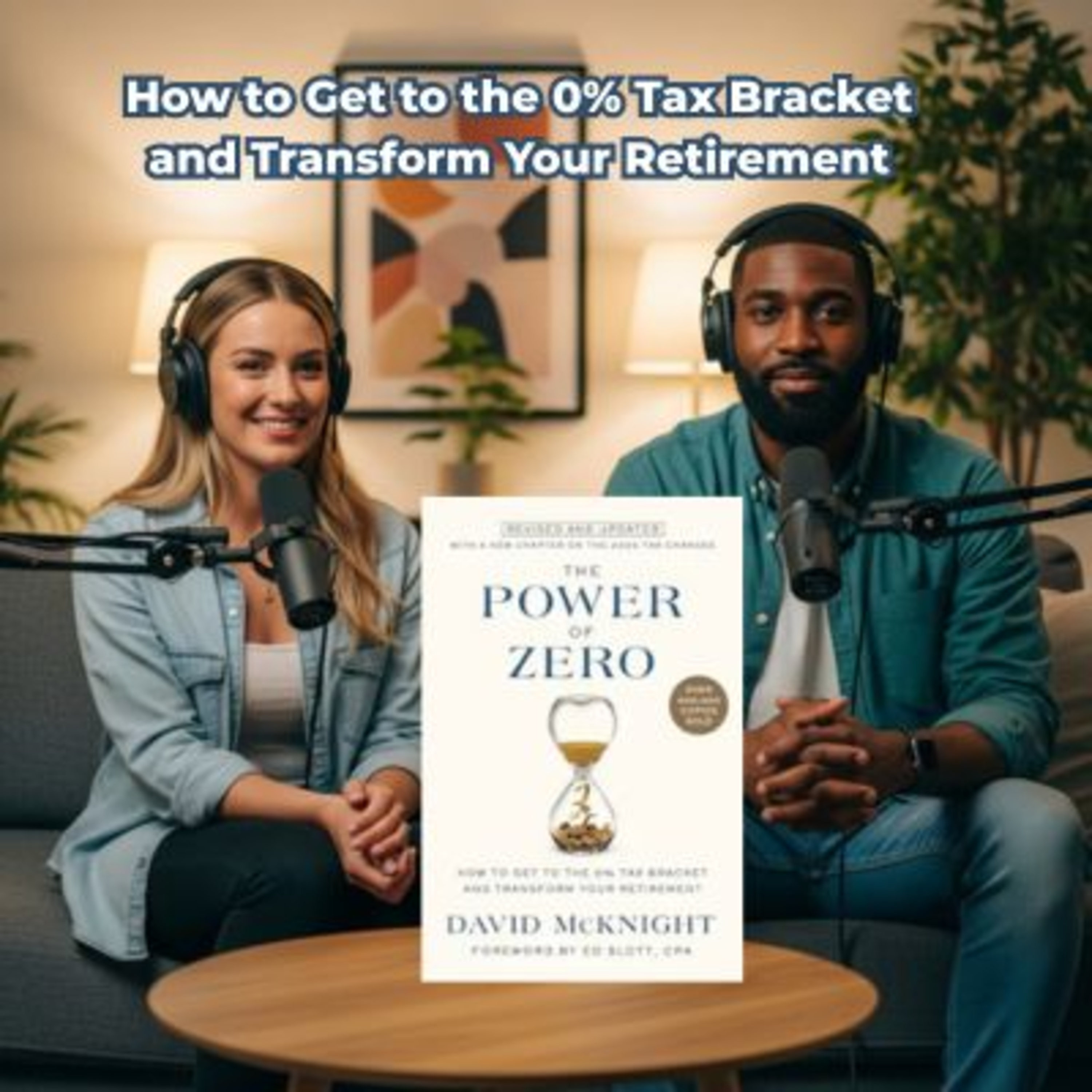
The United States government has made trillions of dollars in unfunded promises for programs like Social Security and Medicare—and the only way to deliver on these promises is to raise taxes. Some experts have even suggested that tax rates will need to double just to keep our country solvent. Unfortunately, if you’re like most Americans, you’ve saved the majority of your retirement assets in tax-deferred vehicles like 401(k)s and IRAs. If tax rates go up, how much of your hard-earned money will you really get to keep?
In The Power of Zero, David McKnight provides a concise, step-by-step road map on how to get to the 0% tax bracket by the time you retire, effectively eliminating tax rate risk from your retirement picture. Now, in this expanded edition, McKnight has updated the book with a new chapter on the One Big Beautiful Bill Act, showing readers how to navigate the new tax law and how they can extend the life of their retirement savings by taking advantage of it now.
The day of reckoning is fast approaching. Are you ready to do what it takes to experience the power of zero?
This episode outlines a strategic framework for achieving a zero percent tax bracket during retirement to protect wealth from inevitable future tax hikes. The author argues that rising national debt will force the government to increase rates, making it essential to shift assets into tax-advantaged accounts like Roth IRAs and specialized life insurance policies now. By utilizing Roth conversions, investors can pay taxes at today’s lower rates to ensure that all future growth and withdrawals remain completely tax-free. Additionally, the guide highlights Life Insurance Retirement Plans as versatile tools that provide both a death benefit and tax-free supplemental income through policy loans. Ultimately, the source serves as a roadmap for proactive planning to ensure retirees keep their full savings rather than losing a significant portion to the IRS.
#RetirementPlanning #PersonalFinance #WealthBuilding #TaxStrategy #FinancialFreedom #Investing #MoneyManagement #PassiveIncome #RothIRA #FinancialEducation #WealthMindset #RetirementGoals #FinancePodcast #BookSummary #MoneyTips
So I want you to just imagine your ideal retirement for a second. Oh yeah, the dream scenario. Right. You know you've done everything quote UN quote, right? You've saved carefully, you maxed out the accounts, and you are finally just ready to relax. Sitting on a beach somewhere, hopefully. Exactly. But then out of nowhere you get this surprise notice, and it's from the IRS, and they are basically demanding this massive chunk of your nest egg. Yeah. Which completely shatters that Peace of Mind. It really does.
And well, that's exactly what we're trying to prevent today. So welcome to today's Deep dive. Our mission today is to really unpack this book by David McKnight. It's called The Power of 0. Right, which actually features a forward by Ed Slot, who is a huge name in tax planning. Yeah, exactly. And the whole goal here is to discover this clear, actionable road map for achieving A literal 0% tax bracket in retirement. Which sounds impossible to a lot of people. I mean, right off the bat. Totally does.
But we are here to help you, the listener, really understand how to shield your money from future tax increases. You know how to keep more of your earnings and just eliminate that awful stress of unpredictable tax obligations. Because that unpredictability is the real threat here. Before we can even talk about fixing the problem, we have to, you know, understand why taxes going up is such a massive threat in the first place. Right. So why are we talking about taxes going up? Is this a guarantee?
Well, the first major lesson from the source material points right at the national debt. I mean, it is growing at an incredible pace. Yeah, it's a huge number. It is, and that implies that future tax increases aren't just possible, they are highly likely. Because, frankly, raising taxes is just the simplest way for the government to deal with that debt. OK. But let me push back on that for a second because, you know, is the national debt really something that impacts my personal 4-O1K directly? It absolutely does.
Or is it just like a macroeconomic problem? Because I always think of traditional retirement saving as like filling a bucket. You're just putting water in the bucket for decades. Right, that's a good way to look at it. But it sounds like you're saying the government essentially has the power to just poke a larger hole in that bucket whenever they want. That is exactly what they can do. And waiting until retirement to address those taxes, well, it means your income is likely going to be heavily reduced by that bigger hole.
So the government is just draining the bucket faster. Yeah, I mean, the source highlights a really specific example. Let's say you have a sizeable 4-O1K and you're almost ready to retire. If taxes increase just as you start pulling that money out, you could suffer some really significant consequences to your standard of living. Wow, so you're taking all the market risk for decades, but they can just change the rules at the finish line? Exactly. Which is why the solution, according to McKnight, starts with moving money into a Roth IRA today.
OK, so that brings us to the actual environments where your money is immune to those hikes, you know, tax advantage accounts. Right, the core mechanism here. Since the threat is future tax hikes, we really need to break down how Roth IRAs actually work. So with a Roth IRA, you contribute money after taxes have already been paid. Which means no tax deduction today. Right, no deduction today, but the magic happens later. The money grows tax free and then crucially, you withdraw it without paying any taxes in retirement.
OK, but I have to be honest, paying taxes right now feels terrible. Oh, I know nobody likes writing that. Check. Right. It feels like you're giving up capital today that could be, you know, compounding in the market. Is it really worth it to pay the IRS now? It is, and let's just walk through the math slowly to prove why. Because this is where people get stuck. Overtime, the IRS will actually take a much larger portion of your retirement fund than you currently contribute. Really just from the growth.
Yes, the source give this really stark example. Imagine a 30 year old who is contributing $5000 a year to a Roth. IRA OK, 5 grand a year seems reasonable. Yeah, and by age 65, that account grows to over $400,000, entirely tax free. Wow. 400 grand, all yours. Exactly all yours. But if that was in a standard taxable account or a traditional tax deferred account where rates spike, that money would have been continuously drained by annual taxes or hit with a massive bill at the end. So you're basically paying tax on the seat today instead of paying tax on the entire harvest tomorrow.
That's a perfect analogy. The harvest is where the massive value is. OK, I get that if you're 30 and just starting out, but what if you've already spent years, maybe decades, building this massive tax deferred traditional? IRA yeah, that's it's a very common situation. How do you even pivot to reach this Holy Grail of a 0% tax bracket? So this is where we introduce the concept of Roth conversions. OK. Roth Conversions. Right. This means you actually convert a portion of those tax deferred savings, like your regular IRA, into a Roth IRA while you are still employed.
Oh, I see. So it's like driving on a toll road. A toll road. OK. Yeah. But you have two choices. You can pay the fixed known toll right there at the entrance ramp, right? Or you can wait and pay at the ramp, but the exit ramp has like surge pricing that the government controls. That is exactly it. That is a brilliant analogy. You are choosing to avoid that surge pricing and the Peace of Mind of hitting that 0% bracket is just immense. Because you know exactly what the toll is today. Exactly. The source shares an anecdote to really drive this home.
Imagine this really consistent employee, someone who has built up a very sizable standard IRA over their whole career. OK, so they've got a lot to lose. Right. If they just take it out in retirement as usual, they will be heavily taxed, especially if rates go up. But by starting to convert portions of it now, paying that entrance toll bit by bit, they completely neutralize the threat of future tax hikes. They just take the government's power right out of the equation. Exactly, and then they can actually picture a retirement completely free from withdrawal taxes.
That is incredible. But you know, if Roth IRA's are so great, why stop there? Well, you can't just rely on one thing. Right, because reaching that absolute 0% tax bracket requires like diversifying your tax free assets. You don't want to rely too heavily on anyone single account type. No, you really don't. And that leads us to the unconventional shield in this strategy, which? Honestly blew my mind when I read it. We're talking about LIRPS, life insurance, retirement plans. Yeah, LIRPSA lot of people haven't heard of them used this way.
I definitely hadn't. Yeah, because, wait, life insurance? I always thought that was just, you know, a payout for your loved ones after you pass away. That's the traditional view, yeah. So how does a life insurance policy actually pay for my daily living expenses in retirement? That makes no sense to me. It is super counterintuitive, but the mechanics make this a really potent tax free asset. This uses permanent life insurance to augment your retirement income. OK, but how? So the cash value inside the policy grows tax deferred over time, and you still get a death benefit for your loved ones, of course.
But when you need the money for retirement, you don't withdraw it. You actually borrow against the policy's cash value. Wait, you take out a loan? Yes, and because these withdrawals are technically loans under the tax code, they are not subject income taxes. Oh wow, because a loan isn't classified as income? Exactly, it's a liability, not income. The source highlights a really cool example here. So you create a LIRP at age 40. OK, age 40. By the time you hit retirement, that policy has grown significantly and you could potentially access say $500,000 in cash value entirely tax free.
$500,000 and the IRS doesn't see a dime of it. Not a single dime and you use that to comfortably fund your life. And the best part is you never have to pay the loan back while you're alive. Wait really? How does the loan get paid off then? When you pass away, the insurance company just uses the tax free death benefit to pay off whatever loan balance is leftover. That is just wow. It's like a closed loop system entirely outside the IRS. It really is. It's a completely different bucket of tax free money to complement the Roth IRA.
OK, so we have the tools now, we understand the Roth conversions, we understand how how a IRP works. But why is it so critical to take action on this right now? Because of the urgency of the current tax environment. Right. Like why can't I just wait 10 years to start doing this well? The source emphasizes that current tax rates are historically low right now, but this trend may not continue. In fact, due to that massive national debt we talked about earlier, it's very likely they won't continue.
The time to take advantage of these reduced rates is right now. Today. But it still just feels so counterintuitive. So the ultimate life hack to saving money in retirement is to voluntarily write a check to the IRS today. I know it sounds crazy when you say it out loud. It really does, but. You have to reframe it. You aren't just paying taxes, you are actively locking in today's lower rates. You're buying certainty. Yes, you are shielding your future income against those unforeseen increases. You are literally buying security and control over your own money.
OK. I can see that It's an investment in Peace of Mind. Exactly the source details this final example that I think really pulls it all together. Think about a person who is near retirement and they have a $300,000 typical IRA. Every single future withdrawal they make from that account will cost them more money if tax rates rise. Because the surge pricing gets them. Exactly. But by converting that to a Roth now, yes, they pay the toll upfront, they pay the tax today, but they unlock tax free access for the rest of their life, regardless of what the government does with tax rates.
They just eliminate the variable entirely. Completely the government's debt is no longer their personal financial problem. Man, that is just a totally different way to look at wealth building. So to recap this whole journey for you listening, we started by recognizing this really looming threat of the national debt rate. Right, the realization that tax hikes are the easiest solution for the government. Exactly. And then we looked at how to leverage tools like Roth Iras to stop that compounding taxation.
And we didn't stop there. We also explored LRPS using permanent life insurance as this incredible tax free loan engine. Which is just so fascinating. And ultimately, it's about taking control, right? By locking in today's low rates through those systematic conversions, you build a much more stable retirement. Yeah, it's all about stability and predictability. Because at the end of the day, David Mcknight's The Power of 0 isn't just about outsmarting the IRS. No, it's not just a tax trick. Right.
It's really about reclaiming absolute control over your financial freedom so you can actually enjoy the results of your hard work without that constant anxiety. The government changing the rules. Which is what everyone actually wants in retirement. Exactly. And that leaves us with a really provocative thought to ponder as we wrap things up here. Oh. I like this. You think about this, the entire premise of reaching the 0% tax bracket relies on taking a known calculated hit today. You have to be willing to pay taxes now to eliminate a massive, unpredictable variable tomorrow.
Right, paying that toll upfront. Exactly. So how might this mindset, you know, paying the toll upfront, applied to other areas of your long term life planning way beyond just your finances? Oh wow, that's a great question. Like having the hard conversation today instead of deferring it. Exactly. Are there difficult career moves or personal habits that you were just putting off and hoping they don't have surge pricing later? It's definitely something to think about. Absolutely. Well, that's all for today.
Until next time, keep diving deep.
 Apple Podcasts
 Castbox
 Castro
 Goodpods
 Moon FM
 Overcast
 Pocket Casts
 Podbean
 Podcast Addict
 Podcast Republic
 Spotify