Ultra Learning by Scott H. Young | The Essential Guide To Mastering Hard Skills And Future-Proofing Your Career
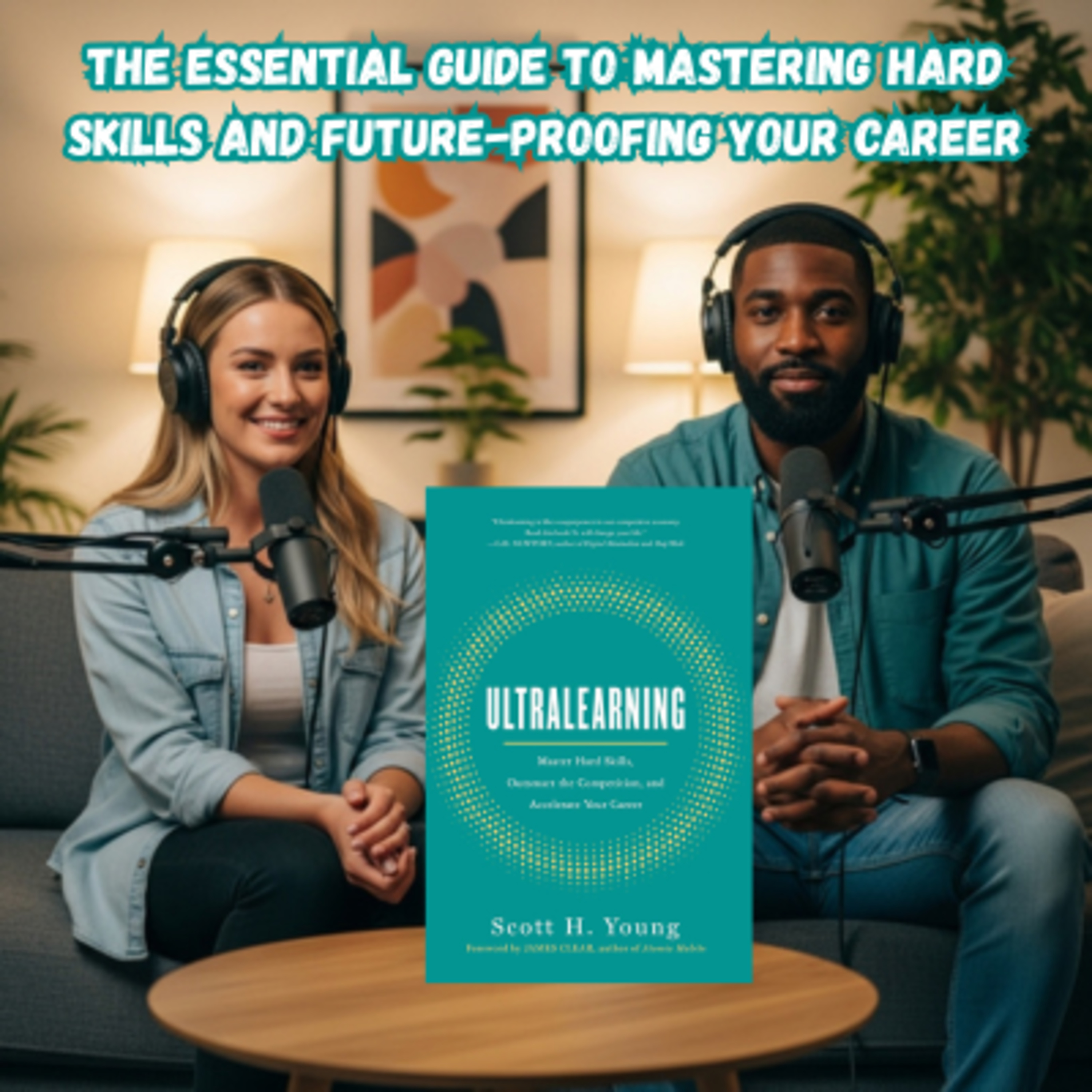
Learn a new talent, stay relevant, reinvent yourself, and adapt to whatever the workplace throws your way. Ultralearning offers nine principles to master hard skills quickly. This is the essential guide to future-proof your career and maximize your competitive advantage through self-education.
In these tumultuous times of economic and technological change, staying ahead depends on continual self-education—a lifelong mastery of fresh ideas, subjects, and skills. If you want to accomplish more and stand apart from everyone else, you need to become an ultralearner.
The challenge of learning new skills is that you think you already know how best to learn, as you did as a student, so you rerun old routines and old ways of solving problems. To counter that, Ultralearning offers powerful strategies to break you out of those mental ruts and introduces new training methods to help you push through to higher levels of retention.
Scott H. Young incorporates the latest research about the most effective learning methods and the stories of other ultralearners like himself—among them Benjamin Franklin, chess grandmaster Judit Polgár, and Nobel laureate physicist Richard Feynman, as well as a host of others, such as little-known modern polymath Nigel Richards, who won the French World Scrabble Championship—without knowing French.
Young documents the methods he and others have used to acquire knowledge and shows that, far from being an obscure skill limited to aggressive autodidacts, ultralearning is a powerful tool anyone can use to improve their career, studies, and life.
Ultralearning explores this fascinating subculture, shares a proven framework for a successful ultralearning project, and offers insights into how you can organize and exe - cute a plan to learn anything deeply and quickly, without teachers or budget-busting tuition costs.
Whether the goal is to be fluent in a language (or ten languages), earn the equivalent of a college degree in a fraction of the time, or master multiple tools to build a product or business from the ground up, the principles in Ultralearning will guide you to success.
OK, let's dive in. Imagine unlocking the ability to learn something new, maybe coding, drawing a new language. Not just over years, but like, surprisingly quickly. It sounds almost, well, almost too good to be true, right? Like a learning superpower. It really does have that feel, doesn't it? But the fascinating things Scott H Young explores in his book Ultra Learning is that it's not magic. Not at all. It's actually about applying incredibly focused, deliberate strategies. Exactly. And that's what this deep dive is all about.
We're pulling insights straight from a summary of Young's key lessons to figure out how you can learn smarter and, you know, faster. Think of this as getting the essential blueprint, maybe the core building blocks of this ultra fast learning idea, giving you those actionable strategies without you needing to read the whole book right now. Yeah, our goal is to extract the most powerful Nuggets, the real sort of shortcuts, I guess, to becoming well informed and skilled and just lay them out for you.
The big idea underpinning all of this, it's learning smarter, not necessarily just harder. It's about being strategic. That's really the core message, isn't it? It's not about skipping effort, no way, but about optimizing every bit of it to get, well, maximum results. And Young breaks this down into 8 powerful lessons. Or maybe we can call them the 8 pillars of Ultra Learning. The first one is metal learning. Metal learning, right? It's essentially the planning phase of your learning journey. It's figuring out how you're going to learn before you even really start.
The book uses a perfect analogy here. It's like planning a trip. You wouldn't just jump in the car without knowing where you're going or like the best route, would you? No, of course not. Metal learning is figuring out that learning map before you hit the road. And Young gives a fantastic example from his own experience when he set out to learn 4 languages in one year, which is just wild. Incredible. Right, his first step was in cracking open a grammar book he actually spent time researching. You know, useful phrases.
What tools were the most effective practical ways to actually practice speaking with native speakers? See that upfront research saved him tons of time later stopped him going down less effective paths. So for you listening this means before diving into that new skill, just take a moment, ask what exactly do I want to be able to do? The what? Why does mastering this matter? To me, the why? And based on maybe others experience or just your own intuition, what seems like the most effective way to actually get there?
That planning focuses your energy right from the get go. Which leads perfectly into the second pillar focus. Focus, the nemesis of our digital age, right young, is pretty clear here. Distractions are like the absolute enemy of learning quickly. To really speed up your learning, you absolutely need to educate deep undivided attention. Just focusing on that one task. His famous MIT challenge really drives this home. Learning a four year computer science degree in just 12 months. Wow. A huge part of how he pulled that off was by just ruthlessly cutting out distractions and setting aside focus blocks of time specifically for studying, nothing else.
It reminds me of that, that anecdote about Bill Gates and Warren Buffett. You know the one. Oh yeah, where they both apparently agreed the intense focus was like the number one key to their success. Exactly. It's a really powerful point. So for your learning, this means creating that distraction free zone, even if it's just for say 30 minutes. Set clear goals for that focus time and really give it your undivided attention. And the more you consciously practice this, the more your brain kind of adapts and honestly, it gets easier.
Makes sense. Yeah. OK. Moving on to principle #3 directness, or put simply, learning by doing, yes. This is where you sort of bypass maybe some of the unnecessary theory and just jump straight into practicing the skill the way you'll actually use it in the real world. The analogy that always sticks with me is learning to swim. You can read every book on swimming technique, every single one, but you won't actually learn until you get in the water and start paddling right? The fastest way to learn something is almost always to do the thing itself.
Think about Young's approach to public speaking instead of just reading books about it. For months he joined speaking clubs competitions, forcing himself to practice in front of actual live audiences. That real environment just accelerated his improvement dramatically. Which naturally brings us to the fourth pillar. Yeah, Drill, this is all about zeroing in on your weak points. This one can feel a bit uncomfortable I think maybe the most uncomfortable. It can, yeah. Youngs work really emphasizes that real growth doesn't come from doing more of what you're already good at.
It comes from confronting and fixing what you're bad at do. You have to identify your biggest areas of struggle, those bottlenecks, and create targeted practice specifically designed to improve those particular weaknesses. He gives the example of improving his drawing. He figured out that drawing eyes was his biggest weakness. So instead of just drawing full portraits all the time, he spent dedicated time just practicing drawing eyes over and over and over until that weakness started to become a strength.
That targeted drill boosted his overall skill much faster. O you need to ask yourself, what's the single thing holding you back in the skill you're learning right now? Find that weakness and create mini drills specifically to tackle it, even if it feels awkward or difficult at first. Pillar 5 is retrieval, basically testing yourself. This means actively pulling information out of your memory, not just passively rereading your notes or highlighting text. Which is what most of us do. Exactly. The key insight here is that the effort of retrieving information is what actually strengthens that memory trace in your brain.
It's the struggle that helps. Yeah, think about that classic example. The college student who aced her exams using flash cards, quizzing herself daily. She wasn't just rereading, she was forcing her brain to recall the answers. And that active recall is what made the knowledge stick. So how are you actively testing yourself? Could you try explaining a concept out loud, maybe to yourself or someone else? Use flash cards. Take practice quizzes. The harder your brain has to work to retrieve that information, the more likely it is to stick long term.
It's counterintuitive, but true. OK, number six, feedback. Feedback. It can sometimes sting a bit, let's be honest. Definitely. But Young's work makes it abundantly clear it's absolutely essential for rapid improvement. Honest Critique shines a light on exactly what's working and, maybe more importantly, what isn't. He talks about improving his writing significantly by sharing drafts with mentors and specifically asking for their critique. You know, asking the hard questions. It probably wasn't always easy to hear, but their insights pointed out blind spots helped him Polish his skills way faster than if he'd just worked in isolation.
So the take away is actively seek feedback, whether it's from a teacher, a mentor, even a peer, or hey, give yourself feedback. Record yourself practicing a presentation or code a small project and then review it critically as if you were someone else. Embracing feedback, even the tough stuff, really accelerates your. Growth makes total sense. OK, moving on to retention, that's pillar 7. This is all about making sure what you learn actually stays learned. It doesn't just disappear after a week. Right, because learning something once often just isn't enough for it to stick long term.
You need to revisit material over time strategically using techniques like spaced repetition. Young used spaced repetition a lot when he was learning languages instead of just cramming vocabulary lists. The usual way, yeah. He'd review vocabulary or grammar points at increasing intervals, maybe a day later than a few days than a week, and so on. This intentional revisiting kind of pushes the information from your short term into your long term memory. So for you, this means scheduling time to revisit key concepts or skills you've learned.
Don't just learn it and move on. Use space repetition software or just simply plan regular review sessions to really lock that knowledge in for the long haul. And finally, Pillar 8 experimentation. This one's about being willing to step outside your comfort zone, trying new methods, taking calculated risks in your learning process, not being afraid to sail a bit. Young really highlights that experimentation and, yeah, that willingness to maybe look a bit silly or fail are crucial for discovering what truly works for you and for becoming adaptable.
He talks about experimenting with different speed reading techniques. Some methods he found didn't work at all for him, but others significantly improved his ability to process information. It was through trying those different approaches that he refined his own learning process. So the message is, don't be afraid to try different ways of learning, even if they feel unfamiliar or maybe have been awkward at first. Young suggests framing any failure not as failure, but just as a natural part of discovering what works and what doesn't for you.
The more you experiment, the more flexible and ultimately effective you become as a learner. So if we kind of thread these 8 pillars together, metal learning, focus, directness, drill, retrieval, feedback, retention, and experimentation, what Young's work really shows is that fast, effective learning isn't some, you know, innate talent you're just born with. It's actually a set of skills. Skills you can develop by being deliberate about your plan, your attention and your practice. So how do you take these these really powerful ideas and actually weave them into your daily learning?
The great thing is you can start small, and the book summary gives us some practical steps. First off, start by planning your learning, at least for anything significant. What's the goal? Why does it matter? How will you actually tackle it? Even just a quick outline helps immensely. Then create that distraction free space for focus learning. Commit to a specific block of time, maybe just 30 minutes, to start and protect it fiercely. No phone, no e-mail. Critically important, start practicing in real world scenarios as early as you possibly can.
Don't wait until you feel perfectly ready. Because you never feel perfectly ready. Exactly. Just jump in and. Actively seek out your weak points, use those drilling techniques we talked about and ask for feedback. Don't shy away from what's hard, lean into it. Yeah, and test yourself constantly through active retrieval practice. Remember, don't just consume information, make your brain work to recall it. Make seeking feedback a regular habit from others or through honest self evaluation. Look at your work objectively.
And schedule time to revisit and review what you've learned. Use spaced repetition or just block out time in your calendar to make sure it sticks long term. And finally, embrace experimentation. Be open, be curious about trying new approaches and methods in your learning journey. By integrating these, you know seemingly small shifts into how you approach learning anything you can genuinely learn faster and see really significant improvements in your skills. It adds up. So to sort of wrap this deep dive up, ultra learning really empowers you.
It shows that rapid skill acquisition isn't some hidden secret. It's a result of combining smart planning, intense focus, and these deliberate practice techniques. It's really about optimizing how you invest your learning effort. It reinforces that incredibly encouraging idea that learning pretty much anything is within your reach if you apply these kinds of systematic principles. It's not magic, it's method. And the take away that resonates most, I think, as the source material concludes, anyone can do it.
It just takes dedication and the willingness to try. Yeah. Which leaves you with a really compelling question, doesn't it? What skill you're going to dedicate yourself to mastering next using these powerful principles?
 Apple Podcasts
 Castbox
 Castro
 Goodpods
 Moon FM
 Overcast
 Pocket Casts
 Podbean
 Podcast Addict
 Podcast Republic
 Spotify