The_Servant_Book_by_James _C_ Hunter | A Simple Story About the True Essence of Leadership \ Explained
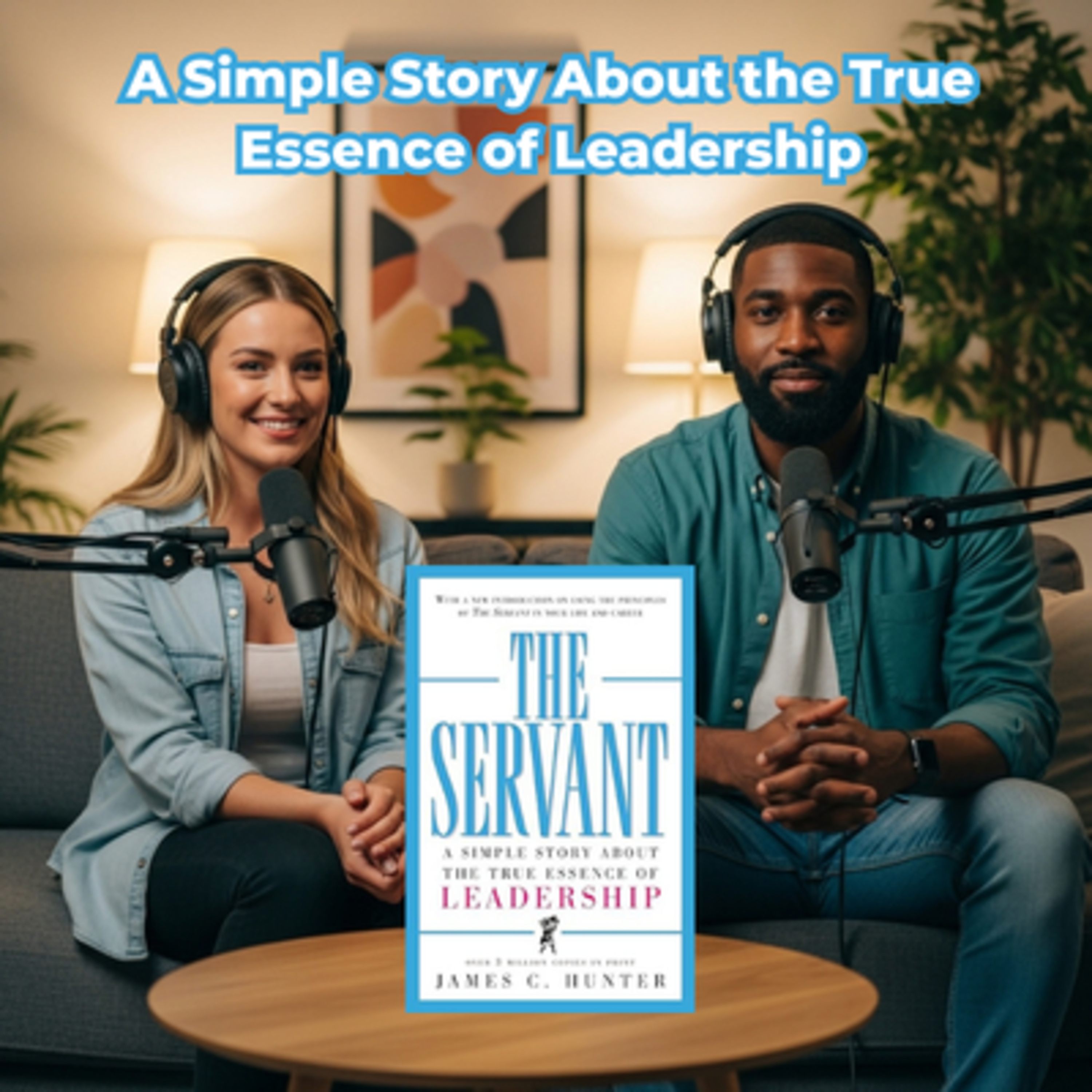
This episode summarizes James C. Hunter’s book, The Servant, which explores a leadership philosophy centered on altruism and support rather than traditional dominance. Through the story of a struggling businessman named John Daily, the narrative illustrates how moving from coercive power to earned authority can heal professional and personal relationships. The source defines leadership as an active choice and a continuous verb, requiring practitioners to prioritize the well-being and growth of their team members. By adopting an upside-down pyramid model, leaders foster a healthy environment built on trust, integrity, and mutual respect. Ultimately, the text argues that serving others leads to sustainable success and deep personal fulfillment for the leader. This overview encourages a shift in mindset toward empathy and sacrifice to inspire genuine loyalty from others.
With an introduction on using the principles of The Servant in your life and career, this book redefines what it means to be a leader.
In this absorbing tale, you watch the timeless principles of servant leadership unfold through the story of John Daily, a businessman whose outwardly successful life is spiraling out of control. He is failing miserably in each of his leadership roles as boss, husband, father, and coach. To get his life back on track, he reluctantly attends a weeklong leadership retreat at a remote Benedictine monastery.
To John's surprise, the monk leading the seminar is a former business executive and Wall Street legend. Taking John under his wing, the monk guides him to a realization that is simple yet profound: The true foundation of leadership is not power, but authority, which is built upon relationships, love, service, and sacrifice.
Along with John, you will learn that the principles in this book are neither new nor complex. They don't demand special talents; they are simply based on strengthening the bonds of respect, responsibility, and caring with the people around you. The Servant's message can be applied by anyone, anywhere—at home or at work.
If you are tired of books that lecture instead of teach; if you are searching for ways to improve your leadership skills; if you want to understand the timeless virtues that lead to lasting and meaningful success, then this book is one you cannot afford to miss.#productivityhacks #personaldevelopment #successstrategies #businessinsights #leadershipskills #leadership #ambitiousprofessionals #businesstips #self help #scaling business #businesstactics #professionaldevelopment #startupgrowth #entrepreneurship #businessmindset #growthstrategies
If you're in a leadership role, or you're just trying to figure out what makes a great leader tick, you know how hard it can be to find the core ideas without digging through a mountain of business books. You want the good stuff fast. Exactly. So today we're doing a deep dive into a book that tries to do just that, The Servant by James C Hunter. It's a simple story about the true essence of leadership. And it is a story, which is what makes it so different. Yeah, it's not some dry academic textbook.
It's a framework. But it's all wrapped in this, this narrative. So our mission today is to sort of strip away the story part as good as it is, and get right down to the nuts and bolts. The philosophy and more importantly, the actionable steps you can take to move from that old school command and control style to something, well, more influential. Absolutely, because Hunter's whole point is that so many of those traditional leadership just leave everyone feeling burnt out. The leaders feel isolated.
The teams are disengaged. And our listener needs that blueprint, the practical shift from just being a boss to, you know, being a leader who actually builds people up. So the book, it throws us right in, doesn't it? We meet this character, John Daly. Oh yeah. Right away and he's successful on paper, you know, great job, family, all of it. But his life is, and this is a quote spiraling out of control. He's great at work, but it's not translating anywhere else. He's using the same demanding power based approach at home and it's just it's failing miserably.
Which is what leads him to this kind of desperate move. He checks himself into a week long leadership retreat at a monastery of all places. And his guide there, a monk named Simeon, that's who introduces him to this big secret servant leadership. And the definition hits you right in chapter 1. It's not a softer, weak idea. Not at all. It's tough. It's about putting the needs of your people first. It means creating an environment where loyalty and respect are things you have to. Earn. They aren't just handed to you because you have the corner office.
Exactly. And that shift from demanding respect to earning it, that's, that's really the foundation for everything that follows. It's the whole difference between just having power over someone and having the authority that makes people want to follow you and. That leads us perfectly into what Hunter calls the old paradigm. He really dismantles it in Chapter 2. The old paradigm, it's all about the top down pyramid power control. It's the boss who you know, commands and just expects everyone to fall in line.
And it's designed to get compliant, sure. But what it really creates is fear, resentment. The team feels no ownership at all. It's just not sustainable, is it? It relies on the leader constantly pushing, constantly forcing things. Right the minute you step away, the whole thing grinds to a halt because there's no internal motivation driving the team. It's all coercion. But let's get into this key distinction he makes, because it's a huge vocabulary shift for anyone trying to lead power versus authority.
Yes. This is so important. Power is basically forcing people to do your will using your title. Well, authority is earning their respect, so they follow you willingly. They're inspired to, not forced to. Now here's the tricky part for you, the listener. What if you're a new manager or there's a crisis? You haven't had time to build that trust. How do you lead then? And the book doesn't say you just abandoned all structure. It's not about that. It's about changing your motive. Right. You might still have to give a tough urgent direction, but a servant leaders motive is to serve the team to clear the path for them.
Exactly. They aren't just barking orders to prove who's in charge. The old way focuses on what the employees have to do for the boss. And the new way flips that. It focuses on how the leader can support the employees so they can do their best work. The whole dynamics it changes completely. It's all about listening, empathizing, supporting. Which brings us perfectly to the core model from Chapter 3. This is where Simeon the Monk shows John Daly the upside down pyramid. And this visual is just it's central to the whole idea.
Normally you have the CEO at the pointy top and orders flow down. Hunter flips it completely. In his model, the leader is at the top of an inverted pyramid. So they're at the bottom really, and the people they serve, the customers, the team are at the broad base above them. So your job is structurally defined as supporting everyone else. You're literally the foundation holding everyone else up so they can succeed. But what fuels this whole thing? I mean, what makes it work? Hunter uses a pretty profound term here.
He does. He calls it love and service, specifically Agape Love. Now in a business setting that word agape, that can make people a little uncomfortable. For sure, but we need to define it carefully. It's not about, you know, emotion. It's a selfless, sacrificial love. It means putting the needs of others before your own. And right away leaders think, wait, am I supposed to sacrifice profits for every single employees needs? And that's the tension, Hunter is clear. It's not about financial martyrdom.
It's about prioritizing the long term growth of your people over your own ego or your own short term convenience. So you're sacrificing your need to be right or your desire for all the credit. Exactly. Or the comfort of just telling people what to do. You sacrifice that for the good of the team. That's a practical idea. It is. And from that core motivation, that agape motivation, you get the four pillars of servant leadership. These are the principles that turn the idea into action. This is the blueprint for the listener, so let's break them down.
They are respect, responsibility, caring and integrity. OK, let's start with respect. This isn't just about being polite, it's treating people like they are valuable. Period. So in practice, that's active listening, not interrupting, actually trying to understand where they're coming from, even if you don't agree. Right. And then you have responsibility. This is huge for trust. It means the leader owns the team's failures. They don't prone fingers. The first question is what did I fail to provide them?
Exactly. They take the blame, but they give away the credit. Then comes caring, which is a gay P in action. It's seeing your team as whole people, not just, you know, resources. Do you know what their goals are? Are you helping them grow? Do you care about their well-being and not just their output? That's what builds real loyalty. And finally, integrity. The bedrock and Hunter defines it as consistency. You have to walk the talk. If you say you value transparency, you have to be transparent even when the news is bad.
It's those small, consistent acts of integrity that make that whole upside down pyramid stable. It's how you earn the authority to lead. Which is why Chapter 4 is so brilliantly titled The Verb. Because this isn't something you are, it's something you do. It's a constant active process. That's the key. So many people like the idea of certain leadership, but they don't do the work. It's about active listening, empathizing, and being truly committed to your team's growth. Let's talk about that listening piece, Hunter says.
It has to be deep, focused, listening, not just waiting for your turn to talk. And empathy isn't just understanding their words, it's understanding the feeling behind the words. That's often where the real messages. And the commitment to growth has to be real. Are you clearing roadblocks for them? Are you investing in their skills, even if it means they might outgrow their role? Right, and you have to play the long game. Trust is built through consistent actions over time. You can't just do it once and expect everything to change.
That consistency is what separates the real thing from just, you know, empty management buzzwords. That's what turns a nice idea into the actual culture of the team. So that brings us to the environment this all creates. Chapter 5 is called the Environment and it's about the leaders main job being cultivation. Yes, cultivation. Like a gardener. The servant leaders job is to create a space where people feel safe, valued and motivated. And that word safe is so important. We're talking about psychological safety.
The. Feeling that you can take a risk or admit a mistake, or even give your boss honest feedback without fear of being punished. That is the engine of innovation. Every company wants it, but very few actually build it. And it's built directly from the leaders. Consistency and integrity. Those pillars in action. You have to explicitly show people you value them. How do you do that? What are some concrete examples? Well beyond just listening. It's acknowledging their contributions publicly. It's treating them with kindness, even during a tough performance review.
It's giving them the tools and the mentorship they need to grow. It sounds like the servant leader spends less time telling people what to do and more time equipping them and shielding them. Exactly. Shielding them from bureaucracy or corporate nonsense so they can just focus on doing great work. This all leads up to Chapter 6. The choice. The idea that leadership isn't a title you get, it's a choice you make moment by moment. The actions have to be intentional. John Daly learned that his title of boss meant nothing for his failing marriage or his unhappy team.
He had to consciously choose to act differently to serve them, even when it felt totally unnatural at first. And again, responsibility is key here, taking responsibility for those choices and their outcomes. We talked about consistency, but it's consistency in making that choice. Yes. When you consistently choose integrity, empathy and service, you slowly but surely earn that respect and loyalty. You move from demanding obedience to inspiring followership. And that creates this powerful feedback loop.
The right choices lead to consistent actions, which builds trust. And that trust is what gives you real authority. Which brings us to the final part, Chapter 7. The payoff. After John Daly puts in all this hard work, sacrificing his ego, living the pillars, making those choices, he starts to see huge changes. Everywhere, right at work and at home. Everywhere the transformative power becomes clear. By focusing on serving others, he creates this environment of growth and trust, and that leads directly to Better Business results.
The team is suddenly invested. They aren't just punching the clock. And, Hunter points out, the payoff is twofold. It's not just sustainable business success, it's personal fulfillment. He actually finds joy in helping other people succeed. It fixes the very thing that sent him to the monastery in the first place. It's the big paradox. By focusing on others, the leader actually gains more more loyalty, more impact, and, you know, more personal happiness. The focus shifts from just transactions to actual transformation.
So to recap this whole deep dive, we've moved from that old paradigm of power and control. To a new paradigm built on this idea of sacrificial agape love, which is supported by the four pillars Respect, responsibility, Caring and integrity. And it's not a state of being, it's a constant verb, an intentional action to lead with empathy and a commitment to serve. It's a reminder that leadership isn't something you are, it's something you do. The success that follows is just the natural result of putting your people first.
OK, so here's the thought we want to leave you with. It builds on that core tension we talked about earlier. Right. If servant leadership really depends on this idea of selfless sacrificial love, what do you do when 2 critical needs are in direct conflict? For example, your best employee is going through a personal tragedy and desperately needs time off, but your entire quarterly target depends on them being there to finish a project. Or to put an even finer point on it, when the cost of that ethical sacrifice feels truly unsustainable in a cut through results driven business world, where do you draw the line?
Where does serving the employee end and serving your duty to the organization begin? That's the complex reality that you, the listener, have to navigate as you try to apply these principles. And that's something to reflect on as you decide what choice you'll make in your very next leadership action.
 Apple Podcasts
 Castbox
 Castro
 Goodpods
 Moon FM
 Overcast
 Pocket Casts
 Podbean
 Podcast Addict
 Podcast Republic
 Spotify