Show Your Work! by Austin Kleon | 10 Ways to Share Your Creativity and Get Discovered
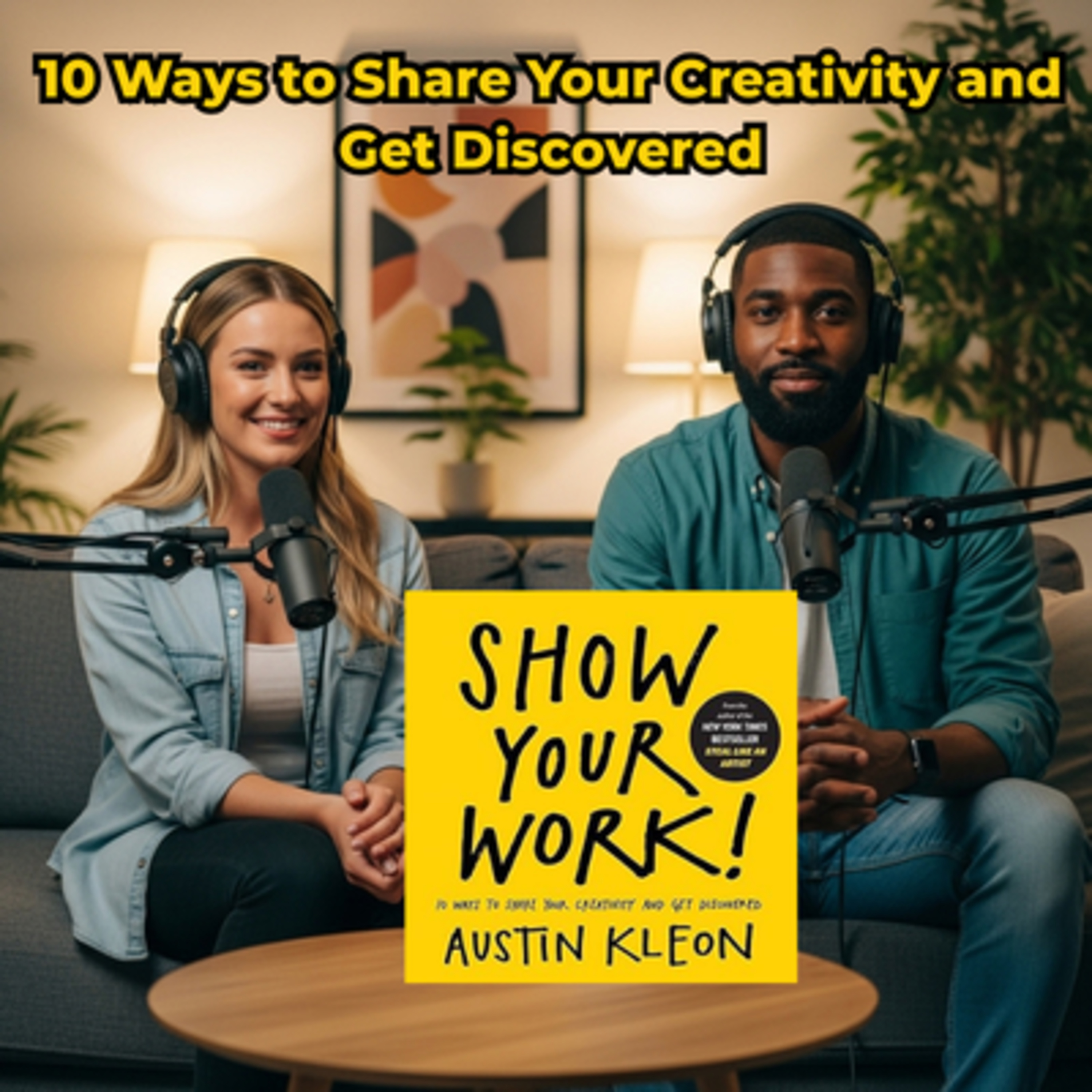
This text outlines Austin Kleon’s philosophy on building a creative career by sharing the journey rather than waiting for a finished masterpiece. It suggests that individuals should embrace the role of the amateur, documenting their daily progress and "small wins" to build a genuine connection with an audience. By teaching others and revealing their "cabinet of curiosities," creators can establish transparency and trust while learning to handle criticism with resilience. The summary also highlights the importance of monetising work ethically to sustain long-term creativity and the necessity of persistence over time. Ultimately, the source serves as a practical guide for artists and writers to step out of isolation and let their creative process be seen by the world.
#productivityhacks #personaldevelopment #successstrategies #businessinsights #leadershipskills #leadership #ambitiousprofessionals #businesstips #self help #scaling business #businesstactics #professionaldevelopment #startupgrowth #entrepreneurship #businessmindset #growthstrategies
Welcome to the Deep Dive. Today we are getting into something that I think every creator, every artist, anyone making anything really struggles with. And that's the big question, when do you actually show people what you're working on? Do you keep it locked away until it's perfect or or do you show the messy behind the scenes stuff? And most of us, we're taught to hide it. We wait for that. You know, that big reveal, the final polished product. But our deep dive today is all about Austin Cleon's show Your Work.
Yeah. And his philosophy basically argues that hiding your work is the very thing that holds you back. It's such a paradox, isn't it? He says. The secret isn't necessarily making better work, but getting better at showing the process behind the work. Exactly. So our mission today is to pull out the 10 really actionable steps from his book that can turn creating something from this like lonely scary thing into a conversation. Yeah, it's a total mindset shift. This isn't about marketing in the traditional sense.
It's about treating your work in progress as a kind of public resource. We're going to walk through the whole road map from mindset to, you know, actually making a living from it. OK, let's do it. Let's unpack this. And I think we have to start with the biggest mental hurdle for pretty much everyone, which is getting over that pressure to be a genius. Yes. Kleon just hits his head on the first idea is you don't have to be a genius. It's all about dismantling that myth that only, like the established masters, have anything worth sharing.
Or that you need some kind of rare innate talent? Right. The big breakthrough here is realizing that the process, the learning, the failures, the tiny wins. That's so much more relatable than some perfect finished product. Which means you can start right now. You're not waiting for permission or for perfection. And the book really pushes this idea of embracing being an amateur, which for a lot of people that sounds like an insult. It's not at all. Being an amateur just means you're doing it for the love of it.
You're passionate, you're curious, and you're learning out loud. You're not pretending you have all the answers. Exactly. You're sharing the questions, you should be sharing your work in progress, the struggles, the breakthroughs. People love seeing how the sausage gets made. They don't just want to see the statue, they want to see the dust and the scaffolding. OK, but let me push back on that a little bit. If you're sharing everything, your influences, the books you're reading, the techniques you're figuring out, aren't you just, I don't know, giving competitors a road map to copy you?
That's a super common fear, but Cleon argues the complete opposite. What you're really sharing is your unique taste, your creative lineage. When you credit your influences, you're not just giving them a shout out. You're showing people how your brain connects the dots. The combination of your influences is totally unique to you. It's like a fingerprint. Someone can copy a step, but they can't copy your reason why. That makes a lot of sense, and it feeds right into the next big idea, which is think process, not product.
The messy part is actually the most valuable content. It is. The Polish thing is for the sale maybe, but the messy journey is for the connection. Cleon's advice is to become a documentarian of your own work. What does that look like practically? It can be super simple, taking a quick photo of your desk, writing a few notes when you finally fix a bug in your code recording like a 32nd video of a design you're working on. So it's not just a vanity thing. This documentation has a real strategic purpose right beyond just building an audience.
Oh, absolutely. It builds a huge amount of trust because you're being transparent. But here's the selfish benefit. It forces you to self reflect. When you document a challenge, you're creating an archive of your own solutions. So six months from now, when you hit that same wall, you don't just remember the frustration, you have the answer you already found. It's efficiency you gain through being a little bit vulnerable. I love that framing vulnerability leading to efficiency. So OK, we've accepted we need to document the process.
How do we keep it going? That leads us to momentum and consistency. Clayon has a whole charter on this. Share something small every day. This is like the engine room of the whole philosophy. Yeah, O often we wait until we have a huge finished roject to show. Yeah, the big reveal. And he says do the opposite. Share one tiny piece of progress, one idea, 1 little win every day. And the benefits? They really stack up fast. One, it just builds the habit, right? It forces you to be consistent. 2 It keeps you connected with your audience so they feel like they're on the journey with you.
And three, and this is probably the most important part for the creator, it gives you early feedback. If you share one small piece of a project, you can kind of test the waters. Getting a little bit of encouragement or even criticism before you sunk 100 hours into the wrong path is it's priceless. It's microfeedback that prevents A macro failure. But doesn't that become a grind? Sharing something every single day? Doesn't that just lead to burnout? That's the crucial distinction. He's talking about a sustainable habit, not creating some massive thing everyday.
Sharing a link to an article that inspired you. That counts. Sharing a single photo of a sketch that counts. It just teaches you to look for the shareable moment in your day instead of forcing yourself to roduce something big. It's about being a filter, not a factory. A filter, not a factory. I like that. So once you're in that groove of sharing, you get to do something really fun. Which he calls opening up your cabinet of curiosities. Yeah. This is where you get permission to just show people how your mind works.
Not just the final painting, but the whole landscape of your brain. So sharing the weird books you read, the strange music you listen to. The bizarre historical fact that sparked an idea. Exactly. If people understand the weird mix of things that inspire you, they get your work on a much deeper level. It stops being about what they make and start thinking about who is this person and why. You're giving them the reading list for your soul. Precisely. And that again, it goes back to that documentarian approach, capturing the why, not just the what.
That kind of transparency is, I think, the most valuable currency there is in the creative world today. OK, so moving from that kind of random curiosity into something more structured that requires A narrative, and that brings us to telling good stories. Right, because storytelling is what makes anything memorable. It turns a list of facts or steps into something that connects emotionally. Even the most technical project needs a story. And the classic structure still works, a clear beginning, middle and end.
The beginning is the problem or the challenge you set for yourself. The middle is the journey, the setbacks, the struggles, and the end is the outcome, the solution you found. But the key ingredient, the one you cannot skip, is authenticity. Be honest about the failures. You have to be perfect. Smooth journeys are just boring. Vulnerability is what makes people pay attention. You can use simple language, you can use visuals, but the story underneath has to be emotionally true. And that idea of being generous with your struggles, that flows right into the next step.
Teach what you know. Cleon is adamant that this isn't just for experts. It's such a vital point. So many people think oh I can't teach, I'm not an expert but honestly the best teacher is often the person who's just like 3 steps ahead of you. Because I still remember what it was like to be confused. Yes, the struggle is fresh in their memory. If you just figured out a really complex piece of software, you're in the perfect position to teach it. The benefits there are huge. You help other people, obviously, but when you structure your knowledge to teach it, like in a blog post or a tutorial, it forces you to understand it on a deeper level.
It solidifies it for you. And it establishes you as a resource people can trust. The book specifically says to embrace that beginner's mind when you teach make the how to guy that you wish you'd had. Being generous with your knowledge is a massive form of creating value, and value is what sustains you. Which is a perfect transition because being generous and sharing opens you up to the the harder side of all this, the practical realities of making it work. Long term promotion, criticism, money. Yeah, if you show your work, eventually you have to promote it.
But the goal is to not become, as he puts it, human spam. Right, the tightrope walk. You have to get the word out, but without being pushy or annoying. Where's that line between promotion and spam? Kleon says spam is just relentlessly demanding attention for your own gain. The key is to be genuine. Shift the focus from look at me to look at this valuable thing I found or made or learned. So share what you love, not just what you sell. Yes. Share other people's work. Share a useful tool, share an insight.
It's about shifting from buy my thing to Here is something that might help you. Actionable advice there is to avoid just, you know, constant low quality updates. Focus on quality and actually engage with people, respond to comments, offer advice. You're building connections by offering value. And when you offer that value, you invite feedback. And inevitably, some of that feedback is going to sting. Which brings us to what might be the hardest part of all of this psychologically. Learn to take a punch.
This is where resilience really gets built. You put your vulnerable work out into the world and some people are going to hate it or misunderstand it or just be mean. Yeah, and Klingon's take is that you have to adopt A growth mindset. You have to learn to embrace feedback because not all of it is bad. Some of it is exactly what you need to hear to get better. The core technique here seems to be creating a mental separation. You are not your work. A criticism of your project is not a criticism of you as a human being, which is so hard for creatives to do.
It's incredibly hard because the work feels so personal, but he offers 2 practical ways to build that thick skin. First, share more often. How's that help? Because it lowers the stakes for any single piece. If you only share once a month, one nasty comment can feel devastating. But you share daily. That comment gets buried under tomorrow's engagement. OK, I get that. What's the second one? Learn to tell the difference between a troll who's just being malicious and a real critic who might be harsh but is actually trying to help you improve.
But the best response to both is actually the same, which is keep creating and keep sharing. And to keep creating, you often need resources. You need time. Which brings us to that really uncomfortable topic for a lot of artists. Sell out. Yeah, Kleon is very pragmatic about this. He basically says making money from your creative work isn't selling out, it's what's necessary to allow you to keep creating. It's buying yourself time. It's. Buying yourself time. Exactly. If you're not getting paid for your passion, you have to get another job to pay the bills, and that job steals time and energy from your real work.
Getting compensated is just a validation of the value you're providing. So the focus has to be on creating that genuine value. People will pay for work that's mean carry them and the financial strategy. Diversify. Don't put all your eggs in one basket. Sell products, offer services, teach workshops, use things like crowdfunding. You've built this audience that trusts you. Don't be afraid to ask for their support. They want to see you succeed. And all of those nine steps, really, from embracing being an amateur to learning how to make money, they all build up to the final and maybe most important chapter.
Stick around. Persistence is the secret ingredient. It's the one thing you can't skip, this whole creative journey. It's not a Sprint to go viral, it's a marathon. A marathon of sustained effort. You need that consistency we talked about to build the audience. You need the resilience to handle the punches. And you need a financial plan to buy yourself the time to do the work. It's about just showing up every day, even when it's slow, and being open to the fact that the work will change and you'll change.
Celebrating the small wins to keep yourself going. That is what leads to a successful creative career in the long run. So we've gone through all 10 of Cleon's steps and what they show, I think, is that success isn't about some stroke of genius. It's about being consistently, authentically vulnerable and sharing the whole journey. You have the road map now to start doing this with your own work, no matter what it is. Yeah, we talked about building that financial runway so you can afford to stick around, and we spent a lot of time on the mental side of it, developing a thick skin.
And that link, the one between persistence and handling feedback, it raises a final thought for you to consider. If the key to sticking around is resilience, and resilience is built by taking punches over and over again, does that mean the simple act of sharing something small every day is actually the ultimate training exercise for building that thick skin you need for the marathon? The more you share, the less any single punch hurts. Think about that daily share not just as building an audience, but as resilience training.
Keep creating, keep sharing, and keep learning.
 Apple Podcasts
 Castbox
 Castro
 Goodpods
 Moon FM
 Overcast
 Pocket Casts
 Podbean
 Podcast Addict
 Podcast Republic
 Spotify