The_Making_of_a_Manager_Blueprint by Julie Zhuo
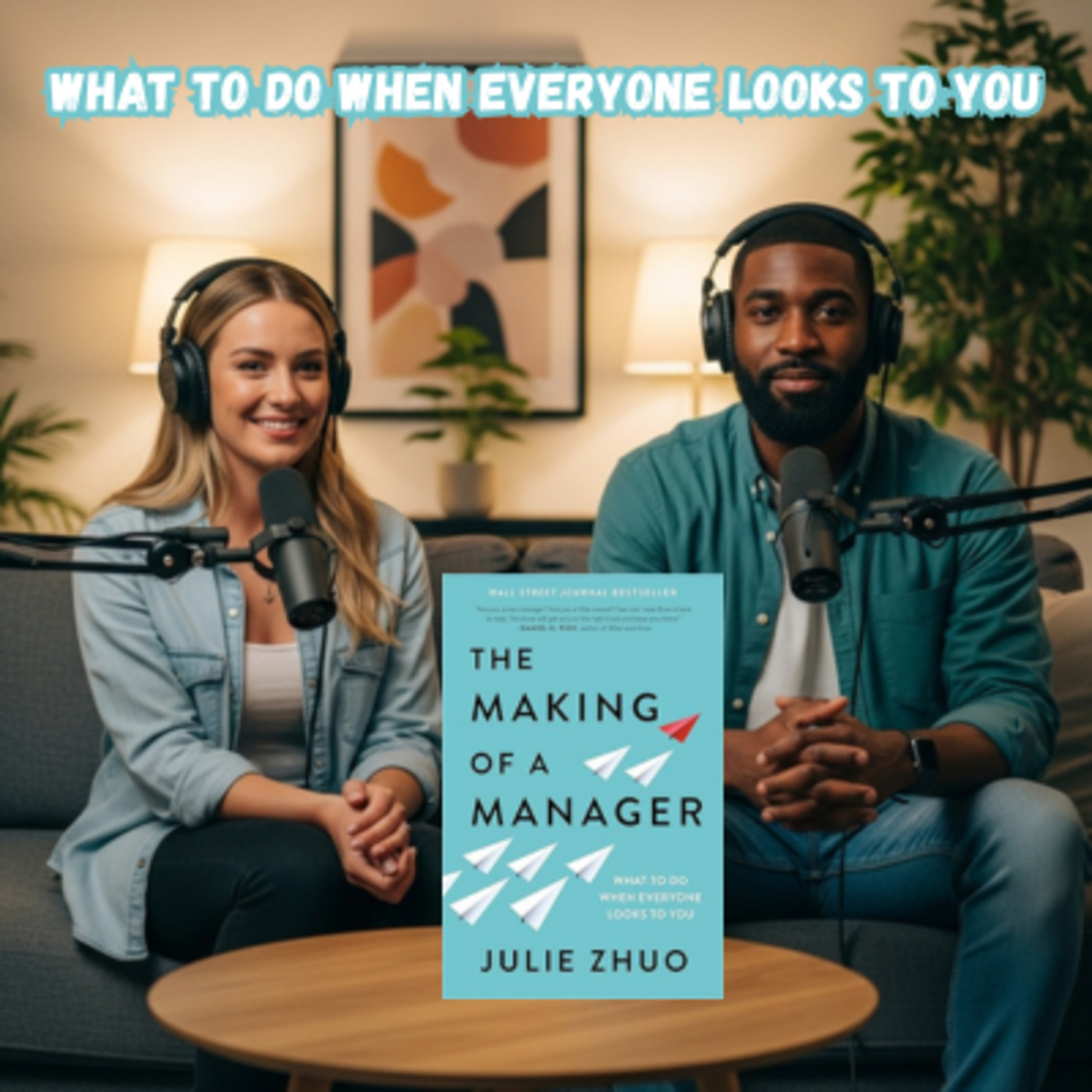
This Episode outlines the core principles of Julie Zhuo's book, The Making of a Manager, which serves as a comprehensive guide for both new and experienced leaders. The chapters explore the transition into management by redefining the role as a supportive function rather than a position of mere command. Key themes include the importance of building trust during the first ninety days, mastering the art of feedback, and the necessity of disciplined self-management. The source also offers practical strategies for hiring diverse talent, facilitating productive meetings, and maintaining a positive team culture during periods of growth. Ultimately, the guide asserts that leadership is a developed skill rooted in empathy, clear communication, and the empowerment of others to achieve collective success.
#productivityhacks #personaldevelopment #successstrategies #businessinsights #leadershipskills #leadership #ambitiousprofessionals #businesstips #self help #scaling business #businesstactics #professionaldevelopment #startupgrowth #entrepreneurship #businessmindset #growthstrategies
Stepping into a management role, I mean, it's one of the most exciting, terrifying and just profoundly challenging jumps you can make in your career. Oh. Absolutely. That shift from being a high performer yourself to suddenly being the person who has to enable others to perform, it's huge. It's a total identity crisis for a lot of. People and if you've ever sat down and just thought OK what is my job now? What exactly do I do first then? This deep dive is recisely for you. Our mission today is really to give you a shortcut, a blueprint almost, for mastering those essential leadership skills.
Hmm. We've gone deep into Julie Zuo's guide, The Making of a Manager. And we've tried to pull out the most actionable wisdom from it. Exactly. I mean, Zuo's experience is incredible. She went from an intern to AVP of design at Facebook. And her big take away is so reassuring. It really is. She basically argues that good management isn't some, you know, innate quality you're either born with or not. Right, it's a craft. It's a set of skills you can actually develop. Things like communication, empathy, decision making.
It's learnable. And that's really where we have to start. We have to read define what the role even is. I think most people assume a manager is just a person who tells other people what to do. Like a boss in a comic strip? Yeah. Exactly. But Zillow corrects that right away. She says management is about enabling others to achieve their best work toward a common goal. It's a fundamental change in how you think about your own output. Your success is no longer about your keyboard clicks or your projects.
No, your output is the collective success of your entire team. And that's a huge mental pivot. It is, and that's why that initial hurdle feels so overwhelming. Zoo is really open about that feeling of, you know, a profound uncertainty that new managers face. So what's her advice? Just push through it. More like embrace it. You aren't expected to be perfect. The expectation is that you lean on mentorship, you seek out training, and you realize you're learning this thing on the job. So that willingness to be a little uncertain, to actively ask for help, that's actually the first skill you have to master.
It is. It sets the whole tone. OK, so let's unpack this blueprint. We're calling our first section Laying the Foundation. Zuo spends a lot of time on your first three months. She does. She says it's like laying the concrete slab for a massive building. And if that foundation is weak? Everything built on top of it is going to crumble eventually. So those first 90 days are not about coming in and, you know, shaking things up to prove yourself. Not at all. It's about data collection and relationship building.
The key actions are really about observing and learning, understanding the team dynamics, the processes, the pain points. But that observation isn't passive, right? You're not just a family on on the wall. How do you actively build trust in that really fragile period? It's all about the one on ones. They are non negotiable. And you're not just talking about status updates. No, you're finding out what people aspire to, what their frustrations are, how they even define success for themselves. By really listening, you earn the right to set expectations later.
Precisely. And those expectations have to be crystal clear, Zua says. You need clarity on three things. What the team is doing, how they're doing it and how they should behave. The culture. That clarity prevents so much misalignment down the road. But what I love about this chapter is that she insists the manager has to look in Word too. Yes. It's not just about giving direction. The manager has to actively seek feedback on their own performance, especially in those first three months. Because it immediately shows the communication is to two way St. It shows vulnerability.
If you as the leader can take constructive criticism, your team is going to be so much more open to getting it from you. It just accelerates the learning for everyone. So foundation set, now we can move to leading a small team. This is for managers who often get promoted from within, right? Yeah, it's a really unique environment. The big difference is just the proximity. You're probably still very hands on and the communication has to be almost constant. But there's a pitfall there, isn't there?
Cheating the team like a family, which can get messy. It can. So the strategy has to be about deep individual insight. You have to know each person's strengths, weaknesses, and goals so well that you can assign tasks that are developmental, not just, you know, operational. That sounds great in theory, but when you're already hands on and juggling your own work, that sounds draining. It is, but it's the high leverage work in a small team. A single point of failure or a single star performer has this outsized impact.
So leading by example, building those connections, it's paramount. It is, and the benefit is speed. A small team is perfect for brainstorming, for quick collaboration. You see, the wins happen almost instantly. And celebrating those wins together reinforces that collective goal. OK, that takes us perfectly into our second section, the core managerial execution skills, right? So you have the trust of your team. Now how do you actually move the needle forward? This means mastering the art of feedback, the tough conversations.
Absolutely. If trust is the foundation, feedback is the engine. It's the compass guiding us toward improvement. As you said, Chapter 4 gives a really strict formula for it. Yeah, let's pull that apart because I think most managers just jump to the constructive part, which just means criticism, and they deliver it like 2 weeks too late. Right. So first, it has to be timely. That means immediately or at least within 24 hours, OK. Second specific. So you don't say improve your communication, you say In that meeting when you interrupted Sarah twice, the team lost the thread of the discussion.
So it's about behavior, not personality. Exactly and constructive must always be paired with open. It has to be a dialogue that balances praise with suggestions for growth so the person feels empowered, not attacked. The big insight here is that managers avoid this because they dread it. But Zua says that avoidance is just a disservice to your team. It is when you do it right. Feedback is a gift. It helps people grow. And you can't really give open consider feedback if you're personally a mess. You can't.
Which is why managing yourself comes right before all the other execution skills. Right, so if I'm a new manager, what are the three big pillars of self management I need to focus on 1st? It starts with the hardest one, taking responsibility for your mistakes. You have to own them, learn from them, and tell your team how you're going to fix it. You're modeling accountability totally. 2nd is prioritizing your time efficiently so you're not just firefighting all day, you're connecting daily tasks to long term goals.
And 3rd is self reflection. Which you actually have to schedule. You do. You can't be an afterthought. Where did I succeed this week? Where did I fail? What's the one thing I need to change? You have to be your own chief debugger. I like that once you've debugged yourself, you can tackle the biggest collective time sync meetings. Ah. Yes, the existential dread of the pointless meeting. Chapter 6 is called Amazing Meetings, which feels like an oxymoron. So how does she actually propose to fix this universal problem?
It's all about planning and facilitation. Step 1 is just invite fewer people, only the necessary ones. Keep the invite brief and focused. So from the moment I open that calendar invite, I should know exactly what we're deciding. Exactly. A clear objective, A timed agenda. But the real skill is in the facilitation. You have to manage time ruthlessly, address conflicts. If one person is dominating, you have to politely but firmly bring others into the conversation. So you can't be a passive note taker, you have to be a conductor.
You absolutely have to be and then and this is the part everyone skips the follow. Up the accountability piece. Yes, a clear summary of decisions and most importantly, the specific action items assigned to each person. Without that, a discussion is just a discussion. It's not progress. That's a perfect segue into Section 3, which is all about scaling time, talent, and, well, scaling. So let's talk about time management. How do we handle just the sheer volume of stuff that comes with leadership? The managers plate is always overflowing.
Zua strategies are about focusing on high leverage activities. You have to prioritize using that classic, urgent important matrix. But with A twist. Right, she says. You have to consciously carve out time for managerial work like one on ones and strategy and separate it from the operational work like emails and reports. Because the operational stuff will just swallow your entire day if you let it. It will. To fight that, you have to delegate. And delegation isn't just dumping work, it's a developmental tool.
You assign a task as a stretch opportunity. And you have to set boundaries. Protect your own focus. Yes, time blocking for deep work, turning off notifications. You have to schedule your strategy time or it just will not happen. And that efficient time management gives you the space to do maybe the most important job a manager has, hiring well. Absolutely. Hiring is the ultimate form of leverage. You can be the most organized manager ever, but with the wrong people on the team, you're just stuck.
You're just spinning your wheels, Zeus says. You have to invest serious time upfront defining the role criteria. Not just the technical skills, but the soft skills too. Collaboration, resilience, that sort of thing. But bias is such a huge risk in hiring. How does her system help with that? Through highly structured interviews, this means you ask every candidate the same core questions, you score them objectively, and you have a diverse group of interviewers. That helps mitigate those unconscious biases.
It does, and she emphasizes that you're not just looking for a cultural fit, you're looking for a cultural ad. I like that distinction. Cultural ad. It's about bringing in diverse perspectives because those different viewpoints or what lead to more innovation and better decisions. You're not just filling a FLOT, you're strengthening the entire team. So you've hired well, the team is doing great, and now it's growing fast. That takes us to the chaos of leading a growing team. What changes when you go from that small intimate group to multiple sub teams?
Your role has to change. You go from being a hands on coach to being more of an architect, a systems designer. So you. Have to be way more adaptable. Deeply adaptable. The main thing is you have to delegate more and not just tasks but real decision making authority. That is so hard for most managers, especially if they were promoted for being the best individual performer, releasing control over quality. Yeah, it's tough. It is so you mitigate that risk by focusing on systems, not just individual outputs.
You spend your time documenting processes, writing clear mission statements, making sure everyone understands the why behind the work. You go from giving the answers to providing the framework for the team to find their own answers. Exactly. And while you're delegating more, you have to fight to maintain that crystal clear communication, which just gets exponentially harder as you grow. It sounds like a constant battle against organizational fragmentation. It is so you focus on encouraging teamwork across the subgroups and actively bringing in diverse perspectives.
You're building levers, not just pushing buttons anymore. Which brings us to the ultimate conclusion of this whole blueprint nurturing culture. This isn't really a separate task, is it? It's the result of everything we've just talked about. It's the compounding interest, Yeah, culture isn't what's written on a poster on the wall. It's lived out through what managers do everyday. So you have to set a positive tone. Lead by example. You have to model the values you want to see. If you preach work life balance, but you're sending emails at midnight, the team hears the e-mail, not the sermon.
And that open dialogue, we talked about owning your mistakes, asking for feedback. That's the core currency of the culture. Absolutely, and beyond that, you have to acknowledge and celebrate achievements publicly that strategically reinforces the behaviors you want more of. And on the flip side, you have to address issues promptly. When conflict happens or performance dips, silence is acceptance. You have to step in. The ultimate goal here is true empowerment, creating an environment where every single person feels valued, respected and motivated to do their best work.
Because they know their success is tied directly to the manager's success. The manager is the chief architect of that whole system. Zua's work just simplifies what feels like this daunting challenge. She makes it clear that management is a skill set you can grow into. It's about building a better system, brick by brick. So what does this all mean for you? As you're looking at your own leadership path, it really seems like success hinges on just a handful of high leverage actions applied with consistency over time.
And that takes us to our final thought for you to consider. Zuo emphasizes that management is about helping others accomplish common goals. But if your team is scaling quickly, going from small to large, which foundational skill do you think is most critical to protect first? Clear communication or purposeful delegation? 1 Let's information flow. The other let's work move. Which one breaks first under pressure? Something to think about as you alley these ideas to your own journey.
 Apple Podcasts
 Castbox
 Castro
 Goodpods
 Moon FM
 Overcast
 Pocket Casts
 Podbean
 Podcast Addict
 Podcast Republic
 Spotify