The Six Disciplines of Breakthrough Learning: How to Turn Training and Development into Business Results
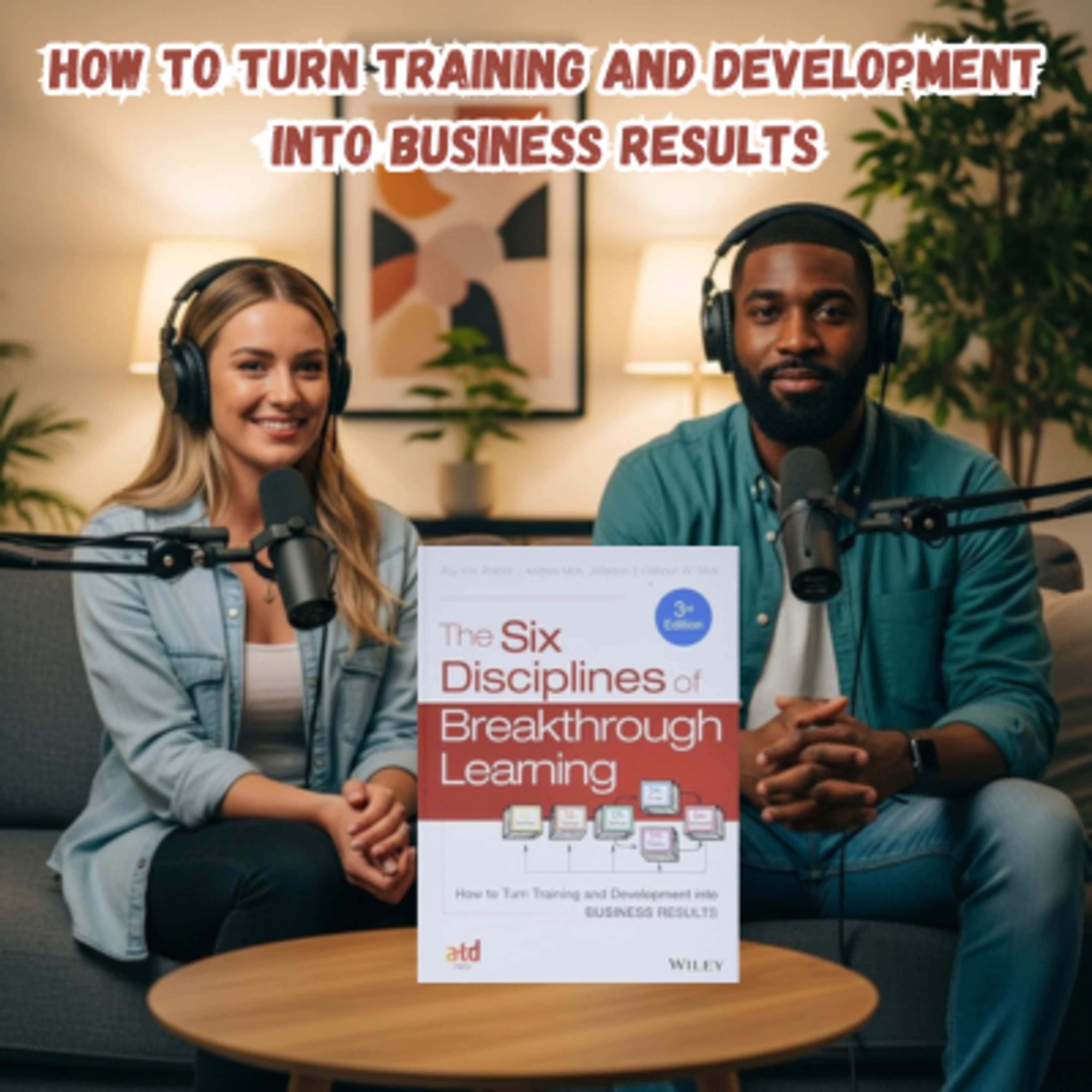
Training should create transformation—not just attendance. In The Six Disciplines of Breakthrough Learning, Roy Pollock, Andrew Jefferson, and Calhoun Wick reveal how to turn learning programs into measurable business impact. This globally recognized guide bridges the gap between classroom instruction and real-world performance, helping organizations link every learning initiative directly to results.
In this episode, we explore the six disciplines that make the difference between wasted training budgets and breakthrough success: from defining outcomes that matter to ensuring follow-through and accountability. You’ll learn how to design programs that stick, measure ROI effectively, and embed continuous learning into workplace culture.
Because the real goal isn’t training—it’s transformation.
If this episode reshaped how you think about corporate learning, follow BookTunez for more insights that bridge leadership, performance, and growth. 🎧
Share this with a learning professional, HR leader, or business executive who’s ready to connect training to tangible impact.
Because great learning doesn’t end in the classroom—it starts there.
#SixDisciplinesOfBreakthroughLearning #RoyPollock #AndrewJefferson #CalhounWick #BookTunez #CorporateTraining #LearningAndDevelopment #ROIinLearning #TalentDevelopment #ContinuousLearning #LeadershipDevelopment #BusinessResults
Ever feel like you just can't make information stick? Like you go to a training and read a book and it's also fascinating, but then poof, it's gone. Happens to the best of us. I think we've all been there for sure, but today we are diving deep into a book that promises to change all that. Oh, I like it. The six disciplines of breakthrough learning. OK. By Pollock, Jefferson and WEC. Sounds promising. We're going to unpack their framework for not just learning, but actually applying knowledge in the real world.
That's the key. Which I know is something our listeners are all. About Absolutely. One of the things I found most interesting about this book, yeah, is that it goes beyond traditional learning models. It really digs into the psychology behind how we retain and apply information, offering a more holistic approach. So we're not just glossing over the surface, we are going deep. Deep dive. I'm ready. Let's do it. Where do we even begin with this breakthrough learning experience? Well, think of it this way, OK?
Imagine you're investing in training for your team. You want to make sure it delivers tangible results, right? Of course, you'd want to see some return on that investment. Exactly, and that's where the first discipline comes in. OK. Ensure that training matches business goals. So it's not just about learning for learning sake. Right, it has to be tied to a specific, measurable outcome. That makes a lot of sense. I've definitely been to those training sessions that felt interesting but didn't actually change how it worked.
We've all been there. So how do we make sure we're not just ticking a box, but actually driving results? That's where Discipline 2 comes into play. OK, education is not an event but a process. I like that. Tell me more about this. Learning is a process idea. Well, think about how our brains actually work, OK? We forget things over time. That's true, especially if I don't use it. Exactly, And that's where the forgetting curve comes in. Oh yeah, I've heard of that. So to combat this, learning needs to be nurtured before, during and after the training.
So it's like planting a seed? Yes, You can't just throw it in the ground and hope for the best. Exactly. You need to prepare the soil, water and sunlight and nurture it over time, right? It needs that ongoing care to really grow. The book uses a great example of a sales training program. OK, they provide pre reading materials before the training. So everyone starts with the same foundation. Exactly. Then during the training the focus is on role-playing and real world scenarios. Not just theory. Right, and crucially, they have follow up sessions and coaching after the training.
To reinforce what was. Learned exactly to help people apply it to their day-to-day work. Wow, it really is about creating a learning journey, not just a one time event. It is. This makes me think about how we create environments yeah that support continuous learning and development. That's a great. Point both for ourselves and for our teams. Yes, and it's not always easy. But even with this ongoing support, how do we make sure that knowledge actually translates into action? That is the question, isn't it?
Because I can definitely relate to having a head full of knowledge. Yeah, me too. But then feeling stuck when it comes to actually putting it into practice. It's like having a toolbox full of tools but no idea how to use them. Exactly. That's a perfect analogy. It's frustrating. So true. So how do we bridge that gap? Well, that brings us to discipline 3. Right application and transfer are essential to impact. So it's not enough to just know something, Nope, we have to be able to actually use it.
The book emphasizes real world practice. Give me an example. Sure. If you're training your customer service team, it's not enough to just talk about how to handle a difficult customer, right? They need to actually practice. Exactly. Maybe through role-playing or simulations? So instead of just passively absorbing information, right, we need to actively engage with it and try things out. Hands on learning. It makes sense that we'd retain information better if we actually apply it. It does. I'm already starting to think about how I can create more opportunities for that in my own life.
That's great. But what happens when the training is over? Yeah, we're back in the real world, facing real challenges. How do we? Make sure those skills stick. And we don't fall back into old habits. That's where Discipline 4 comes in.
Maintaining performance assistance. So it's about building a bridge between the training environment and the workplace exam, making sure people have the support they need to keep using what they learned. It's about creating a support system. So they don't just sync right? I like that. The book shares a great example of a company that trained its employees on problem solving techniques, but they didn't stop there. What do they do? They implemented a 30 day challenge where teams had to apply one new technique to a real project.
So they had to actually use it. Exactly. And they celebrated the outcomes. Oh, I love that. Yeah. It makes learning feel less like a chore and more like an exciting adventure. It does. And it addresses the fear of failure. Which I think can hold a lot of people back. Absolutely, and this ties into the next discipline, which is all about creating a culture of continuous learning and improvement. OK. So we talked about aligning learning with goals, treating it as a process, encouraging application, and providing ongoing support.
We're building a pretty solid foundation here. It sounds like it, yeah. But where do we go from here? Good question. How do we ensure that this learning sticks and leads to real, measurable improvements? Now we're talking. That's where Discipline 5 comes in. Lay it on me, measure results and drive continuous improvement. So it's like taking our learning to the lab and running some experiments. Exactly. We need to move beyond just subjective feelings. Right. Like I think this training was helpful.
Exactly. We need to gather concrete data to see if the learning is actually leading to the desired outcomes. That makes sense, yeah. But how do we actually measure the impact of learning? That's a great question and it really depends on the specific learning goals. If the goal was to improve customer satisfaction, we might look at metrics like customer reviews, repeat business OK, or even Net Promoter scores. I see. So we need to identify the key metrics right that align with our learning goals exactly and then track those metrics over time to.
See if there's been a positive change. Makes sense, but this data isn't just for reporting purposes, is it? You got it. It's about using that data to drive continuous improvement. So if we're not seeing the desired results, yeah, we need to be willing to go back, reassess our approach. You got. It and make adjustments. It's like a feedback loop. I like that analogy. We're constantly gathering information, analyzing it, and using it to inform our decisions and actions. Precisely. This reminds me of the scientific method.
Tell me more. We form a hypothesis, our learning goal, run an experiment, the training or learning initiative. OK, gather data. Yeah. Analyze the results to see if our hypothesis was supported. And if not? We revise our hypothesis and try again. I love that connection. Learning really is a process of experimentation and discovery. Absolutely. And by embracing a data-driven approach, yes, we can ensure that our learning is constantly evolving and improving. Couldn't have said it better myself, OK.
So we've talked about 5 key disciplines. 5 down, one to go. Aligning learning with business goals, treating it as a process, encouraging application and transfer, providing ongoing support, and measuring results to drive improvement. But there's one piece of the puzzle we haven't discussed yet. What's that? The learning environment itself, ah. Yes, the context in which learning takes place. It can make or break the entire experience. Absolutely, O It's not just about what we're learning, right, but how and where we're learning it.
This makes me think about all those boring lectures. Don't get me started my. Friend was just sitting there passively. Or those dense textbooks. It's so hard to stay focused. It's a struggle. This discipline challenges us to move beyond those traditional passive learning models, OK and and create environments that are stimulating, engaging, and truly conducive to learning. So instead of just stuffing information into our brains, yeah, we need to create experiences that invite exploration and discovery.
Exactly. I like that the book encourages us to think about learning as an active process. OK, It's about creating opportunities for learners to experiment, make mistakes. Embracing mistakes? Yes, that's important. And learn from their experiences. I love that idea. It takes the pressure off of being perfect for sure. It allows us to be more playful and creative in our approach. I think that's key. It's important to remember that everyone learns differently too. Absolutely. Some people are visual learners, others are auditory learners, right?
And still others learn best through hands on experiences. A well designed learning environment caters to those different styles. And provides a variety of ways to engage with the material. This makes me think about how we can use technology to create more personalized and interactive learning experiences. I love it, tell me more. Imagine a world where instead of just reading about history, we could step into a virtual reality simulation that would be so and experience it first hand. Or instead of struggling to visualize complex scientific concepts, we could use augmented reality to bring them to life right in front of our eyes.
Those are fantastic examples. Technology is just one piece of the puzzle though, right? Right. We can also create engaging learning environments through group projects. OK, field trips. I love. Field trips, mentorship programs. Great idea and even just creating a dedicated space for learning that is free from distractions. That's so important. It is. It sounds like this 6th discipline is all about being intentional and thoughtful in the way we design our learning experiences. Couldn't agree more.
It's about recognizing that learning doesn't have to be confined to a classroom or a textbook. It can happen anywhere, anytime. As long as we create the right conditions. You said it. This is really making me rethink my whole approach to learning. In a good way I hope. It's not just about checking off boxes or memorizing facts. It's about so much more. It's about cultivating a mindset of curiosity, exploration, and continuous growth that's. The heart of. It and by embracing these six disciplines, yeah, we can transform learning from a chore into a journey of discovery and empowerment.
Beautifully said. This has been such an insightful conversation. I agree. I feel like I have a whole new framework work for thinking about learning. Me too, both for myself and for my team. But. Before we get too carried away, OK, let's take a moment to recap the six disciplines we've covered. A. Good. Idea and how they work together to create a truly effective learning ecosystem. Let's do it. Take a step back and look at the bigger picture. Not ready. OK. Here we go. OK, so we just finished talking about creating a culture of learning, right?
Always learning. Making it a process? Yep. Aligning it with business goals? Yeah. Making sure there's a purpose. And of course, providing support. Can't forget that. But how do we make sure all this actually leads to? Results. That's where discipline 5 comes in. Right measure results and drive continuous improvement. So are we talking like hardcore data analysis here? We are talking about shifting from hoping learning is happening to actually tracking its impact. OK, so like real tangible evidence Exactly, not just a feeling.
We need to move beyond. I think this training was helpful. Right, it needs to be more than a gut feeling. And actually gather concrete data. So how do we actually measure that impact? It depends on the learning goals. OK, so you mean an example? If the goal was to improve customer satisfaction, we might look at things like customer reviews, makes sense, repeat business, Net Promoter scores. I see. So it's about finding the metrics that really matter. The ones that align with those learning goals.
And then tracking them over time. To see if there's a real positive change. But this data isn't just for like a fancy report. Right. Definitely not. What do we do with it? We use it to drive continuous improvement. So if we're not seeing those results. Then it's time to reassess. Tweak the approach. Exactly. It's a cycle. Like a feedback loop. Right, you got it. We're gathering information. Analyzing it. And then using it to make better decisions. This actually reminds me of the scientific method.
Interesting. Tell me more. You have your hypothesis, which is like the learning goal. OK, you run your experiment, the training or initiative. Then you gather data, analyze the results and see if the hypothesis was supported. I like that and if not. Back to the drawing board. Exactly. Revise and try again. Learning really is a process of experimentation and discovery. It is and by using a data-driven approach. We can make sure our learning is always evolving. OK. So far we've covered five key disciplines.
5 down, one to go. Aligning learning with business goals? Check. Treating it as a process, check. Encouraging application? Check. Providing support and measuring results, Check. We are on a roll. We are, but there's one more piece to this puzzle. What's that? The learning environment itself. Oh right, the actual space where learning happens. Discipline 6 is all about. That design and develop the learning environment. That's it, and it's crucial. Because let's be honest, OK, A boring lecture hall or a stuffy textbook.
They don't exactly scream. I love learning. Not at all. They can really kill the vibe. So this discipline is about. Creating environments that are actually stimulating, engaging, that make you want to learn. Instead of just trying to force information. It's about creating experiences I. Like that word experience? That invite exploration and discovery. I feel like I learn best when I'm actively involved. Me too, not just passively. Listening. So how do we make that happen? How do we create those experiences?
The book. Emphasizes active learning. Okay, Giving learners opportunities to experiment, make mistakes. Mistakes are part of the process. They are and learn from those experiences. This takes the pressure off. It does, and it allows us to be more creative. We need to remember everyone learns differently too. That's so important. Some people are visual learners, right? Others auditory. And some need hands on experiences. A well designed learning environment needs to cater to all those different styles.
Exactly, and provide a variety of ways to engage with the material. This makes you think about technology. Oh yeah, technology can play a big role. Imagine if instead of just reading about history, OK, we could step into a virtual reality simulation. That would be amazing. Or use augmented reality to bring complex concepts to life. Those are some really cool ideas. But technology is just one piece of the puzzle. Right, there are so many other ways to create engaging learning environments. Like what?
Group projects? OK, Field trips. Always a figure. Mentorship programs. I like that even just having a dedicated space free from distractions. So important to minimize distraction. It really this 6th discipline is all about being intentional with our learning. It's about recognizing that learning doesn't have to be confined to a classroom. It can happen anywhere, anytime long as we create the right condition. Exactly. This is making me rethink my whole approach to learning. Me too. It's not about check in boxing.
Not a memorizing. Fact. It's about cultivating curiosity. Exploration and. Continuous growth. You got it. And by embracing these six disciplines. We can transform learning. From a chore. Into an adventure. I love that an adventure. That's what it should be. I feel like I have a whole new framework for thinking about learning now. I'm glad to hear that. Both for myself and for my team. It's powerful stuff. But before we wrap up, OK, let's take a moment to recap all six disciplines. A good idea? Let's look at the big picture, all right.
OK, so we've talked about aligning learning with goals. Making it a process. Encouraging application. Providing support. Measuring results. And of course, designing the right learning environment. That's right, that's discipline #6. The final piece of the puzzle. It really ties everything together, doesn't it? It does, because you can do all those other things right? But if the learning environment itself is the drag, it's. Not going to work. Exactly. You need a space that's stimulating and engaging.
So no more boring lectures. No more stuffy textbooks. We need to move beyond those passive learning models. And create experiences that invite exploration and discovery. I'm thinking back to those times when I felt like I was really thriving in a learning environment, OK? And it was always when I felt challenged, yes, but also supported. That's key. Where I could experiment and make mistakes without feeling judged. A safe space to learn and grow. Exactly. Mistakes are part of the process. Right they are.
We learned so much from our mistakes. It's about having that growth mindset. Absolutely, and recognizing that everyone learns differently. We've touched on that a bit. Some people are visual learners, others are auditory. Some need hands on experiences. A good learning environment caters to those different styles and. Provides a variety of ways to engage with the material. Technology can play a big role there, too. I was just thinking about that VR simulations. Augmented reality. So many possibilities.
It's exciting to think about, but it's not just about fancy technology. Right, we can create those engaging environments through other things too. Group project field trips and internship programs even. Just having a dedicated space for learning. Free from distractions. That's so important. It really is. So it sounds like this 6th discipline is all about being intentional and thoughtful. About how we design our learning experiences. It's about creating the right conditions for learning to flourish.
Exactly. It doesn't have to be confined to a classroom. Or textbook. Learning can happen anywhere, anytime, as long as we make it a priority. This has been such a thought provoking deep dive. I agree, it's really made me rethink my own approach to learning. Me too. It's not just about acquiring knowledge, it's. About applying it. It's about growing and evolving. And becoming the best versions of ourselves. Well, what does this all mean for you? You, our listener. If you're feeling stuck in a rut.
Or frustrated with your current learning methods? Take a step back and consider these six disciplines. How can you apply them to create a more effective and enjoyable learning experience? Remember, learning shouldn't feel like a chore. It should be an adventure. An exciting journey of discovery. I love that. And as we wrap up our deep dive into the six disciplines of breakthrough learning, I. Want to leave you with this thought. Never stop learning. Embrace curiosity. And. Never be afraid to make mistakes.
Because that's how we grow. Thank you so much for joining us on this journey of learning and discovery. It's been a pleasure. We hope you found as insightful and inspiring as we have. Until next time. Keep those brains buzzing and. Keep diving deep.
 Apple Podcasts
 Castbox
 Castro
 Goodpods
 Moon FM
 Overcast
 Pocket Casts
 Podbean
 Podcast Addict
 Podcast Republic
 Spotify