The Managers Path by Camille Fournier | The Tech Leadership
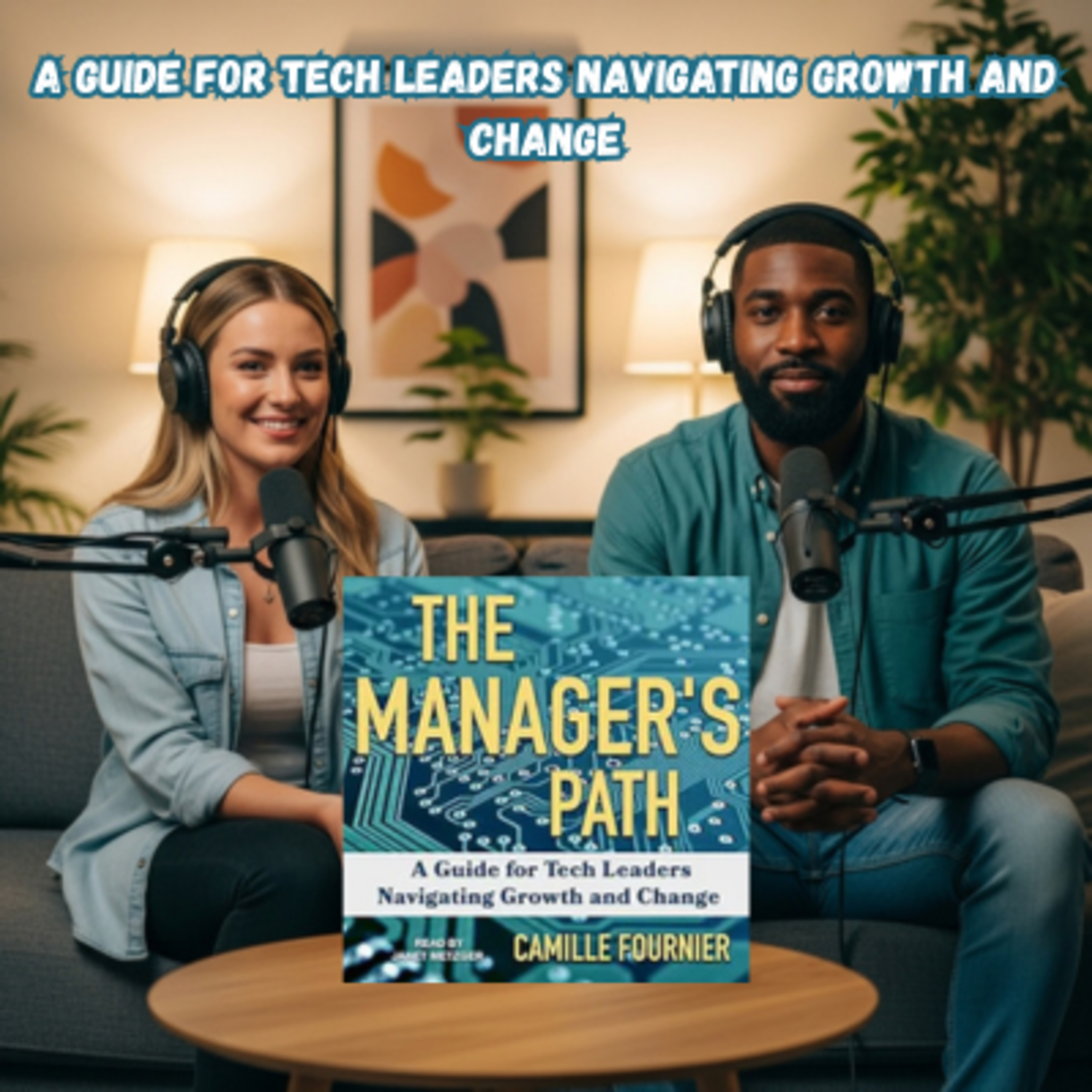
Managing people is difficult wherever you work. But in the tech industry, where management is also a technical discipline, the learning curve can be brutal - especially when there are few tools, texts, and frameworks to help you. In this practical guide, author Camille Fournier (tech lead turned CTO) takes you through each stage in the journey from engineer to technical manager.
From mentoring interns to working with senior staff, you'll get actionable advice for approaching various obstacles in your path. This book is ideal whether you're a new manager, a mentor, or a more experienced leader looking for fresh advice. Listen to this audiobook and learn how to become a better manager and leader in your organization.
- Begin by exploring what you expect from a manager.
- Understand what it takes to be a good mentor, and a good tech lead.
- Learn how to manage individual members while remaining focused on the entire team.
- Understand how to manage yourself and avoid common pitfalls that challenge many leaders.
- And more...
This outlines the fundamental principles of engineering leadership as presented in Camille Fournier’s book, The Manager’s Path. It tracks the evolution of a technical leader, beginning with the transition from individual contributor to mentor and tech lead. The guide emphasizes that successful management requires active listening, clear communication, and a shift from performing tasks to guiding people. As responsibilities grow, the source details the complexities of managing multiple teams, overseeing other managers, and ultimately influencing organisational strategy at the highest levels. Crucially, it highlights the importance of shaping company culture and prioritising the long-term growth and well-being of staff. Ultimately, the material serves as a roadmap for continuous professional development within the IT industry.
If you're an engineer, or really any IT professional who's thinking about stepping up to lead, this deep dive is for you. Or maybe you're already a manager. Yeah, or you're already managing and you just want a serious playbook to master the next few years. Today we are cracking open the managers path by Camille Fournier. It's it's basically a structured map for succeeding as a leader in tech. That's a great way to put it. We're not just summarizing a book here, we're really delivering a kind of strategic shortcut.
Our mission is to dissect Fournier's framework, focusing on those you know, those aha moments, the specific steps you need to take, and crucially, how your mindset has to pivot at every single stage of your career. OK, let's just jump right in, because that first jump from an individual contributor or IC to a manager is, well, it's notoriously difficult. It really is, Fournier argues. The biggest adjustment isn't even about delegation. It's about changing your perspective. So what's the single biggest mental shift you have to make?
I mean, it's embracing the loss of control and the new weight of context switching. Your metric for success is no longer your own code commits, it's the collective output and I'd say the health of your team. And that means you have to delegate. You have to, and that causes anxiety because you're suddenly responsible for outcomes you didn't personally execute. I think that anxiety is so real, especially for engineers who are used to being deep in the weeds. So if the foundation is changing your perspective, the skill you need immediately is it's got to be communication.
Right. Absolutely. But what does Fournier mean by effective communication? It can't just be about setting clear goals. No, it's about building a whole communications infrastructure. It involves clarity, yes, but more importantly, it means providing feedback, which is a skill all on its own and maybe the hardest part for technical people. Active, structured listening. You have to hear not just the words, but the, you know, the implicit frustration or the hidden dependency that's slowing someone down.
This is where the emotional labor of management really starts. Speaking of that, the next big step she lays out is mastering mentoring. And this is way beyond just code reviews, isn't it? It is. It's about providing genuine support and career guidance which, well, it requires vulnerability. And that's why trust is the prerequisite. Exactly. Fournier stresses that mentoring isn't giving advice, it's coaching. Advice is you telling them the answer. Coaching is asking the right questions so they find their own solution.
You have to create that secure, transparent environment first. Because if they don't trust you, they're not going to tell you what the real problem is. Right, and you end up solving for the symptom, not the 'cause. That attention to individual needs seems to carry over directly into her ideas on team leadership, but tailoring your support to every person on your team sounds incredibly time consuming. It is, but it has to be baked into your one on ones. For Fournier, those meetings are sacred. You use that time not just for status updates, but to actively talk about career path and psychological safety.
OK. So that's where you also deliver feedback. And it has to be consistent. The book is so clear about this. Consistent feedback isn't just a scheduled review. It's giving an engineer a high 5 right after a great launch and, you know, also immediately following up on a behavior that needs adjustment. You don't wait six months. OK, left pivot to what I think is the biggest tightrope walk in the entire framework, the tech lead. This is that stage where you have this dual responsibility of managing people while also making sure that technical standards are incredibly high.
It's that constant pull. It truly is the juggling act. As a tech lead, you're still setting the technical direction, making these huge decisions about architecture, tools, everything you have to keep that technical credibility. But how realistic is that really? I mean, every tech lead I've ever known feels pressure to drop one or the other, either the coding or the leading. She acknowledges how hard it is. The key insight is that this is the role where you shift from being a primary producer to being a a leverager, A leverage.
Yeah, you have to find that balance by focusing your own coding time on high leverage tasks like designing a complex system interface or solving a big crossteam problem and then delegating the rest. O your success isn't about how many features you ship anymore. Not at all. Your success is now defined by minimizing technical debt across the team. If you're sending 80% of your time coding, you are failing as a tech lead. Your focus has to shift to leading and supporting the team. And once you stabilize that tightrope, the focus moves to managing team productivity.
This is about execution. Right. And this is where collaboration is just critical. Your job is to facilitate that teamwork. To unblock people. You have to build systems that let dependencies get resolved fast. So an engineer says I'm blocked. The manager's job is to go unblock them. Yes, not to ask the engineer to find a workaround. You clear the path. That focus on systems and flow. It seems to lead right into scaling your leadership, moving from managing one team to influencing the whole organization.
This starts with managing multiple teams. And this is where the political heat gets turned up because you might have two teams, say infrastructure and feature development, both needing the same critical resource. You become this this high level air traffic controller. And the key strategy isn't just delegating tasks anymore. No, it's setting priorities for resources based on the bigger company goals. You're managing the scarcity of time and talent across all your groups. And to do that, you have to keep these open lines of communication.
But how do you stop that from just becoming an exhausting fire hose of information? You structure it. It's about building channels that are transparent but not overwhelming, Fournier suggests. You know, having really clear processes for how teams share status and more importantly, how they raise red flags before they become a full blown crisis. It's about being accessible without being constantly interruptible. OK, so once you get at that, you hit the next level, maybe the Ultimate Leadership Challenge Chapter 7, Managing Managers.
This is such a unique environment because your direct reports are leaders themselves. How does your focus shift here? It's a total shift in leverage. When you manage an IC, you're focused on their tasks and their growth. When you manage a manager, you have to move entirely to offering strategic direction and high level guidance. So you're not worried about the code their team rights anymore? Not at all. You're worried about how that team is being run. Your success is measured by their growth as a manager and their team's overall health.
So you're basically coaching a coach? Exactly. That's a great way to put it. You're coaching them on how to solve their people problems and their organizational alignment problems. If one of your managers is struggling with, say, a toxic high performer, you coach the manager on handling that. You don't intervene yourself. You're building future leaders. You're building organizational stability. And all of this leads up to Chapter 8, the big leagues, the CTO, the VP of Engineering, where the focus is almost entirely on strategy and influence.
Right. And at this level, your primary job is to establish a clear strategic vision for the whole organization and then communicate it everywhere. And this isn't just some motivational slogan. It has to be tangible. Exactly. It could be a three-year plan for modernizing your systems or a five year talent growth plan that's tied directly to the business goals. Everyone needs to understand it. So that clarity makes all the daily priority calls much easier for everyone else. It does. And the second huge responsibility here is directly shaping culture.
You are now the steward of the work environment. Your personal conduct is magnified 100 times over. Which brings us perfectly to the enduring pillar, starting with Chapter 9, Bootstrapping Culture. How does a leader actually do that, especially when a company is growing like crazy it. Starts with defining the building blocks. You have to clearly state the values, but the real test is what happens when things go wrong. When there's a huge outage, do leaders rush in to assign blame, or do they rush in to solve the problem and learn from it?
And at every single stage, the ultimate driver is that leaders must lead by example. Absolutely, if you talk about transparency but then make all your decisions behind closed doors. Your actions are what shaped the culture, not your words. So that brings us to the final synthesis after 10. What are the core ideas that sustain a manager through this whole journey? The first is a mandate for your own growth. Lifelong learning management is not a static skill. You have to keep reading, keep seeking feedback and challenging your own assumptions as the tech landscape shifts under you.
And the final, most important take away the true north that underpins everything we've talked about is the directive to put people first. Absolutely. Throughout the entire process from mentoring that first junior engineer to shaping company, any culture, prioritizing your team members growth and well-being is the key. Healthy, supported teams will solve the technical problems. Burned out teams won't. So what does this all mean for you? We've covered this huge path, this shift from individual delivery and that loss of control in Chapter 1 all the way up to setting a multi year strategic vision for a massive organization.
It's a it's a really complex trajectory. And leadership isn't simple, but having a clear map like the one Fournier provides, it helps you manage the obstacle. The real insight, I think, is that the further you rise, the less you rely on your own technical skills and the more you rely on your ability to cultivate and empower other people. And that focus on empowerment ties directly into our final thought for you to chew on. The book ends on two big requirements that often feel like they're pulling in opposite directions.
The need for lifelong learning for yourself and the need to put people first. The challenge for every single manager is managing that tension. How do you find the time for your own development to read, to reflect, to learn without sacrificing your commitment to the immediate needs of your team? When your calendar is just full of meetings and fire drills, which one gets neglected first? That's the balance you have to strive for every single day. Something critical to consider as you navigate your own managers path.
That was the deep dive. We'll see you next time.
 Apple Podcasts
 Castbox
 Castro
 Goodpods
 Moon FM
 Overcast
 Pocket Casts
 Podbean
 Podcast Addict
 Podcast Republic
 Spotify