The Hard Thing About Hard Things by Ben Horowitz | Explained
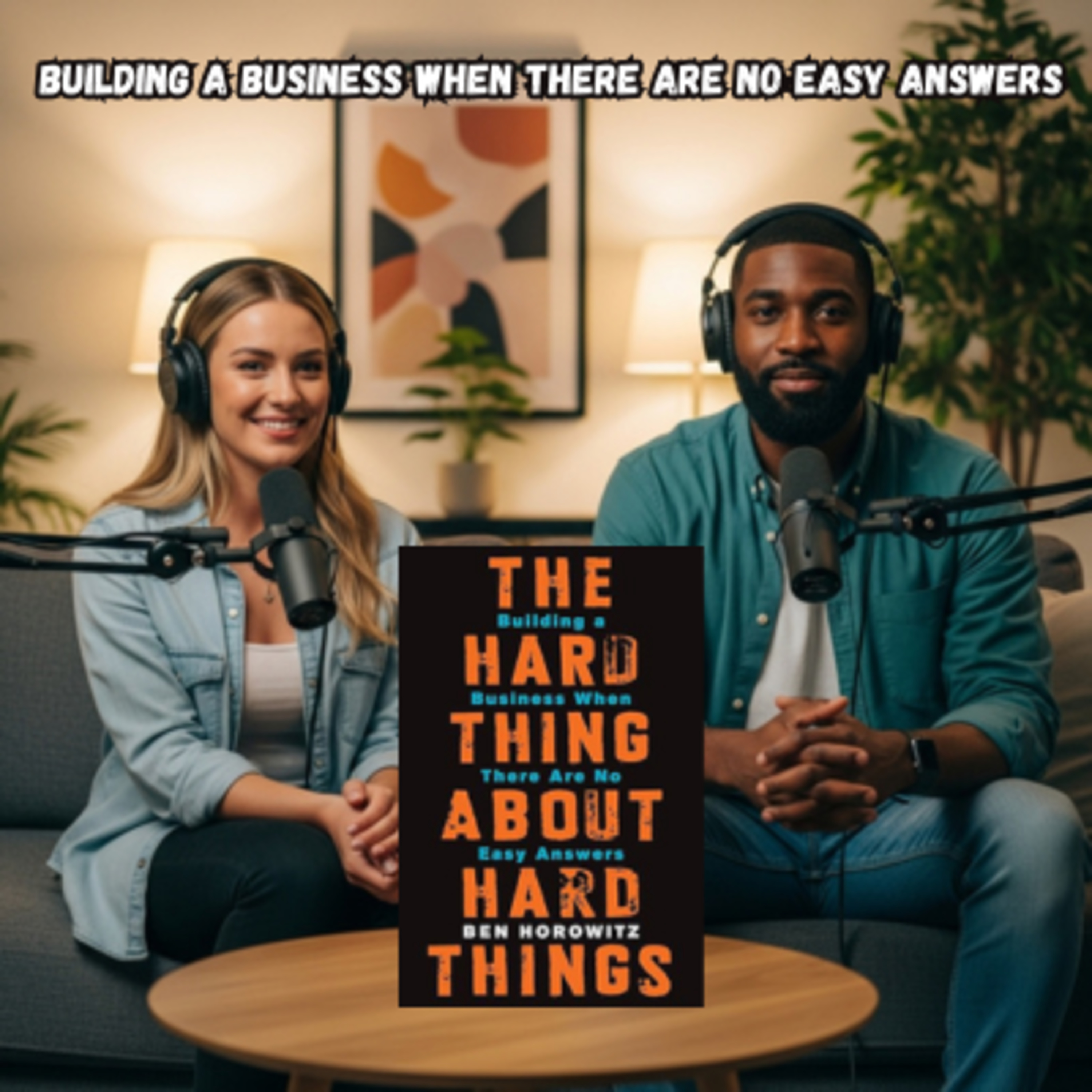
This overview of Ben Horowitz’s management philosophy highlights the extreme difficulties of leadership and the grit required to sustain a startup. The text emphasizes that resilience and transparency are vital when navigating corporate crises or personal professional struggles. Horowitz argues for a human-centric hierarchy, suggesting that executives must prioritize the well-being of their staff and the quality of their products over immediate financial gain. Leaders are encouraged to embrace ambiguity and reject conventional wisdom in favor of creative, rule-breaking solutions. Ultimately, the summary illustrates that emotional intelligence and steady communication are the primary tools for transforming a failing venture into a lasting success.
Ben Horowitz, cofounder of Andreessen Horowitz and one of Silicon Valley's most respected and experienced entrepreneurs, offers essential advice on building and running a startup—practical wisdom for managing the toughest problems business school doesn’t cover, based on his popular ben’s blog.
While many people talk about how great it is to start a business, very few are honest about how difficult it is to run one. Ben Horowitz analyzes the problems that confront leaders every day, sharing the insights he’s gained developing, managing, selling, buying, investing in, and supervising technology companies. A lifelong rap fanatic, he amplifies business lessons with lyrics from his favorite songs, telling it straight about everything from firing friends to poaching competitors, cultivating and sustaining a CEO mentality to knowing the right time to cash in.
Filled with his trademark humor and straight talk, The Hard Thing About Hard Things is invaluable for veteran entrepreneurs as well as those aspiring to their own new ventures, drawing from Horowitz's personal and often humbling experiences.
Welcome back to The Deep Dive. Today we are strapping in for some serious, unfiltered business wisdom. We really. We're taking a deep plunge into the core strategies for surviving, well, corporate hell, really, all drawn from the experiences of Ben Horowitz and his book The Hard Thing About Hard Things. And our mission for you is to pull out the most vital and often pretty counterintuitive leadership principles from Horowitz's brutal history of company building, right? We're focusing on the mindset, the emotional intelligence and, you know, crucially, the crisis management you need to just come out alive.
This is basically your shortcut. A shortcut to getting smart on the difficulties that sink most ambitious companies. Exactly. This isn't one of those celebratory chats about IPO's and, you know, fancy press releases, No. This is about the raw, visceral difficulty of managing a firm when everything is spiraling. I mean that feeling of existential dread. And the source material? It promises real talk without pretentious corporate language. And that is what we're going to deliver, that gritty analysis.
OK, so to really get Horowitz's leadership style, you have to start with his mindset, and it's shaped by a really unusual origin story. Yeah, the book kicks off by charting his path from communist to venture capitalist, which is not your typical Silicon Valley resume, is it? Not at all. And that political background, it fundamentally shaped how he saw the world and later how he ran a company. The key take away from his early life is this sheer necessity to embrace the struggle. Horwitz figured out really early on that achievement is just inherently difficult.
If you think success is supposed to be easy, you're going to quit the second. The first real obstacle shows. Up And that wasn't the only lesson. I mean, moving from one extreme system to the absolute chaos of Silicon Valley demanded radical flexibility. You had to change his entire operating system, and fast. Yeah, that ability to adapt quickly, to pivot when everything changes around you, that's the foundation for everything else he teaches. What's so fascinating is that he didn't come up through just finance or engineering, where you're taught there's always a textbook answer.
His background taught him the map you have is probably wrong. You have to be ready to throw it out and just improvise to survive. It's the difference between knowing the rules and knowing when the rules are actively trying to kill you. OK, let's unpack this then. If that radical flexibility is the foundation, how did he build the 1st wall of his survival strategy? Well, that takes us straight to his time managing loud cloud. The startup that went public rightbeforethe.com bubble burst. The ultimate Crucible.
I mean, you're trying to run a company while the entire market is just collapsing around you. The big theme here is resilience. And this isn't just bouncing back from one failure, is it? No, it's about persistence when you're facing constant daily adversity, when setbacks happen every single day and you still have to show up and lead. It sounds exhausting. It is, and he does not sugarcoat that exhaustion, but going hand in hand with that is communication. Mandatory communication. Absolutely. During these brutal times, he argues, you have to be open, honest and just relentless with your communication.
You can't just retreat into your office and hide. But. What does honest communication even look like when the truth is terrifying? How do you tell your team, hey, we might not make payroll next month without everyone just leaving? It's a tactic that's really based on respect. Horowitz stresses that you have to be transparent about the problem, but you have to be confident about the process to solve it. You tell the truth about the market, about the money, but then you immediately lay out the strategic steps you're taking to fight back.
People, he found, prefer a painful truth they can fight against over a comforting lie that just leaves them confused. So if we connect that that need for resilience back to the idea of flexibility, you realize that conventional wisdom rarely helps in a crisis. Which brings us to one of his most, I think, liberating concepts. From a rule of entrepreneurship, there are no rules. It's such a crucial pivot point when you're fighting for your life. The rule book from a big stable company becomes a liability.
So entrepreneurs have to be willing to break the rules. To question all those established methods, yeah. Can you give us an example of a rule like that? One that actually hurts a startup. Sure, think about standard HR processes like rigid annual performance reviews, right? In a fast growing company, that's just too slow, too bureaucratic. It kills morale. It delays feedback that's needed right now, Horowitz says. You have to invent solutions that fit your unique crisis. So if the. Rule is do a quarterly budget but your cash is changing daily.
You break that rule, you start monitoring cash flow daily. It's about embracing creativity because the old tactics just won't work for the problem you have today. Precisely. Resilience is useless if it's not powered by creative solutions. And this is where it gets really interesting how a leader handles the human element, which is, you know, arguably the hardest part of all. Anyone can talk about numbers and strategy, but managing the emotional core of a company when it's under all that pressure?
That's way harder than fixing a spreadsheet. Which brings us to the section he calls this Time with feeling. He talks about the huge emotional difficulties leaders face, isolation, fear. The burden of carrying everyone else's confidence. Yeah, and leaders first have to acknowledge and address their own feelings and then their teams. I imagine the temptation is just to repress it all right, to be the stoic captain on the bridge. And that's exactly what he warns against ignoring here. Doesn't make it disappear.
It just comes out in other ways. Bad nonverbal cues. A lack of confidence. Miscommunication. Right. Leaders who hide their humanity create this vacuum, and the team will always fill that vacuum with the worst case scenario. Which is where empathy is crucial. It's about actually hearing and understanding and addressing what your team is worried about. It's operational empathy. If the team feels like you get it, they are so much more likely to stick around and fight through the mess with you. So that emotional intelligence becomes your greatest asset when things truly fall apart.
But my question is, it's easy to say remain calm. How do you actually do that when the markets crashing? He focuses on physical actions, on imposing intellectual discipline instead of freezing. The leaders job is to immediately start framing the decision. What do you mean by framing like? Asking what data do we actually have? What are the three non fatal options we have right now? That structure prevents panic from taking over. So calmness isn't just a personality trait, it's a structured process.
Exactly. And once you frame the problem, you have to communicate truthfully. When things go wrong, you confront it head on. Because minimizing it would destroy all that trust you just built. It destroys the foundation. This whole philosophy culminates in maybe the most famous take away from the book. Prioritization mantra Take care of people, products and profits in that order. This sequence, he says, is the core structure for any kind of stability. Staff are the most valuable asset, period. Investing in your people ensures they're motivated.
They are the engine. So people first, that means good hiring, real investment in training, and that operational empathy we talked about. Absolutely, and only after you've stabilized that team do you turn your focus to the product. A motivated team builds a better product. Which you need to keep innovating to attract and keep customers. And finally, the bottom line, profit, which is the result of having great people building a great product. This raises a really important question because we see so many companies, especially startups, trying to scale fast for VC's, they flip this.
All the time. They put profit first to please investors, products second to keep market share, and people last like they're just an expendable resource. Why is reversing that order so deadly? It's about leverage and longevity versus short term extraction. If you put profit over people, you immediately kill trust. Your employees know they're just a line item A. Cost Center. Right. And when the next crisis hits, and it always does, you've destroyed their willingness to be resilient. They'll just look for the next job.
So a company might survive a quarter by maximizing profit. But it won't survive a real downturn if it's people aren't motivated or willing to put in that extra effort. You need to innovate your way out of a problem. OK. So that people product profit sequence is an investment in stability. It's not just a feel good HR policy. It's a survival strategy. When the hard thing hits, your people are the only resource that can fight creatively. That makes perfect sense. So what does this all mean for the long haul?
You've survived the initial chaos, now you have to sustain it. Right, once you hit some stability, the next big threat becomes internal dynamics scaling successfully. And the first lesson there is to minimize politics. As a company gets bigger, people naturally start competing for status, for resources. And Horowitz says you have to crush that. If you reduce office politics by making accountability clear, giving credit where it's due, the focus stays on the actual business goals. Which leads right into nurturing the right kind of ambition.
Exactly. You have to nurture the correct kind of ambition. The wrong kind is the personal power grab, the employee who wants to build their own little empire. And the correct kind. Is being ambitious for the company's success. You want people who get ahead by making the organization advance, and it's the leader's job to build a structure that rewards that collection collective ambition. But sustained growth always means you're dealing with uncertainty, and that's a huge challenge for any leader realizing you rarely have a clear map.
He calls it How to lead When you don't know where you're going, you have to embrace ambiguity. You have to accept that not knowing everything is just part of the job, right? If you pretend you have a perfect plan, you become rigid and reactive. Accepting ambiguity allows you to be more flexible, more adaptive. But if? The leaders admitting they don't know where they're going, how do you stop that from scaring the team? You still have to lead with confidence. The confidence isn't in the specific answer because you might not have it yet.
So the confidence is in what them. The confidence is in the King's ability and in the soundness of the process you're using to find the answer. The team looks to you for stability. That confidence prevents ambiguity from becoming panic. And once you navigate that you reach a point he calls the end of the beginning. Such a perfect phrase. It just captures the relentless nature of building something you think you've won, but you've only reached a new, slightly less chaotic baseline of difficulty. And his advice there is really humanizing, he says.
You have to acknowledge and celebrate the wins. Which is so essential for the culture, for showing people that all that struggle was actually worth it. But that celebration is followed immediately by preparation. You have to get ready for the long. Haul. It never stops being hard, the difficulty just changes shape so. To synthesize this whole deep dive, Horowitz's wisdom isn't about finding easy answers. It's about building a framework to survive the inevitable difficulty. It requires that radical resilience, that emotional honesty, and that ruthless prioritization and people, product, profit, and the ability to lead with confidence through total uncertainty.
The theme is really that the most critical lessons are learned in the struggle, and embracing ambiguity is the key to leading past that initial startup phase. It's a framework for endurance. And that brings us to our final thought for you to chew on. If Horowitz says overcoming those early challenges is just the beginning, and that building a business requires continuous preparation for the next hard thing. What significant long term challenge or area of uncertainty are you intentionally choosing to confront and practice leading through today to prepare for the inevitable hard thing that you know is just over the horizon?
Something to think about as you define your next strategy.
 Apple Podcasts
 Castbox
 Castro
 Goodpods
 Moon FM
 Overcast
 Pocket Casts
 Podbean
 Podcast Addict
 Podcast Republic
 Spotify