How To Win Friends And Influence People by Dale Carnegie| The_Core_Rules_of_Sincere_Influence
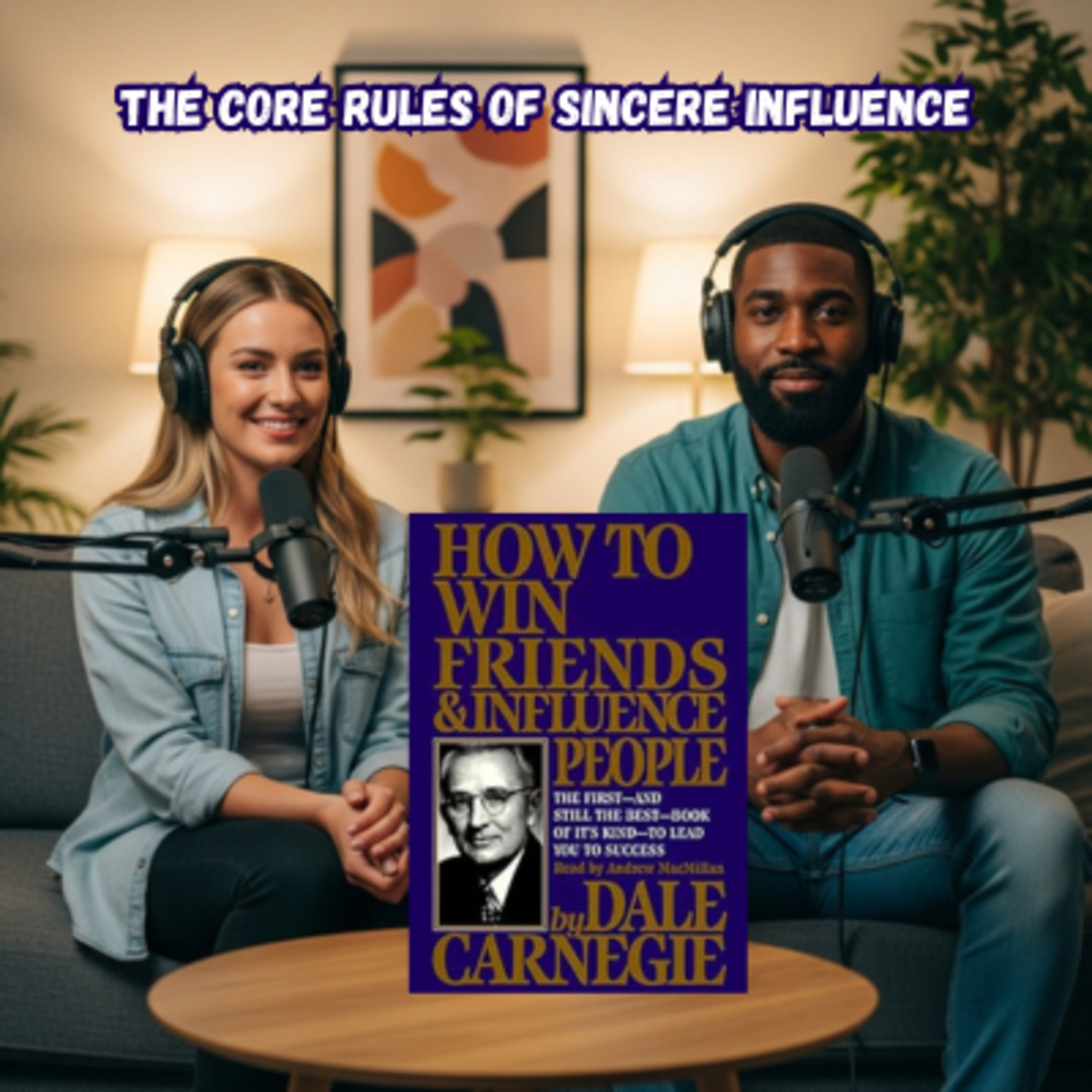
This episode outlines core principles from Dale Carnegie’s seminal work on social intelligence and interpersonal influence. It highlights the importance of sincere appreciation and the necessity of avoiding direct criticism to maintain positive rapport. By focusing on active listening and making others feel truly valued, individuals can become more persuasive in professional and personal settings. The guide advocates for leadership through encouragement, suggesting that subtle feedback is far more effective than giving orders. Ultimately, these strategies serve as a roadmap for building genuine connections and fostering mutual cooperation across all areas of life.
So if you've ever walked away from a conversation just feeling like you completely failed to connect, or, you know, if you struggle to influence decisions in a way that feels, well, authentic, not manipulative, then you know just how frustrating that could be. We're going deep today, really pulling the the core wisdom from this foundational work on human interaction. It's a guide that has just completely reshaped how people approach success, both personally and professionally. And it's funny, it's so often summarized as, you know, a book about winning friends, but that really sells it short, doesn't.
It it really does. What we're actually looking at is, well, it's a timeless manual. It's rooted so deeply in understanding basic human psychology, and our mission today isn't just to summarize chapters you've heard about, it's to distill the why behind it all, giving you a shortcut to becoming more persuasive effortlessly. OK, let's unpack this then let's get right into the engine room. We're going to move logically, starting with the the absolute bedrock principles for just handling interactions, and then we'll get into the tactics for connection and leadership.
And we have to start where the whole thing starts, which is recognition. People, I mean, fundamentally, they crave appreciation more than almost anything. But there's a, a critical distinction here that we have to hammer home right away. What's that? It has to be honest and sincere appreciation, not just, you know, empty flattery, because flattery is cheap. People see right through it, and it only serves the flatterer but sincere appreciation that fuels motivation, that builds real trust. That distinction is everything, isn't it?
Flattery is a transaction, but sincere appreciation is validation. And that brings us to the first foundational technique, which I think is maybe the single hardest piece of advice to consistently follow. It's that negative trap. Don't criticize, condemn or complain. Exactly. And that's the core because of what happens inside our brains. You know the moment you criticize someone, you don't just hurt their feelings you you force their ego to put up this immediate like an impenetrable wall, they. Just shut down.
Completely. They stop listening to your point and they start building a legal case for why they were right all along. Criticism just guarantees they will never ever hear your message. It's totally self defeating. I mean, you might win the point in your own head, but you lose the person and the positive opposite is just, it's so much more effective, that second key lesson. Give honest and sincere appreciation, right? Exactly. And look at that specific story about the colleague Anthony. So Anthony was consistently going above and beyond, right?
The kind of quiet, excellent work that that often gets ignored. The manager in the story didn't just notice it, he made a point to acknowledge Anthony's specific dedication, his effort, and he did it publicly in a team meeting. And the result of that isn't just a happy Anthony for a day, is it? Not at all. The whole relationship gets stronger because Anthony now knows his best efforts are seen and they're valued. This isn't just about morale. It's about connecting effort with respect. Absolutely.
The manager didn't just give Anthony praise, he understood what Anthony desired, which was recognition, and he helped him get it. That creates A lasting, positive environment. That's what effective handling of people is. It's about creating a desire and the other person to want to improve, not forcing them through fear. OK, so once we've mastered that mindset, ditch criticism, use sincere praise, the next question is, well, how do we immediately start building those connections? Now we move into the high impact social tactics.
These are the tools that that build a bridge between you and a stranger almost instantly. And the most high impact one has to be what you could call name power. The guide really hammers this home. Remember it use people's names often in conversation. So I mean, why is that so important? It seems so simple. Because a person's name to them is the sweetest and most important sound in any language. It's the ultimate symbol of their individuality. When you use someone's name, you're not just confirming you listen, you're acknowledging their entire identity.
This little dose of that feeling important principle we're going to talk about. It's a micro dose delivered instantly. Yeah, the guide had that amazing anecdote about the speaker at a huge networking event, and he made this conscious effort to use the names of dozens of people he just met, and he talked about the immediate, profound reaction he got. People soften, they lean in. Exactly. They feel respected because you made that tiny investment of effort. And that links perfectly to the next critical lesson, which is be genuinely interested in other people.
It's not enough to just use their name and then, you know, move on. You have to follow it up with real curiosity. This is where sincerity gets tested, isn't it? Yeah, because we've all been in that networking conversation where someone asks, So what do you do? But they're clearly just scanning the room over your shoulder for someone more important. Oh, it's the worst. Superficial interest is so obvious and it's repulsive. It really is. And the guide suggests the difference is the effort you put into understanding their world.
The story about starting a new job that really drives this home instead of focusing inward on your own anxiety. Right, which is what most of us do. Of course, the speaker in the story actively made an effort to learn about their colleagues, hobbies, their passions, their families. And that just flips the whole social dynamic. Instead of waiting for others to accept you, you become the active 1, making others feel valued first. It helped him build strong connections so much faster and feel more at ease.
These two techniques, remembering names and showing genuine curiosity, they're basically non verbal proof that you care and you're paying attention and that is the root of a lasting connection. You give attention to earn respect. That makes perfect sense. So once you've built that rapport, the next leap is influence. How do we shift from just making friends to actually influencing decisions and leading teams, but still doing it with respect without, you know, making people resent you? Now we're transitioning from social skills to strategic persuasion, and this is where we apply that idea of respect to disagreements.
In chapter 3 kicks off with a really tough one. For a lot of people, the only way to get the best of an argument is to avoid it. I mean, wait a minute, what if I know I'm right? Why shouldn't I argue my case? Because the goal isn't to be right. The goal is to influence. And the second you get into a head on argument, you trigger that defensive ego thing we talked about before. The wall goes up. The wall goes up. So the rule is you show respect for the other person's opinions and you never say you're wrong.
OK, that's a huge behavioral change. How do you do that when you just fundamentally disagree with someone? You focus on validating their perspective, not necessarily agreeing with their conclusion. You can say I can see why you feel that way, or that a really interesting point I hadn't considered. So you give them an easy off ramp? You give them an off ramp. If they feel heard and respected, they're way more likely to be open to your ideas. The guides example of the disagreement with a friend over a project.
It's perfect. Instead of arguing, the speaker listened. He acknowledged the friends valid concerns and by doing that they collaborated. They found a solution that worked for both of them. That's influenced through validation, not domination. You made them feel like a Co creator. And this flows right into effective leadership tactics in the next chapter. If you can't rely on confrontation, how do you manage people well? You move from arguing to gentle redirection. The two leadership lessons here are so subtle.
First, call attention to people's mistakes indirectly and 2nd, always ask questions instead of giving direct orders. Let's breakdown that indirect critique. So a manager needs to talk to a struggling team member, right? The classic case. Deadlines are being missed. A direct critical approach just crushes morale. Always. But the indirect method, it softens the blow. You might start by praising something they do well, their dedication or a specific strength, and then you phrase the problem as a shared one.
So instead of saying your reports are late, you might say something like, hey, we're running into some timeline issues and I know how great you are at detailed analysis. What if we tweaked the first couple of steps? Do you think that could help make the delivery more predictable? Exactly. You give them a path to self correction. And that second principle, asking questions instead of giving orders. It's brilliant because it gives the other person agency. You don't command, you empower them to find the answer themselves.
So you're basically influencing them to use their own brain to get to your desired outcome. Yes, and they feel ownership over it. It creates buy in. When people feel heard, they move from just executing an order to owning a solution. Now let's get into Segment 4, which has some of these less obvious methods that the guide says can produce, well, miraculous results. We're moving beyond just talking. Right. And the most surprising one for me in our world today might be the power of letters. In an age of instant, disposable DMS and emails, why focus on the written word?
Because it shows real intentionality and permanence. The story about writing a sincere, personal thank you letter to a mentor that's so powerful it went beyond a quick e-mail. It was a physical, lasting thing, an artifact of gratitude. And that single act just dramatically strengthened the relationship. It opened up new opportunities, all because of the depth of sincerity it showed. It separates you from everyone else. And these concepts, they apply even closer to home. Chapter 6 takes these same rules and applies them to family life.
And it's the exact same principle we started with. Don't nag. Avoid constant criticism. It's so easy to take family for granted, isn't it? To let our guard down. But that constant drip, drip, drip of minor critiques erodes relationships at home just as fast as it does in the office. And the simple fix was just acknowledging family efforts more often, you know, noticing the effort that went into dinner or helping with chores. These small constant affirmations just create a way more harmonious environment.
It shows these rules are universal rules of human engagement. And when you need cooperation, Chapter 8 gives us the key. Let the other person feel ownership of ideas. This is so critical for any kind of collaboration. Think about a group project. If the leader just dictates the whole plan, people will comply, but they won't be invested. But if the leader encourages everyone to share ideas, asks questions and this is the key, gives them credit for the good parts, even if the leader guided them there, you get so much better cooperation.
Because people are far more motivated to execute an idea they believe is at least partly their own. You're appealing to their creativity, their self importance. You're making them the hero. And if you absolutely have to give corrective feedback, which we all do, Chapter 9 offers what's called the Wonder Formula. And it's not a gimmick, it's a very specific psychological strategy. It's that structured approach to criticism, right? The three-part sandwich. But it only works if the bread is genuine.
You have to begin with praise and honest appreciation, call attention to mistakes indirectly, and then end with a positive suggestion. That structure is vital. The example of applying this to a colleague by starting with authentic praise and ending with encouragement. The person didn't feel attacked, They felt coached and alleged to real improvement because their sense of worth was honored while the issue was still addressed. And what all of these chapters, the letters, the home life, the formula, what they all reinforce, is that successful communication requires subtlety and genuine warmth.
Whether you're leading a company or just managing your family life, the goal is always the same. To make the person feel seen in value. Exactly. OK, so we've covered the fundamentals, the connections, the influence tactics. Let's wrap up with Chapter 10, focusing on the single driving desire that underpins every single thing we've talked about today. It's the great non secret secret of human nature. Everyone, everywhere desires to feel important. And that's the final lesson. Always make people feel important and acknowledge efforts and achievements.
If you can consistently and sincerely meet that one fundamental need, everything else just falls into place. You become the person who validates the self worth of everyone around you. And this is just beautifully illustrated in that final anecdote, the moment where the speaker stops to sincerely thank a janitor for keeping the office clean. Not just a passing nod, but genuine acknowledgement. And the look on the janitor's face, that look of priceless appreciation, that wasn't just thanks for the compliment, was it?
No, it was validation. In that moment, he didn't just thank him for cleaning, he validated his core identity and his contribution to the whole team. And that distinction is the difference between flattery and recognition. And that really synthesizes this entire deep dive. All these principles, avoiding criticism, using names, giving ownership, offering praise, they're all just tools for meeting this one fundamental human need to feel valued and respected. They are simple rules, but they require consistent, sincere application.
It's not about manipulating people, it's about aligning your actions with their deepest psychological needs. So we've given you the essential shortcut to these life changing principles. We've broken down the why and given you the structure for applying them and the transformation. It really starts when you just internalize that philosophy and start applying it day by day. And to take this one step further, we want to leave you with a concrete challenge, something to apply immediately, given the immense power of sincere appreciation and making people feel important.
Who is one person in your immediate orbit? Maybe the person at your coffee shop? A quiet colleague? A family member whose contributions you tend to overlook? Acknowledge them genuinely and sincerely. Today. Start with that small action, just like with the janitor, and just watch how quickly that simple validation opens new doors in that relationship.
 Apple Podcasts
 Castbox
 Castro
 Goodpods
 Moon FM
 Overcast
 Pocket Casts
 Podbean
 Podcast Addict
 Podcast Republic
 Spotify