The Laws of Human Nature by Robert Greene
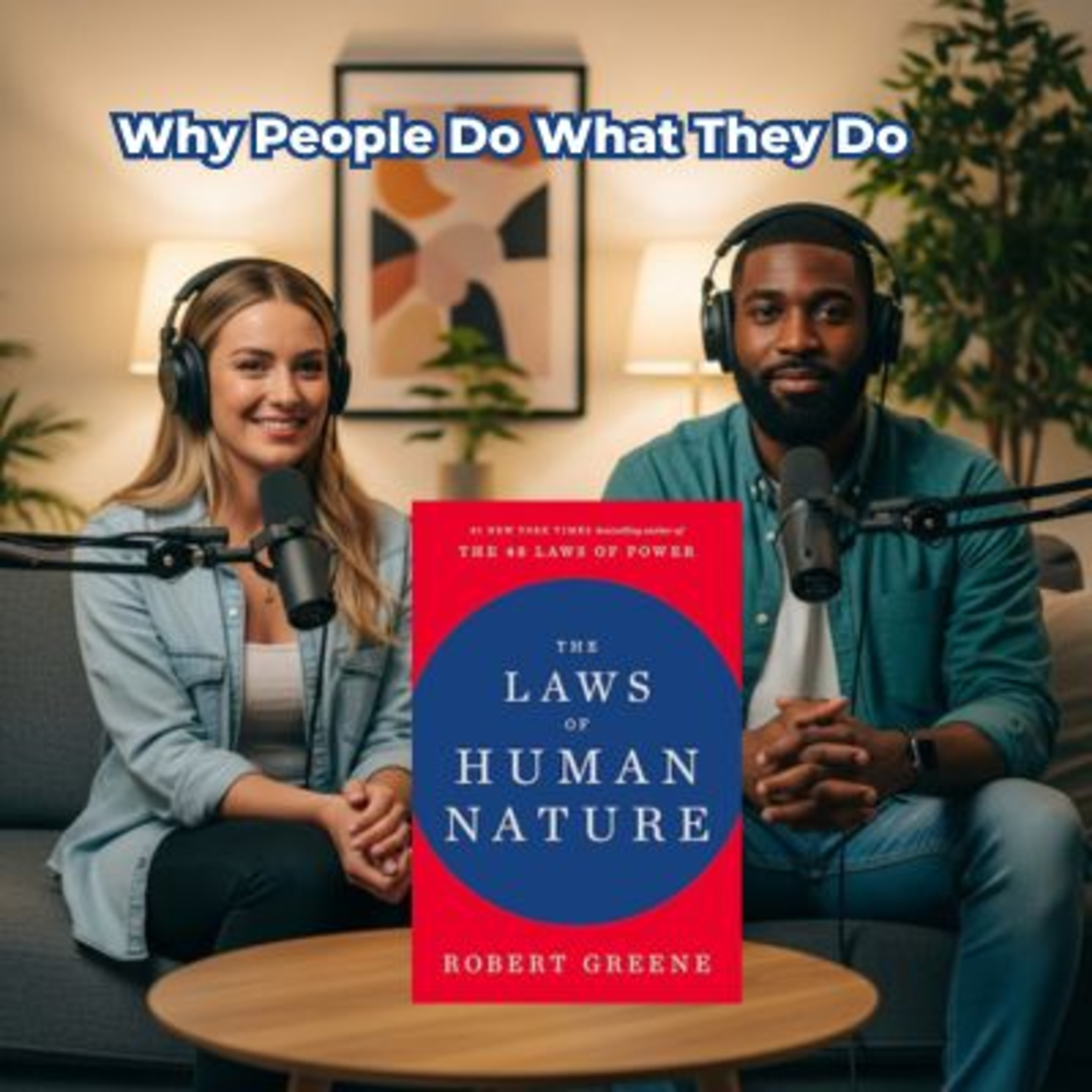
Robert Greene is a master guide for millions of readers, distilling ancient wisdom and philosophy into essential texts for seekers of power, understanding and mastery. Now he turns to the most important subject of all - understanding people's drives and motivations, even when they are unconscious of them themselves.
We are social animals. Our very lives depend on our relationships with people. Knowing why people do what they do is the most important tool we can possess, without which our other talents can only take us so far. Drawing from the ideas and examples of Pericles, Queen Elizabeth I, Martin Luther King Jr, and many others, Greene teaches us how to detach ourselves from our own emotions and master self-control, how to develop the empathy that leads to insight, how to look behind people's masks, and how to resist conformity to develop your singular sense of purpose. Whether at work, in relationships, or in shaping the world around you, The Laws of Human Nature offers brilliant tactics for success, self-improvement, and self-defense.
#TheLawsOfHumanNature #RobertGreene #productivityhacks #personaldevelopment #successstrategies #businessinsights #leadershipskills #leadership #ambitiousprofessionals #businesstips #self help #scaling business #businesstactics #professionaldevelopment #startupgrowth #entrepreneurship #businessmindset #growthstrategies
What if I told you that the colleague who just snapped at you during a meeting isn't actually angry about your presentation? Right, it's usually never about the presentation. Exactly what if instead they are just physically and psychologically exhausted from like repressing a massive part of their own personality, and your minor slide deck error was just the the trigger that caused all that internal pressure to finally rupture? It's a terrifying thought, honestly. It is. We walk around every day bumping into these invisible, highly pressurized psychological land mines and we just assume we understand the people around us.
But I mean, most of the time we are flying completely blind. Oh totally. We operate as social creatures essentially without a user manual. We just interact with the surface layer of human behavior, you know, completely oblivious to this massive churning engine of hidden motives. Right. The ancient evolutionary drives and unconscious biases just operating right beneath the floorboards of everyday conversation. Yeah, exactly. Well, today we are handing you that user manual. Welcome to today's deep dive.
If you're tuning in, if you're the learner who wants the shortcut to being exceptionally well informed without drowning and all the academic noise, you are in exactly the right place. Glad to be here for this one. We're dissecting a really brilliant synthesis of Robert Greene's The Laws of Human Nature. Specifically, we're looking at a comprehensive video summary covering all eighteen of these foundational laws, and our mission today is to translate these concepts into a master key for your personal and professional life.
And the goal here isn't to just, like, rattle off psychological theories. We want to extract the underlying mechanisms. We want to look at the why and the how behind human behavior, right? So you can immediately begin applying these frameworks to navigate the actual messy reality of the people in your life. Consider this your ultimate cheat code for understanding the human animal. Whether you're prepping for a massive negotiation tomorrow or you're just insanely curious about the bizarre architecture of your own mind, we've got you covered.
So OK, let's impact this. Let's do it. Because before we can start diagnosing the weird behavior of our coworkers or friends, we have to endure the deeply uncomfortable process of holding the mirror up to ourselves. We have to look at the internal battles first. Yeah, and that's usually where people want to look away because self deception is really the foundation of almost all human dysfunction. The source material begins with this concept of law, one irrationality arguing that we actively, continuously lie to ourselves.
But the mechanism behind this is what actually matters. Right. Why do we do it? Exactly. The brains primary evolutionary function is not to seek objective truth. Its function is survival, and part of that survival is protecting your ego from the psychological pain of being wrong. Wow, so being wrong actually registers as a threat? A literal physical threat facing the reality that you might be the toxic element in a relationship, or that your failure was, you know, entirely your own fault. It causes a literal stress response in the body.
Cortisol spike, yes. So to prevent that cortisol spike, the brain just filters out the threatening data. It constructs a comfortable irrational narrative instead. So to break that cycle, this summary suggests, we have to intentionally step back, right? We have to give the brain room to think. Let the rational prefrontal cortex catch up and override that emotional amygdala. Which is much harder than it sounds. It really is, and at least an analogy I was turning over while reviewing these sources.
I mean, is our mind essentially operating like a smartphone running way too many background apps? Oh, I like that. Right. Like we have the self deception app constantly refreshing, but then we also have these other laws the source mentions like Law 9 repression and Law 12 gender rigidity, and they're just silently running in the background draining our battery all day long. That analogy perfectly captures the metabolic cost of our psychological blind spots. Those background apps are basically the fragmented parts of our identity that we refuse to integrate.
The stuff we shoved down. Exactly. The summary touches on repression, the shadow aspects of our personality we hide because our parents or our culture deemed them unacceptable, and it also specifically highlights gender rigidity. Yeah, that part was fascinating. Right. It points out that every human possesses a complex mix of both masculine and feminine traits, yet we often rigidly suppress one side just to conform to some arbitrary societal template. And the source notes that the friction of ignoring those hidden sides is what causes unexplained sadness, chronic anxiety, and and those weird, unpredictable outbursts we mentioned earlier.
It's a literal battery drain on your central nervous system. What's fascinating here is how these internal blind spots, this elaborate illusion we maintain about our own identity, they directly fuel behaviors like Law 8, self sabotage. Oh yeah, mindset is everything. It literally shapes our physical reality. The material emphasizes that when you live in a constant state of repression and self deception, your body absorbs that friction as allostatic load. Chronic stress. So it's not just in your head.
Not at all. Alternatively, adopting a mindset of positive thinking and prioritizing genuine self-care isn't just about feeling cheerful. It physically alters your nervous system's baseline. It lowers inflammation, yes. It lowers inflammation and actually prepares your biological hardware to effectively handle external stress. The physiological link is just wild, but the trap that I think trips up the most intelligent people is this concept of Law 11 grandiosity. Grandiosity is a dangerous one. The summary illustrates this so beautifully.
Imagine you're playing a team based multiplayer video game, right? You win a few rounds, you get a high score, and suddenly your brain decides you are an absolute untouchable E sports prodigy. You're suddenly the best player in the world. Exactly. You completely erase the reality that your teammates actively supported you, or that the game's algorithm just handed you incredibly lucky. Lewd. Your brain attributes the entire victory to your raw innate skill. And the underlying mechanism there is just a dopamine driven memory distortion.
Prochemical rush of the win artificially suppresses your awareness of external variables. The ego just swoops in and claims total authorship of the success. Grandiosity is the dangerous belief that our elevation is entirely self generated. Which renders us completely blind to our actual vulnerabilities. Precisely. And the inevitable result is that you go into the next match wildly overconfident, you abandoned teamwork, and you get absolutely obliterated. You crash hard, yeah. The take away for you, the listener, is that achieving true mastery over your nature requires actively choosing the cold, hard discomfort of reality over the warm fuzzy lies of grandiosity and repression you have to actively force.
Quit those background apps. Right. And once you manage to do that, you quickly realize something pretty sobering, which is those internal forces, the insecurities, the grandiosity, the repressed desires. They don't just quietly remain quarantined inside your head. No they don't. They violently project outward into your social environment as ego, envy and aggression. Yeah, this is the turning point where the internal becomes external, and the biggest driver of this external friction is law to narcissism.
But the the source introduces A crucial nuance here that I didn't expect. The idea that we're all narcissists, yeah. It states quite plainly that every single one of us is somewhat narcissistic. Yeah, and surprisingly, that is a necessary trait. It is The objective is not to eradicate your ego and become some purely selfless martyr. The objective is cultivating what Green calls healthy narcissism. So what's the difference, practically speaking? Well, unhealthy narcissism collapses inward like a black hole, right?
It demands constant validation and shatters at the slightest criticism. We all know someone like. That exactly healthy narcissism on the other hand utilizes self-interest as an outward directed engine. You still desire success, recognition, mastery, but you channel that drive into producing excellent work. And demonstrating genuine care for others. Right, you actually process negative feedback to iterate and improve. You use the ego to build bridges rather than defensive walls. We need that outward directed engine because I mean, we are constantly navigating a landscape of desires.
The summary explores this through Law 5 covetousness and Law 10 envy. Two very distinct things, by the way. Yeah. Totally. It's entirely standard human operating procedure to desire what's missing from our lives. You see a colleague with effortless charisma or neighbor with a lifestyle you want, and your brain naturally covets it. Covetousness is focusing on the object of desire, but envy is a far darker psychological mutation. Envy occurs when that desire curdles into resentment toward the person who actually possesses the object.
Fundamentally, it's because their possession of it makes you feel deeply, painfully inferior. And acknowledging that feeling of inferiority is just way too damaging to the. Ego. Exactly. So the brain disguises the envy. It really presents a sadness. It morphs into self-righteous anger or, you know, moral superiority that bleeds out into your interaction. It's just so toxic. People can smell that resentment a mile away, and it instantly destroys trust. But the source offers an incredibly sharp, actionable pivot here.
The empathy hack. Yes. Instead of agonizing over your own endless list of desires, use that mechanism in reverse. Pay forensic attention to what others secretly wish for. If you can decode the specific void they're desperately trying to fill, you can connect with them on a level that feels almost telepathic to them. It's brilliant You shift your cognitive focus from why am I lacking what they have to what is the unhealed wound or missing piece driving their behavior. Understanding that void reveals their entire higher motivational architecture and.
When people cannot figure out how to fill those voids, they frequently resort to Law 16 aggression, they manipulate situations, or they intimidate the people around them. Which ties heavily into the summary's view on Law 4 compulsive behavior. Yes, the material argues that a person's character, heavily forged by their genetics and childhood environment, dictates their behavior far more reliably than their surface level charm or their intelligence. Character is destiny. Right, but there was a specific detail regarding this that made me hit the brakes.
The source claims you can actively test a person's character by making a joke at their expense, heavily criticizing their work, or intentionally handing them a difficult task. You had a problem with that part. I have to push back on this. Yeah. Are we really supposed to walk into the office tomorrow and start orchestrating artificially stressful scenarios or criticizing our friends just to run a covert psychological stress test on them? I mean, that sounds incredibly manipulative. It does. It sounds like Machiavellian gamesmanship if you interpret it as engineering conflict, but the true application of this concept is about heightening your observational acuity during moments of natural friction.
Natural friction. Right, You don't need to manufacture crises. Life provides them constantly. So relying on the friction that naturally occurs in any relationship or project. Precisely when a difficult hurdle naturally arises in a project, observe the micro reactions. Do they roll up their sleeves and collaborate, or do they immediately seek a scapegoat? OK, that makes more sense. When a casual, playful joke occurs, do they display self-awareness or does a flash of cruel defensiveness cross their face?
People who possess rigid, compulsive behaviors cannot maintain their polished masks. Under sudden stress, their underlying character leaks out. The mask slips, Yeah. The vital lesson here is that when you observe someone acting aggressively or strangely in a low stakes moment of stress, you must assume they will repeat and escalate that behavior when the stakes are high. Because the pattern is the person. And when you inevitably encounter those aggressive, controlling types, the source advises against matching their toxic energy.
You don't fight fire with fire, you use your own grounded natural confidence to simply stand as a wall. They cannot move. Bullies require your emotional compliance. Denying them that reaction neutralizes their power. So we have a world populated by individuals wrestling with grandiosity, operating on various spectrums of narcissism and occasionally leaking envy and aggression. A. Fun place to live. Right. If we all operated with total, unfiltered transparency regarding these intense drives, the friction would tear society apart.
Which means we all have to put on the masks, we have to participate in the social theater. This brings us to the rules of engagement. The summary explicitly tackles law three role-playing, stating that social life is inherently a performance. Total honesty is socially lethal. It acts as the necessary lubrication for civilization, Yeah. To survive and thrive, you have to become highly literate in reading body language and intentionally projecting the version of yourself that fits the role your environment requires.
Because absolute transparency about every fleeting annoyance or critical thought would leave you entirely isolated. So what does this all mean? My initial thought was that social life is like a massive multiplayer game where everyone is screwed organizing avatars. I like that. But looking deeper at the sources concept of Law 14, conformity, I think the mechanism is more about survival camouflage. We fiercely declare to ourselves that we are highly independent, rational thinkers. Everyone thinks they're a free thinker.
Exactly. But the reality is that we conform to our groups because in our evolutionary history, social isolation meant literal death. Conformity functions as a kind of herd immunity against social rejection. The illusion of our own independence is perhaps our most persistent self deception. We adopt the opinions, the outrage and the aesthetics of our chosen tribe as protective camouflage. The danger of the material highlights is when you begin to believe your specific echo chamber possesses the absolute objective truth.
To operate effectively, you have to maintain the cognitive flexibility to step outside that camouflage and extract knowledge from diverse, even opposing groups. And if you were the 1 tasked with leading one of these easily swayed groups, you run head first into law 15. Fickleness leadership is described as a high wire act here. Oh absolutely. Aiders frequently fall into the trap of assuming their team genuinely loves them. In reality, the moment the leader stumbles or shows weakness, the group will eagerly unleash pent up resentments.
Because deep down, humans only truly favor people who validate their pre-existing beliefs. We violently reject anything that challenges our meticulously crafted self-image. This raises an important question. Wait, no, you usually say that. I do. This raises an important question for you, the listener. If human nature dictates that groups are inherently fickle and individuals are defensive about their self-image, how do you successfully cultivate, influence, or maintain authority without devolving into a tyrant?
It's a tightrope walk. True authority, according to the laws, demands an incredibly delicate equilibrium. You must project enough strength to offer clear direction, demonstrate enough fairness to build baseline trust, and provide enough support to make individuals feel valued. Influence is coaxed. It is never forcefully extracted. And that nuance of coaxing influence is brilliantly detailed in the concept of Law 7 defensiveness. If you want to change someone's mind or win their loyalty, bulldozing them with superior logic triggers their ego protection mechanisms.
It never works. Never. Instead, you step back and genuinely ask for their advice. It elevates their status, makes them feel intelligent, and instantly lowers their defenses. But there is a crucial detail hidden in this section that absolutely blew my mind. The favor trap. Yes, if you were trying to win someone over, never under any circumstances bring up past favors you have done for them. It violates everything we assume about social reciprocity. But logically, reminding someone of your past generosity is the fastest way to breed quiet, lingering hatred.
The cognitive dissonance of that is fascinating to me. Society constantly reinforces the I scratch your back, you scratch mine narrow. Why does reminding them of a favor trigger hostility instead of gratitude? Because of how the ego processes debt, when you verbally remind someone of a favor, you're not sparking a warm memory of your kindness. No, no, you are forcibly reminding them of a moment in their life when they were vulnerable, weak, and dependent on you. It makes them feel trapped by an emotional debt.
To resolve the painful cognitive dissonance of feeling indebted, their brain will actively start looking for flaws in your character to justify resenting you. That is so dark, but it makes total. To bypass this, the source suggests the exact opposite approach. Casually remind them of a time they helped you. It frames them as the powerful, generous benefactor. It elevates their self-image and makes them naturally eager to recreate that dynamic of helping you. You don't trigger the debt, you trigger their grandiosity in a way that benefits you both.
It's brilliant. So we've navigated the internal psychological minefield. We've decoded the hidden external drivers and we are successfully managing the defensive masks of the social theater. We've covered a lot of ground. We have, but now the material forces us to zoom all the way out. We have to look at the macro constraints time in generations. Right, We are shifting the lens from the immediate friction of a boardroom meeting to the existential horizon of a human lifespan. The summary hits US with Law 6, short sightedness.
We are biologically hardwired to over index on the present moment. You know, the dopamine hit of the shiny new trend, the panic of the immediate crisis. Everything feels urgent. Yeah, the guidance here is to ruthlessly filter out short term temptations and force your actions to align with a distant long term architecture. Reacting solely to the present ensures you spend your entire career acting as a firefighter, endlessly suppressing localized crises, rather than operating as an architect building a durable structure.
But acting as an architect takes massive amounts of time, which frequently leads to Law 13 aimlessness, particularly for younger people trying to find their path. It's easy to get lost. The advice is to aggressively sample new experiences to locate a sense of meaning. But the material delivers a hard truth about this process. The most difficult part of pursuing any significant goal is not surviving A dramatic, fiery failure. No, the hardest part is enduring the mind numbing boredom of the plateau.
The plateau. The plateau is where dreams quietly starve to death. The human brain craves narrative and novelty when you are grinding through the necessary repetitive actions required to achieve mastery. There is no dopamine spike. There is no immediate feedback. You're just doing the work. And the brain interprets this lack of constant progression as failure, compelling most people to abandon their aims just before a breakthrough. Enduring the dopamine desert is the actual test, and while you are navigating that desert, you have to contend with Law 17 generational myopia.
Another macro constraint. Yeah, the text insists that you cannot ignore the specific era you were born into. Your generation has distinct collective traits sheet by historical and technological forces, and actively fighting those traits is described as a futile exercise that only creates unnecessary friction. You had a thought on this one too, right? I did. I have a serious philosophical issue with this. If we are fundamentally boxed in by the traits of the generation we happen to be born into, how do any of us break the mold?
I mean, how do we avoid becoming just a generic statistical output of our era? It's a tension between determinism and agency for sure, But if we connect this to the bigger picture, the material isn't suggesting you are a helpless prisoner of your generation. OK? Think of your generational traits, the economic anxieties, the digital fluency, the specific cultural skepticism as the prevailing winds on a ocean. You did not choose the weather, and if you stubbornly attempt to sail your ship directly into a Gale force wind just to prove your independence, you will simply capsize.
You burn all your energy just fighting the environment. Exactly. Breaking the mold does not mean pretending the wind doesn't exist. It means thoroughly studying those winds. You analyze the unique constraints and perspectives of your era, and you meticulously adjust your sails to use that massive kinetic energy to tell yourself toward your own highly individualized destination. You use your generational context as leverage, not as a limiting excuse. You harness the momentum, you don't fight the weather.
What an unbelievable landscape. We've covered today it. Really is comprehensive. We started by disassembling our own irrationality and stopping the battery drain of repressed traits. We explored how to utilize healthy narcissism, how to spot envy masquerading as moral outrage, and how to test for compulsive behaviors. We decoded the camouflage of the social theater. Realizing that reminding people of past favors is a trap and we analyzed how to use the prevailing winds of our generation to survive the plateau.
The intention is that you, the listener, can walk into your next interaction and instantly perceive the matrix beneath the conversation. Exactly. You can recognize the grandiosity, decode the body language, and understand the unhealed wounds driving the person sitting right across from. You you officially have the user manual, but here's where it gets really interesting, because the summary culminates with one final overarching concept that contextualizes everything else. Law 18 Law of death Denial the.
Absolute, inescapable horizon. The material observes that humans expend vast amounts of psychological energy actively avoiding the reality of our own mortality. But it argues that directly facing the inevitability of death is the only mechanism that injects genuine urgency and profound purpose into our daily actions. Which leaves us with a necessary, slightly provocative thought for you to carry forward. Lay it on them. If death is the ultimate non negotiable deadline, the single constraint that gives the currency of time its value, does our everyday obsession with playing roles in the social theater or conforming to groups just to avoid rejection actually result in US wasting the incredibly finite time we've been given?
That is the ultimate filter. I mean, if you viscerally accepted that your personal clock was ticking down right now and the battery was genuinely running out, which of these intricate human nature traps would you instantly stop falling victim to? It's. A heavy question. It is. Would you stop agonizing over the fickleness of the crowd? Would you drop the exhausting camouflage of conformity and finally channel your true nature? It fundamentally rewrites how you use the manual we just handed you. That really puts everything into perspective.
Thank you for joining us on this team dive. Take that question into your week. Keep studying the theater around you. And as always, keep questioning your world.
 Apple Podcasts
 Castbox
 Castro
 Goodpods
 Moon FM
 Overcast
 Pocket Casts
 Podbean
 Podcast Addict
 Podcast Republic
 Spotify