Seven Secrets of Wealth Preservation in the Coming Chaos | Aftermath by James Rickards
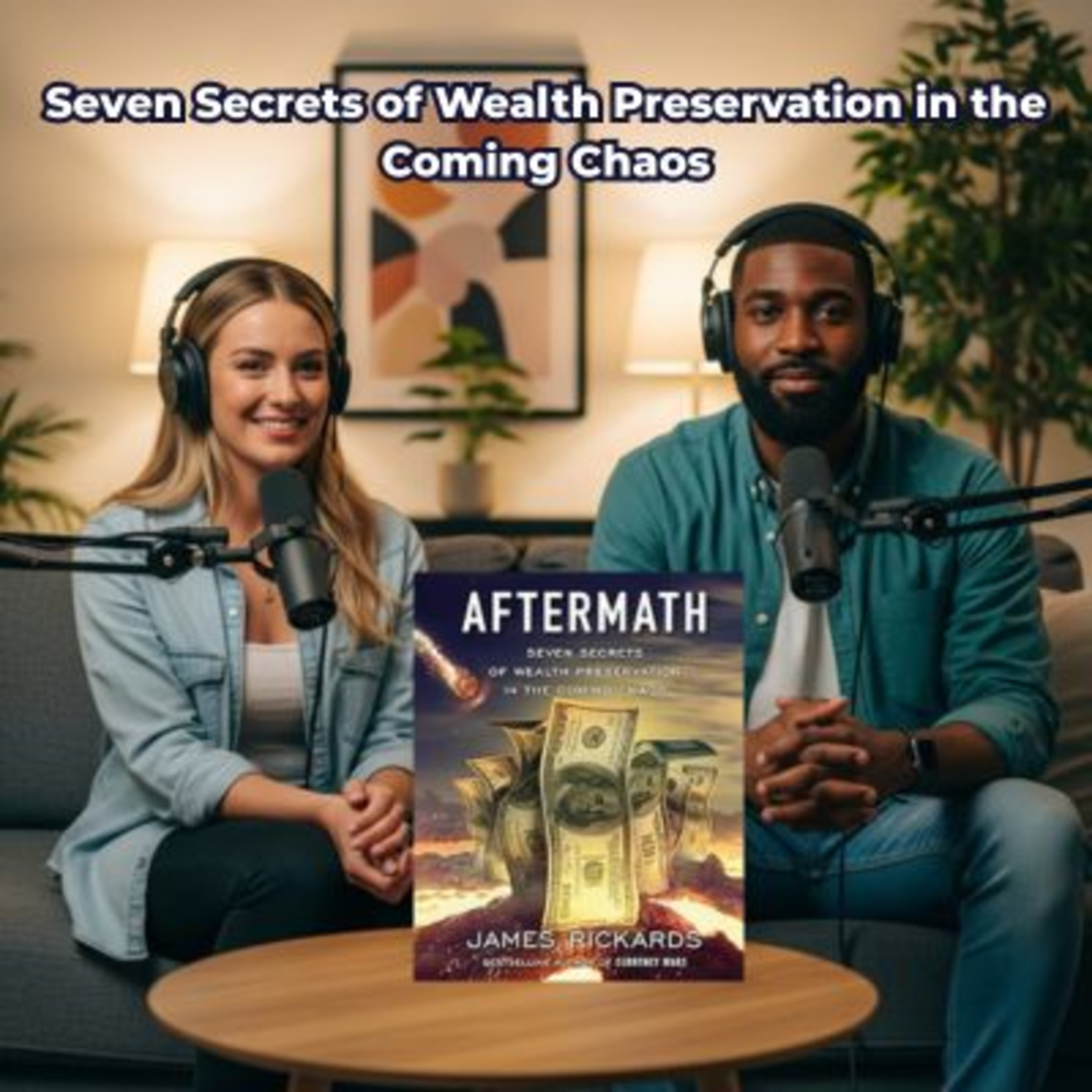
Financial expert, investment advisor and New York Times bestselling author James Rickards shows why and how global financial markets are being artificially inflated--and what smart investors can do to protect their assets
What goes up, must come down. As any student of financial history knows, the dizzying heights of the stock market can't continue indefinitely--especially since asset prices have been artificially inflated by investor optimism around the Trump administration, ruinously low interest rates, and the infiltration of behavioral economics into our financial lives. The elites are prepared, but what's the average investor to do?
James Rickards, the author of the prescient books Currency Wars, The Death of Money, and The Road to Ruin, lays out the true risks to our financial system, and offers invaluable advice on how best to weather the storm. You'll learn, for instance:
* How behavioral economists prop up the market: Funds that administer 401(k)s use all kinds of tricks to make you invest more, inflating asset prices to unsustainable levels.
* Why digital currencies like Bitcoin and Ethereum are best avoided.
* Why passive investing has been overhyped: The average investor has been scolded into passively managed index funds. But active investors will soon have a big advantage.
* What the financial landscape will look like after the next crisis: it will not be an apocalypse, but it will be radically different. Those who forsee this landscape can prepare now to preserve wealth.
Provocative, stirring, and full of counterintuitive advice, Aftermath is the book every smart investor will want to get their hands on--as soon as possible.
This episode explores strategies for preserving wealth and maintaining financial resilience during periods of economic instability. Drawing on insights from James Rickards, the author emphasizes the importance of identifying warning signs by monitoring historical trends and global financial news. To mitigate risk, the source recommends diversifying assets into tangible goods like gold or real estate and maintaining a varied currency portfolio. Additionally, the passage highlights the necessity of comprehensive insurance coverage and adopting a long-term investment perspective to avoid reactionary decisions driven by market volatility. Ultimately, the material serves as a guide for building a robust financial safety net that allows individuals to thrive despite fiscal chaos.
#WealthPreservation #Investing #PersonalFinance #FinancialFreedom #WealthBuilding #MoneyManagement #FinancialPlanning #InvestmentStrategy #EconomicTrends #PortfolioManagement #BookSummary #FinancialEducation #LongTermInvesting #FinancialResilience #MoneyMindset
What if, and just hear me out on this, what if the absolute worst thing you could possibly do during an economic crash is just, you know, hold on to your cash? Right, which goes against basically everything we're taught. Exactly. I mean, think about that for a second. We are constantly told that when the markets get choppy, cash is king, right? Just hoard your dollars and wait it out. Yeah, that's the standard, the standard conventionalism. Hide it under the mattress. Right. But today we are taking a wildly counterintuitive approach to those terrifying economic headlines.
You've been, you know, probably doom scrolling at 2:00 in the morning. Oh, we've all been there. It's hard not to. For sure. So if you are tired of feeling like everything you've worked so hard to build could just like, evaporate overnight, you are definitely in the right place. Absolutely. We're doing a deep dive into the strategies from James Rickard's book Aftermath 7 Secrets of Wealth Preservation in the Coming Chaos, and our mission today is pretty simple. We want to transform you from a panicked observer into someone who is completely financially bulletproof.
And, you know, the context for this is just incredibly urgent right now. I mean, we are looking at a landscape of intense market volatility, these sudden and really sticky inflation spikes and just profound economic insecurity everywhere you look. Yeah. It feels like every time you open a news app, it's just bad news. Exactly. And the philosophy we are diving into today, it isn't about figuring out how to just, you know, scrape by and merely survive a crash, right? It is about understanding the actual underlying mechanics of wealth so you can actually thrive in the aftermath.
It's a fundamental shift, really. From a defensive posture to an offensive one. Yes, moving from a defensive reactive posture into a position of absolute strength. OK. Let's unpack this, because before you can even think about protecting your house from a storm, you have to actually know that the storm is coming. That's step one. Right. And the first major concept from the source material is comprehending economic chaos through anticipation. I mean, to me this is essentially like checking the radar before you go for a long hike in the mountains.
That's a great way to put it. Right, because you aren't going to somehow magically stop the rain from falling just by looking at the weather app on your phone. But having a financial weather forecast means you can, you know, grab an umbrella. You can pack the right gear. While everyone else on the trail gets completely soaked. Exactly because they just weren't paying attention. That is a highly accurate way to visualize it. You are scanning the horizon for storm clouds. But practically speaking, this doesn't just mean reading a history book or watching the nightly news.
Right. It's more technical than that. Much more, it requires you to look for specific mechanical warning signals of an impending economic disaster long before it actually materializes in your daily life. OK. So what are those actual signals? I mean, give us an example of a blip on that financial radar. Well, a classic example is the inverted yield curve. Oh man, OK, I've seen that term thrown around in financial articles but usually comes with just a ton of jargon. Yeah, economists love their jargon, but let's break it down simply.
Under normal circumstances, if you buy a long term government bond, say a 10 year bond, you expect a higher interest rate than if you buy a short term 2 year bond. Because my money is locked up for longer. Exactly. You are locking your money up for a longer period, so you naturally demand a higher reward for taking on that time risk. That is what we call a normal yield curve. Makes total sense. Right, but an inverted yield curve happens when short term bonds suddenly start paying more than long term bonds.
Wait, really? Meaning investors are essentially saying the near future is actually riskier than the distant future. Precisely. It signals A collective lack of confidence in the short term economic outlook. Big money is rushing to lock in long term safety, which actually drives the long term yield down. Wow, OK, so it's like everyone rushing for the emergency exits all at once. Yeah, and historically, an inverted yield curve has preceded almost every major modern recession. The massive red flag. What's another signal we should be looking out for?
Another major signal is when the rate of inflation consistently outpaces wage growth over several quarters. Yeah, people are definitely feeling that right now. Because when everyday people are mathematically losing purchasing power month after month, consumer spending inevitably collapses. They literally just run out of money to buy stuff and that is a major structural fault line for the whole economy. So by monitoring these specific indicators like the yield curve and the inflation to wage ratio, you are no longer just guessing, you actually have a real data.
Yes, and what's fascinating here is the psychological benefit that comes with this knowledge. The source material really emphasizes this. It creates A profound shift in how you carry yourself day-to-day. How so? Like confidence. Exactly. Imagine you are at a dinner party, right? And inevitably, the topic of the economy comes up. Always usually ruins the mood. Right, because usually this is when the collective panic sets in. People start going crazy over the stock market. They're sweating about their four O 1 KS complaining about gas prices.
Yeah, everyone just feeds heads off each other's anxiety. But because you have been monitoring these historical trends and indicators, you aren't doing that. You're sitting there coolly discussing the shifts you already saw coming months ago. You project total control. Because you aren't reacting to a surprise. You saw the radar. Precisely, man. Being the calmest person in the room when everyone else is losing it, That is just a really powerful image. It changes everything about how you experience a crisis.
But you know, seeing the storm on the radar doesn't actually keep you dry. Like you still have to build the shelter. And that means rethinking what you consider an asset and moving beyond just a standard, boring portfolio of stocks and bonds. Right. The foundational building block of the shelter is aggressive diversification. Spreading your investments over a number of entirely different asset classes naturally lowers your localized risk. OK. So what kind of assets are we talking about here? The strategy strongly suggests looking into physical gold, real estate and even artwork.
OK, here's where it gets really interesting and honestly where I have to push back a little bit on the source material. OK, let's hear it. Because I mean, diversifying into real estate makes total sense to me. People need a place to live. And gold? Sure, that's a classic historical hedge against chaos. But artwork? It sounds a bit out there, I know. Yeah, I mean, if the economy completely collapses, is a painting really going to act as a safety net or is that just like a strategy for the ultra rich who have millions to park in some climate controlled belt in Geneva?
It is a very fair critique, and it sounds completely counterintuitive at first glance. I get that, yeah. But if we connect this to the bigger picture, it makes perfect sense mechanically. OK, explain the mechanics to me then. The underlying logic here is asset correlation. Assets like art or even gold, and specific types of real estate. They operate on entirely different frequencies than the stock market. Let's pause on that word for a second correlation. Let's make sure we're totally clear on. That sure correlation basically measures how 2 assets move in relation to each other.
If they move in the exact same direction at the exact same time, they're highly correlated. Right. So if one goes up, the other goes up. Exactly. And the danger for most people is that their entire net worth is highly correlated to the broader stock stock market. If Wall Street takes a massive hit, there are 401K, their company stock options, and often their actual job security. They all plummet simultaneously. Yeah, everything is essentially on the exact same frequency. Exactly. When the stock market drops 20%, it doesn't automatically mean the value of a specific rental property in a stable market drops at the exact same rate.
That makes sense. And it certainly doesn't mean a rare piece of art loses 20% of its value at auction the very next day. These alternative assets are not directly tethered to the daily algorithmic fluctuations of the S&P 500. They function as shock absorbers. So if your stock portfolio falters, these non correlated assets just kind of sit there on that different frequency, absorbing the loss and allowing your overall net worth to stay afloat. Yes. So it's less about the painting itself and more about owning something, really anything of value that genuinely does not care what the stock market is doing today.
Wow. OK. That's a great way to think about it. It doesn't care about the stock market. Exactly. That is the core mechanism and this concept of a comprehensive Moat. It extends directly into the next phase of the strategy, which is insurance. Insurance OK. Because being adequately insured Shields you from those sudden, unforeseen financial catastrophes that can wipe out even those beautifully diversified portfolio. But you know, most people hear the word insurance and they just think about their basic auto policy or their health insurance.
Which is necessary, obviously, but it's completely insufficient in a major crisis. The strategy dictates assessing your current coverage to ensure you have substantial life, health and property insurance. Sure, but it goes much further than that. Like what? What else should we be looking at? It recommends specialty plans depending on your specific vulnerabilities, for instance, business interruption insurance. OK, how does that work? Well, say you run a small business. If a natural disaster or a severe economic shock completely disrupts the global supply chain and your business cannot operate for three months, standard property insurance doesn't cover your lost income.
It just covers physical damage to the building. Oh wow, so you're just bleeding cash for three months? Exactly. And that's where business interruption insurance steps in. It covers payroll and lost revenues, preventing a temporary crisis from becoming a permanent bankruptcy. Got it. So it is really about covering all your bases so a localized disaster doesn't trigger this like cascading financial failure in your personal life. Correct, you are isolating the damage so it can't spread. But you know, as robust as the shelter is with the real estate, the gold, the comprehensive insurance, there is still a massive, glaring vulnerability in this whole setup.
Oh, really? Which is what? Because I felt pretty secure just now. Well. Let's say you've done everything right. You own the non correlated assets, you are fully insured. What happens if the actual money you use to measure those things, like the cash sitting in your checking account, suddenly loses its value? Ah. The currency trap, which is exactly what we hinted at in the very beginning of the deep dive. Exactly. It's the silent killer of wealth. This brings us to a really critical distinction in the strategy regarding long term wealth.
Unexpected changes in currency values can absolutely destroy wealth overnight, even if your physical assets are totally secure. It happens faster than people think too. Right. And the action step here from the book is to hold a variety of stable currencies. They specifically call out the Singapore dollar and the Swiss franc alongside your non currency dependent commodities. Yeah, because most people suffer from severe local bias. What do you mean by local bias? Well, when you think about inflation or the value of money, you probably only think about the prices at your local grocery store, in your local currency.
Your paycheck, your mortgage, your savings. They're all tied to a single Fiat currency. OK, let's define Fiat currency real quick for anyone who might not be completely familiar with the term. Sure. Fiat currency is simply government issued money that is not backed by a physical commodity like gold or silver. Right. It's just paper, basically, yes. It only has value because the government issuing it maintains that value and because the public trusts it. The US dollar, the euro, The yen, these are all Fiat currencies.
So it's heavily dependent on trust. Entirely dependent on trust, and the inherent risk there is that if the specific government managing your Fiat currency makes a massive monetary mistake, like say, printing way too much of it to cover domestic debt which drives up inflation, your entire financial existence takes the hit. Because all your eggs are in that one currency basket. Exactly. So what does this all mean? To me, holding foreign currency is like having different financial passports. I like that analogy.
Right, because if you only have one passport and that country suddenly closes its borders or its economy just implodes, you are stuck. You are trapped by the mistakes of a single central bank. You have no way out. But if you have multiple passports, if if one currency gets grounded by hyperinflation or some massive domestic crisis, your wealth can still travel safely elsewhere. The financial passport is a perfect analogy for this, and it raises an important question. Why specifically the Swiss franc or the Singapore dollar?
I mean, what is the actual mechanism making them so stable? Yeah, that's what I want to know. Why are those two always the go to safe havens when things get crazy? It really comes down to structural economic discipline. Take Switzerland for example. The Swiss franc, or CHF, is heavily favored because Switzerland maintains an incredibly strict banking regulatory environment and a historically neutral geopolitical stance. Right, they kind of stay out of everyone else's drama. Exactly. They are mechanically insulated from many of the political and economic conflicts that Dr. inflation in the West.
Historically, their central bank has maintained massive reserves and they actively avoid the kind of extreme debt monetization, which is essentially printing money to pay government debts that we see in other major economies. So they aren't just turning on the money printers every single time there is a crisis. Yeah. They are very disciplined. And what about Singapore? Why are they on the list? Singapore operates on a similar principle of discipline, but with a slightly different mechanism. The Monetary Authority of Singapore actually manages its monetary policy by targeting the exchange rate rather than domestic interest rates.
Oh. Interesting. Yeah. They have massive foreign exchange reserves, a highly diversified economy and a really strict regulatory environment. The Singapore dollar is engineered from the ground up to maintain stability against the basket of currencies from its major trading partners. But practically speaking, how does a normal person actually do this? I mean, we can't all just fly to Zurich and open a secret bank account, right? Are everyday investors supposed to just keep stacks of foreign cash under their mattress?
No, no. The modern financial system makes this much more accessible than it used to be and everyday investor can gain exposure to foreign currencies through specific exchange traded funds or ETFs that directly track the Swiss franc or the Singapore dollar. Oh, so you can just buy them in a standard brokerage account? Exactly just like you'd buy a stock, there are also multi currency digital bank accounts available today that allow you to convert and hold different global currencies with just the tap of the screen on your phone.
Wow, technology really makes this so much easier. It does. Or as the strategy also notes, holding physical gold is essentially holding a globally recognized non Fiat currency. It is, in many ways, the ultimate borderless money. Because gold is gold anywhere in the world. Exactly. So it is about diversifying the medium of exchange itself, not just what you buy with it. By spreading out the currencies you hold, you dramatically lower your risk of total ruin if your home country's economy takes a massive hit.
Exactly. You're systematically removing the single point of failure from your net worth. OK, so let's review where we are. We've built a diverse portfolio with non correlated assets. We've insured it against disasters with specialty coverage. We've even shielded our literal cash by getting our financial passports in order. A very solid foundation. But the final piece of the puzzle isn't about what you own at all. It's entirely about how you think. Right, the required mindset shift that this might be the hardest part, yes.
The mindset, The directive here is to establish specific 510 or even 20 year financial goals. You have to define exactly where you want to be decades from now, establish a sound investing strategy that supports those goals, and then, crucially, adhere to it even during intense market turbulence. But we have to be honest here. I mean, executing this is incredibly difficult in practice. See, that is exactly what I wanted to push back on because it is so incredibly easy for us to just sit here in a quiet room and say, oh, just think 20 years ahead.
Right, it sounds great in theory. But let's be real, when you are looking at your retirement account and it is actively bleeding today, like when it's down 30% and the news is just screaming about a total global collapse, how do you actually ignore that panic? How do you just look at a 20 year plan and feel OK? It is brutal. I am not going to pretend it is easy to watch your hardened wealth drop on a screen. Human psychology is just hardwired to react to immediate threats. The Saber toothed tigers in the room.
You panic. Exactly. The tiger is eating my 401K right? But if we lean on the actual mechanics of the market, the answer is embedded in the framework of the strategy itself. Having a rigid long term plan is precisely what relieves the tension of daily fluctuations. OK, but how does a piece of paper with a 20 year goal stop the panic today? Think of it like engineering a skyscraper in an earthquake zone. OK, I'm tracking. If you build a rigid, brittle structure, the moment the earth shakes, the building just snaps and collapses, right?
But modern skyscrapers are engineered with incredibly deep bedrock foundations, and their upper structures are actually designed to sway in the wind and roll with the seismic activity. Oh wow, so they are built to move? Exactly. If your financial timeline is tomorrow, a drop today is a catastrophic structural failure. The building collapsed. Because you needed that money right now, yes. But if your foundation is set 20 years deep, a 30% drop today is just the building swaying. It feels incredibly uncomfortable while you're inside it, but the bedrock is secure.
That is such a good way to frame it. By adopting that long term outlook, you structurally remove the need to panic at every set back. You understand that the volatility is part of the design, not a flaw in it. You stop reacting, which allows you to make informed, rational judgments instead of panic selling at the absolute bottom of the market. The plan itself is the deep bedrock foundation. It absorbs the shock. And that is the true secret of wealth preservation in the coming chaos. Financial disaster is not an inevitability.
Even when there is total chaos all around you. With the correct mindset, the right non correlated assets and currency protection, you don't just survive the aftermath, you flourish. That is an incredibly empowering shift in perspective. Let's take a second to recap the journey we've just been on because we have covered a lot of vital ground today. We really have. We started in that place of vulnerability, you know, doom scrolling, terrifying economic headlines, and desperately holding onto cash.
But we've walked through the precise mechanical tools to actually acquire real wealth preservation. We move from reactive to proactive. Right first we learned to monitor the radar, tracking actual signals like inverted yield curves and inflation data to spot the economic storm clouds before they hit. So we aren't caught by surprise. Exactly. Then we built the shelter. We diversified away from highly correlated stocks into assets on totally different frequencies like real estate and yes, even art, while wrapping it all in comprehensive specialty insurance to prevent cascading failures.
We. Secured the physical foundation. Then we protected the very medium of our wealth by holding stable global currencies like the Swiss franc and the Singapore dollar, basically getting our financial passports in order to avoid the Fiat currency trap. Avoiding that single point of failure. And finally, we anchored the entire strategy in deep bedrock engineering our 20 year plan so our portfolio can sway in the economic earthquakes without snapping. It really is a complete paradigm shift. It takes you from being a victim of circumstance to an architect of your own stability.
And as we wrap up, I want to leave you with one final thought regarding all of this, something that really struck me as we analyze this approach to wealth. Throughout these concepts, there is a recurring theme of you being the smartest, calmest person in the room. You know, the dinner party, the family meal or the backyard cookout. Yes, that social contrast is a really powerful metric. When everyone else is agonizing over a temporary dip, you are enjoying the party because you know your foundation is secure.
But consider the broader implication of that What? Do you mean? Well, when you actually become that person, when you become the rock during a time of intense economic chaos, people are going to notice. Oh they will definitely notice you weren't panicking while they are freaking out. Right. And they won't just admire you, they will rely on you. The ultimate consequence of mastering these secrets isn't just saving your own personal wealth or looking smart at a cookout. It's that you will inevitably become the financial anchor for your friends and your family when things get really hard.
Wow. They are going to look to you for guidance, for stability and for reassurance when the storm hits and their correlated assets are crashing. So the real question you have to ask yourself isn't just whether you can protect your own portfolio, it's this, Are you ready for that kind of leadership? Wow, that completely changes the stakes. It's not just about insulating yourself, it's about becoming a shelter for everyone around you. Thank you so much for joining us on this deep dive today. We really appreciate you taking the time to explore these concepts with us.
Keep questioning the headlines, look closely at the mechanics of your own assets, and most importantly, start preparing your financial weather radar today. We'll catch you on the next deep dive.
 Apple Podcasts
 Castbox
 Castro
 Goodpods
 Moon FM
 Overcast
 Pocket Casts
 Podbean
 Podcast Addict
 Podcast Republic
 Spotify