How Good People Make Tough Choices by Rushworth M. Kidder | Resolving the Dilemmas of Ethical Living
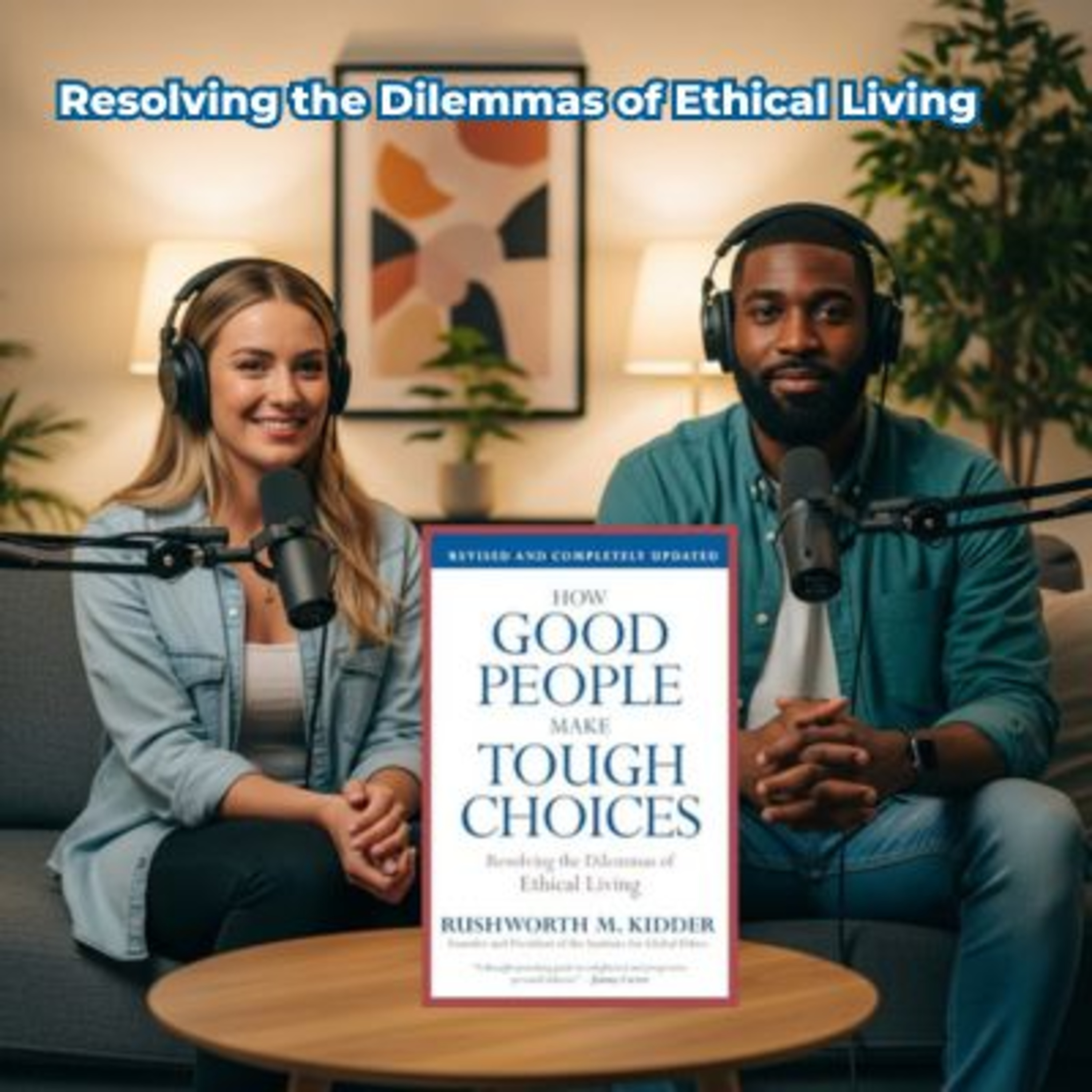
“A thought-provoking guide to enlightened and progressive personal behavior.”
—Jimmy Carter
An essential guide to ethical action updated for our challenging times, How Good People Make Tough Choices by Rushworth M. Kidder offers practical tools for dealing with the difficult moral dilemmas we face in our everyday lives. The founder and president of the Institute for Global Ethics, Dr. Kidder provides guidelines for making the important decisions in situations that may not be that clear cut—from most private and personal to the most public and global. Former U.S. senator and NBA legend Bill Bradley calls How Good People Make Tough Choices “a valuable guide to more informed and self-conscious moral judgments.”This episode provides a comprehensive guide on navigating ethical dilemmas by examining key concepts from Rushworth M. Kidder’s work. It defines these challenges as conflicts between two competing right values, such as honesty versus loyalty, rather than simple choices between right and wrong. To manage these situations, the author emphasizes the importance of identifying core personal values and maintaining ethical fitness through constant reflection and practice. By categorizing problems into specific dilemma paradigms, individuals can gain clarity and reduce the emotional stress associated with difficult decisions. Finally, the source offers resolution principles to help evaluate the consequences and fairness of one's actions. Ultimately, these strategies aim to foster integrity and confidence when facing life's most complex moral choices.
#EthicalLeadership #DecisionMaking #Integrity #Leadership #PersonalDevelopment #CriticalThinking #EmotionalIntelligence #LeadershipDevelopment #PersonalGrowth #Ethics #ProfessionalGrowth #LifeLessons #BookSummary #CharacterDevelopment #SelfAwareness
So picture this, you are out grabbing dinner having just like a fantastic time. Oh nice, setting the scene right. The food is great, the atmosphere is totally relaxed, and then one of your absolute best friends leans across the table, lowers their voice and confesses something in total confidence. Oh. That's never good. Exactly, they tell you they are seriously considering cheating on a massive make or break assignment at work. Oh wow. Yeah, instantly the mood just evaporates. Your stomach completely drops and you are now sitting there staring at your plate, totally trapped.
Because what do you even do in that situation? Right. Do you urge your friend to do the right thing, potentially reporting them or ruining A lifelong relationship just to protect the integrity of their workplace? That's tough. Or do you stay loyal, keep your mouth shut, and protect the secret of someone you really care deeply about? It is an incredibly isolating position to be in. You feel like a traitor no matter which path you take. Yes, that agonizing sensation, feeling like you are betraying A fundamental value regardless of your choice.
That is the core focus of the notes we're using for today's Deep dive. It's based on Rushworth and Kidder's work, right? Exactly his book, How Good People Make Tough Choices, and this deep dive is tailored specifically for you, the listener. Our goal today isn't to, you know, judge your dinner table ethics or just hand you a CHEAT SHEET of correct answers. Right, because there really isn't a CHEAT SHEET for life. Sadly, no. But we want to pull apart Kidder's framework so we can figure out how to navigate these agonizing situations where 2 completely opposing choices both feel somehow right.
And that distinction between right and right is the crucial starting point. Yeah, Kidder argues that most of the agonizing decisions we face, they're not choices between obvious good and obvious evil. Right, like choosing not to rob a bank isn't a dilemma. Exactly. Choosing not to embezzle money from your employer isn't a complex dilemma, it's just resisting moral temptation. The true paralyzing dilemma only occurs when two of your deeply held virtues are actually engaged in a tug of war. Like the right thing versus another right thing.
Yes. So to solve a difficult problem, you first have to properly identify it, which leads us right into naming the beast. The source material provides another workplace scenario that perfectly illustrates this tug of war. The promotion one, right? Imagine you discover that your best friend is about to receive a major promotion at work. OK, but you know for absolute fact they did not earn it. Perhaps they cut corners or, I don't know, took credit for someone else's work and the management is completely blind to it.
Yikes. Yeah, you were immediately caught between loyalty to your friend and honesty to your boss and the company. Because both loyalty and honesty are inherently good things. You value both, but in this specific instance they are mutually exclusive. You can only choose to act on one, which means you are forced to act actively violate the other. OK, let's unpack this, because I tend to visualize this kind of cognitive dissonance like a glitch in a video game. A. Glitch. Yeah, we're two fundamental rules of the programming suddenly contradict each other.
The character just freezes because the physics engine is saying gravity goes down, but the level design is demanding gravity goes up. That's a great analogy. The system just locks. But identifying that the game is glitching doesn't automatically unfreeze it. We still waste an immense amount of emotional energy desperately searching for the villain in this scenario. We really do. Right, like we want one choice to clearly be the bad 1 so we can comfortably pick the good one. But isn't the real problem that we waste time trying to figure out which side is wrong instead of just accepting that both sides have merit?
Yes, because human beings fundamentally hate ambiguity. But what's fascinating here is Kidder actually suggests A mechanism to bypass that panic. OK, he calls it identifying the dilemma paradigm. So when you look at the friend getting the unmerited promotion and you mentally categorize the situation. Like putting a label on it. Exactly. Saying to yourself, OK, I recognize this. This is the classic paradigm of personal allegiance clashing with professional integrity. Oh, I see. By naming it, you actually initiate A neurological shift.
You move the problem from the emotional center of your brain, the amygdala, right into the prefrontal cortex, which handles logic and categorization. So by forcing a label onto the conflict, you are essentially mapping the terrain. Precisely. You stop hunting for the non existent villain and just accept the reality of the landscape. You acknowledge the mechanics of the problem. Now. It doesn't solve the dilemma for you, but it significantly turns down the volume of the panic. It takes the emotion out of.
It right. Once that emotional static is cleared, you can objectively evaluate the potential fallout for both your friend and your company, rather than just drowning in preemptive guilt. OK, so naming the paradigm lessens the stress, but once you've stripped away the emotional burden, how do you actually break the tie between two rights? That requires consulting your baseline. Your core values. Exactly. Kidder's second major lesson is the significance of core values. These are the ideals like justice, kindness or honesty that basically form your identity.
The sources outline a scenario for this that I think we can all relate to. You are offered a highly lucrative, life changing job. The dream scenario. Right. The salary will wipe out your debt, secure your family's future. Everything but the company's practices directly conflict with your deeply held values of environmental sustainability. So it is the classic clash of financial security, which is a very valid responsibility to yourself and your family versus upholding your moral integrity regarding the environment.
The analogy that comes to my mind here is grocery shopping. Grocery shopping? OK, I'm listening. If you go to the store incredibly hungry without a grocery list, you are going to grab whatever provides immediate gratification. Oh, the junk food. Definitely grab the junk food. In this scenario, the junk food is that massive paycheck. Core values are supposed to be your grocery list. You know they keep you grounded, so you don't just react to immediate temptation. That makes perfect sense. But let's be entirely realistic here.
It is incredibly easy to claim you value sustainability when you are just sitting in your living room theorizing, right? When nothing is on the line. Exactly. But when a company slides a contract across the desk with A7 figure salary, doesn't that grocery list just go right out the window? It certainly tries to. Like how do we stop ourselves from caving? How does a theoretical core value actually compete with life altering money? Well, it is a massive friction point. Walking away from tangible, life altering rewards is incredibly difficult, but Kidder's argument hinges on the long term psychological toll of cognitive dissonance.
What do you mean by that? When you have taken the time to truly determine what your identity is built on, abandoning that baseline actually carries an invisible but very heavy tax. The tax is selling out. Essentially, yes. If you take the money while deeply, genuinely valuing sustainability, you fracture your own identity. You might have a significantly larger bank account, sure, but psychological literature shows you will likely live with a low low grade persistent anxiety. Because you know you compromised your core self.
Exactly. By rejecting the financial temptation and honoring your inner compass, you maintain psychological congruence and that long term Peace of Mind, that solid foundation of identity. It ultimately becomes more valuable to your daily well-being than the cash. So you are basically protecting your own psychological immune system. That's a great way to frame it, yes. But again, knowing your values in theory is completely different, different from having the stamina to execute them in real time, which transitions us into the active practice required to maintain integrity.
Yes, the physical, the moral workout. Here's where it gets really interesting. The sources introduce Kidder's concept of ethical fitness. Right, because we often treat ethics as an inherent static trait. People just assume you either are an ethical person or you. Aren't like eye color? Right, but Kidder reframes it as a dynamic capacity. It requires constant maintenance. Let's ground this in the workplace scenario provided in the text. OK. You are sitting in a cross deartmental meeting. A teammate suggests a new strategic tactic.
On the surface it sounds highly efficient, but as you process the proposal, you realize it is entirely unjust to certain members of the broader group. Oh, I've been in these meetings. We all have, right it is going to intentionally marginalized another department or make their jobs incredibly difficult just so your team can hit its quarterly metrics. It is a terrifyingly common corporate scenario, and speaking up means derailing the meeting. Yeah, potentially angering your direct teammates and risking your own social standing in the office.
So it literally is like hitting the gym. You can't just wake up one day and decide to run a marathon. You have to train. Exactly. It's like learning to play the piano. You don't just sit down and sight read a complex concerto under bright stage lights without ever having touched the keys before. No, you freeze. You practice scales in an empty room for months so that your fingers just know where to go automatically. Yes, the muscle memory. But practically speaking, how does a person actually work out a moral muscle on a random Tuesday?
Well, the sources outline a specific daily protocol for greasing those neurological grooves. OK, what is the protocol? The first step is rigorous periodic self reflection. It is the habit of reviewing your minor daily decisions, like an audit right on your commute home. You ask yourself questions like, did the way I spoke to the junior associate today align with my value of respect? Oh, I see. Or did I cut a corner on that report just because I was tired? So it's an internal audit of the low stakes moments.
Yes, and the second part of the practice is actively normalizing ethical discussions with your peers, bringing up complex scenarios over lunch, and just debating the right course of action. Just talking about it out loud. Exactly when you engage in this daily audit and these regular discussions, you are building that muscle memory. I get it. So when you are unexpectedly sitting in that high stakes meeting and the unjust tactic is proposed. Your brain doesn't just flood with cortisol and freeze. Because the neurological pathways for evaluating fairness are already well worn.
Exactly. You don't act in hazed and you don't stay silent out of fear because you have been practicing your ethical fitness. The response becomes an automatic reflex rather than a panicked scramble. That makes so much sense. You have the resilience to boldly articulate that the tactic violates basic principles of respect, and you can actually do it calmly without personally attacking the teammate who suggested it. OK. So we've established how to categorize the dilemma to stop the panic, right? We've defined the core values that serves the baseline, and we've built the muscle memory to act.
The Ethical Fitness. Exactly. But we still need an execution strategy for when we are the ones in the decision maker's seat staring down the barrel of a tough call. The final checklist, right? So what does this all mean? Looking at Kidder's resolution principles, is this resolution framework just a dressed up version of a standard? Pros and cons list that managers use all the time. Well, if we connect this to the bigger picture, it is far deeper than a standard pros and cons list. How so? Because a pros and cons list usually devolves into a purely utilitarian calculation of you know what is easiest or most immediately profitable.
Just weighing the bottom line right? Kidder provides a final tiebreaker checklist that forces you to view the decision through three distinct moral pillars. OK, let's test these three pillars against the final story from our source material. Let's do it. You are a manager and you have a promotion to hand out. You have two candidates. Candidate A is a young prodigy, highly talented, explosive potential, but completely inexperienced and untested in leadership. OK. High risk, high reward. Exactly. Candidate B is your seasoned veteran.
They lack the explosive natural talent of the prodigy, but they are the glue of the team, deeply loyal and have been there for years. The. Reliable one. Right now, if you pass over the seasoned employee, they will likely feel completely underappreciated and leave the company. Which would hurt the team. Both choices have massive merit. Both choices carry significant risk. So how do Kidder's three pillars actually resolve this? Because as I read them, the pillars are evaluating the utilitarian effects, respecting the strict rights of the individuals, and striving for universal fairness.
Correct? But don't those pillars often conflict with each other? They frequently conflict, which is actually why the framework is so robust. Let's apply the first pillar to the managers dilemma, the utilitarian effects. This asks you to look far beyond the immediate bottom line. What are the ripple effects? By taking everything into account. Exactly. Promoting the prodigy might bring in a short term spike in revenue, sure, but if the seasoned veteran leaves, what is the effect on the broader teams morale?
Does the entire department lose trust and management because they see loyalty means nothing? OK. So the utilitarian lens is looking at the ultimate outcome for the greatest number of people. Yes, but then the second pillar asks us to look at the strict rights of the individuals involved. The respect pillar. Right. Are you treating the seasoned employee with the dignity their tenure deserves? Even if the utilitarian outcome suggests the prodigy will make more money for the company? Does the veteran have a right to transparent feedback?
Do they have a right to a fair evaluation process that isn't just based on the manager's gut feeling about potential? Exactly. And that leads directly into the third pillar, universal fairness. The Golden Rule application. Right. Would the manager want to be treated the way they are treating candidate B? If the manager were a loyal employee for 10 years, would they consider it universally fair to be passed over for someone with six months of experience? Probably not. So when the manager runs the promotion dilemma through these three specific pillars, the friction between them forces a deeper synthesis.
It elevates the decision from a mere transaction to an act of ethical leadership. Beautifully said. Perhaps the manager realizes through this framework that while the prodigy has more raw talent, the universal fairness and the long term utilitarian effects on team culture demand that the seasoned veteran gets the role. Or perhaps they choose the prodigy, but realize the rights pillar demands they create an entirely new leadership track for the veteran to honor their loyalty. It's fascinating because the text notes that applying this specific reflecting technique has a massive external benefit as well.
It's not just about the manager sleeping better at night. No, it actively shapes the culture around them. It creates an architecture of trust. Well, when your team sees that you aren't just making gut reactions, playing favorites, or solely chasing the quarterly profit, but that you actually utilize A dedicated framework geared toward decency and justice, they trust your leadership. Even if they don't get the outcome they want. It exactly. Even if the seasoned employee doesn't get the promotion, they are far more likely to accept the outcome and stay with the company if they know the decision was made through a rigorous, fair and highly respectful process.
Because transparency of process often mitigates the sting of a negative outcome. It really. Does. Wow, we have dissected a vast amount of material today. We really covered a lot of ground. We started by learning to recognize the terrain. You know, identifying dilemma paradigms so we aren't paralyzed by the illusion of a villain when faced with a clash of right versus right. Right, naming the beast. Then we discussed the invisible psychological tax of abandoning our core values even when those super lucrative temptations arise.
The grocery list. Exactly. We explore the necessity of greasing our neurological grooves and building ethical muscle memory through daily audits. Ethical Fitness. And finally, we just examined how to use the three illars of utilitarian effects, individual rights, and universal fairness as a rigorous tiebreaker checklist to make well-rounded choices. The ultimate take away from Kidder's work here is that resolving these challenges is a lifelong, ongoing practice. It's not so quick fix. No, there is no ultimate finish line where decisions suddenly become easy.
You will continue to face agonizing choices. But internalizing this framework replaces that crippling ambiguity with structural clarity. It ensures that when you look back on the difficult calls you've made, you experience the peace of congruence rather than the weight of regret. It is about equipping yourself for the inevitable friction of living an ethical life. Absolutely. But before we wrap up this deep dive, there is a final concept worth mulling over. Yeah, we discussed how making good choices requires practicing your ethical muscle memory and hitting that moral gym.
Yes, but human willpower is a finite resource. So what happens when we experience ethical fatigue from being forced to make too many hard decisions in a row? That is a very real challenge, right? If the moral battery gets completely depleted by just the friction of daily life, how do you recharge your inner compass when it starts spinning wildly? That's a great question to reflect on. Because eventually you might find yourself back at that dinner table, staring across at your friend who just confessed they might cheat at work.
And you are going to need it. You are going to need every ounce of clarity you can muster to figure out the right way forward. Thanks for joining us on this deep dive.
 Apple Podcasts
 Castbox
 Castro
 Goodpods
 Moon FM
 Overcast
 Pocket Casts
 Podbean
 Podcast Addict
 Podcast Republic
 Spotify