The Introvert's Edge by Matthew Pollard : Mastering Sales Through Quiet Strengths
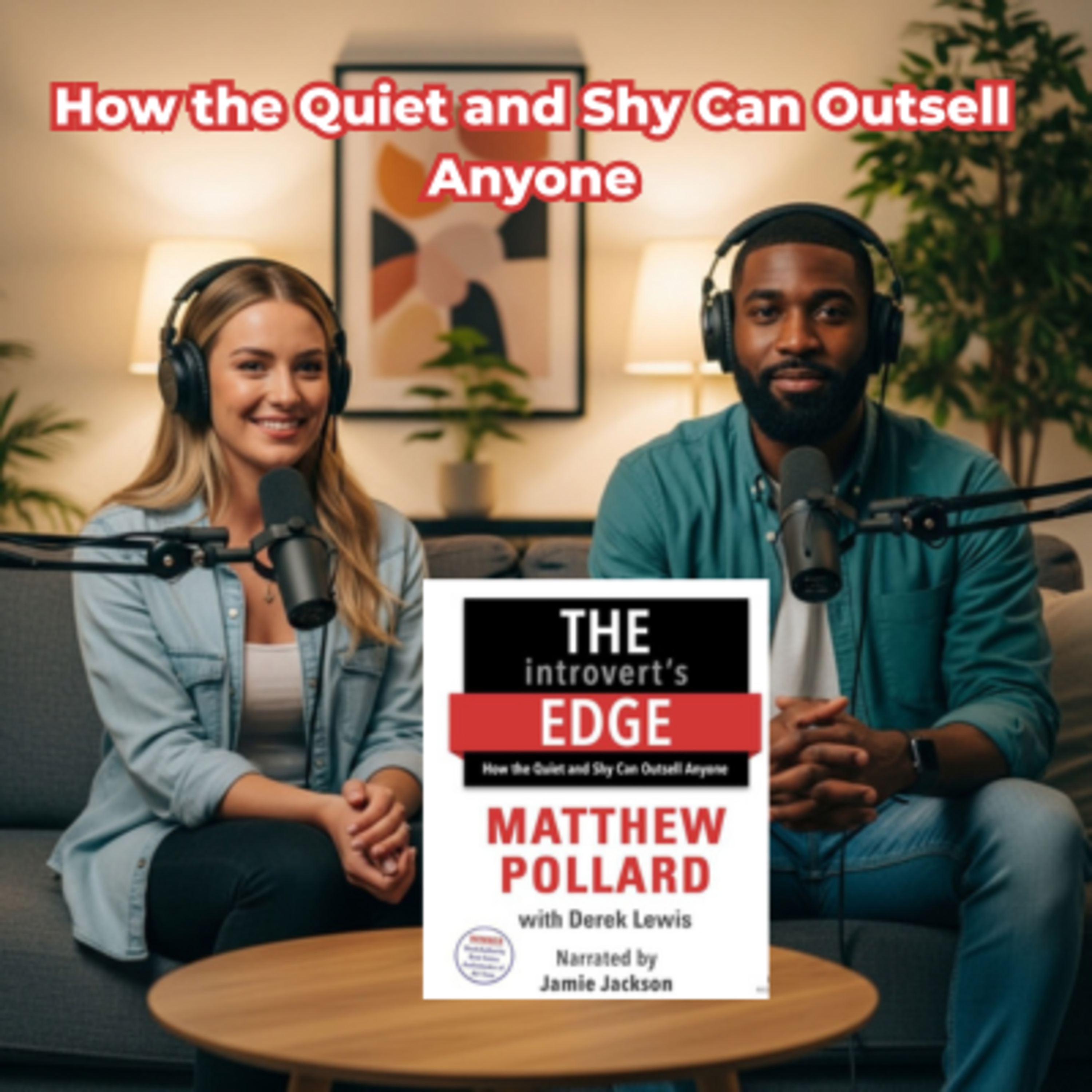
This episode provides a summary of Matthew Pollard’s book, The Introvert’s Edge, which argues that a reserved personality is a competitive advantage in the sales industry. The author explains how introverts can leverage their natural listening skills and empathy to build deep trust rather than relying on aggressive tactics. Key strategies mentioned include asking thoughtful questions, sharing relatable stories, and handling concerns with calm professionalism to create a low-pressure environment. By following a structured sales process, quiet individuals can guide clients toward decisions naturally and authentically. Ultimately, the source encourages readers to embrace their inherent traits and commit to continuous improvement to achieve professional success.
An introvert? Great at sales? Yes.
Sales is a skill anyone can learn and master - and introverts are especially good at it once they learn how to leverage their natural strengths.
Introverts aren't comfortable with traditional tactics like aggressively pushing a product or talking over a customer's objections. That's the beauty of The Introvert's Edge: it doesn't focus on the sale itself but on a sales system that helps introverts feel sincere instead of sales-y. Powerful and practical, the book reveals how to:
- Find natural confidence
- Prepare for every situation
- Present your value so that customers want to buy
- Sidestep objections
- Judge when the customer's ready to buy
- Ask for the sale - without asking
- Continually adapt and improve
- Profit from a process that doesn't rely on personality
- Enjoy sales
With stories of introverted entrepreneurs, salespeople, and business owners who went from stagnant to success, The Introvert's Edge shows you how to succeed in sales - without changing who you are.
#introvertsedge #matthewpollard #productivityhacks #personaldevelopment #successstrategies #businessinsights #leadershipskills #leadership #ambitiousprofessionals #businesstips #self help #scaling business #businesstactics #professionaldevelopment #startupgrowth #entrepreneurship #businessmindset #growthstrategies
The loudest person in the room is usually, well, the worst at persuasion. Yeah, which is completely backwards to what we were taught, right? Exactly. I mean, it is a myth we've bought into for decades, and honestly, it's probably holding you back. Think about it. You're sitting in a crowded conference room. Or maybe you're on one of those massive video calls with 20 different faces staring back at you. And everyone is just pitching their ideas, talking over each other. Right. They're confident, they're loud, and you have something genuinely valuable to contribute.
You want to speak up, but you just feel completely drowned out by all that noise. It's frustrating. You start to think you're quieter. Nature is a, you know, a professional liability. Totally. So today we are tearing down that myth of the aggressive, fast talking salesperson. We're doing a deep dive into some amazing insights from a book Ginger video summary of Matthew Pollard's book The Introvert's Edge. And the mission here is really to show you how to take your quietest traits and turn them into your absolute greatest professional superpower.
Yes, and without having to change a single thing about who you actually are. So let's unpack this from the start. We usually associate sales, persuasion or even just like getting buy in for an idea at work as this loud chaotic battlefield. Yeah, Battlefield is a good way to put it. Right. Like you have to be this aggressive warrior who just wears the other side down through sheer volume and force of personality. Why is that our default setting? Well, what's fascinating here is that we picture Persuasion that way because of an outdated, almost cinematic archetype.
Like the slick used car salesman on TV. Exactly. We've been conditioned by movies and culture to picture this fast talking person who just refuses to take no for an answer, dominating the conversation until the prospect finally caves. Just grinding them. Down, yeah, but the reality of modern persuasion is completely different. The modern buyer, and that could be a customer, your boss or a colleague. They're highly sophisticated, they see right through those high pressure tactics. Well for sure when someone does that to me, my guard goes up immediately.
Right, because the loud, pushy extrovert model actually triggers an immediate psychological resistance, you feel manipulated. But on the flip side, the exact traits introverts naturally possess like patience, thoughtful communication, and deep, active listening, those are the exact tools that lower those defenses and create genuine connection. OK, so if loudness actually creates resistance in modern buyers, we're basically looking at a complete inversion of the traditional playbook. A total inversion, yes.
How do we practically start doing that? Because I mean, for a lot of introverted people the instinct is just to put on a mask and try to fake being that loud extrovert for an hour. Right. And that mask is exhausting. It drains your energy completely. And frankly, people have a very keen radar for inauthenticity. They can. Tell you're fake. Exactly. They can tell when you're performing rather than actually connecting. Yeah. So Pollard points out that the very first step is to just drop the mask completely.
Make your introversion your number one strength. Make the quietness the strategy. I like that. Because the long term game of persuasion isn't 1 quickly with force, it is one through trust. And introverts are naturally wired to build trust because their baseline is to listen more than they speak. So how do you set that up early on? Because usually the first 30 seconds of a meeting is where all the pressure is. You can establish this dynamic right away. In those first 30 seconds, instead of launching into some rehearsed elevator pitch, you set a totally transparent agenda.
Give me an example, what does that sound like? You just say something simple like I'd like to hear about what you need, and then I'll tell you how we can help, OK? I have to admit, saying something like I'll hear what you need and tell you how we can help sounds a bit risky. How so? Well, if I'm just sitting back listening, aren't I kind of losing control of the meeting? The person across the table is expecting me to pitch them. Doesn't that make me look, I don't know, unprepared? If we connect this to the bigger picture, it only feels risky if you view persuasion as a monologue.
OK, but think about the psychology of being sold to When someone sits down to hear a pitch, their physical posture is tense, their mental defenses are totally up. They are just waiting for you to try and trick them or push a product they don't really want. Yeah, you're just waiting for the trap to spring. Exactly. So when you start by transparently laying out the agenda and literally giving them the floor, it completely disarms them. You aren't forcing a product, you are creating a collaborative environment.
Wow, so you're taking the pressure off? Completely. By removing the pressure of a traditional pitch, the person suddenly feels safe. Their shoulders literally drop. You are changing the dynamic from a battle of wills to a mutual exploration that. Makes a lot of sense. You haven't lost control at all, you've actually just established A framework where they are willingly going to hand you the exact information you need to persuade them. OK, that really changes the perspective. You're taking all the anxiety out of the room by letting them know, hey, there won't be a hard sell right out of the gate.
But let's look at the next phase. The armor is down, they feel safe, and they are talking. Now, as an introvert, I might be perfectly happy to let them talk for the next hour. Right, just sit back and listen all day. Yeah, but we still have an objective to reach. We need to actually guide the room without suddenly taking over and dominating the airtime. How do we do that? The key here is adopting the mindset of a detective. A detective, Yeah. You direct the conversation not by talking constantly, but by deploying highly targeted, open-ended questions.
Your goal is to uncover their true underlying needs rather than just pushing your own agenda. So you're kind of gently steering them. Right. You want them to vocalize their pain points because when they say it out loud, they actually start persuading themselves. Think about how this applies to something complex like consulting. There's a story in the summary about an introverted consultant named John. Yes, John's story is a perfect example of this. Right. So he really struggled with selling his services initially.
He was probably, you know, sweating through his suit, trying to remember all the bullet points of his service packages. And his climates just weren't biting. Because he was trying to be that extroverted pitchman. Exactly the shift happened when he completely stopped pitching and started diagnosing. He started asking simple but really profound things, like what problems are you dealing with and what's stopping you from reaching your goals? And the shift in his business was incredible after that. Totally.
Clients stopped seeing him as a salesperson and started seeing him as a genuine helper. So what does this all mean? It's basically like the difference between a late night infomercial host screaming about a blender versus a doctor asking where it hurts so they can diagnose you. I love that the doctor doesn't have to be loud to be effective. The Doctor analogy is brilliant because it highlights who actually holds the power in a room. The infomercial host is relying on manufactured hype, which is just exhausting to maintain.
Super exhaust, but think about being in a doctor's office. The doctor doesn't walk in and immediately yell at you to take a specific pill. They ask questions. How long has this been hurting? Does it hurt when I press here? Yeah, the patient is doing most of the talking. Exactly. The patient does the talking, but the doctor is completely in control of the interaction. When you ask probing follow up questions, especially when a customer expresses doubts or frustrations, it shows genuine empathy. And it builds that trust we were talking about earlier.
Right. The client feels heard and more importantly, they feel like they are in control of the conversation. Meanwhile, you are quietly mapping out the exact problem that your product or ID is going to solve. So the doctor has listened, asked the right questions and diagnosed the problem. Now comes the part where introverts usually panic. The presentation phase. You have to actually present the solution. This where you usually feel the pressure to flip a switch, turn into a performer and run through a massive list of features and specs.
But knowing the spec inside and out isn't actually the best tool for an introvert, is it? Not at all. In fact, defaulting to a list of features is one of the quickest ways to lose the connection you just spent all that time building. So what's the alternative? The strategy here is to completely ditch the feature lists and use real life stories instead. Let's really breakdown why that is, because the summary gives 2 great examples of this. First, consider an introverted tech salesperson selling complex B to B software.
A notorious, obviously difficult thing to sell, right? And she find it incredibly difficult to explain the intricate technical details, the API integrations, the cloud architecture. It wasn't her strong suit, and when she tried, she would stumble and the client's eyes would just glaze over. We've all been in those meetings. Yeah, it's brutal, but her sales skyrocketed when she stopped trying to be a technical manual and just started sharing a customer success story. She talked about a previous client who was losing sleep over potential data loss and how the software finally gave them Peace of Mind.
Much more relatable. Exactly. Then there's a weight loss program example. Instead of listing out the nutritional macros, the calorie deficits and the specific workout schedules, the advice is to share a previous client's journey. Right, focusing on the human element. You talk about how a previous client felt sluggish, how they struggled to keep up with their kids, and how the program helped them finally run a 5K. Here's where it gets really interesting. Why is a story so much more powerful for an introvert than just reading off a brilliant, logically sound list of benefits?
It entirely comes down to cognitive load and emotional resonance Cognitive. Load. Yeah, when you read a bulleted list of features to someone, like API integrations or nutritional macros, you are forcing their brain to do a tremendous amount of work. Oh, because they have to figure out what it all means for them. Exactly. They have to process the technical information, translate it, and then imagine how that technical feature might benefit their specific life. It burns mental calories. A story, on the other hand, does all that heavy lifting for you.
It just serves it up on a silver platter. Right. It bypasses the logical friction and builds an emotional connection instantly. People don't buy macros, they buy the feeling of fitting into their favorite jeans. Again that. Is so true. And for an introvert, this is an absolute game changer. You don't need a charismatic, performative delivery to keep their attention because human beings are biologically wired to pay attention to narratives. We just love stories we do. The narrative arc of the story becomes the charismatic element in the room.
It takes the spotlight off you, the speaker, and places it squarely on to the successful outcome the client actually desires. That is a massive relief. I mean, you are basically letting the story do the talking. You just deliver the narrative and the narrative does the persuading. Exactly. But as great as stories are, we have to talk about the roadblock. The moment every introvert absolutely dreads where the heart rate spikes. I'm pushed back. Yeah, the moment the customer pushes back, raises a concern, or just flat out says no.
For someone who naturally avoids conflict, an objection feels like a brick wall. It does feel like a wall and the natural introverted physiological response to an objection like your price is too high or I don't think we need this is either a freeze response or a total retreat. Yeah, you just want to sink into the floor. Right. We view it as a personal rejection or an invitation to argue. But the framework asks us to fundamentally reframe what an objection is. Objections aren't rejections. What are they then?
They are simply requests For more information, disguised as a roadblock. There are opportunities for a deeper conversation. Let's look at the classic budget pushback. A client says, look, I love this, but I don't think it fits my budget right now. The old panic inducing reaction is to either immediately drop your price, get defensive about your value, or just apologize and pack up your bags. Which is what a lot of people do, right? But the introverted approach is to absorb that pushback and calmly reply.
I completely understand budget is important. Can you tell me more about your current priorities so we can figure out a solution that actually works for you? Let's dive into the neuroscience of why that specific response is so incredibly powerful. When someone raises an objection, their fight or flight system is slightly activated. They are bracing for you to argue with them. They're expecting a fight. Exactly. By saying I understand budget is important, you are providing instant validation. Validation diffuses the amygdala response.
You are telling their brain I am not a threat, I am actually listening. You move from sitting across the table as an adversary to sitting on the same side of the table as a partner. Beautifully said, Yes. Then you use that detective skill again. You ask an open-ended question about their priorities. You are turning a point of conflict into a collaborative problem solving. Exercise it. Diffuses the tension instantly because you aren't fighting their reality, you are just exploring it with them. Exactly.
And that leads right into how you actually check if they are ready to move forward without suddenly turning into that aggressive closer the framework calls at the trial close. Yes, the trial close is vital. It's a way of checking the temperature of the room without forcing A definitive decision. Like when a worker at a clothing store asks would you like to try this on, They aren't asking you to buy it yet. Or in a meeting asking how do you feel about what we've discussed so far? The trial close is essentially a low stakes micro commitment.
When you ask for a massive decision all at once, you trigger buyer's remorse before they've even bought anything. Oh yeah, that pressure is the worst. By asking low stakes questions you gauge their readiness and allow them to agree in small comfortable increments. It prevents the buyer from feeling cornered and crucially, it protects the introverts energy by avoiding a high stakes direct confrontation. I follow the logic there, but I have to say the very final step of this process made me pause.
Which part? Well, after you do these temperature checks, the advice is to act like the sale is already made. So instead of nervously asking so do you want to buy the service you were supposed to say something like great, the next step is for me to send over the contract for you to review. Wait, doesn't assuming the sale feel exactly like the arrogant, pushy, extroverted behavior we spent this whole time trying to avoid? This raises an important question, and it's a very natural concern. It's actually where a lot of people adopting this method get tripped up, but there is a massive difference between being pushy and confidently guiding the next steps.
OK, explain that difference for me. Context is everything. Look at the sequence we've just walked through. You haven't cornered them at any point. You build trust upfront by setting an honest agenda. You asked deep diagnostic questions like a doctor. You shared relatable stories instead of blasting them with specs. And you calmly, empathetically handled their objections. By the time you reach this final moment, the heavy lifting of persuasion is completely done. So you aren't springing a trap on them at the last.
Second, exactly, you and the client have already mutually agreed through the trial closes and the diagnosis that your solution fixes their problem. Yeah, I see. If you suddenly get nervous, hesitant and weird at the very end, it actually makes the client nervous. They start wondering, wait, why is she hesitating? Is there something wrong with his deal? You create doubt where there wasn't any, yes. Saying great, I'll get the paperwork ready for you isn't a high pressure tactic, it is a natural, helpful reduction of friction.
You are doing them a service by making the final step as smooth and easy as possible. Confident guidance, not arrogant pressure. That reframing is incredibly helpful. It's not assuming the sale because you think you're a genius. It's assuming the sale because you've done the rigorous work together to prove it's the right fit, precise. It brings this whole quiet framework together so beautifully. But I think it's really important to remind you listening right now that these skills aren't a magic wand.
You aren't going to just listen to this deep dive walk into a boardroom tomorrow and Florida State execute this without a hitch. No, definitely not. It is a muscle that has to be developed. That is the crucial final lesson. Practice, improve and repeat. The journey of mastering the introverts edge is exactly like learning to ride a bicycle. When you first get on, you are going to wobble. You might fall a few times. Scrape your knee a bit. Yeah, when you first try to bite your tongue and use open-ended questions instead of launching into your comfortable pitch, it might feel incredibly awkward.
The silence might feel heavy. Silence is always tough at first. But the secret to long term mastery is the post meeting reflection, taking 5 minutes after every single call or presentation to ask yourself what worked? Where did I get defensive? Did my story resonate? Just a quick. Audit. Exactly. It is that habit of continuous reflection that refines your approach from feeling awkward to feeling like second nature. So bringing this all home, the core message for you today, is incredibly freeing.
You do not need to change your quiet nature. Not at all. You don't need to put on a loud, extroverted mask, drain your social battery, and pretend to be someone you aren't just to be persuasive or successful. Your natural empathy, your patience, and your deep listening. The things that might make you feel drowned out in a chaotic room, those are your actual superpowers. They really are. When you use them strategically, when you ask the right questions and let your stories do the heavy lifting, you don't just survive in high pressure scenarios, you completely thrive.
And as we wrap up, I want to leave you with a final thought to Mull over. We framed all of this around professional sales and business meetings today because that was the focus of the source material, right? But human psychology doesn't change just because you leave the office. If listening deeply, storytelling and asking diagnostic questions are the ultimate tools for quiet persuasion, well, how might you use this exact same introverts edge in your personal? Life. Oh, that's a great point. Think about the next time you have to negotiate your salary with HR or even just sitting around the dinner table trying to convince your family on where to go for vacation.
Time you are sitting in that crowded room, feeling the pressure to speak louder and talk faster just to be heard. Remember, you don't have to shout to be the most powerful voice in the room, you just have to ask the right questions.
 Apple Podcasts
 Castbox
 Castro
 Goodpods
 Moon FM
 Overcast
 Pocket Casts
 Podbean
 Podcast Addict
 Podcast Republic
 Spotify