The Happiness Advantage: The Seven Principles of Positive Psychology That Fuel Success and Performance atWork
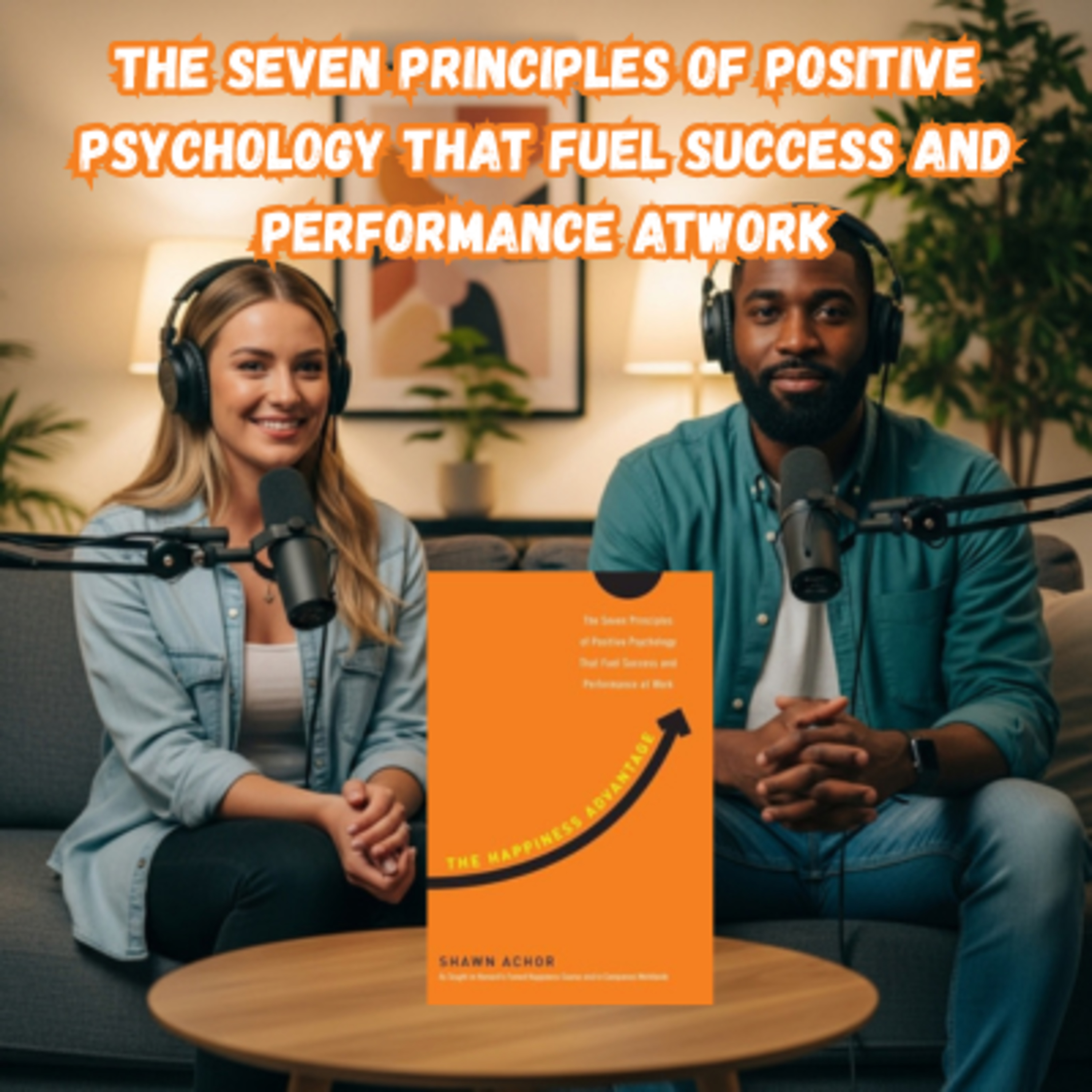
What if happiness isn’t the result of success—but the cause of it? In The Happiness Advantage, Harvard researcher Shawn Achor flips the traditional success formula on its head and proves, through science and storytelling, that joy fuels performance, not the other way around.
In this episode, we dive into the seven principles of positive psychology that can rewire your brain for optimism, productivity, and resilience. From the Tetris Effect, which trains your mind to spot opportunities instead of obstacles, to Social Investment, which shows why surrounding yourself with supportive people amplifies your success—these ideas reveal how happiness isn’t a luxury; it’s a strategy.
You’ll learn how small mental shifts can spark massive professional and personal breakthroughs. Because when you master happiness, success becomes inevitable.
If this episode lifted your perspective, follow BookTunez for more science-backed insights every week. 🎧
Share this with someone who’s chasing success but forgetting joy—and remind them that happiness isn’t the reward; it’s the foundation.
Because when you lead with positivity, success follows naturally.#TheHappinessAdvantage #ShawnAchor #BookTunez #PositivePsychology #MindsetShift #PersonalGrowth #WorkplaceWellbeing #SuccessMindset #Optimism #HappinessHabits #LeadershipDevelopment
Welcome to our deep dive into the happiness advantage. You know how we often think like we'll be happy after we've, you know, achieved success? This book kind of flips that idea on its head. It suggests that happiness isn't the destination, it's more like the fuel. So we're going to explore how cultivating happiness can actually drive you towards greater success. I'm excited to dive in. Yeah, it's really compelling. The happiness advantage isn't just, you know, feel good flop. It's actually rounded in solid research.
You know, happy people, they're demonstrably healthier. They're more creative, more productive. There's a real science behind you know why this works? That's what intrigued me about this. It's not just, you know, wishful thinking. So Chapter 1 lays out this concept of the happiness advantage and it challenges this assumption that success leads to happiness, right? The book argues that happiness isn't just a byproduct of success, it actually fuels it. It creates this like positive feedback loop where a positive mindset makes your brain more engaged, more creative, motivated, resilient and this in turn helps you achieve greater success.
So it's like happiness gives your brain a boost which then helps you achieve more, which makes you even happier. But is this just a theory or do they actually back it up with real world examples? They absolutely do. Take Sarah the graphic designer. She was feeling stuck in a rut. She was starting her days expecting the worst, and that negativity was just seeping into her work. OK, I can relate to that feeling. Some days it's like you're just waiting for the next thing to go wrong. But how did Sarah turn things around?
She started a simple gratitude practice. Each morning, she'd write down three things. She was grateful for this small act. It helped rewire her brain to focus on the positive. And what's fascinating is that this shift didn't just make her feel better, it actually improved her work. So by focusing on the good, she actually started to perform better. That's interesting, reminds me of something else the book talks about, the Tetris Effect. I've heard of that before, but hadn't really thought about it in this context.
The Tetris Effect is a psychological phenomenon where focusing on something for extended period, it makes you start seeing it everywhere. The book uses this to illustrate a crucial point, what we focus on. It shapes our reality. If we're constantly looking for problems, that's all we'll see. But if we train ourselves to notice the positive, we'll start to see more opportunities. That makes sense, but isn't that just a form of toxic positivity? Like ignoring the bad stuff doesn't make it go away.
That's a great question. The book isn't advocating for ignoring problems. It's about shifting our focus. It's about acknowledging the negatives but not letting them dominate our thinking. Because even when things are tough, they're always positives to be found. And those positives can fuel our resilience and help us find solutions. So it's about rewiring our brains to see the good even amidst the bad. Like training your brain to spot those Tetris blocks of opportunity even when the game feels like it's going too fast.
But how do you actually do that? Is there a specific technique? Well, remember Sarah's gratitude practice? That's one way. Another example is Lisa, a project manager. She was constantly stressed out. She shifted her focus by intentionally noticing and writing down things that went well each day. I like that it's like taking a moment to celebrate the small wins instead of just rushing onto the next fire that he's putting out. Exactly. It's about consciously choosing to focus on the positive, which then helps us approach challenges with a more resourceful mindset.
So we've got this idea that happiness can actually boost our performance, but how does that play out in terms of our overall potential? Chapter 2 tackles this with the metaphor of the fulcrum and the lever. It explains how our mindset acts like a fulcrum, and where we place that fulcrum determines how much leverage we have to lift our potential. OK, that sounds a bit abstract. Can you break that down A? Little more. Imagine a liver. If the fulcrum is close to the load, you'll need a lot of effort to move it.
But if you shift the fulcrum further away, even a small amount of effort can create a huge impact. So it's like if our mindset is weighed down by negativity and self doubt, it's much harder to make progress. But if we shift to a more positive and optimistic mindset, it's like moving that fulcrum, giving us more leverage to achieve our goals. Precisely. And this isn't just theoretical. The book gives the example of Tom, a sales manager. He struggled with self doubt despite a track record of success.
He was carrying this heavy mental load of negativity. I know that feeling. It's like you have this inner critic constantly whispering doubts in your ear. How did Tom deal with that? He used a technique called affirming his past successes. Each day he would consciously acknowledge his accomplishments, both big and small. This helped him shift his mental fulcrum towards a more positive position. So instead of dwelling on what he hadn't done, he was focusing on what he had achieved. Just like reminding yourself of your own strengths.
Did that actually make a difference for? Him it did. Tom's confidence increased and his sales figures soared. This really illustrates how a simple shift in mindset can have a tangible impact on our performance. That's pretty powerful stuff. So we've talked about the science of happiness, the importance of focusing on the positive, and how our mindset can act like a lever to boost our potential. But what about when things inevitably go wrong? I mean, we all face setbacks and failures, right? Does this happiness advantage just disappear when things get tough?
Not necessarily. That's where Chapter 4 comes in, and it's one of the most intriguing parts of the book. It's called Falling Up, and it reframes the whole concept of failure. OK, I'm really curious about this. Falling up sounds almost counterintuitive. How can you fall up? It's about recognizing that failure isn't the end of the story, it can actually be a stepping stone to something greater. The key lies and how we choose to respond to those challenges. So it's about bouncing back stronger. I guess that makes sense, but isn't that just basic resilience?
It's more than that. Falling up isn't just about surviving failure. It's about using it to propel yourself forward. It's about recognizing that setbacks, whether there are own mistakes or unforeseen circumstances, can provide valuable lessons and oortunities for growth. OK, I'm starting to see how this connects with the happiness advantage. If you approach failure with a ositive mindset, you're more likely to learn from it and use it to your advantage. But do they have any real world examples of this falling up in action?
They do. Emily's story really highlights this concept. She was a small business owner whose store was hit hard by an economic downturn. It would have been easy for her to give up, but she chose to see it as an opportunity for reinvention instead of just trying to recover her losses. Emily completely reimagined her business model and shifted her focus to online sales. This bold move allowed her to not only overcome the set back, but actually expand her customer base significantly. That's incredible.
Emily didn't just bounce back, she actually came out ahead. It really shows how a challenging situation can become a catalyst for positive change if you approach it with the right mindset. Exactly. Falling up is about seeing the potential in every situation, even the difficult ones. So we've seen how happiness can fuel success and how the right mindset can help us navigate challenges. But let's get ractical for a moment. A lot of us struggle with feeling overwhelmed, like we're drowning in a sea of todos and responsibilities.
Does this book offer any strategies for dealing with that? It does. Chapter 5 introduces the Zorro Circle, a framework for regaining control and building momentum when you're feeling overwhelmed. Great. Zorro Circle? I'm intrigued. How does a fictional swordsman help with feeling overwhelmed? Well, the idea is that Zorro didn't start by trying to conquer the entire world. He mastered his skills within a small circle, gradually expanding his range as he gained confidence and expertise. So it's about focusing on small, manageable goals instead of trying to tackle everything at once.
I can see how that could be helpful. Does the book give any specific examples of how this works in real life? It does. The book tells the story of Mark, a project manager who was completely swamped with deadlines and emails. He was constantly feeling behind and stressed out. He decided to apply the Zorro Circle concept by starting with just one small area, his inbox. That's something I think we can all relate to. Taming the e-mail monster can feel like a Herculean task, so how did Mark approach it?
He focused on creating a system for managing his emails effectively. Once he felt in control of his inbox, he gradually expanded his circle to other areas, like planning his daily tasks more efficiently. It's like that saying, how do you eat an elephant? One bite at a time. By breaking things down into smaller, more manageable chunks, you can make progress without feeling overwhelmed. Precisely, and what's interesting is that Marks small victory with his inbox created a ripple effect. It gave him the confidence and momentum to tackle other areas of his work, eventually leading him to not only meet deadlines but also find time for strategic thinking.
That's a great example of how even small wins can build positive momentum. But let's be honest, sometimes the hardest part is just getting started. We all have those good intentions that somehow never seem to translate into action. Does the book address this? It absolutely does. Chapter 6, the 22nd rule, is all about reducing the barriers that prevent us from following through on our good intentions. The 22nd rule. OK, I'm all ears. Tell me more. Have you ever noticed how even tiny inconveniences can derail your best intentions?
Like, you plan to go for a run after work, but then you have to dig out your running shoes, find your headphones, fill up your water bottle. Suddenly that run seems like a lot less appealing. Oh. Absolutely. It's like those little hurdles create enough friction to make us give up before we even start. Exactly. The 22nd rule is about removing those points of friction. The idea is that by making good habits 20 seconds easier to start and bad habits 20 seconds harder, you can significantly influence your behavior.
So it's about strategically designing your environment to make it easier to make good choices. I like that. Take some of the pressure off willpower. Does the book provide any examples of how to apply this in real life? They do. They share the story of Jake, an aspiring novelist who struggled to make writing a daily habit. He knew he should write, but the initial hurdle of getting started always felt too high. He used the 22nd rule by setting up his writing tools on his desk the night before. So by reducing the setup time, he eliminated that initial resistance.
That's pretty clever. Did it actually work for him? It did. That simple adjustment helped him overcome his procrastination and make writing a regular part of his routine. I love that it's such a simple concept, yet it can make a big difference. It reminds me of the advice to prepare your workout clothes the night before if you want to exercise in the morning. It eliminates that decision fatigue when you're half asleep. Yes, it's all about setting yourself up for success, and this concept can be applied to all sorts of habits, from exercising to eating healthier to working on a creative project.
It's about removing those small obstacles that often lead to procrastination. We've talked a lot about the individual aspects of cultivating happiness and achieving success, but we're not solitary creatures, are we? We exist in a social ecosystem. Does the Happiness advantage address the role of relationships in all of this? It does. Chapter 7, Social Investment, focuses on the importance of relationships not just for our emotional well-being, but also for our success. I think we often underestimate the power of connection, especially in a world that can feel increasingly individualistic.
Absolutely. The book highlights how our social connections provide supported vice, diverse perspectives, and a sense of belonging, all of which contribute to greater resilience, creativity, and problem solving abilities. So it's not just about feeling good, it's about having a network of people who can help you navigate challenges and achieve your goals. Do they give any specific examples of how social investment plays out in the workplace? They share the story of Anita, a manager who was facing a major project crisis.
She initially tried to handle everything on her own, which led to feelings of stress and isolation. But when she decided to open up to her team to share her challenges and seek their input, something amazing happened. I'm guessing they didn't just abandoned her to deal with it alone. Not at all. They rallied around her, brainstorming solutions and offering support. Not only did they come up with innovative ideas, but the process also strengthened their bond and boosted everyone's morale. It became a shared victory, demonstrating the power of collective problem solving.
That's a great reminder that we don't have to go it alone. Leaning on our social network can provide valuable support and lead to better outcomes. It's like that African proverb, If you want to go fast, go alone. If you want to go far, go together. Exactly. Social investment isn't just about seeking help when we need it. It's about cultivating strong relationships, being there for others, and recognizing that our success is often intertwined with the success of those around us. This deep dive into the happiness advantage has been incredibly eye opening.
We've covered a lot of ground for the science of happiness, to the power of mindset, the importance of resilience, and the value of social connection, but we've only scratched the surface of what this book has to offer. There's so much more to explore, and we encourage you to dive into the book yourself to uncover all the gems of wisdom it contains. So we've. Explored this idea of the happiness advantage and how cultivating happiness can actually fuel success. But how do we actually put this into practice in our own lives?
That's the $1,000,000 question, isn't it? It's one thing to understand the concepts, but how do we translate them into tangible actions? Right. We don't want this to just be a theoretical exercise. We want to walk away with actionable strategies that we can implement right away. Absolutely, and the beauty of the Happiness Advantage is that it offers a wealth of practical tips and techniques. Like what? Give us some examples of things listeners can start doing today. Well, remember Sarah's gratitude practice?
That's something anyone can start doing right now. Just take a few minutes each day to write down three things you're grateful for. It's a small act, but it can have a powerful impact on your mindset. It's like intentionally shifting your focus to the positive. And it doesn't have to be big things. Sometimes it's those little everyday moments that can bring a spark of joy. A good cup of coffee, a sunny day, a kind word from a stranger. Exactly. It's about training your brain to notice and appreciate the good things, big and small.
And what about Tom's strategy of affirming his past successes? Is that something that could work for anyone? Absolutely. We often get so caught up and striving for the next goal that we forget to acknowledge how far we've already come. Taking a moment to celebrate our wins, even the seemingly small ones, can boost our confidence and motivation. It's like giving yourself credit where credit is due. Yeah, and it doesn't have to be a grand self congratulatory ceremony, just a quiet acknowledgement of your own efforts and accomplishments.
Right. It's about recognizing and appreciating your own strengths and capabilities. We also talked about the Tetris Effect and how it applies to happiness. Are there any specific techniques for rewiring our brains to focus on the positive? Lisa's story provides a great example. She overcame her negativity bias by intentionally noticing and writing down things that went well each day. It's like creating a highlight reel of positive moments. Instead of dwelling on the negatives, you're actively seeking out and recording the good stuff.
Exactly. It's about training your brain to look for the opportunities, the Silver Linings, even amidst the challenges. And what about the Zorro circle? How can we apply that in our daily lives? The key take away from the Zorro circle is to break down overwhelming tasks into smaller, more manageable chunks. Instead of trying to do everything at once, focus on one area at a time. Start small, gain some wins, and gradually expand your circle of influence. So if you're feeling overwhelmed by your inbox, for example, you might start by creating a system for managing your emails.
Once you have that under control, you can move on to tackling another area, like organizing your workspace or streamlining your workflow. Precisely, It's about creating a sense of control and momentum, which in turn boosts your confidence and motivation. And the 22nd rule, that's a great one for building better habits. Do you have any tips for how listeners can apply that in their own lives? Think about those small things that often trip you up. If you want to exercise in the morning, lay out your workout clothes the night before.
If you want to read more, put a book on your bedside table. If you want to eat healthier, make sure you have healthy snacks readily available. It's about removing those little barriers that make it easy to procrastinate. Exactly. Make good habits 20 seconds easier and bad habits 20 seconds harder. And finally, let's talk about social investment. What are some practical ways we can strengthen our relationships and cultivate A supportive network? Start by reaching out to people. Connect with friends, family, colleagues.
Schedule coffee dates, phone calls, even virtual Hangouts. And don't just focus on what you can get from others. Look for ways to contribute to offer support and encouragement. It's about creating a reciprocal network of care and support. Exactly. Invest in your relationships and they will in turn invest in you. This deep dive into the happiness advantage has been truly inspiring. It's a powerful reminder that happiness isn't the destination we reach after achieving success. It's an advantage we can cultivate and leverage to create a more fulfilling and successful.
Life, and it's within our reach, no matter our circumstances. By adopting a positive mindset, focusing on what we can control, and investing in our relationships, we can unlock the potential for greater happiness and achievement. So as we wrap up this deep dive, we leave you with this question. What's one small step inspired by the happiness advantage that you can take today to boost your own happiness and create positive momentum in your life? It could be starting a gratitude practice, affirming your past successes, reaching out to a friend, or simply taking a moment to appreciate the good things in your life.
Whatever it is, we encourage you to take action because happiness is not a passive state of being. It's a choice, a practice, and a powerful advantage that we can all cultivate.
 Apple Podcasts
 Castbox
 Castro
 Goodpods
 Moon FM
 Overcast
 Pocket Casts
 Podbean
 Podcast Addict
 Podcast Republic
 Spotify