The First 90 Days: Proven Strategies for Getting Up to Speed Faster and Smarter
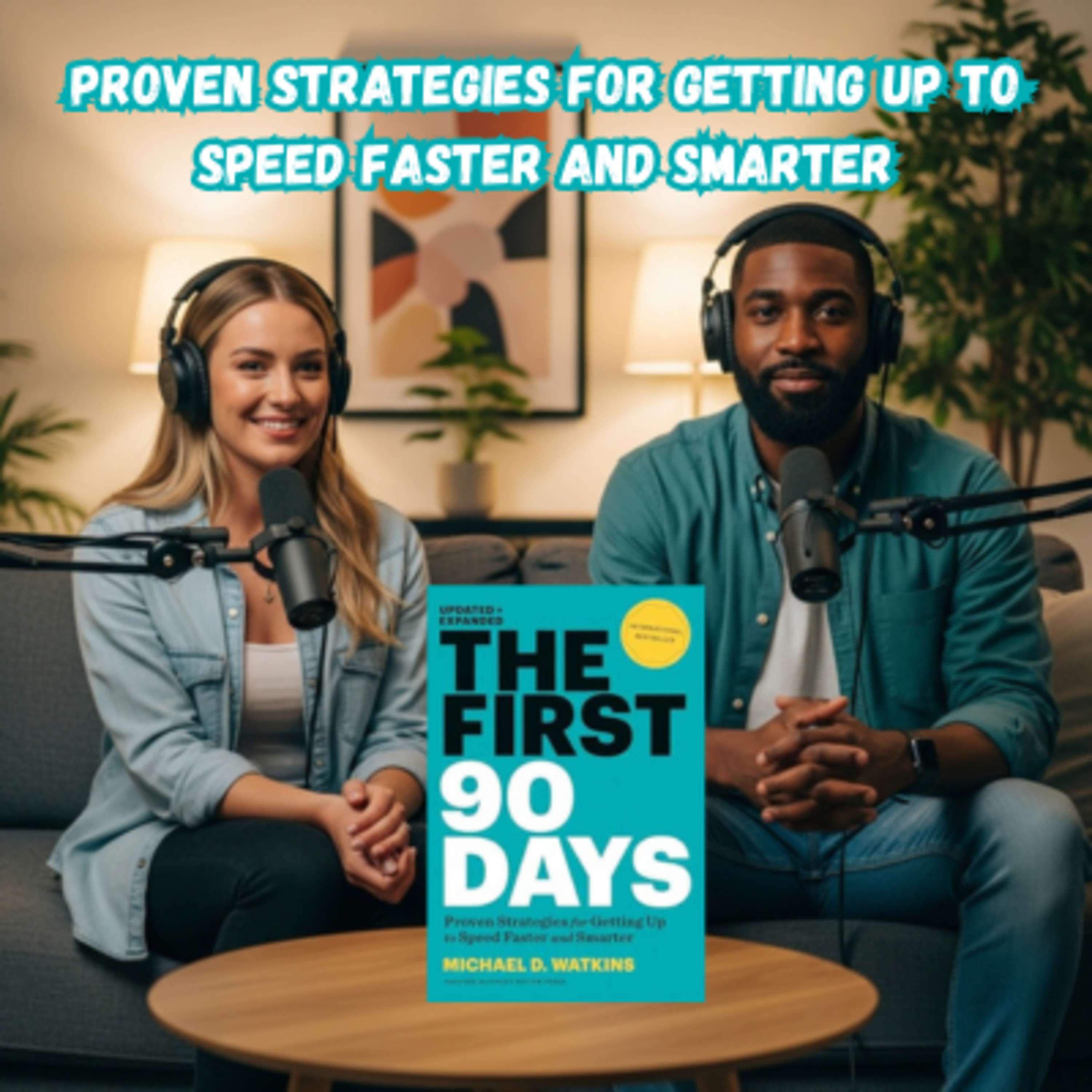
Your first 90 days in any new role can define your success—or your struggle. In The First 90 Days, leadership transition expert Michael D. Watkins lays out a proven roadmap for accelerating learning, building trust, and achieving results fast when stepping into a new position.
This episode unpacks how to quickly diagnose your situation, secure early wins, and build momentum without burning out. Whether you’re starting a new job, leading a fresh team, or taking your business in a new direction, you’ll learn how to manage expectations, form alliances, and avoid the common traps that derail new leaders.
Because when you master your first 90 days, you set the stage for the next 900.
If this episode gave you clarity for your next big move, follow BookTunez for more practical and inspiring leadership insights every week. 🎧
Share this with a friend or colleague stepping into a new role—and remind them that every transition is a chance to lead smarter, faster, and stronger.
Because success doesn’t start on day 91—it starts the moment you walk in.#TheFirst90Days #MichaelWatkins #BookTunez #LeadershipTransition #CareerGrowth #NewLeaders #LeadershipDevelopment #OnboardingSuccess #BusinessStrategy #ManagementSkills #ProfessionalGrowth
Hey everyone and welcome to this deep dive. We're diving into the 1st 90 days. Have you heard of it? Oh yeah, it's basically the Bible for anyone starting a new leadership role. Right like that crucial period can really make or break you. Absolutely. There's actually a stat in there that really got me. Oh yeah? What was that? Something like 40% of executives actually fail within their first 18 months. So we're giving everyone a CHEAT SHEET to beat those odds. Exactly, and the 1st 90 days really lays it all out.
OK, so jumping right in, it seems like the book emphasizes this idea of tailoring your approach. Yeah, it really stresses that cookie cutter solutions don't work. Makes sense, you're walking into a totally new environment each time. Right. So before you even think about strategy, you got to look inward. Interesting. So it's less about think it till you make it and more about self-awareness. Totally. The book calls it Building Your Personal Foundation. I like that. So it's understanding your strengths, your weaknesses, your style.
All of that. Even how you deal with stress, which let's face it, there'll be plenty of that. For sure those first few months are a pressure cooker, but how do you actually do that self reflection? Well, the book suggests asking yourself some pretty tough questions. OK, like what? Things like what are my three biggest career wins and what drove them interesting, or what are my development needs and how can I tackle those in this new role? Wow, those are pretty deep. I guess answering honestly can reveal blind spots.
Exactly. You start to see where you might need extra support. So it's acknowledging that you don't know everything and being open to learning. Precisely, it's a shift from I've got this to I'm here to learn and adapt. And Speaking of learning, that's a huge part of those first 90 days, right? Absolutely. It's like stepping into a new world. You need to learn the language fast. The customs, the unwritten rules, it can be overwhelming. Totally, which is why the book introduces this idea of a learning agenda.
OK, so not just randomly absorbing info, but being targeted about. It right you figure out what you need to know to be successful. So like creating a road map for your learning? Exactly, and a big part of that is asking the right questions. Oh yeah, the book actually provides A framework for that. It does. It focuses on things like the company culture, the priorities, potential roadblocks. So instead of asking like what's my team working on, you'd have something deeper. Right, Something like what are the biggest challenges facing this team?
And how can I best support them in overcoming those? Now you're talking. That shows you're not just there to take orders. You're there to really understand the situation and add value from day one. Exactly. You're already thinking like a leader. Which brings us to another important point, figuring out your leadership style. Oh yeah, this is huge. What worked before might not work in this new environment. It's like each new role is a detective case. You can't use the same formula every time. That's a great analogy.
The book calls this matching strategy to situation. So it's about being a strong leader, but also the right key kind of leader. You got it. And that takes flexibility to adaptability, willingness to adjust. OK, so let's say you've done the self reflection, crafted your learning agenda. Assess the situation. Now what? Now it's about building momentum, showing you're capable and making a real impact. OK, so how do you do that? The book talks about securing early wins, right? Exactly. It's about demonstrating your competence as quickly as possible.
But don't those early wins sometimes feel like just grabbing low hanging fruit? That's where strategy comes in. You got to be smart about it. So how do you make sure those wins are actually meaningful? They need to align with your bigger goals and highlight your skills. So it's not about checking off easy tasks, it's about showing you're a problem solver. Exactly. Maybe you streamline a process or boost team morale, Something impactful. Something that demonstrates action, not just intention. Exactly.
Even small wins can have a big impact on how you're perceived. Makes sense, and this might sound obvious, but I think clear communication is key too. Oh, absolutely. It's not just about talking, it's about setting expectations. Making sure everyone's on the same page from the start. The book calls this negotiating success. So it's about having those sometimes tough conversations. Right with your boss, your team, key stakeholders across the organization. Because if you don't do that early on, you're setting yourself up for conflict later.
Exactly, It's like setting the ground rules for a game everyone knows how to play. So you're advocating for yourself, making sure you have the resources to succeed. The time, the budget, the people, all of that. This all makes sense, right? But the first 90 days also talks about achieving alignment within the organization itself. Ah yes, that's crucial. It's about making sure all the pieces are working together. Right, like when you join a company and everyone's working in silos. Or there are conflicting priorities or just confusion about the goals.
Like everyone's rowing in different directions. And that's exactly what the book wants you to avoid. So you're not just focused on your own performance, you're looking at the bigger picture. You're identifying potential roadblocks that could hinder everyone's success. So it's about being a leader who sees the whole system, not just their little part of it. Exactly. You're like the conductor of an orchestra, making sure everyone's in harmony. I love that analogy. And Speaking of teams, building a high performing team is obviously crucial.
Couldn't agree more, especially in those first 90 days. The book has a great analogy for this. Oh yeah, let's hear it. It's like assembling a championship sports team. You need the right players and the right positions. O you start by assessing your current team. Who are your MVS? Exactly who are your rising stars and who needs more development? And then you create a culture where everyone feels valued and empowered. You foster a sense of shared purpose, trust, and collaboration. That's how you win.
It sounds like the first 90 days really emphasizes that leadership is a team sport. Oh absolutely. Can't do it alone. You need allies, advocates a support. System. The book calls this creating coalitions, right? Exactly. It's about recognizing you're not on a solo mission. It's like navigating a complex landscape. You need a guide and some to companions. That's a great way to put it. You need people who can help you navigate the terrain. So you need to identify those key influencers in the organization.
The people who really understand how things work, the ones who can help you make things happen, not. Necessarily the people with the fanciest titles, but the ones with real influence. Exactly, and building relationships with those people is crucial for your success. This is all so insightful, but we're just scratching the surface here. We've got so much more to unpack in the 1st 90 days. So stay tuned, we'll be right back after a quick break. So before the break, we were talking about creating coalitions.
It's all about building that network of support within your organization. Yeah, and it's so easy to feel like you have to go it alone, especially at the start. It really is, but that can be a recipe for disaster. The book makes that clear. Like trying to climb a mountain with no ropes, no safety net. Exactly, and the 1st 90 days give some really practical advice on how to build those alliances. Yeah, I'm all ears. Well, it starts with identifying the key influencers in your organization. OK, so not just the people with the big titles, Yeah.
Right. It's more about who truly understands the company culture, the politics, how decisions are made. The people who really know how to get things done. Exactly, and the book has some interesting ways to approach these individuals. So it's not about sucking up or anything like that. No, not at all. It's about building genuine relationships based on mutual respect. OK, that makes sense, but how do you actually do that, especially when you're the new kid on the block? Well, the book suggests a few things.
First, do your homework. Research these people. Ah. So understand their background, their expertise. Exactly. Maybe even their hobbies or interests outside of work. So you're showing you're interested in them as a person, not just as a stepping stone. Precisely. And when you do reach out, frame the conversation in a way that benefits both of you O. Like ask for their advice, their insights on the challenges you're facing. People love to feel valued and respected for their experience. Makes sense, And by asking, you're also showing that you're open to collaboration.
Exactly, and don't forget to follow up and show your appreciation. A thank you note. A quick e-mail goes a long way. It really does. Those small gestures can make a big difference. So we've talked a lot about navigating the organization, but what about managing ourselves in all this? Yes, that's a whole other challenge. The 1st 90 Days has a whole chapter on that. It's something a lot of leaders struggle with, right? It's easy to get caught up in the whirlwind. It is the demands are high, the pressure's on and we often feel like we have to prove ourselves.
But the book really stresses the importance of self-care. It's not selfish, it's essential for long term success. It's like they say, it's a marathon, not a Sprint. Exactly. Yeah, you can't burn yourself out in the 1st 90 days. You need to pace yourself. And the book actually gives some really helpful tips for doing. That like setting boundaries. Don't be afraid to say no to things that drain you. Delegate tasks whenever possible. Make time for breaks. All of that, It's so easy to feel like we have to be on all the time.
Especially in a new role. But that leads to burnout and ultimately hurts our performance. Exactly. The book also talks about finding healthy ways to manage stress. Like exercise or meditation? Or even just spending time with loved ones. Do things that recharge your batteries. It's about recognizing that we're human. We need time to rest and reconnect. And that's not a weakness, it's actually a strength. Because it allows us to show up as our best selves, both at work and in our personal lives. And Speaking of showing up as our best selves, the last chapter of the book is all about this idea of Accelerate Everyone.
Oh yeah, I love that concept. It's about thinking bigger than just your own individual success. Exactly. It's about how you elevate your team, how you empower them to grow. It's about leaving a legacy of positive change. And the book provides A framework for doing just that. It starts with empowering your team. Giving them the freedom, the resources and the support they need to thrive. Exactly, letting go of that need to micromanage and trusting them to do their best work. And it's about fostering a culture of continuous learning.
Where mistakes are seen as opportunities for growth. This makes me think about something we discussed earlier, strategic question. It's not about giving all the answers, but asking the right questions to help your team develop. That's a great connection, and the book also talks about the importance of leading by example. So it's not just what you say, but what you do. It's about embodying the values and behaviors you want to see in your team. So the first 90 days is really a journey of continuous learning and growth.
Not just for ourselves, but for everyone we lead. And these principles apply far beyond those first 90 days. Absolutely. They're relevant throughout your entire career. It's about always striving to be a better leader and a better person. Couldn't have said it better myself. This has been such a great conversation, I'm really enjoying this deep dive. Me too, it's such a valuable book with so many practical takeaways. But before. We wrap up. I'm curious, what are your biggest takeaways from the 1st 90 days?
For me, it's a focus on self-awareness and adaptability. Yeah, those are huge. Because every leader situation is different, you have to be able to adjust. I totally agree and I love the framework for accelerated learning and securing early wins. Me too. It gives you a clear path to making a real impact right away. And I think the emphasis on building relationships and creating coalitions is so important. Couldn't agree more. Leadership is a team sport. You need that support system. So the first 90 days is more than just a book, it's a call to action.
It is it challenges us to step into our leadership roles with intention and courage. And to make a positive impact on the world around us. And what's so exciting is that these ideas apply no matter what stage of your career you're in. Whether you're just starting out or you're a seasoned executive. There's always something new to learn and new ways to grow. The 1st 90 days gives us the tools to not only build a successful career but also to live a more fulfilling life. Absolutely. It's about becoming the best version of ourselves, both personally and professionally.
So as we wrap up this deep dive, I encourage everyone listening to think about how you can apply these principles to your own journey. What steps can you take today to create your own 1st 90 days success story? You don't have to wait for a new job or promotion, you can start right now. And remember, you're not alone. We're all in this together. Supporting each other, learning from each other and making a difference in the world. That's what it's all about. Thanks for joining us on this deep dive into the 1st 90 days.
It's been a pleasure. And until next time, keep crushing it. You know, as we wrap up this deep dive into the 1st 90 days, it really strikes me how much of it is about mindset. Yeah, I think you're right. It's not just about tactics, it's about how you approach those first few months. With intention, curiosity, a real drive to learn and grow. Exactly, and I love that it emphasizes it's never too late to have your own 1st 90 days. Right, even if you're not starting a brand new job. You can apply these ideas to any new project or challenge.
Like hitting the reset button, approaching things with fresh eyes and a renewed sense of purpose. That's a great way to put it and it's so empowering. Because no matter where we are in our careers, we always have that chance to learn and grow. And to make a real difference. Well said. Well this has been such a fascinating deep dive into the 1st 90 days. I've really enjoyed it. We hope you have too, and that you've gleaned some valuable insights for your own journey. Whether you're just starting out or you're a seasoned leader.
These principles can make a real impact. So keep exploring, keep learning, and keep leading with courage. And until next time, keep crushing it.
 Apple Podcasts
 Castbox
 Castro
 Goodpods
 Moon FM
 Overcast
 Pocket Casts
 Podbean
 Podcast Addict
 Podcast Republic
 Spotify