Blind Spots: Why We Fail to Do What's Right and What to Do about It
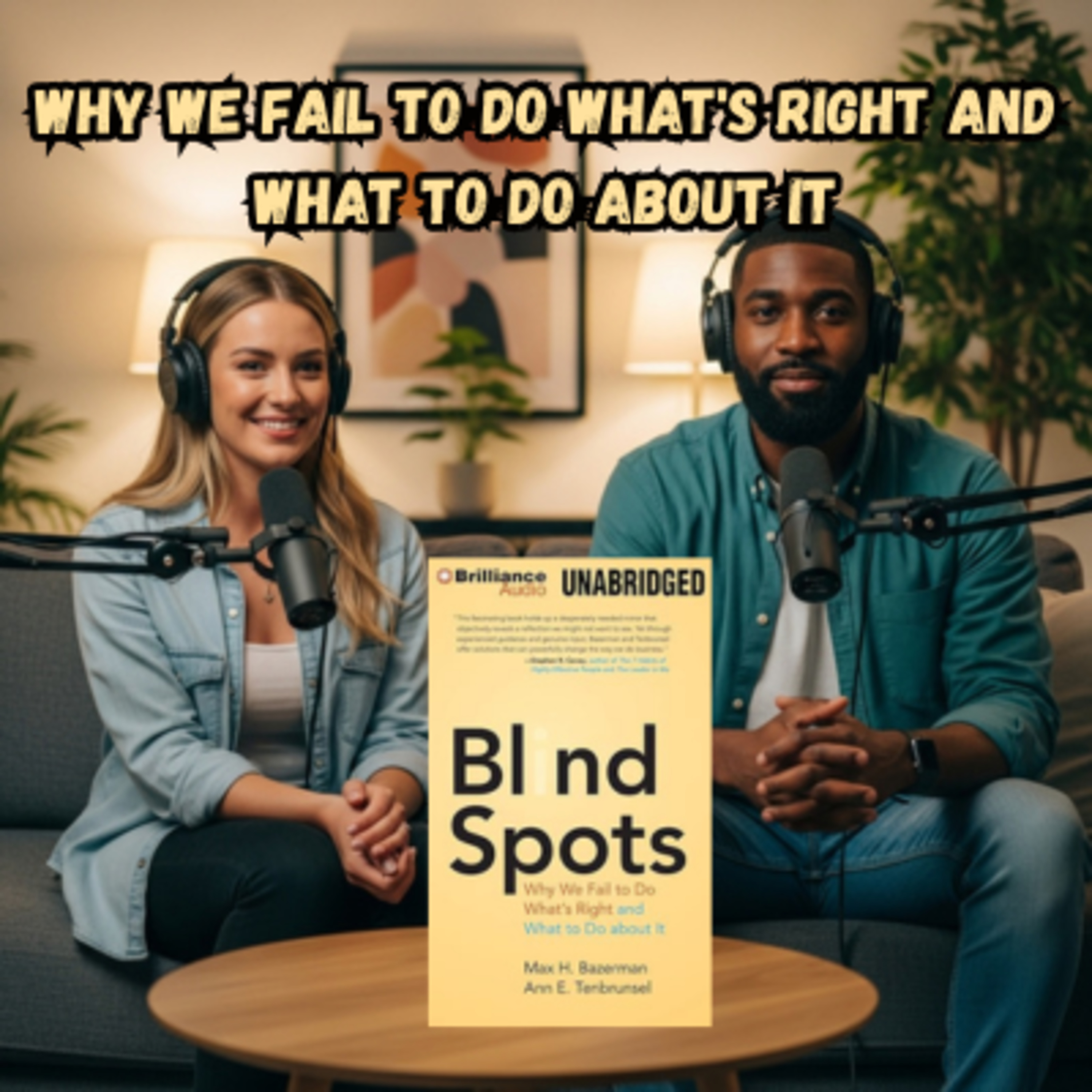
Most people believe they’re ethical—but the truth is, we all have blind spots. In Blind Spots: Why We Fail to Do What’s Right and What to Do About It, behavioral ethicists Max H. Bazerman and Ann E. Tenbrunsel reveal how good people unintentionally make bad choices, and why we often fail to see our own ethical lapses until it’s too late.
Through stories ranging from Enron to the Challenger disaster, they expose how our “should self” (who we aspire to be) clashes with our “want self” (who actually makes the decision). This episode explores how biases, pressure, and organizational culture distort our judgment—and what practical steps individuals and leaders can take to close the gap between intention and action.
If you’ve ever wondered why smart, decent people sometimes cross ethical lines, this episode will open your eyes to the psychology behind moral blindness—and how to overcome it.
#BlindSpots #MaxBazerman #AnnTenbrunsel #BookTunez #EthicalLeadership #BehavioralEthics #DecisionMaking #CorporateIntegrity #MoralPsychology #EthicsAtWork #HumanBehaviorIf this episode gave you a new perspective on ethics and decision-making, follow BookTunez for more thought-provoking insights every week. 🎧
Share this with a colleague, leader, or friend who faces tough choices—and remind them that awareness is the first step toward doing what’s right.
Because integrity isn’t automatic—it’s intentional.
All right, so we're diving deep today into ethical decision making. Oh, fun. With this book called Blind Spots by Max Baseman and Anton Brunsel. OK. And you know, it's not just about knowing right from wrong. Yeah, it's about all these, like, psychological factors that can really kind of mess us up, right, even when we think we're doing the right thing. It's like you have these hidden biases and you don't even realize they're influencing your choices. Yeah. And the book goes right into this gap between what we intend to do ethically, right, and then what we actually do.
Oh yeah, like I'm going to eat healthy and then I end up with like a bag of chips an hour later. Totally, yeah. Or, you know, I'm going to start working out every day and then. Yeah, you hit snooze you. Hit snooze every morning. Yeah, Blind Spots actually uses this example of finding a small accounting error. OK, so you find it, but it would be really easy to just let it slide, you know, maybe you even convince yourself it's not a big deal. Right or. Reporting it'll cause trouble. Yeah, it's going to cause more trouble than it's worth.
But that's exactly what the book is trying to make us aware of, right? It's these like little decisions, these seemingly minor ethical compromises, yes, that can really build up overtime. Yeah, absolutely. And often we don't even realize right we're making them. That's why this book challenges the traditional approach to ethics training. Yeah. You know, it's like, here are the rules, right? Don't break them. Don't break them Which? Can be that's. Gonna work. Yeah, right. It's kind of like reading the instruction manual for a treadmill.
Yeah. And being like. Now I can run a marathon. I'm in marathon shape now. Exactly. So for knowing the rules doesn't guarantee we're going to follow them, right? Especially when we're faced with real world pressures. Yeah, like how do we actually bridge that gap? That right? If just knowing the rules isn't enough, Yeah. What does it actually take? That's a great question. To make ethical choices consistently. I think that's where the psychology of ethical decision making comes in. OK, Blind Spots argues that we really need to understand these subconscious biases and influences that can lead us astray.
Interesting. It's like, you know, learning to anticipate those moments when you're most likely to grab that bag of chips, right? And you have a plan to deal with it. OK, so it's like being prepared for those ethical crunch times, Yes, when the pressure's on. Exactly. But what about those times when we might be influenced by like, what everyone else is doing? You know, like going along with the crowd, even if it feels a little off. Absolutely. Yeah, That is a classic ethical dilemma, and the book addresses it head on.
OK. It talks about the power of conformity. Yeah. How we can be swayed to act against our values. Interesting. Just because everyone else is doing it. It's like that pressure to meet a deadline. Right. Even if it means you're cutting corners on safety or quality. Yeah, or maybe it's something as simple as like, laughing at a joke that you don't actually think is funny, right? Just to fit in. Just fit. Yeah, and all those little choices can really chip away at our moral compass overtime. They do.
Which brings us to what I think is one of the most eye opening parts of blind spots. Oh, really? This idea that we're not always as ethical as we think we are. Oh, that's so true. It's so easy to judge other people's behavior, right? But are we really so much better? Exactly. It's like that classic example of taking office supplies home, right? You know. We might be outraged if we saw a Co worker doing it totally, but then we totally justify it to ourselves when we. Do it. It's all those little rationalizations.
We make to protect our own self. Image to make us feel better about it. Exactly. And that's where self self-awareness becomes absolutely crucial. Self-awareness is so important. Yeah, recognizing our own biases, yes, and tendencies for self deception. Exactly. Is the first step toward actually closing that gap? Yes. Between our ideals and our actions. I love that. So we've talked about the gap between our intentions and actions, the limitations of just knowing the rules right, the pressure to conform, yes, and the danger of overestimating our own ethical behavior.
Yeah, there's a lot to unpack there. That's a lot to think about, but it gets even more interesting when we start talking about what happens when we see other people behaving unethically. Yeah, like what do you do then? Exactly. And that's actually where we'll pick up in Part 2. OK, sounds good. OK, so we've been exploring like, our own ethical blind spots, those moments where our good intentions, you know, don't always lead to the most ethical actions. But what about when we're not the ones in the spotlight?
OK, what happens when we see someone else kind of crossing the line? That's a really crucial aspect of ethical decision making, and Blind Spots really dives into that. It's one thing to grapple with our own choices, right? But witnessing someone else's ethical misstep, yeah, can be just as challenging. It's like, do we get involved All right? Do we risk making things awkward? Yeah. Or like damaging the relationship? Especially if it doesn't directly impact us. Yeah, it's so easy to just look the other way.
It is. It's the classic bystander effect. We assume someone else will step in. Right. Or we convince ourselves it's not our place. Exactly. But the book is challenging us to think about the consequences of our silence. Because by not saying anything, aren't we kind of like condoning that behavior? We are. We're sending a message that it's OK, right to bend the rules, even if it goes against our own values. And Blind Spots uses this example of a friend exaggerating their qualifications on a resume.
Oh yeah, you see it. Yeah, you know it's wrong, right? But do you confront them? It's a tough. One, do you risk the friend right or do you just tell yourself it's none of your business? It is a tough one because you want to be a good friend, but on the other hand you don't want to be complicit. You're caught in this ethical tug of war. You are, and that's where I think the book really emphasizes finding your voice, even in a small way. It might not be like this big confrontation, but maybe you pull your friend aside and express your concerns privately.
Or you could suggest that they reconsider their approach. Frame it as a way to protect their reputation in the long run. So it's about finding a way to nudge things, yeah, in a more ethical direction. In a more ethical direction without making it this big dramatic showdown. Right. Right. Sometimes a subtle approach can be more effective. And even if you don't see an immediate change. Yeah, you've planted a seed of doubt. That's a good point. You've made them think twice about their actions. OK, so we've talked about navigating our own ethical choices and what to do when we see someone else acting unethically.
But what about the larger systems that we're a part of, like the organizations we work for? Do they have a role to play in shaping our ethical decisions? Absolutely, if they do. And that's where things get even more complex. Blind Spots kind of takes aim at this idea of the ethical organization, this belief that companies with codes of conduct and value statements are somehow immune to ethical breaches. Yeah, but we all know that's not always the case. We do. We've seen companies with like these beautiful mission statements that sound great on paper but don't actually play out.
They don't translate into real world action. In the real world. It's like having a shiny new car with a faulty engine. OK, I like that. It looks great from the outside, right? But there are fundamental problems. Lurking beneath the surface. Yes. And the book really digs into those problems, yeah, highlighting how organizations can sometimes prioritize profits over ethics. Right, even if it's not explicitly stated. They use an example of companies turning a blind eye to environmental violations or cutting corners on safety measures because it's cheaper or faster.
It's cheaper and faster, yeah, and that sends a very dangerous message. It's like saying as long as we're making money, it doesn't really matter how we get there. Exactly. But that puts individuals in a really tough spot. It does because they might be pressure do things. Right. That go against their own moral compass. It's so easy to feel trapped in that situation. Yeah, especially if you're worried about like, losing your job. Especially. Or being seen as a troublemaker. You're worried about rocking the boat, right?
But Blind Spots reminds us that we're not just cogs in a machine. We have a responsibility to uphold our own ethical standards. Even if it means pushing back against the organization. And even if it means pushing back, yeah. But that can be so scary. It can be. Especially if you're going up against people in positions of power. It can feel like David versus Goliath, but I think the book really encourages us to find ways to voice our concerns. OK, constructively. Maybe it's starting a dialogue with your team about the ethical implications of a decision.
Or it could be suggesting alternative approaches right that align better with the company's stated values. So it's about being a proactive force for ethical change within the organization. Rather than just passively accepting things the way they are. Exactly. So we've explored the challenges of making ethical decisions on an individual level, how to respond when we see others behaving unethically, and the complexities of navigating these ethical dilemmas within organizations. That's a lot, but where do we go from here?
That's a great question. How do we actually make a difference in a world that often feels ethically challenged? That's where Blind Spots shifts from highlighting the problems to actually offering solutions. OK, the last two chapters provide a framework for creating positive change, both on a personal and systemic level. I think we're all ready for a little hope, but a dose of practical advice. Yes, we've identified the blind spots. Now let's figure out how to illuminate them. Exactly. So we've been on this journey exploring ethical blind spots and how to handle those tough situations when we see someone doing something wrong, Right.
And then even those bigger ethical dilemmas and organizations. It's a lot. It is a lot, yeah. But now let's get to the good stuff, OK? How do we actually make a difference? Yeah. How do we take all this and put it into action? Exactly because it's easy to get to that place of like, Oh yeah, what can I do? The problems are so big. So big, right? It's easy to just feel helpless, Totally. But the book makes this really compelling argument that change starts with OK individuals taking action. Even small actions.
Even small actions. So it's about shifting our mindset from someone else will take care of it to like. I can be a part of this. I can actually do something. Yeah. And they give some great examples in the book. Yeah. What? Are some of them. Like, maybe you see your company cutting corners on environmental regulations, right? Or you notice some unfair hiring practices going on. Yeah. It's not about, like, blowing the whistle on some huge scandal, right? It could be as simple as like asking a question in a meeting, voicing a concern to a colleague.
Yeah, or just suggesting a different approach. A more ethical approach? So those little nudges, right? Those everyday actions. It's about planting those seeds of ethical behavior. And creating that ripple effect. Exactly. And the book reminds us that real change takes time. Yeah, it's not about instant gratification. That's a good point. It's about a persistent effort, a commitment to doing what's right, even when it's hard. So like that saying right, a journey of 1000 miles begins with a single step.
I love that. But what about when it comes to improving our own ethical decision making? OK. Are there any like tools or strategies? Yes, we. Can use the book is this fantastic framework for strengthening our ethical muscles. OK, I like that they use this analogy of like navigating A challenging terrain. OK, and you need a few essential tools. I love analogies. Yeah, so you don't get lost. What tools are we packing in our backpack? So first you need a mirror. OK, this represents self reflection, taking the time to examine your own values and motivations.
OK, asking yourself, are my actions really aligned with who I wanna be? Yeah, Am I letting my biases get in the way? Exactly. So it's about taking that pause, that moment of self-awareness before you jump into action. That's so important. It is. The next tool you need is a compass. Okay? This symbolizes seeking guidance from trusted advisors or mentors. Getting that outside perspective. Yes, talk to people you respect, get different perspectives, and make sure you're not letting your ego lead you astray.
I feel like that's really important. It is, especially when you're facing a tough ethical dilemma. OK, so we have the mirror, the compass. What's the third tool? The third tool is a map, OK, And this represents thinking through the potential consequences of your actions, OK, considering the ripple effects not just for yourself but for others. So taking that broader view. Yes. Asking yourself what impact will this have on my my team, my community, even the world? I like that. And you know, the book really emphasizes that this is an ongoing process.
Yeah. Ethical growth is a journey, not a destination. We're always learning. Always learning. We're all works in progress. So to wrap things up, blind spots, yeah, is a reminder that we all have these ethical pitfalls. But it's not about beating ourselves up, right? It's about understanding them. Understanding them so we can make more conscious and intentional choices. The real challenge isn't just knowing what's right. It's doing what's right. Yeah, even when it's hard. Even when it's hard. Even when we're tempted to look the other way.
Exactly. So as you go through your day, think about those tools, the mirror, the compass, and the mat. Yeah, great tool. Use them to navigate the ethical terrain and remember we're all in this together. Be kind to yourself, keep learning and keep striving to make choices that reflect the best version of you. I. Love that. Until next time.
 Apple Podcasts
 Castbox
 Castro
 Goodpods
 Moon FM
 Overcast
 Pocket Casts
 Podbean
 Podcast Addict
 Podcast Republic
 Spotify