The Automatic Millionaire: A Powerful One-Step Plan to Live and Finish Rich
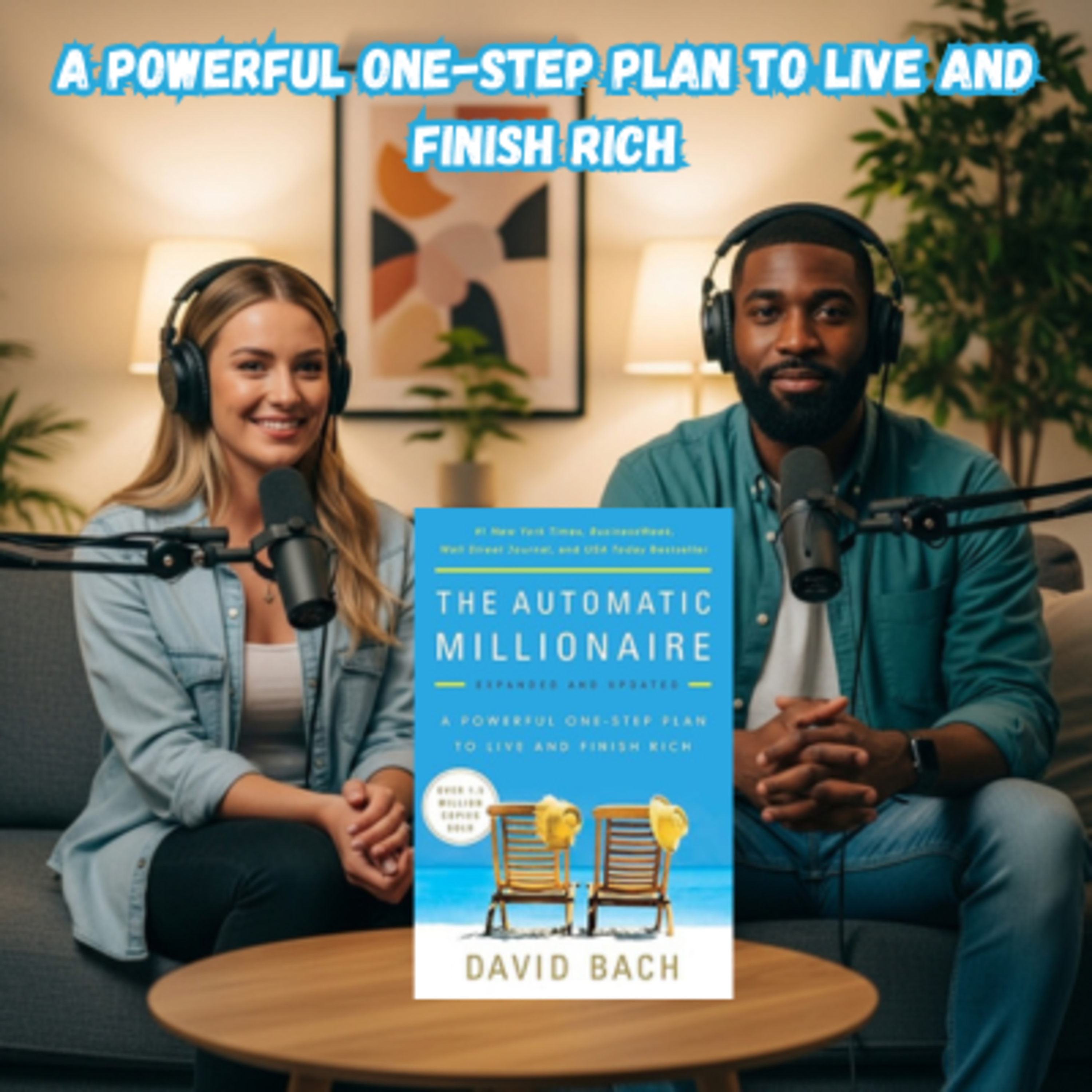
What if building wealth didn’t require discipline, spreadsheets, or complex budgeting—but could happen automatically? In The Automatic Millionaire, bestselling author David Bach lays out a simple, no-stress system to create lasting financial freedom—without living cheap or obsessing over every dollar.
In this episode, we dive into Bach’s powerful one-step plan to “pay yourself first” and make saving, investing, and wealth-building completely automatic. You’ll learn how to set up your money so it grows on autopilot, how to avoid lifestyle traps, and how to retire richer than you imagined. With millions of readers and proven results, this plan is a roadmap to financial peace, not just financial success.
Because the secret to wealth isn’t perfection—it’s automation.
If this episode helped you see that wealth can be simple, follow BookTunez for more powerful money insights every week. 🎧
Share this episode with someone who thinks getting rich is complicated—and remind them: it’s not about working harder, it’s about setting up smarter systems.
Because the easiest way to become a millionaire is to make it automatic.#TheAutomaticMillionaire #DavidBach #BookTunez #FinancialFreedom #WealthBuilding #PassiveIncome #MoneyAutomation #PersonalFinance #InvestingBasics #FinancialLiteracy #FinishRich #MoneyMindset
I'm thrilled to provide you with a summary of The Automatic Millionaire by David Bach. The author produced this book with one specific purpose in mind, to demonstrate that gaining financial freedom isn't as difficult as we might believe. David Bach thinks that everyone, regardless of economic level, can become a millionaire by taking a few basic automatic steps. In this summary, I'll go over the important points and tactics from the book. You'll learn the value of paying yourself first, the power of compounding interest, and the effectiveness of making tiny, persistent adjustments to your financial habits.
If you want to learn how to become an automated millionaire, please hit the notification bell, like and subscribe to our channel. Chapter 1 is titled Meeting the Automatic Millionaire. In this chapter, the author discusses the concept of becoming an automated billionaire through easy automatic changes to your financial habits. It emphasizes the premise that anyone, regardless of income, can build wealth via continuous systematic saving and investment. The important lessons this chapter teaches us are #1 pay yourself first.
The book emphasizes the importance of prioritizing saving and investing by paying yourself first before allocating money to other expenses #2 Consistency is key. By automating contributions to savings and investment accounts, individuals can harness the power of compound interest to steadily build wealth over time #3 Start small. Even small regular contributions can lead to significant financial growth over the long term #4 Mindset shift. Becoming an automatic millionaire requires a shift in mindset towards prioritizing long term financial security over short term gratification.
The title of Chapter 2, The Latte Factor. Becoming an automatic millionaire on just a few dollars a day. The latte factor, which emphasizes how minor daily expenses can add up to substantial sums over time, is a notion that this chapter addresses. People may put money aside for investments and savings by recognizing and eliminating wasteful expenditures, which creates the foundation for future financial success. What information does this chapter offer #1 Mindful spending. The chapter encourages readers to take a closer look at their daily expenses and identify areas where they can cut back on unnecessary spending #2 small changes, big impact.
By making small adjustments to their spending habits, individuals can free up money to put towards savings and investments, leading to significant long term wealth accumulation #3 the power of compounding. The concept of compound interest is emphasized showing how regular contributions, even small ones, can grow exponentially over time #4 opportunity cost. Every dollar spent on non essential items represents a missed opportunity for savings and investment, highlighting the importance of prioritizing financial goals.
Chapter 3 is titled Now Make it Automatic. The basic principle of paying yourself first is presented in this chapter as the foundation for financial success. People can make steady progress toward their long term financial goals by giving savings and investing priority over other expenses. These are a few tactics we should learn. Number one, make saving a priority. Paying yourself first involves setting aside a portion of your income for savings and investments before paying for other expenses #2 Automate savings.
By setting up automatic transfers or direct deposits, individuals can ensure that saving becomes a regular, non negotiable habit #3 Start today. The chapter emphasizes the importance of taking action immediately, regardless of the amount saved. Consistency over time is more critical than the initial sum #4 Protect your future. Prioritizing savings and investments early in life lays the foundation for financial security and enables individuals to weather unexpected expenses or emergencies. Chapter 4 is titled Now Make it Automatic.
The author goes more deeply into the realistic procedures for investing and saving money to guarantee stability and long term growth. Through the implementation of automated procedures, people can effectively eliminate the need to spend and gradually accumulate wealth. What details does this chapter provide? Number one, set up automatic transfers. Automating transfers from your checking account to savings and investment accounts ensures that saving becomes a habit rather than a conscious decision #2 Utilize employer plans.
Take advantage of employer sponsored retirement plans and set up automatic contributions to maximize long term savings potential #3 Diversify investments. Consider automated investment platforms or robo advisors to diversify your investment portfolio and minimize risk #4 monitor and adjust. While automation is beneficial, it's essential to periodically review your savings and investment strategy to ensure it aligns with your financial goals and circumstances. The title of Chapter 5, Automate for a Rainy Day.
The significance of automating savings for unforeseen costs and crises is the main topic of this chapter. Through emergency fund setup and automatic contributions, people can safeguard themselves against financial hardships and preserve stability in trying times. What does this chapter teach us #1 Prioritize emergency savings. Building an emergency fund is crucial for handling unexpected expenses without resorting to debt or derailing financial goals #2 automate contributions. Set up automatic transfers from your checking account to your emergency fund to ensure consistent and disciplined savings #3 Start small, Build over time.
Even modest contributions to an emergency fund can accumulate over time, providing A valuable safety net when needed #4 Adjust as needed. Periodically review and adjust the size of your emergency fund based on changes in expenses, income, and life circumstances. Chapter 6 is titled Automatic Debt Free Home Ownership. The author investigates the use of automation by individuals in achieving debt free home ownership. People who put smart savings and payment plans into place can pay off their mortgage faster and achieve the financial independence that comes with being a house owner.
Observations that are important to note in this chapter #1 Set clear goals. Define your home ownership goals and create a plan to achieve them. Whether it's saving for a down payment or paying off your mortgage early #2 automate savings. Establish automatic contributions to a dedicated savings account for your home down payment to ensure consistent progress towards your goal #3 Optimize mortgage payments. Explore options such as bi weekly payments or making additional principal payments to pay off your mortgage faster and save on interest #4 Stay disciplined.
Maintain discipline and consistency in your savings and payment strategies, even when faced with competing financial priorities. The title of Chapter 7 The Automatic Debt Free Lifestyle The focus shifts to achieving a debt free lifestyle through automation and disciplined financial habits. By leveraging automation to pay off debts and manage expenses efficiently, individuals can break free from the cycle of debt and build a solid foundation for long term financial success. What insights does this chapter provide #1 Face your debts.
Confront your debts head on and develop a plan to pay them off systematically, starting with high interest debts #2 Automate debt payments. Set up automatic payments for your debts to ensure timely payments and avoid late fees or penalties #3 Live within your means. Adopt A lifestyle that aligns with your income and priorities, avoiding unnecessary expenses and frivolous spending #4 build wealth, not debt. Shift your focus from accumulating debt to building wealth through saving, investing, and prudent financial management.
Chapter 8 titled Make a Difference with Automatic Tithing. This chapter covers the idea of charity giving or automatic tithing as a way to support causes that are both in line with personal values and have a positive impact. People can support causes they care about and feel the fulfillment that comes from giving back by automating charitable contributions into their financial strategy. Here are some strategies #1 Support causes you believe in. Identify charitable organizations or causes that resonate with your values and beliefs, and consider making automated donations to support their work #2 Automate your giving.
Set up recurring contributions to charities or religious institutions to ensure consistent support without the need for manual intervention #3 Budget for giving. Allocate a portion of your income for charitable giving as part of your overall financial plan, prioritizing it alongside savings and other expenses #4 experience the joy of giving. Embrace the opportunity to make a positive impact through charitable giving, experiencing the joy and fulfillment that come from helping others. Chapter 9 is titled the Automatic Millionaire Blueprint.
This chapter offers an approach to becoming an automatic millionaire and summarizes the main ideas of the book. It combines the ideas of debt management, investing, saving, automation, and charitable giving into a thorough plan for achieving financial success. What is this chapter teaching US #1 Automate everything. Set up automated processes for saving, investing, debt payments, and charitable giving to ensure consistency and discipline in financial management #2 Pay yourself first. Prioritize saving and investing by allocating a portion of your income before budgeting for other expenses #3.
 Apple Podcasts
 Castbox
 Castro
 Goodpods
 Moon FM
 Overcast
 Pocket Casts
 Podbean
 Podcast Addict
 Podcast Republic
 Spotify