Ask Powerful Questions: Create Conversations That Matter
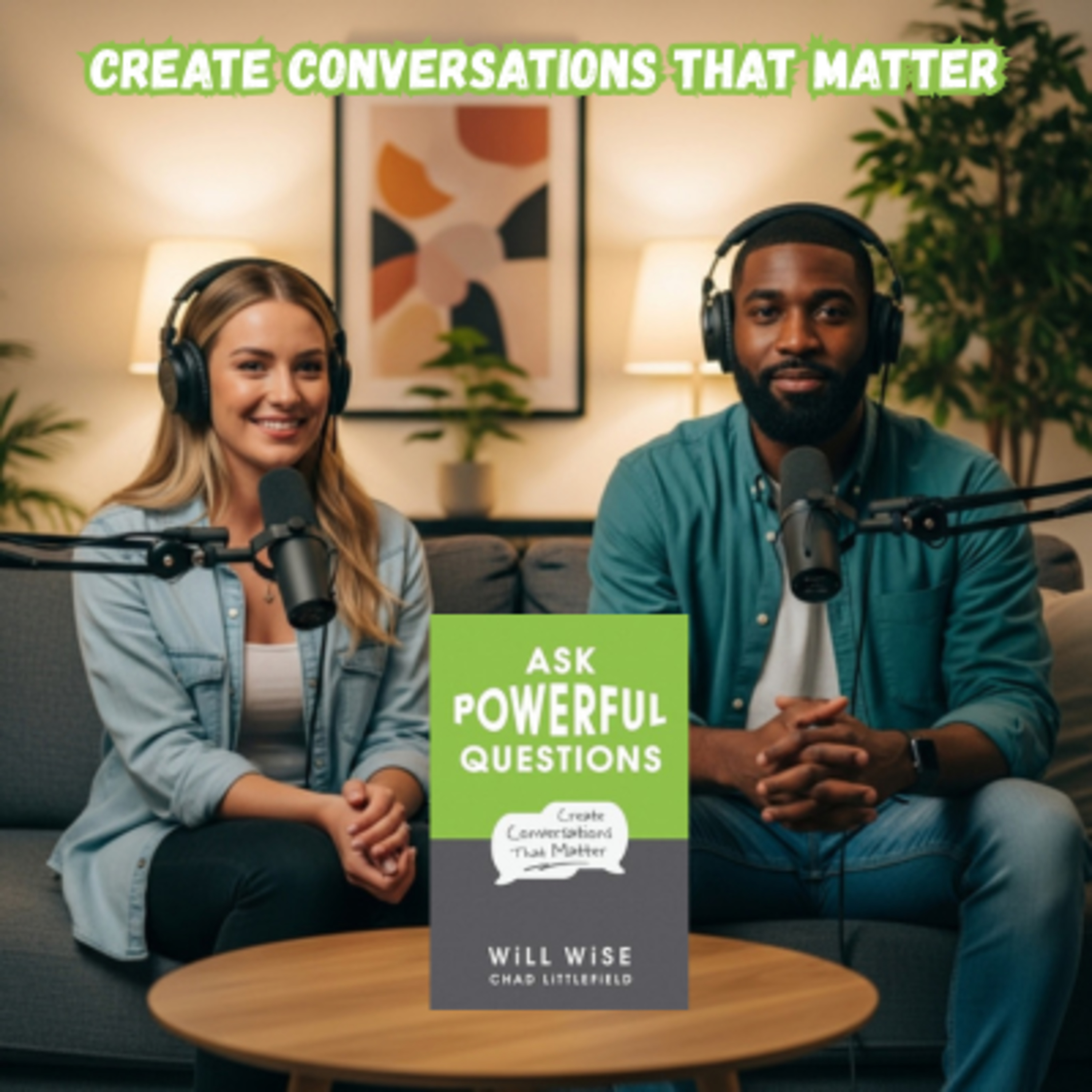
What if every conversation you had could build deeper trust, stronger teams, and more meaningful connections? In Ask Powerful Questions, Will Wise and Chad Littlefield show how the right questions can transform “How are you?” into dialogue that actually matters.
In this episode, we explore how to replace surface-level small talk with conversations that spark empathy, collaboration, and growth. Drawing on the Asking Powerful Questions Pyramid™, we walk through six essential layers—Intention, Rapport, Openness, Listening, Empathy, and the questions themselves—to help you create genuine human connection at work and beyond.
Whether you’re leading a team, coaching a client, teaching a class, or simply wanting to communicate better, this episode reveals the art and science of asking questions that move hearts and minds.
Because connection doesn’t start with answers—it starts with the courage to ask.
If this episode inspired you to listen deeper and lead better, follow BookTunez for more insights on communication, leadership, and growth every week. 🎧
Share this episode with someone who wants to build stronger relationships—and remind them that great conversations don’t just happen.
They’re created—one powerful question at a time.
#AskPowerfulQuestions #WillWise #ChadLittlefield #BookTunez #CommunicationSkills #LeadershipDevelopment #ActiveListening #EmotionalIntelligence #TeamCulture #PsychologicalSafety #Connection #PersonalGrowth
Welcome back everybody to another deep dive. And today we're tackling something a lot of you have been asking about really impactful conversations. And and to help us out, we're going to be taking a deep dive into ask powerful questions, great cook by Will Wise and Chad Littlefield. And we asked you guys for some of your favorite excerpts. And we're going to kind of use those to to jump off and hopefully unlock some of the secrets to having those conversations that really matter. Absolutely. One of the things is it just jumped out at me.
Yeah, right away reading this, yeah. Is that the book really focuses on the idea that it's not just about asking more questions, right, but about asking the right kinds of questions to spark real connection and understanding. It's a real game changer. Yeah. You know, I think most of us, yeah, go through life thinking we're pretty good at conversations, right? But this book reveals a whole new level. It does, It really does. And you know, the first big take away I think for me was this idea of setting an intention before you even ask a question.
Right. Like I I get that you know, in theory, but how do you actually do that in real life without sounding super forced? Well. It's it's subtle, but it's powerful. You know, instead of just kind of firing off questions, just take a pause for a second and consider what is it you're really hoping to achieve in this conversation? Are you trying to, you know, solve a problem deep in a relationship? Offer support? Once you know that, why then your questions become more targeted and meaningful. Oh, so it's almost like you're setting like a mini goal for each conversation?
Exactly. OK. And, And the other person's senses, that intention. Yeah. Which makes them feel valued. Yeah. And more likely to kind of engage thoughtfully. That makes sense. The book is a great example about asking for feedback on a project, you know, instead of just a generic. What do you think? Right. You could say I'm really looking for ways to make this even better. What ideas come to mind for you? Oh, so you're guiding the conversation in a specific direction, but without being like, controlling about it?
Precisely. And. And that leads us to the next big take away, which is presence. OK. Now, we all know, you know it's rude to be on our phones during a conversation, right? But the book digs a little deeper. It's about this inner presence, OK? You know, it's about truly being engaged with the other person. OK, so that makes sense. But how do you actually? Yeah, like how do you do that? It's like our minds are always racing. Well, think of it as this kind of gentle redirection. OK, you know, just notice your breath, quiet that inner monologue, right, and truly focus on what the other person is saying.
Yeah, it's like tuning your attention to a specific radio frequency. I like that analogy, yeah. So what kind of impact does that have on the other person? Well, it creates this feeling of being seen and heard, which is so fundamental to building trust and rapport. You know, think about it. Have you ever had a conversation where you felt like the other person was miles away? Oh yeah. Even if they were physically present. It's the worst, right? You walk away feeling like completely unheard. Exactly.
And unimportant. Yeah. And but when someone's truly present with us, yeah, it makes us feel valued and respected, and it deepens that connection and opens the door for more authentic communication. This is making me rethink every conversation I've ever had. OK, so we've got intention. We've got presence. What's the next tool in our powerful questioning toolkit? It is the art of asking open-ended questions. OK. You know, you're probably already doing this to some extent, but the book really breaks down why it's so effective.
You know, instead of questions that just lead to a simple yes or no answer, we want to invite exploration, deeper thinking. OK, I'm intrigued. Give me an example all. Right, so let's say you're talking about a movie. Instead of asking, did you like it? Try what stood out to you in that movie, or what emotions did it evoke for you? Wow. You see, I see what you mean. Because those questions like open up a whole world of possibilities for discussion, as opposed to just like shutting it down with a single word.
Exactly. And, and this is especially powerful when you're trying to understand someone's perspective or brainstorm ideas. It encourages creativity. It allows diverse viewpoints to surface. And that kind of brings us to a technique that builds beautifully on this whole idea of open-ended inquiry. It's called reflective listening. Reflective. Listening. It's about going beyond simply hearing the words to truly grasping the underlying message and, importantly, the emotions behind them. So it's not just like parroting back what they said, it's more about like reflecting back.
The. Heart of what they're trying to communicate. Precisely. It's about showing them that you're not just listening. Yeah, but you're actively trying to understand their experience. And often that includes reflecting back their emotional state. Oh, so this feels like this could be really powerful, especially when you're having like, right, like a tough conversation or something like that. Exactly. Does the book give any examples of like how to actually do this? It does. It does. Let's say a colleague is venting about feeling overwhelmed by deadlines.
OK, instead of just saying, yeah, that sounds stressful, right, you could try something like I hear you. It sounds like you're feeling completely buried under those deadlines, and that must be incredibly frustrating. OK, so you're not just acknowledging the problem, right? You're actually acknowledging how they feel about. It exactly. And that validation, yeah, creates a safe space for them to open up even more. Wow. Perhaps share the deeper reasons behind their stress. That's so interesting. This is where true connection starts to happen.
This is blowing my mind. I feel like I am not doing this right nearly enough in my conversations. It's it's a skill we can all develop. It And that's like a superpower almost. It is and and it leads beautifully into our final take away. OK, bring it on. I'm ready. Which is empathy. Empathy. This is where we move beyond simply understanding to actually connecting with the other person's emotions on a deeper level. So it's about more than just saying I understand how you feel. Yes, exactly. It's about trying to step into their shoes and genuinely feel what they're feeling.
OK, this is where I get a little lost because how can you truly empathize with someone if you haven't had that same lived experience? It's not about pretending you know exactly how they feel, OK? It's about acknowledging the validity of their emotions and responding with compassion. The book uses a powerful example of a friend going through a tough breakup. Instead of jumping to advice or trying to fix it, just say something like that. Sounds incredibly painful. I can only imagine how heartbroken you must be.
That's so much more powerful than saying like, oh, you'll get over it or something dismissive like that. Exactly. You're not trying to minimize their experience or offer solutions. You're simply holding space for their pain and letting them know that you're there for them. It's about support rather than solutions. Exactly. OK wow, this is making me rethink how I approach those kinds of conversations with people who are struggling. It's not about fixing things, it's about offering genuine empathy and support.
Exactly, and you'd be surprised how much that simple act of empathy can strengthen a relationship and build lasting trust. This is incredible. We've covered so much ground already. I know you know, setting clear intentions, cultivating presence, mastering open-ended questions, practicing reflective listening, and now this deep dive into empathy. It feels like we've unlocked like a whole new level of communication. I feel like we've been handed like a decoder ring for human connection. It is powerful stuff.
It is, but I have to admit I'm also feeling a little overwhelmed. Like, how do we actually put all this into practice without feeling like we're constantly like, you know, analyzing every word, right? Every sentence. Well, in the book addresses that head on. OK. It's not about becoming some kind of conversational robot, right? It's about gradually incorporating these tools, Yeah, into your natural communication style. OK. The key is to start small, OK? Pick one technique that really resonates with you and just practice it consciously.
So maybe like this week I focus on being more present exactly, and next week I'll experiment with open-ended questions or something like that. Exactly. It's like learning any new skill, right? I mean, you wouldn't expect to become a master chef overnight, would you? Definitely not, I can barely boil water without setting off the smoke alarm. There you go. And you're already bringing humor into the conversation. OK? Which is another key point the book emphasizes. OK, don't forget to be yourself. That's good.
These techniques are meant to enhance your communication, right? Not turn you into someone you're not. That's reassuring because I was picturing myself like walking around with a notebook, like frantically, like writing down my intentions and like analyzing every sentence. Right. No, it's it's not about that at all. OK. The more you practice, the more these skills will become second nature. Yeah, that makes sense. And the beauty is you can tailor them to your own personality and your own communication stuff.
So to recap, Ask Powerful Questions has given us these five powerful tools to transform our conversations. You know, setting clear intentions, cultivating presence, mastering open-ended questions, practicing reflective listening, and leading with empathy. That's it. Like that's a lot. It is. It's powerful stuff. But I love that they're not just like theoretical concepts. The book is full of practical exercises and real world examples that you can actually start using Absolutely. Like, in your life today.
Today. What I also love is that it feels like these tools can be used in any situation. Yeah. I mean from like casual chats with friends to like high stakes negotiations at work. Absolutely, the principles remain the same. Right. It's just about shifting your mindset from just like talking at someone to really connecting with them. It's about connection. And I feel like that shift can make all the difference in the world. It. Does it can turn ordinary conversations into these really meaningful exchanges that, like, deepen relationships and leave everyone feeling heard and understood?
It's about creating this ripple effect of positive communication that spreads outward from you. OK, so as we wrap up this deep dive into the world of impactful conversations, what's like one key take away you hope listeners will walk away with? I would say it's this. The power to transform your conversations is within your grasp. I like that. It starts with awareness, intention. Yeah, and a willingness to practice these skills. And this book gives you the tools it does to do that it does. Now here's a final thought provoking question for you to ponder.
OK, what one conversation in your life could be dramatically improved by using these techniques? That's a good one. It could be with a loved 1A colleague or even a conversation you have with yourself. Take a moment to reflect on that and then start asking those powerful questions. You might be surprised by the incredible connections and insights that emerge. Thanks for joining us on this deep dive into the art of powerful conversations. It's been a. Pleasure. Until next time, keep those questions flowing and those connections growing.
 Apple Podcasts
 Castbox
 Castro
 Goodpods
 Moon FM
 Overcast
 Pocket Casts
 Podbean
 Podcast Addict
 Podcast Republic
 Spotify