TEN THINGS I WISH I’D KNOWN ABOUT NETWORK MARKETING BEFORE I GOT STARTED
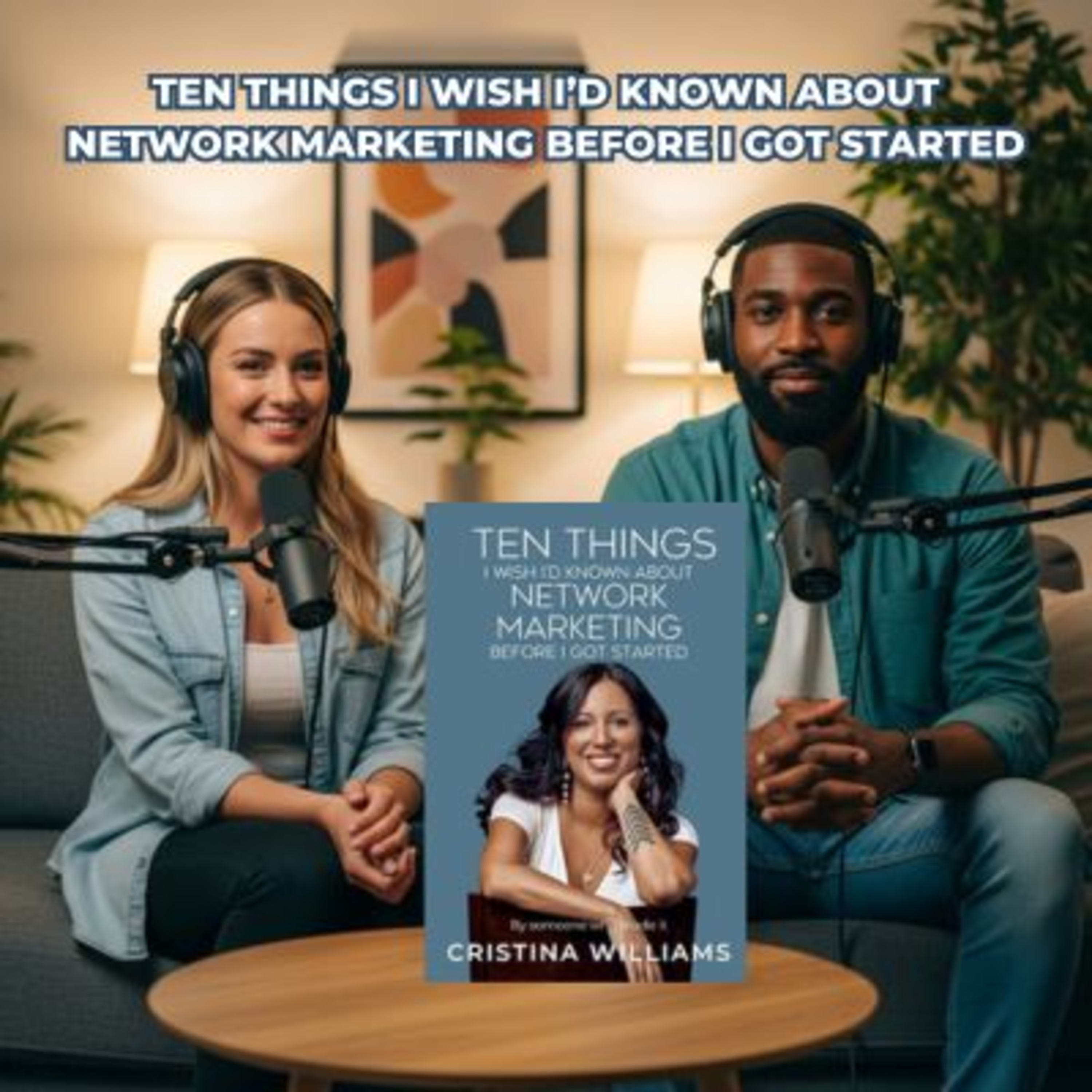
This is not a long book. Cristina already knows you don’t have the time to read it, and she certainly didn’t have the time to write it. So it’s more of an instruction manual, helping you to succeed in this new crazy gig you just jumped into … or are thinking of getting into. The things in this book need to be said, because they TRULY would have helped her get results faster and Cristina KNOWS they will make a big difference to you, too, as you get started. After 20 years in network marketing, Cristina has seen so many excited hopefuls bring their deepest dreams to the altar of the network marketing gods, hoping that this vehicle truly might work. Many have great success, many do not. Yes, we all know that anyone CAN. This book will share with you Ten Tips that will stack the odds massively in your favor. These secrets come from observing the strategies, the habits and especially the thinking of those individuals who use network marketing to impact the world and make every one of their dreams come true.
This episode explores fundamental strategies for achieving long-term success in the network marketing industry by following the insights of expert Cristina Williams. It emphasises that a genuine belief in one’s products is essential for building trust and naturally attracting a dedicated client base. The source suggests that individuals must adopt a professional business mindset, focusing on structured planning and accountability rather than treating the venture as a casual hobby. Furthermore, the guide highlights the importance of effective prospecting and utilizing repeatable systems to ensure consistency and prevent burnout. By viewing objections as opportunities to connect and prioritizing persistence over perfection, entrepreneurs can develop a sustainable and profitable network. These lessons collectively aim to transform how newcomers approach their professional journeys to secure financial independence.
#NetworkMarketing #EntrepreneurMindset #SideHustle #BusinessGrowth #SalesMindset #PersonalDevelopment #FinancialFreedom #MindsetShift #Leadership #DirectSales #BusinessPodcast #SelfImprovement #SuccessMindset #BookSummary #OnlineBusiness
I really want you to picture a very specific, but honestly incredibly common scenario. Oh, I think I know where this is going. Yeah, you probably do. So you are sitting across a small cafe table from a really good friend. They've just bought your coffee. They're leaning in close and their eyes are just gleaming with like a level of excitement you haven't seen from them in years. Right, the classic coffee shop pitch. Exactly. They start pitching you on this brand new network marketing opportunity that they've just joined.
I mean, they are thrilled. They are absolutely convinced that this is the vehicle that's going to change their life, buy them financial freedom, you know, the whole 9 yards. And you're just sitting there, trapped with your latte. Right. You're sitting there listening and just feeling this really complex mix of emotions, like you're happy they found something they care about, and you're definitely curious about the claims they're making, but there's this heavy, undeniable dose of hesitation. 'Cause you're quietly wondering to yourself, like, can this actually work?
Could this work for me? Or is this just a another wave of temporary enthusiasm? Exactly. And that mix of curiosity and skepticism is basically the universal starting point for almost anyone who brushes up against the network marketing industry. It really is. I mean, it's an industry built on massive promises, which naturally triggers our internal alarm bells, right? We want the freedom they're pitching, but our practical side just demands evidence. And that tension is exactly why we are taking this deep dive today because whether you are actively considering an opportunity that a friend just pitched you or you're just, you know, intensely curious about the actual underlying mechanics of how network marketing getting functions, this is for you.
We're digging into some really fascinating source material today. Yes, we are. We're analyzing Cristina Williams of 10 Things I Wish I'd Known About Network Marketing before I got started. And the goal here is to just trip away the flashy promises, the over the top income claims and the aggressive sales tactics. Because the mission here is to isolate the fundamental psychological and business principles that actually dictate whether someone succeeds or fails in this model. Underneath all the hype.
Right underneath the hype, there is a very real, very unforgiving architecture to how independent sales structures operate. I mean, you cannot build a sustainable business on an empty internal foundation. No, definitely not. Before you can convince a single person to buy a product or join a team, you literally have to completely sell the concept to yourself. OK, let's unpack this because there is a massive gulf between like forcing yourself to act excited and actually holding a deep internal belief.
Oh, huge difference. People can tell. Totally. Think of it like recommending a restaurant to a friend. If you've been to a specific spot and you've eaten the most amazing tacos of your life there, telling your friend about it isn't selling. No, it's just a natural, enthusiastic transfer of information. Exactly, you genuinely want them to experience how good it is, but if you're trying to hype up a restaurant you have literally never set foot in, suddenly your voice gets a little too loud. Your smile is a little too strange.
Yeah, you're pushing. You aren't sharing an experience anymore. You're just trying to manufacture a transaction. And the source material actually provides a really clear road map for how to reach the authentic conversational level of enthusiasm. It's not magic. It requires active, deliberate work. Like what? Well, the text points to the story of a woman named Sarah who had recently joined a team, and she started out with that exact same hesitation you might feel at the coffee shop. The natural skepticism.
Right. But rather than blindly regurgitating the promotional scripts her upline handed her, she actually paused. She became intensely well versed in the product first. Which is so rare, usually people just copy and paste whatever they're told to say. Exactly. But she didn't. She researched the specific advantages of the network marketing model, she sought out independent verifications, and most importantly, she used the product extensively herself. She effectively became her own most demanding customer.
That makes total sense. I mean, we all have a highly tuned radar for authenticity, you know, We can smell manufactured hype from a mile away, but genuine lived experience that draws us in. It does, and what's fascinating here is the secondary psychological benefit of this authentic belief that's mentioned in the text. Well, like what? It's not just about acting as a magnet for potential clients. The source explicitly states that deep belief serves as this psychological armor against rejection. That is so important.
Right when you know, like in your bones, that a product holds real value, a no from a prospect stops feeling like a personal condemnation of your character or your life choices. The cognitive dissonance just totally disappears. Exactly, A rejection just means the product doesn't fit their current needs, which allows you to move on without your confidence taking a hit. And rejection is just the baseline reality of any sales environment. I mean having that internal armor is basically non negotiable.
Absolutely. But passionate belief, you know. While foundational, they aren't. Structural passion without a rigid framework is just a very expensive, very time consuming hobby. That is a great way to put it. Yeah, so all of that internal conviction has to be channelled into a concrete work ethic. And the source draws a really sharp contrast here. Network marketing is the furthest thing from a typical nine to five job. You alone determine the objectives, you set the pace, and you bear full responsibility for the daily operations.
You're the boss. Now wait a minute. I have to push back on this a little bit. OK, go for it. You are telling me I have to become a rigid, structured boss. But isn't the entire appeal of network marketing like the exact thing getting pitched in every coffee shop across the country? That you don't have to act like a corporate manager. That's the dream they sell. Right. The pitch is usually all about escaping the grind, working from your phone on a beach somewhere, and just having total autonomy. This sounds like a bait and switch where I'm just building myself a new, lonelier cubicle.
I get that and. It is honestly the most common paradox in the entire industry and it is the exact hurdle with a vast majority of beginners feel because. They buy into the beach fantasy. Yeah, yes. The promise of freedom is entirely real, but autonomy without discipline is just unemployment. Wow, autonomy without discipline is unemployment. That's harsh but true. The text illustrates this trap with a case study of a guy named Mark. So Mark transitioned into network marketing after spending his entire adult life in hourly wage positions.
OK. And he carried that deeply ingrained employee mindset directly into his new venture, the. Hourly mindset being the idea that simply showing up and being physically present somehow entitles you to a paycheck. Precisely because in a standard job, the structure is provided for you, right? A manager tells you what to do, when to do it, and you are compensated for your time regardless of the broader strategic outcome you. Punch the clock, you get paid, right? But Mark treated his new found autonomy as a license to work only when inspiration struck.
He essentially waited for a boss that didn't exist to tell him what his daily tasks should be. Let me. Guess the outcomes were dismal. Predictably dismal. Yeah, he had to execute a fundamental psychological pivot. He started planning his weeks, tracking his active revenue, generating hours and establishing hard, measurable goals. He had to become the boss. He stopped acting like an employee on a perpetual coffee break and assumed the role of the CEO of his own operation Which? Requires a massive amount of delayed gratification because ACEO is trading effort and strategy today for scalable returns months or even years down the line.
Exactly, it's a. Completely different neurological reward system than getting a biweekly paycheck just for logging hours it. Really is and the text highlights that once Mark made this shift, he unlocked 3 distinct advantages. What? Were they well? First, it paved the way for consistent long term success, insulating him from the boom and bust cycle of working only when he felt highly motivated. Makes sense? Consistency is key. Second, it provided actual financial control. And 3rd, and perhaps most importantly, it yielded A profound psychological fulfillment though, because.
He owned it. Yes, there is a unique, irreplaceable satisfaction in building a mechanism that is genuinely yours, rather than just renting your time out to further someone else's corporate objectives. OK. So we have established the necessary internal belief and we have adopted the proactive structured mindset of ACEO. We are ready to execute. Ready. To go. But a business structure is entirely useless if you are projecting it into the void, or worse, pitching it to the wrong room. Finding the right audience is the next critical hurdle.
It is. The make or break step and the. Source lays out a rule that is brilliantly simple, yet seemingly ignored by every single beginner. Reach out to people who actually need or want what you are selling it. Sounds so obvious when you say it out loud it. Does. And here's where it gets really interesting. The text specifically advises against trying to persuade family members or close friends who show absolutely no natural interest, Which? Is usually step one for most people, right? Defaulting to pestering the inner circle is almost a cliche in this industry.
Why do so many intelligent people immediately corner their reluctant relatives at family gatherings to pitch like a nutritional shake or a financial service? It's. A combination of fear and just a fundamental misunderstanding of market dynamics. Fear of what? Strangers. Yeah, we instinctively seek the path of least resistance. Approaching strangers or professional acquaintances carries the risk of cold rejection. Approaching family feels safe because, well, the social bond already exists. My. Family loves me, therefore they will buy my supplements.
That's the flawed logic, yeah, but affection does not equate to market demand. The text highlights a woman named Jenny who fell directly into this exact trap. I. Mean, I can only imagine how tense those Thanksgiving dinners became. Oh. They definitely did. Jenny attempted to build her initial customer base exclusively from her family tree, and the immediate result was mutual frustration. Her relatives felt commodified, like they were just walking dollar signs, and Jenny felt betrayed by their lack of financial support.
She was actively burning her personal social capital for zero professional gain. That's. Dangerous. It is mixing the unconditional bonds of family with the conditional transactional nature of commerce. It usually just creates a toxic friction. So she. Had to break out of that inner circle if she wanted to survive. She. Did she completely abandoned the family strategy and began attending local business networking gatherings instead? A. Much better room to pitch to, absolutely. And if we connect this to the bigger picture, the text points out that Jenny's pivot wasn't just about finding better leads.
It was about protecting her personal life while simultaneously stepping into a real marketplace setting. Boundaries. Right by utilizing Internet resources and attending local interest groups, she achieved 2 crucial things. First, she repaired her strained personal relationships, leaving business out of family gatherings. Thanksgiving. Is safe again. Thanksgiving is safe, and more importantly, she found a room full of people whose pre-existing interests actually aligned with her product. She stopped trying to manufacture demand through guilt and started capturing existing demand through professional networking.
That's. Huge. She stopped trying to convert the skeptical and started looking for people who were already looking for her. But. You know, even when you are in the correct room, speaking to an engaged audience, friction is just inevitable. You are still going to encounter resistance. You are still going to hear the word no. You're. Going to hear it a lot. And the interpretation of that no is the dividing line between those who burn out and those who build a sustainable network. How so the? Source approaches this with a fascinating concept, treating objection handling as a rigid system rather than a test of your willpower.
So taking the emotion out of it completely, yes. Amateurs view an objection as a personal rejection or a permanent roadblock. Professionals view an objection as a request For more information, an expression of unmet requirements, or just a display of natural hesitancy. You. Know, I look at it kind of like the check engine light on a car's dashboard. Oh, I like that, yeah. When that light illuminates you, don't instantly pull over, throw your hands up in despair, and assume the entire vehicle is permanently destroyed and like, hates you, right you.
Don't just abandoned the car on the highway, no. You understand that it is a diagnostic tool, It is the machines way of communicating. Hey, I want to keep driving, but there's a very specific localized issue right here that needs to be addressed before we can safely move forward. That is the perfect operational mindset an. Objection in sales is simply the prospects check engine light coming on it. Really is, and the source provides a clear demonstration of how to plug into that diagnostic tool through the story of Tom.
What happened with Tom? So Tom is in the middle of a pitch and the prospect throws up the most common objection in the history of commerce. I just don't have the time for this. Oh, the ultimate smokescreen. Yeah, because honestly, I don't have time. Usually translates to. I just haven't seen enough value yet to prioritize this over my current routine. Exactly. And an amateur takes that statement at face value, feels completely defeated, and walks away. But Tom, he operates on a system. So what did he do?
He. Doesn't argue with the prospect about their schedule and he doesn't retreat. He leans into the friction with a simple collaborative follow up question he just asks. What are you currently most busy with? Wow. That completely changes the dynamic of the conversation, doesn't it it? Shifts the entire interaction it. Takes it from being adversarial to being investigated it. Really does, and the source breaks down the dual power of this specific pivot first. By asking a targeted follow up question, Tom proves he is actively listening rather than just waiting for his turn to deploy another scripted talking point Which?
Immediately builds trust. Huge trust. Second, it prompts the prospect to articulate their daily burdens as they explain their hectic schedule. They are essentially handing Tom the blueprint to their pain points. And giving him the solution. Right. This opens a sincere doorway for Tom to explain exactly how his specific product or system might actually alleviate that burden and return time to their day. He turns the defensive wall into a collaborative problem solving session just by maintaining his curiosity.
So if we trace the journey so far, you've built an authentic, tested belief in your product. You are operating with the proactive discipline of ACEO, you've protected your family relationships by finding a relevant, engaged audience, and you are expertly diagnosing objections rather than fleeing from them. You're. Doing everything right. Exactly. So inevitably, things are going to start moving. You're going to generate leads, have follow up calls, and build this roster of contacts. But here's the critical vulnerability As your network expands, the human brain's capacity to track it all simply fails it.
Crashes, which introduces the final and arguably most operational lesson from Cristina Williams analysis, the absolute necessity of prioritizing persistent and systems over raw effort. Because raw effort has a ceiling. A very low ceiling, yeah. Relying on your biological memory to manage a scaling business is a guaranteed recipe for failure. The text warns that attempting to hold a growing network in your head leads directly to being severely overburdened, dropping crucial follow-ups and presenting just an inconsistent, unprofessional face to your clients.
So what does this all mean in practice? The text advocates for implementing rigid step by step organizational strategies, right? Yes. It suggests using a customer relationship management system, a CRM to track every interaction, or maintaining strict scheduled daily task lists. But I have to ask about the reality of this. Go ahead. For someone who is already feeling the immense pressure of reaching out, facing rejection, and trying to learn a whole new industry, doesn't setting up complex administrative architecture feel like a massive counterproductive addition to their workload?
Like, how does adding data entry to my day actually reduce my stress? It's. A great question, but we have to look at the cognitive load theory behind this. Think of your brain like a computer's operating system. Every time you meet a prospect and make a mental note to call them back next Tuesday, you are basically opening a new background tab in your browser. Oh, I see where this is going. Right. If you do that 50 times a week, you have 50 open loops constantly running in the background, draining your processing power.
And your system starts to slow down, overheat, and eventually crash. Exactly. Setting up the CRM is the equivalent of bookmarking those tabs and closing them. It takes a moment of effort upfront, but it frees up massive amounts of cognitive bandwidth. The source uses the story of Lisa to illustrate this exact transition. Let. Me guess Lisa was trying to run the business purely on memory and effort she. Was relying entirely on her own mental energy and as her lead list grew, she began losing track of conversations.
She forgot who needed a follow up, who had objected, who was ready to buy. She was constantly operating in a state of reactive panic that. Sounds exhausting it. Is this raises an important question. What is the actual tangible cost of trying to hold all, all of your business data in your head? Burnout. Yeah. For Lisa, the cost was a state of chronic, suffocating stress, compounded by the financial loss of entirely avoidable missed sales. Because there is a hard limit to how many plates the human brain can keep spinning before they start shattering on the floor, right?
But she recognized the failure and implemented a system. She established A repeatable digital method for logging every contact, noting the exact stage of their conversation, and automating reminders for future follow-ups and. It worked the. Text highlights a massive dual benefit to the structural change. First, her stress levels plummeted because the anxiety of forgetting was removed. Second, the consistency of her sales increased dramatically because. The system takes the weight of the administration off the brain.
When you have complete trust, your CRM is going to alert you to call Tom on Thursday at 2:00 PM. You do not have to spend Monday, Tuesday, and Wednesday anxiously burning mental energy trying to remember Tom. You can. Just focus on today. Exactly. You can be fully, deeply present in whatever conversation you are currently having. It allows you to scale your persistence and your outreach without simultaneously scaling your anxiety it. Creates reliability. And in any business venture, from network marketing to corporate sales, consistent reliability is almost always more profitable over the long term than just flashes of disorganized talent.
We have covered a massive amount of ground today, navigating the realities of an industry that is so often clouded by emotion and hype. We. Really have. If we step back and synthesize all of Cristina Williams lessons, moving from that initial necessary spark of authentic belief through the required CEO mindset, the protection of personal relationships, the mechanics of diagnosing objections, all the way to the cognitive relief of CRM systems, a very clear picture emerges. It's. Not a lottery ticket.
No, Network marketing, when executed correctly, is not a lottery ticket or a casual side hustle. It is a highly structured, demanding discipline. It requires building authentic connections, maintaining relentless, systematized consistency, and treating the endeavor with the absolute accountability of a true business and. Understanding the underlying mechanics really strips away the intimidation factor. It demystifies the process. You can see exactly what structural pillars are required to actually make the model function sustainably and for.
You, the listener. Whether you decide to call up that friend from the cafe tomorrow and jump head first into the opportunity they pitched, or whether you decide to politely and firmly decline, having this structural understanding is incredibly valuable. It makes you a. Vastly more informed consumer A. Sharper communicator and someone who fundamentally understands the difference between manufactured hype and actual operational hustle. And I want to leave you with one final provocative thought to Mull over as you go about your day.
We've spent this entire deep dives analyzing these psychological and structural lessons strictly within the context of network marketing. But look at your own life right now. Yeah, zoom out a bit. Even if you never join a network marketing company, even if you never sell a single nutritional supplement or skin care product in your entire life, how could you apply these exact same fundamental lessons to accelerate your current career or your personal ambition? That's a great. Question What? Would happen to your stress levels in your professional relationships if you started reframing the objections, the friction and the roadblocks you face at work.
Not as personal rejections, but as check engine light diagnostic tools just. Looking at the data right? What if you truly treated your daily tasks like you were the CEO of your own time, proactively tracking your progress and setting the pace instead of just waiting for someone else to dictate your schedule? And most importantly, how would your daily experience change if you did the internal work required to build an unshakable, authentic belief in the value of the work? You were already doing it.
Changes everything it. Really does. The next time you find yourself sitting across the table from a friend with gleaming eyes itching you on a new vision, remember the real secret isn't necessarily the specific opportunity they're offering. The real secret is the mindset and the architecture you bring to the table. Wilson, thanks for joining us on this Dee dive. We'll see you next time.
 Apple Podcasts
 Castbox
 Castro
 Goodpods
 Moon FM
 Overcast
 Pocket Casts
 Podbean
 Podcast Addict
 Podcast Republic
 Spotify