Sleep to Heal by Abhinav Singh | The Masterclass in Restorative Rest
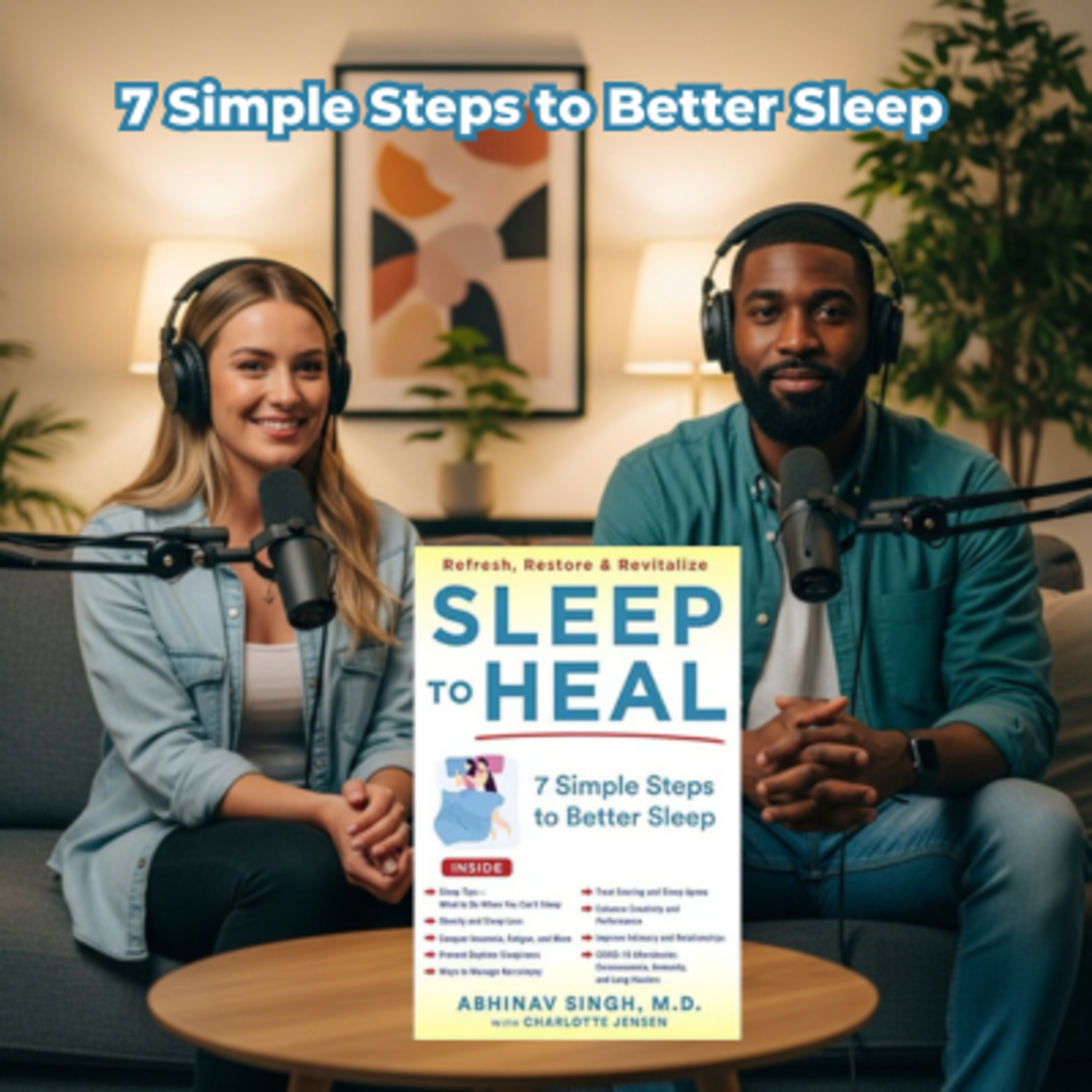
WHAT IF A GOOD NIGHT’S SLEEP WAS ALL YOU NEEDED TO TRANSFORM YOUR LIFE BEYOND YOUR WILDEST DREAMS? SLEEP TO HEAL IS HERE TO HEAL AND INSPIRE.
Are you tired of waking up tired? You are not alone. We may have become super-productive in our fast-paced, always-connected, 24/7 society, but in exchange we lost something precious: our harmonious connection to sleep, a natural biological function integral to our overall health, wellness, and well-being.
The new and unraveling science of sleep tells us that sleep impacts everything from anxiety and creativity to productivity and longevity. We also now know it’s an essential pillar of health—perhaps even more important than nutrition and exercise.
Dr. Abhinav Singh is a physician with a keen interest in preventive medicine, and he firmly believes that better sleep equals better health. No matter your age, this book will help you revolutionize your patterns on a daily basis and support you on a renewed journey toward better sleep, better health, and ultimately a better life—not just for tonight but for a lifetime.
No matter your goal—better sleep, losing weight, or simply feeling more patient around loved ones—it is never too late for a sleep reboot. Based on scientific research and 15 years of clinical experience from a double board-certified sleep physician who has taught the art of sleep to more than 7,000 patients, SLEEP TO HEAL will forever reshape the way you think about sleep, and give you the strategies and tools you need to transform your life from the inside out—one peaceful night at a time.
Dr. Abhinav Singh’s work explores the essential role of sleep as a biological necessity rather than an optional indulgence. The text highlights how restorative rest functions as a natural cleansing process for the brain, enhancing cognitive performance, emotional stability, and physical health. By examining the detrimental effects of sleep deprivation, the author underscores the connection between quality rest and personal success across all stages of life. Practical strategies are offered to reset internal clocks and establish healthy nighttime routines, especially in the wake of modern stressors like the pandemic. Ultimately, the source encourages readers to prioritize sleep as a vital investment in their long-term happiness and well-being. This comprehensive guide serves as a roadmap for reclaiming health through simple, science-backed lifestyle adjustments.
REFRESH, RESTORE, AND REVITALIZE YOUR LIFE TODAY!
#sleeptoheal #AbhinavSingh #productivityhacks #personaldevelopment #successstrategies #businessinsights #leadershipskills #leadership #ambitiousprofessionals #businesstips #self help #scaling business #businesstactics #professionaldevelopment #startupgrowth #entrepreneurship #businessmindset #growthstrategies
So if you live to be 80 years old, you will spend roughly 13.5 million minutes doing exactly one thing. Which is sleeping. Right, sleeping. And that is, you know, it's a full third of your entire time on this planet. Yeah, it's a massive block of time. It really is. Yet I mean, most of us treat that time as like a biological tax. Or absolutely like an inconvenience. Exactly, we treat it as an optional luxury or you know, like a a bank account that we can just endlessly withdraw from to fund our work or our socialize or let's be honest, our late night binge watching.
Yeah, just one more episode. Right. Yeah, but it's a staggering number when you really frame it that way. 13.5 million minutes and you know, the mission of our deep dive today is to fundamentally change how you, the listener, view those minutes. Because it's not just passive time. No, exactly. We are looking at some incredible clinical research today, primarily driven by Doctor Avinav Singh's work on sleep recovery and his book Sleep to Heal. It completely shatters this illusion that sleep is just a blank space.
Right, like the space between the moments of your actual life. Yeah, exactly. So we're going to explore how to treat that time as the ultimate active investment in your physical health, your cognitive success, and your emotional resilience. And to do that, you know, before we can actually use sleep to our advantage, we have to understand the biological reality of what our bodies are doing when we close our eyes. Right, because the biggest misconception I had, and I think a lot of people listening probably share this, is that sleep is just the body powering down.
The old computer analogy, yes. You know, you close the lid on your laptop, the screen goes black, the fan stops spinning, and everything just goes totally dormant until you you open it back up in the morning. Right. Well, the science shows us that the laptop analogy could literally not be further from the truth. Not even close. Not even close. Your brain is not powering down at all. It is shifting into this highly orchestrated, incredibly demanding active state. Wow. Yeah. I mean, sleep is as biologically essential to your immediate survival as food and water.
We all generally know about the the different stages of sleep, right? Sure, like right and deep sleep. Exactly. But what's fascinating here is the rigid, like non negotiable division of Labor between them. OK. What do you mean by division of Labor? Well you have non REM sleep which acts as the physical construction crew. Oh, I see. Yeah, it is heavily involved in repairing tissues, synthesizing proteins and, you know, literally building bone and muscle. So it's fixing the hardware. Precisely. And then you have REM sleep, which acts as the emotional and cognitive archivist.
It's processing memories, integrating your daily experiences, and basically resetting your emotional day line. OK, so if the laptop analogy is just completely wrong, I I started visualizing it more like a massive bustling city. Oh, that's a great way to look at it, right? Like during the day, there are millions of cars, pedestrians, transactions happening, factories churning away. Total chaos. Yeah, and by the end of the day, the streets are covered in trash, smog is in the air. The garbage cans are totally overflowing.
Sleep isn't shutting the city down. Sleep is When the sunsets and sanitation crew finally comes out. You know, the street sweepers, the garbage trucks, the maintenance workers, they take over the city to clean up the mess we made during the day. That is a brilliant way to picture it, and the research actually uses a very specific term for this exact process. They call it brainwashing. Brainwashing. Like, literally. In the most literal biological sense, yes. During deep sleep, this fascinating physiological mechanism occurs the brain's glial cells.
Wait, what are glial cells? Oh, they're the supportive cells that surround your neurons. Anyway, during deep sleep, these glial cells actually shrink in size. Wait, really? The cells in your brain physically change size. They do. They shrink by up to 60. Percent. That is insane, 60%. Yeah. And what that does is it creates all this extra space between your neurons that allows A rush of cerebrospinal fluid to just flow right through the brain tissue like. The street sweepers in the city. Exactly like the street sweepers, this fluid literally washes away the metabolic waste and the neurotoxins that accumulated during your waking hours.
Specifically, you know it flushes out harmful byproducts like beta amyloid proteins. And those are bad, I assume. Very bad. They are directly linked to neurodegenerative diseases like Alzheimer's. Oh wow, so that toxic buildup, that's what physically manifests as brain fog. Yes, exactly. Like when you pull an all nighter or you just get terrible sleep, you aren't just feeling quote UN quote tired in some abstract way. No, not at. All your neurons are literally wading through chemical sludge. Yeah, because you, you know, you cut the sanitation cruise shift short.
That is the exact biological reality of it. If you keep cutting that cleansing cycle short by staying up late or waking up constantly, those harmful substances just keep building up, right? And that creates this cascading biological failure. When you skip that nightly sanitation cycle, the hidden toll across multiple bodily systems is just severe. Yeah. Let's look at exactly what happens to the body then, because the dark side of sleep loss, it isn't just about feeling a little groggy during your morning commute.
Oh, it's so much worse than that. The source material outlines how sleep deprivation immediately weakens the immune system. Like you literally produce fewer cytokines. Right. And cytokines are the proteins that target infection and inflammation. So you're just leaving the front door open for sickness? Exactly. And then you have a dramatically increased risk of chronic illnesses. We're talking diabetes, heart disease, obesity. Because your body just loses its ability to regulate insulin and blood pressure properly.
Right. And that is just the physical infrastructure collapsing. The immediate mental toll is devastating, too. Oh, the mental toll is huge without REM sleep to process those emotions we talked about earlier, the connection between your amygdala. Which is the emotional center of the brain, right? Correct the connection between the amygdala and your prefrontal cortex, which handles rational thought. That connection becomes severed. So you just can't think straight. Right. And it leads to anxiety, depression, massive mood swings and just, you know, intense irritability.
Yeah, your fuse is just non existent. Exactly. You lose your memory capacity, your concentration tanks, and your ability to solve complex problems just entirely evaporate. Which. I have to say, makes the societal narrative around sleep so incredibly frustrating. The hustle culture stuff. Yes, we all know people who boast about grinding on 4 hours of sleep. You see it constantly on social media. It's the CEO's, the hustle culture influencers, the the students during finals week saying I'll sleep when I'm dead or claiming they've somehow biohacked their way to only needing 3 hours a night to be wildly successful.
Well, the research completely dismantles that myth. The idea that sacrificing sleep leads to greater success is a total biological illusion. It's just fake. Completely fake. It is functionally impossible to reach your peak potential while chronically sleep deprived. I mean, think about what is required to be genuinely successful in any high level field. Right, you need to be sharp. You need to integrate discrete pieces of new information to formulate creative insights. You need to regulate your emotions so you can be patient, collaborative, and, you know, empathetic in your relationships.
And you need your prefrontal cortex firing at absolute peak capacity for executive decision making. And you literally cannot do those things if your brain hasn't washed out the beta amyloid proteins from the day before. Precisely. Genuine success and peak performance are driven by restorative sleep. Good sleep lifts your mood, it reduces your baseline stress levels, and it allows you to handle daily friction calmly. Wow. The research really emphasizes that sleep isn't just about recovering from yesterday.
It's a powerful, active tool for constructing a successful tomorrow. OK, so if sleep is this ultimate life hack, if it is the literal foundation for physical health, emotional stability, and cognitive dominance, why is it so incredibly hard for so many of us to just go to sleep? That is the $1,000,000 question. It feels like we are constantly fighting against our own biology. If it's this vital, shouldn't our bodies just do it automatically? You know, the same way we breathe. Well, that is the core struggle of modern life.
The answer really lies in understanding how our biological sleep needs change over our life cycle, and how those changes violently collide with the disruptive modern environments we've built for ourselves. Right, our environment is totally different now. Exactly. Yeah. If we look at the 2 ends of the age spectrum, children and older adults, we see how dynamic this biological process really is. Yeah, the source refers to the childhood phase as the ABC's of Ziz. And I mean, anyone with a toddler knows that if they miss a nap, the entire house pays the price.
Oh, for sure, because for children, sleep is the primary engine of their development. It's not just resting, it is active construction, right? During deep sleep, children release massive amounts of growth hormone. Their immune systems are fortifying themselves, and on a neurological level, their brains are engaging in a process called synaptic pruning. OK, wait, what does that mean? Synaptic pruning. So imagine a massive garden that has grown wildly during the day as the child absorbed a million new sights and sounds.
Synaptic pruning is basically the brain acting as a gardener. It's trimming away the weak or unnecessary neural connections so the important ones can grow stronger and more efficient. Oh, that makes sense. It is also when their emotional regulation is cemented. When kids don't sleep, their brains cannot prune those pathways. Which leaves them overstimulated. Exactly. Overstimulated, cranky, unfocused, and literally unable to learn. But then, yeah, as we age, we shift to the other end of the spectrum and the actual architecture of our sleep starts to work against.
Us it does. Unfortunately, for older adults, circadian rhythms naturally begin to shift. They experience what is called an advanced sleep phase, which means it makes them want to go to bed earlier and wake up much, much earlier. Furthermore, the brain's production of melatonin. That's the hormone that signals sleep. Right, right. Melatonin decreases with age. This means sleep naturally becomes lighter and much more fragmented. So they're waking up a lot more in the night, yes. The biological need for quality sleep doesn't decrease, though it remains absolutely crucial for staving off cognitive decline and managing conditions like hypertension.
But it gets harder to actually get it. Exactly the biological ease of acquiring that deep restorative sleep diminishes significantly. So we have the natural aging process, changing our internal clocks, but then we have to factor in the absolute chaos of the modern world. And the text highlights a very specific modern crisis that I think honestly, fundamentally broke a lot of people's relationship with sleep. The pandemic. Yes, the COVID-19 pandemic and that massive shift to working from home. It was an unprecedented, perfect storm for a global insomnia.
I mean, the pandemic forced this overnight shift in how we lived, completely erasing the environmental boundaries that our brains rely on. Yeah, I realized my own sleep hygiene was absolutely destroyed during this period. I was, you know, sitting in bed answering work emails. At 11:30 PM, the bedroom suddenly became the office, the gym and the cafeteria all at once. And the research explains exactly why this breaks our biology. It's classical. Conditioning, right? Exactly. Our brains rely heavily on environmental cues and compartmentalization to know when to secrete alertness hormones like cortisol and when to release relaxation hormones like melatonin, right.
Historically, leaving the office and commuting home signaled to your brain that the work day was over. But when your laptop is sitting three feet from your pillow, those. Boundaries just vanish they completely. Vanish. Your brain starts associating the bed with stress, deadlines and anxiety rather than rest. It's like. Trying to land a plane, but you've turned off all the runway lights and left the air traffic control radio just blaring in the cockpit. That is why. Yeah, your brain. Has no environmental signals telling it to descend and it's just being bombarded with noise that is a.
Perfect analogy. Yeah, you are asking the plane to land on a pitch black runway and then compound that lack of boundaries with the massive global spike in existential stress and anxiety we all felt, which physically locks the nervous system in a fight or flight state. Yes, and. Then add the exponential increase in electronic screen time because we were living our entire social and professional lives through our devices, tearing at. Screens all day and night it completely. Short circuited our ability to initiate sleep.
And the troubling part is, for millions of people, those bad habits haven't been corrected even as the pandemic has receded, Which? Brings us to the absolute most important part of this deep dive. The fix? The. Fix. We understand the complex biology now. We know about the synaptic pruning, the glial cell shrinking and that toxic buildup of beta amyloids, right? We recognize the modern roadblocks like the breakdown of work from home boundaries. So how do we fix it? Because I will be honest, when you are already exhausted from a year of terrible sleep, the idea of making massive lifestyle changes feels incredibly overwhelming.
It does. I need the low friction strategies. How do we fall in love with sleep again? Well. The most encouraging take away from Doctor Singh's work is that the quote UN quote easy sleep reset does not require a massive stressful overhaul of your life. OK, good. It is entirely about making small tactical adjustments to your environment and your pre sleep routines. You just need to give your biology the cues it desperately needs. So what's? Step one the. 1st and arguably most critical step is aggressive consistency, meaning.
Going to bed and waking up at the exact same time every single day? Yes. This is how you anchor your circadian rhythm. You have to train your brain to anticipate sleep at a specific hour. OK, I. Have to push back on this a little bit. Sure, because what about the weekends? Like, if I sleep poorly Tuesday through Thursday, isn't sleeping in until 11 AM on Saturday a good thing? I'm paying off the sleep debt, right? I know it. Feels so intuitive, but the biological reality is that catch up sleep creates what researchers call social jet lag.
Social. Jet lag, yeah. By shifting your wake time by three or four hours on a weekend, you are essentially dragging your internal clock across three time zones, and then you're asking it to instantly snap back to normal on Monday morning. It severely disrupts your circadian rhythm. Consistency must be maintained seven days a week. That's tough. But it makes sense. OK, what's next? The second. Tactical step is optimizing your environment. Your bedroom needs to become a cave optimized for biology, dark, quiet and critically cool.
The cool temperature requirement is fascinating to me. Why does the room need to be cold it? Ties directly back to your circadian rhythm. Again. In order for your body to initiate sleep and cross the threshold into the deeper restorative stages, your core body temperature actually needs to drop by about 1 to 2°F. Really. Your internal temperature drops. It has. To If your bedroom is too warm or your blankets are too heavy, your body fights against that natural temperature drop. It sends a signal to your brain that it is not yet time to sleep.
I. See Keeping. The room cool actively facilitates that necessary biological dip. So we have the rigid consistency, we have the cool dark cave. What about the hour before we actually get into bed? The pre routine this. Is your runway for the plane you mentioned earlier, you need to turn the runway lights back on and lower the radio volume, right? This means establishing A calming runway, reading a physical book, practicing light stretching, or taking a warm bath. And the absolute non negotiable rule is entirely disconnecting from blue light emitting screens.
So. No phones, tablets or laptops. None. Because. The specific wavelength of blue light tricks the brain into thinking the sun is still upright. Exactly. Photoreceptors in your eyes detect that blue light and they send a direct signal to the pineal gland in your brain to immediately halt the production of melatonin. Wow. Yeah. By scrolling on your phone in bed, you are chemically intervening to keep yourself awake. You are actively suppressing the very hormone required to signal sleep, that is. Terrifying it.
Is and the research also highlights the impact of diet and exercise in these evening hours. You really want to avoid large meals, caffeine and alcohol right before bed, OK? Wait, I need to stop you on the exercise point because intuitively, isn't physically tiring yourself out a great way to guarantee sleep? Like shouldn't I just do a massive heavy workout at 9:00 PM so my body just collapses onto the mattress? It is an. Incredibly common misconception, but the Physiology dictates the exact opposite really.
Yes, staying active and exercising during the day absolutely makes falling asleep easier. But vigorous, heavy exercise close to bedtime actively hinders the biological process of sleep. Why? What is happening in the nervous system when you do that? When? You engage in a massive, heavy workout. You are intentionally triggering a stress response. You are elevating your heart rate. You are flooding your bloodstream with cortisol and adrenaline, which wakes. You up exactly. Those are hormones specifically designed to make you highly alert and ready for physical action.
And tying back to the temperature requirement we just discussed, you are significantly raising your core body temperature. Ah, so you are doing the exact opposite of what the body needs to initiate sleep. Precisely. It takes hours for that adrenaline to clear your bloodstream and for your core temperature to drop back down to the required baseline. So you're. Basically mashing the gas pedal right when your body is trying to hit the brakes. Exactly. You can have physically exhausted, aching muscles, but your nervous system will be completely wired.
The goal of the evening pre routine is to signal absolute safety and relaxation to your nervous system, not physical exhaustion. That makes perfect sense when you map out the biology like that. Wow. Let me quickly summarize the incredible journey we've been on today, because this really has been a paradigm shift. It really. Is a whole new way to look at it, right? We started by dismantling the laptop analogy. Sleep isn't powering down. It's an intensely active biological state where our physical construction crew and emotional archivists get to work.
We learned about the literal brainwashing process, how glial cells shrink so fluid can wash away the toxic beta amyloids that cause brain fog. We looked at the devastating cascading failure of sleep dead on our immune system and memory and. We completely dismantled that toxic myth that sacrificing sleep makes you more successful. Yes. The hustle culture lie. Then we looked at how modern life, especially the blurred boundaries of working from home, destroyed our environmental cues. Right? And finally, we laid out the tactical reset.
Strict consistency even on weekends to avoid social jet lag, a cool room to drop the core body temperature, ditching the blue light to save our melatonin, and avoiding those late night workouts that spike our cortisol and. You know, if you take nothing else away from our time today, remember this. You're 13.5 million minutes of sleep are not a chore. No, they are not a penalty you pay for being alive. And they are certainly not a bank account you can overdraw without consequences. They are an essential treasure.
I love that they are the bedrock biological foundation for a more vibrant, resilient and successful life. By simply prioritizing it and setting up the right environmental cues, you give your brain the permission it desperately wants to heal itself. Which? Brings me to a final thought. I want to leave you with something to Mull over tonight when you were going through your own evening routine. We've established that sleep is the ultimate active tool for processing information, for healing the physical body and for unlocking cognitive dominance.
So. What if we completely stopped viewing sleep as the end of our day? Oh, that's an. Interesting shift, right? What if instead, we started treating it as the critical, active first step of tomorrow? How would your evening routine change tonight if you viewed going to bed not as winding down the current day, but is the starting line for tomorrow's success? It changes. Everything it really. Does think about your 13.5 million minutes, How are you going to invest your next block of them? Thank you so much for joining us on this deep dive.
We will. Catch you next time.
 Apple Podcasts
 Castbox
 Castro
 Goodpods
 Moon FM
 Overcast
 Pocket Casts
 Podbean
 Podcast Addict
 Podcast Republic
 Spotify