Disarming the Narcissist by Wendy T Behary | Surviving and Thriving with the Self-Absorbed
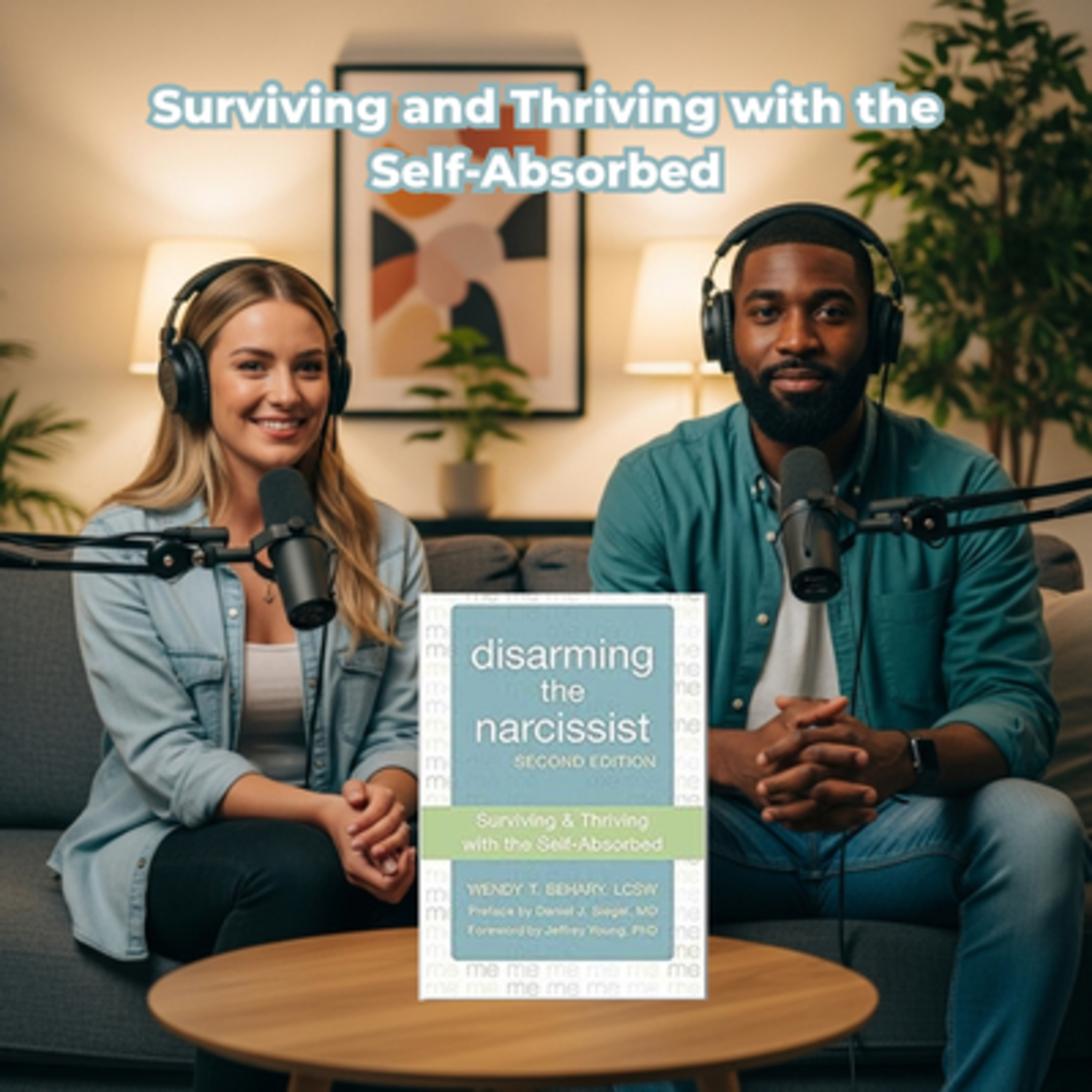
This text summarizes Wendy T. Behary's book, which offers a comprehensive framework for managing relationships with individuals who exhibit narcissistic personality traits. The author explores the psychological origins of self-centered behavior, linking these actions to early life schemas and specific brain functions. Readers are taught to identify personal emotional triggers and "traps" that enable toxic dynamics while learning to implement firm boundaries. A central strategy highlighted is empathic confrontation, a technique that balances assertive communication with an understanding of the narcissist’s underlying insecurities. Ultimately, the guide provides practical advice for high-stakes scenarios, such as co-parenting or dealing with dangerous behaviors, to help victims reclaim their resilience.
#productivityhacks #personaldevelopment #successstrategies #businessinsights #leadershipskills #leadership #ambitiousprofessionals #businesstips #self help #scaling business #businesstactics #professionaldevelopment #startupgrowth #entrepreneurship #businessmindset #growthstrategies
Welcome back to The Deep Dive. Today we are taking a journey into something that, well, frankly, can be profoundly draining. Yeah, some really tough relationship dynamics. Exactly. We've extracted the key insights from Wendy T Bahari's foundational work, Disarming the Narcissist, A Guide to Survival and Resilience. We're condensing years of therapeutic wisdom into the crucial Nuggets you need. And our mission here is really centered on action. We're moving beyond just, you know, recognizing the traits.
Yeah. We're pulling out the essential knowledge to provide you, the listener with proven strategies, tools, really. Tools that help you protect your peace, maintain your boundaries. And actually thrive, whether you're dealing with a self-centered partner, a difficult family member or even a challenging colleague. OK, let's unpack this then. Yeah, before we can disarm A dynamic, we have to understand what we're facing. So what exactly is the clinical definition of narcissism we're working with? I mean beyond just the everyday term for being a bit full of yourself.
At its foundation, the material defines narcissism as a personality pattern, and it's defined by three major characteristics, A profound arrogance, a marked lack of empathy for others, and an inflated, almost sacred belief in one's own superior importance. I think most people can spot arrogance, but where does the line get blurry? Because confidence can be really attractive, especially at the beginning of a relationship. That's where the defining traits come in. We are looking for a constant, almost thirsty need for admiration, a deep sense of entitlement, this belief that the rules just don't apply to them, and, crucially, a pattern of using others.
We're. Using them for what? To meet their own emotional or practical ends. They don't see you, they see a resource. And the research highlights that devastating relationship pattern, the initial charm, the attention, that almost overwhelming love bombing. Precisely that initial charisma is often the hook. They're fantastic performers when they need something, but the source material shows this quickly devolves into controlling behavior where your needs, your feelings, even your contributions are just systematically ignored.
Sometimes even punished. Yes, sometimes even punished. What's fascinating, and I think surprising to a lot of people, is the origin story. It's not just one path to developing this kind of pattern, is it? Absolutely not. The sources explain that these traits often stem from one of two polar opposite childhoods. On one hand, you have the child who got excessive unrealistic praise, never really encountered healthy resistance or feedback. So they developed that schema of superiority. Exactly. But on the other hand, you had the child who experienced harsh criticism or profound neglect, and that forces them to construct this impenetrable defensive shell to protect an incredibly fragile core self.
Understanding that duality is critical. So it's either a lack of grounding or intense damage that leads to this defensive armor. Let's talk talk about that armor, the internal architecture. We need to understand schemas because they are kind of the defensive software running the whole operation. Schemas are exactly that, mental blueprints. They are deeply ingrained patterns of thinking and feeling that are forged during our earliest interactions, usually with caregivers. They determine how we interpret and respond to the world.
Often, you know, unconsciously. So if schemas are their operating system, what are the specific programs that dictate narcissistic behavior? The defining programs are the schemas of entitlement, superiority and that ever present need for validation and admiration. When those are challenged, the entire system goes into crisis mode. Which explains the explosive reactions. It explains the explosive reactions and the intense defensiveness we so often see. And there's a biological layer to this, too.
The book mentions the brain's role. We're not getting into deep clinical neuroscience here, but what's the practical take away about how their brain differs? The key take away is really about response and processing. Narcissists often exhibit very strong immediate emotional responses. They react before they can really process. And crucially, there can be challenges in the parts of the brain related to inhibitory control and emotional regulation. So it's genuinely difficult for them to step into another person's experience.
It is. Empathy requires a shift in perspective, and their brain architecture often fights against that shift. Now this doesn't excuse the behavior, but it helps us understand its automatic defensive nature. OK, here's where we shift the gaze and this is where it gets really personal and actionable for you. We need to start focusing exclusively on the narcissist and start focusing on ourselves. How do we recognize the traps we fall into that keep this dynamic alive? Recognizing your own traps is the turning point.
These are patterns of thinking and behavior you have developed that make you vulnerable. Narcissists don't necessarily hunt for victims. They hunt for emotional triggers they can exploit. Give us an example of a common trigger they might latch onto OK? Think about a deep seated feeling of inadequacy, or maybe a huge subconscious need for external approval to feel like you're worth something. If those are your triggers, the narcissist gains immediate leverage. They can selectively withhold praise or deploy subtle criticism, and they keep you performing.
For them to get that fleeting sense of worth, it traps you in a cycle. And that often leads to us taking on specific roles that enable their behavior without us even realizing it, the book points out. The pleaser and the fixer. And these roles are so insidious because they feel virtuous to the person playing them. The pleaser constantly sacrifices their own needs, just walking on egg shells to avoid the narcissist's temper. Well, the fixer believes. The fixer operates. It's under this delusion that they have the unique insight or the special love required to finally heal the narcissists core wound.
That belief I can fix them, that's such a powerfully dangerous illusion isn't? It it is. Recognizing that role and understanding that you are not responsible for another adult's fundamental behavior is the single most important step toward changing the dynamic. You can change your role. You cannot change their personality. So once we identify the trap and stop playing the fixer, what's the immediate, actionable advice for stopping that cycle? It all boils down to clear, firm, and absolutely consistent boundary setting.
This is the bedrock of yourself protection. A narcissist is designed to test and push limits, particularly if they're used to you folding. So if you aren't consistent. If you aren't consistent, even if it feels uncomfortable or causes a short term blow up, you are just reinforcing the old pattern that their demands will eventually win. So self-awareness is less about about therapy and more about what operational defense. Exactly, it's an active defense mechanism. You have to become aware of your own needs and make sure you are meeting them healthily so you don't look to the narcissist for the approval they are literally designed to withhold.
OK, let's move into the day-to-day battleground. Yeah, communication. Chapters four and five deal with how to navigate these difficult conversations. What are the key manipulation tactics we need to watch out for in real time? Their core tactics are designed to keep you destabilized and focused on them. They deflect, they minimize your reality, what we often call gaslighting, and they aggressively pivot the argument back to your flaws. They thrive on drama. They thrive on drama, on volatility and provocation, because that keeps the spotlight on their perceived victimhood or their outrage.
So if they are throwing emotional grenades, what is our shield? The single most crucial technique is maintaining emotional distance, staying calm, collected, and confident even when they're escalating. When they don't get a big dramatic reaction from you. When you stay neutral, you neutralize their power to control the exchange. You starve them of the validation that their drama is working. And you have to let go of that urge to prove you are right. Absolutely avoid power struggles at all costs.
The moment you engage with the intent to win the argument or get them to admit they were wrong, you are playing their game and they are masters of it. So the focus has to shift. Completely to what you can control your actions, your responses, and most importantly, the clear enforcement of your boundaries. This sounds mentally exhausting, which is why we need to move to the really powerful technique the book champions. Empathic confrontation. It sounds like a paradox. Empathy and confrontation? How does that even work?
Empathic confrontation is It's like a psychological surgical strike. It marries validation with unwavering assertiveness. You use empathy to show you understand why they might be reacting the way they are. Maybe they feel slighted or unappreciated, which helps disarm their defensiveness. But, and this is critical, showing empathy doesn't mean agreeing with them, right? That distinction has to be razor shark. It is the most vital distinction. You acknowledge their feeling or their perspective without endorsing, accepting or excusing their negative behavior.
You show that you see their emotional landscape, which reduces the tension, but you absolutely do not concede your boundary or your reality. Can you walk through a quick example how this would sound compared to a typical argument? Certainly. Let's say a narcissist is furiously accusing you of being incompetent because they missed the deadline. The standard exhausting response is to argue back defensively. I gave you the report on Tuesday. It's not my fault. Right, which goes nowhere. Exactly. Empathic confrontation is different, you might say.
I hear that you are deeply frustrated and worried about missing this deadline, and I understand why you feel stressed right now. So you validate the feeling first. Yes, then you pivot. However, yelling at me is not acceptable. Going forward, if you need clarification on a report, please send a text and I will respond within the hour. That's powerful. It addresses the emotion, the fear of failure, but immediately Italy pivots to a non negotiable standard for behavior. It focuses on the future, not the past.
Blame. Precisely. You are clear and direct, focusing only on specific observable behaviors and their effects. You avoid vague accusations like you are always difficult. Specificity forces them to address the action, not just the accusation. Let's transition now to some high stakes situations where it moves from frustration to actual trauma. The book addresses perilous and hypersexual narcissism. These aren't just annoying, they're dangerous. They are Bahari talks about the causes for these more harmful manifestations, and they often spring from deep core feelings of shame and unresolved trust issues, often rooted in severe past betrayals or trauma.
The arrogance becomes an even thicker, more desperate shield. And when that manifests as a hypersexual behavior or infidelity, how is that a control mechanism? It's used as a desperate means to assert control or as a frantic way to seek external validation to fill that endless hole of inadequacy. And this behavior frequently causes profound betrayal and trauma for their partners. In these scenarios, the safety imperative is paramount. So the message here is clearly about protection. First, always.
The book stresses prioritizing safety above all else. This often means seeking professional help immediately for yourself or specialized therapy, and, when necessary, removing yourself from volatile situations where safety is genuinely compromised. Your well-being has to come first. We also have to address the challenging reality of Co parenting with a narcissist. What is the prime objective when you have children involved? The absolute prime objective is prioritizing the children's emotional health and stability.
That means you must strive to create a stable, predictable, nurturing environment for them, even if the other parent is actively trying to destabilize things. Your home has to be the safe harbor. It must be their safe harbor. How do you enforce boundaries when the narcissist sees the children as leverage or an extension of themselves? Your boundaries have to become absolute and you have to operate like a meticulous business partner, not an emotional Co parent. That means setting rigid boundaries to protect the children's space and time, preventing the narcissist from overstepping limits, changing schedules unilaterally, or undermining your authority.
And the communication strategy has to reflect that professional distance. Precisely. Communication must be surgical. Stick strictly to the facts, scheduling logistics. Avoid emotional triggers at all costs. Don't engage in arguments about feelings or past behaviors. And critically, document absolutely everything. Keep accurate, unemotional records of conversations, missed appointments, everything. That documentation is your shield. And finally, how do we shield the children from being dragged into the conflict?
This is non negotiable. Ensure they are never used as messengers, you manage the communication channels they do not and seek outside support. Therapy for the children, support groups for yourself to help manage the chronic stress while creating a strong firewall between the adult conflict and the children's. So after all of this, what does this mean for the listeners? Long term resilience. We've gone from understanding the roots to managing specific behaviors. The final section focuses on the seven gifts of communication with a narcissist.
This moves us past just surviving and into thriving. And these gifts are not just strategies for dealing with the narcissist. They are practices that profoundly benefit your own mental and emotional health, regardless of the outcome of that one relationship. They're tools for resilience. OK, let's break down the gifts related to strategic engagement. We can Group 3 powerful practices here. Gift one is understanding their feelings without endorsing their behavior, which as we said, is the foundation for de escalation.
Gift 2 is being clear and direct. And Gift 4 is exercising patience, taking time to respond thoughtfully, avoiding that reactive cycle they want. That thoughtful delay creates space for better choices. It does. And what about the gifts focused on self protection and boundary maintenance? That's where gift three comes in. Setting and maintaining strong boundaries consistently. This has to become automatic. It is the backbone of yourself, protection and your peace. You're slowly training them that you are no longer available for their games.
And the final gifts deal with inner perspective, which sounds like the key to escaping that feeling of being chronically consumed by the drama. Absolutely. Gift 6 is crucial perspective. Always remember that the narcissist behavior, the arrogance, the control is fundamentally more about them, their shame, their fragile schemas than it is ever about you. Taking it personally is what causes the most damage. And gift five and seven relate directly to self-care, which isn't a luxury in these situations, It's a necessity.
Precisely, Gift 5 is prioritizing your own mental and emotional health through deliberate self-care. And Gift 7, finding moments of gratitude, even in difficult interactions, helps you stay grounded and maintain a positive outlook. You need fuel to fight this fight. This has been a dense but critically necessary deep dive into building resilience to synthesize all this for the listener. The past to resilience really rests on three main pillars. First, rigorously understanding their operating system, the Steamas to predict their actions.
Second, setting clear non negotiable limits. Boundaries are your non emotional shield. And 3rd, learning to communicate with strategic assertiveness, which means mastering empathic confrontation. The ultimate goal? The ultimate goal is moving from constant emotional repair to genuine psychological stability, protecting your own Peace of Mind regardless of their volatility. Dealing with a narcissist is inherently draining. It demands hyper vigilance, radical self-awareness, and relentless boundary enforcement.
But consider this final thought as you begin implementing these changes. If consistently applying these rigorous strategies, boundaries, self-awareness, and crystal clear communication allows you to remain grounded and prioritize your well-being against such a powerful emotional current, How does this discipline process fundamentally change your relationships with everyone else in your life? Does managing this challenge make you a more grounded, clearer communicator? Universally, we leave that for you to explore.
 Apple Podcasts
 Castbox
 Castro
 Goodpods
 Moon FM
 Overcast
 Pocket Casts
 Podbean
 Podcast Addict
 Podcast Republic
 Spotify