Self-Compassion by Dr. Kristin Neff | The_Three_Pillars_of_Self-Compassion
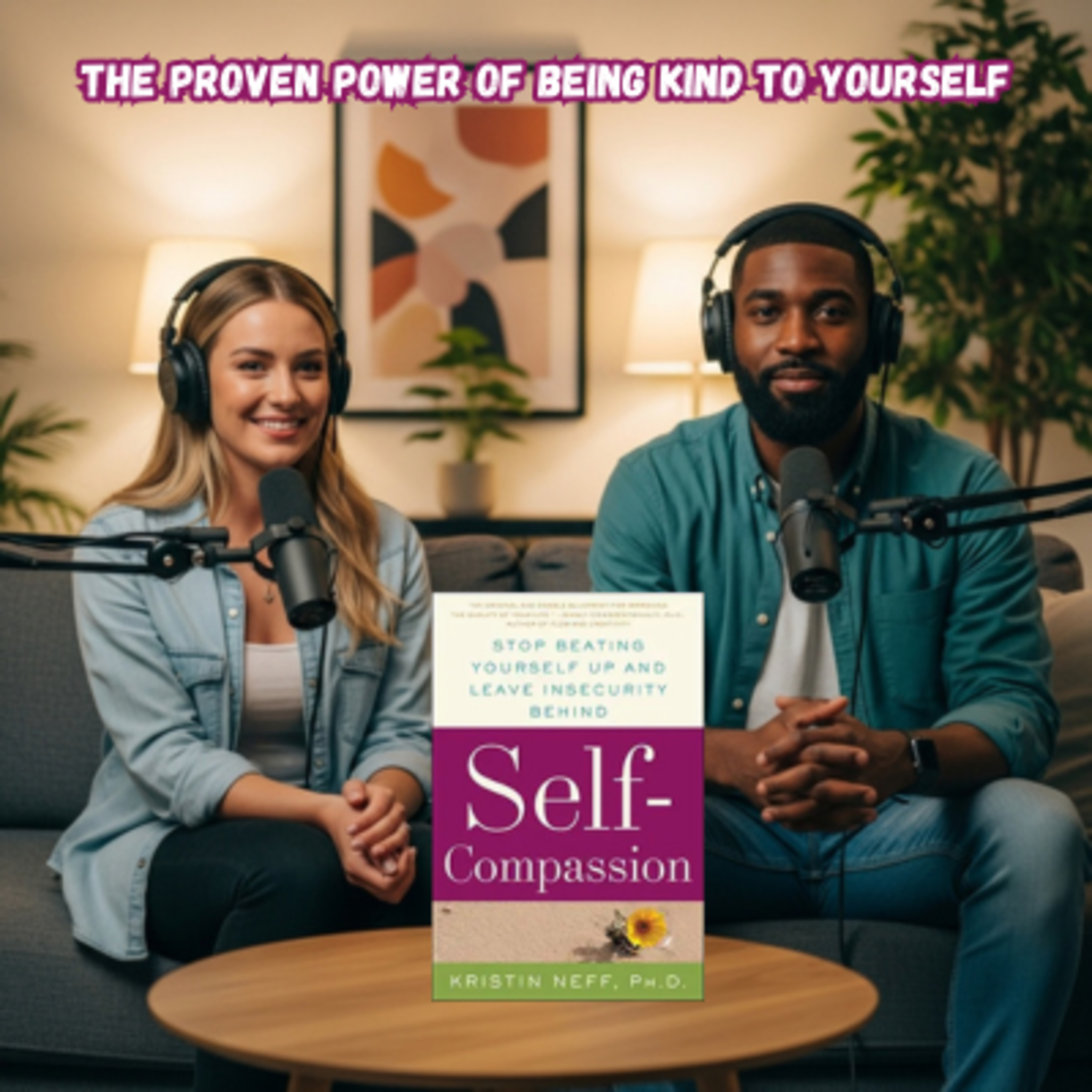
Self-Compassion: Stop Beating Yourself Up and Leave Insecurity Behind offers expert advice on how to limit self-criticism and offset its negative effects, enabling you to achieve your highest potential and a more contented, fulfilled life.
More and more, psychologists are turning away from an emphasis on self-esteem and moving toward self-compassion in the treatment of their patients—and Dr. Neff’s extraordinary book offers exercises and action plans for dealing with every emotionally debilitating struggle, be it parenting, weight loss, or any of the numerous trials of everyday living.
This outlines Dr. Kristin Neff’s research on the transformative power of self-compassion, which involves treating oneself with the same warmth and understanding typically reserved for friends. Unlike self-esteem, which relies on social comparisons and external achievements, this practice provides a stable sense of worth through self-kindness, mindfulness, and the recognition of common humanity. Scientific evidence suggests that adopting this supportive internal dialogue enhances mental and physical health while simultaneously increasing personal motivation and emotional resilience. Beyond individual well-being, the source explains how nurturing a gentle attitude toward oneself improves interpersonal relationships, aids in parenting, and facilitates healing from trauma. Ultimately, the text serves as a guide for turning self-compassion into a daily habit to foster a more fulfilling and successful life.
#productivityhacks #personaldevelopment #successstrategies #businessinsights #leadershipskills #leadership #ambitiousprofessionals #businesstips #self help #scaling business #businesstactics #professionaldevelopment #startupgrowth #entrepreneurship #businessmindset #growthstrategies
So let's just start with a scenario because I think, well, I think we've all been there. A friend calls you and they are absolutely devastated. They've made some huge, really embarrassing mistake at work. You know, maybe they tanked a big presentation or missed a critical deadline. You just feel terrible, stupid even. What's your immediate reaction, your gut instinct? You instantly become their biggest advocate, right? You're patient, you're understanding, you're gentle. You tell them, hey, it's OK, you're human.
This doesn't change a thing. You just offer them that warmth. But, and here's the really baffling disconnect we're diving into today. Why is it that when you make that exact same mistake, that inner friend just disappears and in their place you get this, this personal judge, jury, and executioner all rolled into one? Why are we so good at being compassionate to others, but just so consistently, brutally harsh with ourselves? That internal friction, that that voice, that monologue, it's such a universal problem.
And the good news is that our sources today, which focus really heavily on the foundation work of Doctor Kristin Neff, they don't just point out the problem. They actually give us a powerful and I mean scientifically proven solution. Our mission in this deep dive is to pull out and really deliver to you the precise framework that unlocks the power of what she calls self compassion. We want to show you exactly how this inner kindness can genuinely, you know, transform your life. We're not just talking about happiness, but greater resilience.
And this is crucial, a sense of success that doesn't depend on anyone elses approval. Yeah, and it's so important to say right up front that this is so much more than just vaguely, you know, being nice to yourself. The sources layout, a really clear three-part framework, they all kind of interlock. So we're going to unpack these three essential pillars, because understanding how they work together is really the shortcut to making this a real shift in your daily life. So where do we start? The core definition I guess.
Absolutely. The fundamental definition of self compassion as it's laid out in the source material is actually pretty simple, but it's revolutionary. It just means treating yourself with the exact same kindness and understanding you would automatically give to a good friend who's struggling. It's an active choice. OK. An active choice. So it's not a feeling, it's a practice exactly. And you mentioned it's built 3 distinct components. They have to work together or the whole thing kind of falls apart.
What are they? That's right. They create this, this really robust practice that's designed to catch you at every point where self criticism might sneak in. So first you have self kindness. This is the active counter response. So when that critical voice starts up, you know, calling you names and saying you're not good enough, the self kindness means actively choosing to be gentle and supportive instead. It's about comforting yourself, not attacking yourself. Right. Replacing that judgement with warmth.
Exactly. OK, that makes sense. But the next pillar, common humanity, that one feels like where the the really big intellectual shift happens, doesn't it? It really is, yeah. And I'd argue it's maybe the most profound concept for completely disarming shame. The second pillar is common humanity, and this is the recognition that suffering and failure and making mistakes, these aren't your personal flaws. They're not some unique problem that only you have. They are just part of being a human being. And why is that so critical?
Because shame absolutely thrives in isolation. When you criticize yourself, you feel like you're uniquely broken, but common humanity just pulls you right out of that isolation. It reminds you, hey, my experience of failing at this is shared by literally everyone who has ever tried to do something difficult. It reframes the whole experience. It's not a personal indictment anymore. It's a universal one. OK, that's a huge shift. And then the final one is mindfulness. Now this is the one I think people can get confused by.
How do you acknowledge your pain without just, you know, wallowing in it? And that is precisely where the power of mindfulness, the third component, comes in. It ensures you maintain, well, a balanced awareness. It's about being aware of your painful feelings, but without ignoring them or judging them. So you're not suppressing the feeling, which is just avoidance, but you're also not getting lost in it, which is, you know, rumination or wallowing. You're just observing it. You're observing it. You simply acknowledge it.
Wow, I feel deeply embarrassed right now. And you face it without judgement. And that awareness, it keeps you anchored. It stops the feeling from defining your entire self worth in that moment. OK, let's make this really concrete. Let's use that scenario from the sources. You mess up a really important high stakes presentation at work. You know, you stumble, the tech fails, you just feel completely exposed. The classic nightmare. So instead of spending the whole evening in that that spiral of self hatred, you apply this framework first.
You'd pause and you just acknowledge that punch in the gut feeling of embarrassment. That's your mindfulness, right? You're not ignoring the pain. Then you'd remind yourself that every single successful person on the planet has failed publicly, probably countless times, and that's your common humanity. Exactly. You realize this pain is just part of the journey and then because you're aware and you're anchored, you can actively start using self kindness. So instead of that inner critic screaming you are a total idiot, you can deliberately shift your inner voice to something like, OK that was really tough and I messed up but I am going to be OK.
I'll figure out how to handle this calmly tomorrow and. The key take away here is that this doesn't let you off the hook. It doesn't mean you're excusing the mistake. Not at all. In fact, Doctor Net's work shows it helps you process the pain so you can deal with the actual challenge better. When you cut that stress response, you actually get your rational brain back online. OK, this is where it gets really interesting for me, where we move past the philosophy and into the actual science, the hard data.
Absolutely. The research detail in the sources is pretty clear. People who are intentionally kind to themselves are well, they're demonstrably happier. They're far more resilient, but we can even go deeper into the actual mechanisms. You mean what's happening in the body? Precisely. OK, When you engage in that harsh self criticism, you're lighting up your body's threat defense system, the fight or flight response. You're flooding your system with cortisol and adrenaline. It's just exhausting. But self compassion, the sources explain it activates what's called the mammalian soothing system.
OK. And this releases hormones like oxytocin, which calms the nervous system down. Wow. So we're talking about a measurable physiological difference. This isn't just a psychological trick. You are literally flipping A biological switch from threat to safe. You are, and the results are significant. Compared to populations with low self compassion, people who practice it experience far less anxiety, less depression, and their stress is just managed so much more effectively. Which would lead to greater life satisfaction I imagine.
Much greater, yeah, because they have this internal resource that's constantly replenishing them. And I was really struck by the mention of the physical benefits. Because stress and information are so linked, practicing this can actually lower inflammation in your body. It can even boost your immune system. I mean, that's an incredibly powerful reason to change your inner monologue. It's huge. So if the science is so clear, why don't we do it more? And that brings us right to the concept. We always confuse it with self esteem.
You know why do I need self compassion if I'm working on myself esteem? This distinction is it's just vital for anyone looking for a stable sense of self worth. Self esteem is almost always conditional. It relies on external things, right? Succeeding, getting the promotion, being better than someone else. So it's fragile. It's incredibly fragile. We're taught to chase high self esteem, but if you fail or someone criticizes you, your whole sense of self worth just crumbles because it was built on something outside of you.
The research even shows it can lead to things like narcissism when it's challenged. So self esteem is constantly looking for proof that you're valuable, yes? Whereas self compassion is completely unconditional. It offers you kindness and acceptance whether you're succeeding or having a terrible day. It accepts your whole flawed self. Let's use that example again. Getting negative feedback on a big project. Someone relying on self esteem, they might just completely internalize it. They'd feel defined by that failure because their value was tied to that project's success.
Right. And that feeling of worthlessness makes it almost impossible to actually learn from the feedback. You're too busy defending your ego. But the person practicing self compassion. They'd use mindfulness to acknowledge that yeah, the stings, the feedback hurts, but they don't let the failure define them. They treat themselves with care, which actually clears the mental space to learn and move forward without being paralyzed by shame. So it gives you a a steady source of internal worth. It's an anchor.
It's the anchor. It doesn't rely on outside forces or constant comparison to keep you emotionally stable. OK, now we have to tackle the elephant in the room, the big objection that always comes up, the motivation myth. That fear of if I stop being so critical of myself when I just get lazy, isn't that fear what pushes me to succeed? That is the fundamental question, isn't it? Because our whole culture basically teaches us that self criticism is the engine of achievement. But the source material tackles this head on.
It explains that self compassion is actually a far more powerful and sustainable motivator. How so? Well, just think about the kind of energy it creates. When you approach a mistake with self compassion, you're much more likely to take responsibility and actually try to improve. Why? Because you want to be better for your own well-being, not because you fear the pain of your own inner critic. 1 is a motivation of care, the other is a motivation of fear. So fear based motivation is just exhausting.
It leads to burnout or avoidance. Exactly. You fail a big exam, you beat yourself up, you're likely to just give up. You'll feel too overwhelmed. But if you apply self compassion, it helps you learn from what went wrong so you can try again. The pain doesn't paralyze you, it actually directs you and. This just seems like it would flow outward right into your relationships. Profoundly, the sources explained that when you're kind to yourself, you just have a larger capacity for understanding and empathy toward other people.
That's fascinating. So if I'm not judging myself so harshly all the time, I'm less likely to hold my friends or my partner to that same impossible standard. Precisely. The research shows it dramatically reduces conflict. It builds stronger, more authentic bonds. Think about a time of sin disappoints you. Maybe they cancel on something important. Your knee jerk self esteem reaction might be to feel insulted to get angry. Right, because my ego is bruised. Exactly, but self compassion helps you manage your own hurt feelings first.
You use kindness on your own disappointment, and from that grounded place you can communicate so much better with your friend. You can address what happened without holding this huge punishing grudge. And the sources give a really specific application for parents, which I think will resonate with a lot of people. Parenting is just so full of pressure, self doubt, guilt. Every parent has those days where they feel like a total failure. Yes, and self compassion is described as absolutely vital for parents.
It helps them regulate their own stress. Let's take that specific scenario. You lose your temper with your child after a long hard day instead of collapsing into that I'm a bad parent identity. Which is so easy to do. So easy SE prompts the parent to remind themselves. Parenting is hard. All parents struggle. I'm doing my best right now. And the benefit isn't just about the parent's stress level, is it? It's about what they're modeling for their child. That's the deepest part. When a parent uses self compassion, they can authentically apologize for shouting.
They show their child that making a mistake isn't the end of the world and that self kindness is how you begin to repair it. That's incredible. It shows them that people aren't perfect, but they can be resilient. Exactly. They see a human being who knows how to recover constructively. OK, so we've covered the framework, the science, how it's different from self esteem, how it impacts motivation and relationships. Let's talk about the deepest application using this to actually heal old emotional wounds.
This is where self compassion becomes a crucial tool for really for long term health. The sources describe it as a key ingredient in healing from emotional wounds and trauma. By offering compassion to ourselves and fully acknowledging our past pain without judging it, we create this this internal sanctuary, a safe space where recovery can finally start. Because if we're constantly criticizing ourselves for how we handled a painful situation years ago, we're essentially just re traumatizing ourselves over and over again.
You are judging or minimizing your past pain. Just stalls the entire process of moving on. It keeps you stuck. It keeps you stuck. The sources use the powerful example of someone who has lost a loved one. Self compassion allows that person to just grieve without adding this extra burden of judging themselves for how long it's taking or how intense their feelings are. It provides that non judgmental support you need to heal. So this all sounds great. We get the framework. Intellectually, how do we actually do it?
How do we make this a habit instead of just a nice idea? Cultivation is all about conscious consistency. The sources offer really simple, actionable steps. Things like mindful awareness exercises, just taking 5 minutes to check in with how you're feeling without calling it good or bad. Or expressive practices like writing kind, supportive things to yourself in a journal, Literally treating your journal like you're writing a letter to a dear friend. I like that framing. And critically, using positive phrases or mantras, especially when you're stressed.
And these aren't about boosting your ego. They're anchors designed to switch on that soothing system we talked about. I really loved the specific example they gave for a daily routine. Just starting your day with a simple mantra like I deserve love and kindness. It isn't just a feel good phrase, it's a deliberate practice that sets the tone for all three pillars, right? It's self kindness, it acknowledges your common humanity, and it requires you to be mindful of your own needs. And making that a regular part of your routine, just like brushing your teeth, that's what transforms everything.
The key take away is that integrating this improves your emotional resilience, strengthens your health, and really just transforms your overall well-being. It is a fundamental life skill. So to synthesize everything we've covered today, Self compassion built on those 3 pillars, self kindness, common humanity, and mindfulness, is this scientifically proven path to deep, unwavering resilience and a steady sense of self worth. It strengthens our motivation, our relationships, our parenting, and it gives us the tools we need to genuinely heal.
It replaces that brittle, fragile nature of self esteem with something unconditional. Which brings us right back to where we started. If we accept the science, if we accept that self kindness is a better motivator than the fear of failure, then we have to look inward. So the question for you to take away is this. What is one single area of your life, Maybe a goal at work, a relationship, a health goal, where you have been relying only on harsh self criticism to drive yourself forward? And what concrete steps could adopting that simple mantra I Deserve love and kindness, help you change in that area starting today?
Just consider for a moment the profound implications of choosing common humanity over self judgement in your most difficult internal dialogue.
 Apple Podcasts
 Castbox
 Castro
 Goodpods
 Moon FM
 Overcast
 Pocket Casts
 Podbean
 Podcast Addict
 Podcast Republic
 Spotify