The Body Keeps The Score by Bessel van der Kolk Explained
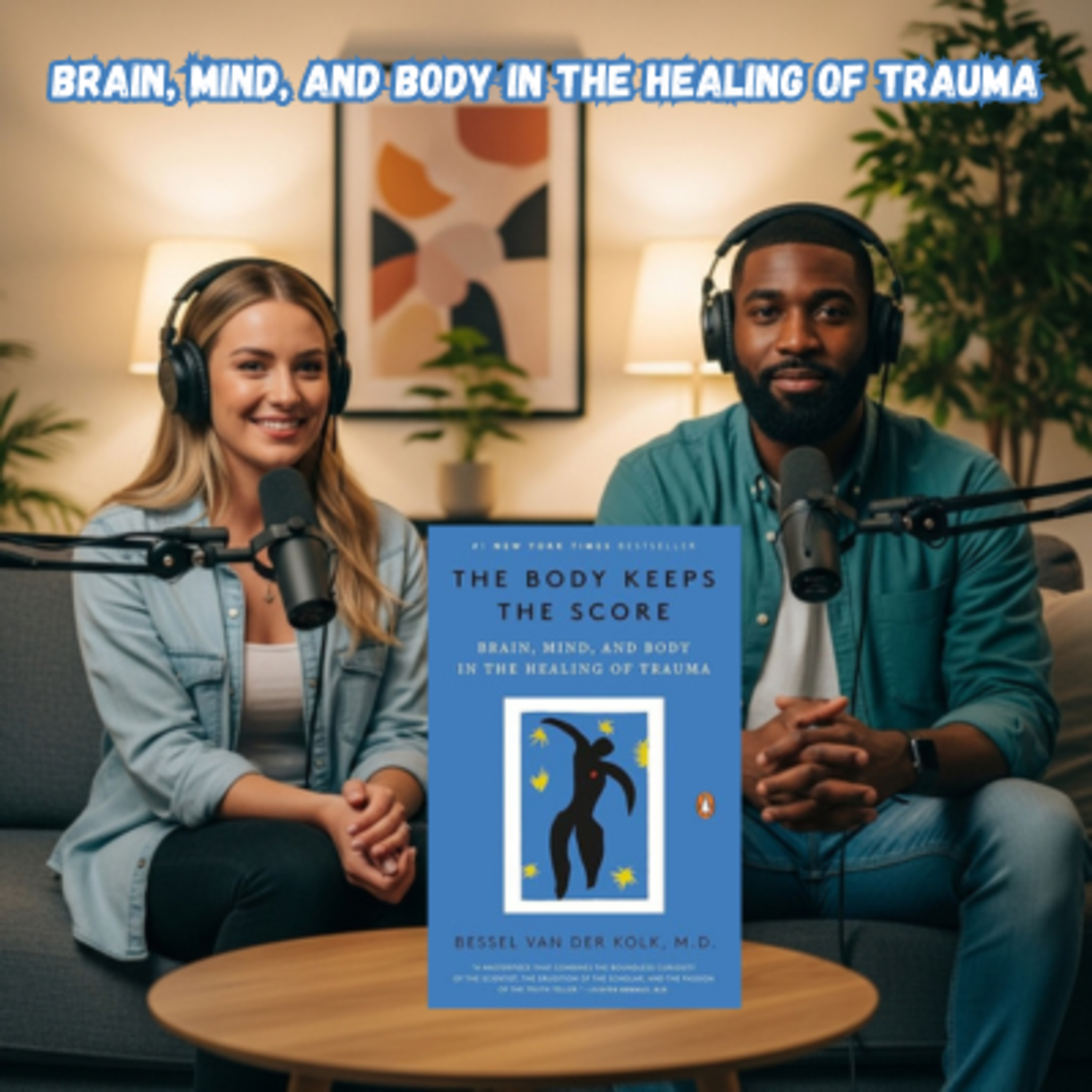
Based on an analysis of Bessel van der Kolk’s research, these excerpts explain how traumatic experiences physically reshape both the human brain and the nervous system. The text highlights that trauma is not limited to catastrophic events but includes childhood neglect and everyday stressors that leave a lasting biological imprint on the body. Because the amygdala can become trapped in a state of hyper-vigilance, individuals often experience physical symptoms and emotional distress long after a threat has passed. The sources emphasize that recovery requires more than just traditional talking; it involves holistic approaches like yoga or EMDR to reconnect the mind and body. Ultimately, the summary suggests that true healing begins with recognizing that the body stores past pain as a means of survival.
Welcome back to the Deep Dive. Today we are taking on a subject that's, well, it's profoundly personal, but it's also fundamentally biological. It really is. We're talking about how we store stress, pain, and history in our actual bodies. Exactly. And for this, we're diving deep into the sources based on Bessel, Vanderkolk, Seminole work. The body keeps the score. A book that really changed the game in so many ways. It did. And our mission today is, I think, a crucial 1 to quickly get past that old narrow definition of trauma, you know, the big stuff, the war, the disaster, and start to understand how the hidden wounds really shape us physically and mentally.
We're talking about things like chronic neglect or just growing up in constant low grade chaos. The kind of stuff that doesn't leave a visible scar. Right. We want to give you the foundational knowledge to understand how your body records that stress, sometimes long after your mind has tried to, you know, move on. It's such an essential shift in perspective. The sources we looked at, they all emphasize that trauma is intensely personal. The same event can impact two people in completely different ways.
And it's not just in your head. Not even close. The sources stress that it affects the body, your actual nervous system, just as profoundly. Your body becomes this, this memory keeper that you can't just silence with willpower. OK, so if the body is the record keeper, let's start there. The body's unwanted alarm system. For decades, trauma was seen as, you know, a mental problem. A psychological failing? Almost exactly, but this deep dive confirms the damage is so much more physical. The body remembers what the mind is desperately trying to forget.
And you see this persistence in the physical symptoms. The source material is full of these really vivid examples. Think about a combat veteran hearing a loud noise and just hitting the deck. Instantly, no thought involved. Or screeching tires causing someone who's in a bad car crash to completely freeze up. The body's survival mechanism is firing off before the rational brain even knows what's happening. That's the real trick, isn't it? The body gets stuck in that survival loop. It's not about being weak or not coping.
It's about this, this physical residue of fear that just hangs around. Absolutely. The trauma isn't just what happened. It's the physical, hormonal echo that keeps playing long after the danger is gone. Yeah, the sources have this really powerful image. A soldier, years after coming home, is on a quiet St. A car backfires. And in that instant in an. Instant. His heart rate spikes, adrenaline fleds his system, and he drops low looking for cover. His body genuinely believes on a cellular level that it's back on the battlefield.
And the state of high alert, it isn't just a fleeting moment of anxiety, right? It actually changes the operating system of our biology. The sources call it the autonomic nervous system, the ANS. Right the ans. It's your body's automated survival switchboard. It runs your breathing, your heartbeat, digestion, all the stuff you don't conjugally think about. And it has. 2 modes, 2 main branches. Yeah, you have the sympathetic branch, which is your gas pedal, gets you ready for fight or flight, and then the parasympathetic, which is your brake.
It lets you rest and digest. So with trauma, the gas pedal just gets jammed down. It gets chronically jammed, completely overriding the brake. Your body never gets the signal that it's safe to calm down. So if you live your life with the accelerator floored, what are the long term costs? The sources talk about all these physical signs that doctors often can't explain. Yeah, things they label is idiopathic, which just means we don't know the 'cause we're talking about persistent muscle or joint pain that has no clear origin.
Chronic tiredness. A deep tiredness that sleep just doesn't fix cause your body never feels safe enough to truly relax. And then widespread digestion problems. Of course, if you're always ready to run from a tiger, you're not going to be focused on digesting your lunch. Exactly, the system is stealing resources from all the necessary healing and maintenance functions. So the big take away here is that understanding this mind body link, it's the essential first step to healing both physically and mentally.
OK, so if the ANS is the how in the body, let's move to the how in the brain. We need to look at the wiring for brain on high alert. The neuroscience confirms that trauma literally changes the brain. It absolutely does, and to get this you have to look at a tiny almond shaped structure deep in the brain called the amygdala. The brain's alarm system, the. Primitive rapid fire alarm system. During a traumatic event, the amygdala just goes into OverDrive. Its only job is to spot a threat and trigger that immediate fight, flight or freeze response to keep you alive.
It's like the ultimate smoke detector. And I think that analogy works so well because after the trauma, that detector just, it doesn't stop beeping. The fire's out, but the alarm is still blaring. And it's hypersensitive. It can be set off by the smallest thing. And that blaring alarm? It just drowns out the brain's CEO the prefrontal cortex, the part right behind your forehead that handles rational thought, planning, logic. That part can actually go offline. It can be suppressed by all that stress and panic.
Which is why people struggle so much to process what happened. If the CEO is offline, you can't put things in order, you can't find context, you can't use reason to say I'm safe now, it's over. Right. Instead, you're left with these intense, unfiltered feelings and sensory fragments. It feels like you're reliving it right now because it never got filed away as a past event. Let's go back to that car accident example. Perfect example, The survivor might know intellectually that they're safe driving to the store, but every time they hear a horn or see brake lights flash.
Their hands grip the wheel. Their heart starts racing. Exactly. Their conscious mind is on the road, but their primal brain is trapped in those terrifying 10 seconds of the original crash. The amygdala is firing and the calming part of the brain just can't get a word in. So the key take away here is just so powerful. Trauma keeps the whole brain in emergency mode. It makes it incredibly hard to feel safe even when you are safe. And recognizing this isn't about judgement, it's a medical understanding of a brain that has been physically altered to be in a state of high alert.
We've talked about these big acute events, but now we have to shift focus to something really crucial, the long shadow of childhood experiences. The sources make it so clear that the subtler ongoing trauma of youth can be just as, if not more, impactful. Absolutely. We're not always talking about a single event. It could be chronic emotional unavailability from a parent, being consistently ignored, or just growing up in a home that's totally unpredictable. And what's the developmental cost of that?
It's huge when a child's world isn't safe or they don't have that consistent caring attachment figure it it hinders their ability to learn how to regulate their own emotions. They can't build the framework for feeling safe in the world because their world is unsafe. And they internalize it. This is the detail that's just devastating. Kids don't have the tools to understand why bad things are happening. So they blame themselves. They blame themselves. This must be happening because I'm bad. Exactly.
Or I'm not worthy of love or attention. And that self blame turns into this deep, pervasive shame and guilt that they carry, often silently, into their adult life. Think about the child growing up in a home with constant fighting. They learn to walk on egg shells, always listening for the next slam door, the next raised voice. That constant, exhausting hyper vigilance. It makes it impossible to form secure attachments because danger is always just around the corner. Deep connection starts to equal risk and pain.
And then you see the results. In adulthood, they might struggle in relationships, always waiting for the other shoe to drop. Or they might have this generalized anxiety that never seems to go away. Their system learned on a physiological level that the world is a dangerous place. So the synthesis here is that childhood trauma isn't just a bad memory. It fundamentally changes a person's developmental path. It lays the groundwork for how they relate to themselves and to everyone else. Which is why early interventions that create safe, predictable environments are so critical.
They're not just therapeutic, they're developmentally restorative. They help a child's nervous system heal. OK, if any of this discussion has resonated with you, it is so important that we turn to the most hopeful part of the source material. The conclusion is powerful recovery is absolutely possible. Yes, but it requires addressing the body just as much as the mind. And there's no magic. Bullet The sources are very clear on this. There is no one-size-fits-all answer. It's a highly personalized journey, which means we need a holistic approach.
We need to integrate psychological tools with physical somatic work aimed at helping the body finally feel safe. So let's talk about the spectrum of methods. We have the traditional things like talk therapy and medication, but the real breakthroughs seem to be in these somatic and expressive approaches, right? Practices that engage the body directly. Things like trauma informed yoga, specific mindfulness routines, or even artistic outlets like dance or art. One of the core concepts the sources keep coming back to is something called interception.
What is that? Interception is your ability to feel what's happening inside your own body, to recognize your heartbeat, to feel hunger, cause sense tension, trauma, just it wrecks your interception. You lose touch with your physical self. Because your body has become a place of pain and danger, so you disconnect from it. So the goal of something like trauma informed yoga isn't just about being flexible, it's about rebuilding that inner map. Precisely. It's about slow, purposeful movement and breath that lets you safely inhabit your body again.
You're reconnecting sensation with a feeling of safety, maybe for the first time in years. The sources also highlight specific therapies. EMDR comes up a lot the. Eye movement desensitization and reprocessing. It's a really powerful tool for memory. And for you, the listener, EMDR is a therapy that uses bilateral stimulation. Often it's guided eye movements to help your brain process traumatic memories in a new way. It doesn't erase the memory. No, but it helps to decouple the intense emotional and sensory charge from the event.
It lets that chaotic present tense memory finally get filed away in the past where it belongs. It gives the rational brain the context it was missing at the time. The body can then finally start to let go of that defensive posture. Think about the example in the book, the person who starts yoga after years of trauma. At first, just focusing on their breath feels threatening. They're hyper aware of every sensation. But over time, through the routine, the structured movement, they learn to tolerate those feelings.
They start to experience themselves as calmer, more connected, and this is crucial in control of their own body. They are literally physically rewriting their body survival script. The most empowering take away here is that the physical memory of trauma is not a life sentence. Recovery is about finding what works for you. Exactly finding that unique combination of movement or creative expression or cognitive processing. The goal is wholeness. So let's just synthesize everything we've talked about in this deep dive.
We've unpacked this idea that trauma is stored physically, chemically changes the brain. The amygdala gets locked in OverDrive. And the rational prefrontal cortex struggles to keep up. And all of that shows up in the body as chronic pain, digestive issues, and just this constant difficulty feeling safe. But the final, most profound insight is this. The first step to healing is understanding that your pain is real. It's physical. It's a completely normal, protective response to overwhelming events.
You are not broken. You are not broken, your body is just stuck in a very sophisticated rotective loop. But because we know how the body records the score, we have multiple ways EMDR yoga art to help the system reset and find that sense of peace. And that leads us to a final idea for you to explore. If so much physical illness, so many of these chronic unexplained symptoms are rooted in the body's stored stress, in that constantly active survival system, how might a shift in focus from just treating the symptom to addressing the body's deep stored narrative of stress?
How might that fundamentally transform our entire approach to Wellness, to chronic disease, and even to medicine itself? We really encourage you to explore the original source material for a detailed map of these pathways. Thanks for joining us for this deep dive.
 Apple Podcasts
 Castbox
 Castro
 Goodpods
 Moon FM
 Overcast
 Pocket Casts
 Podbean
 Podcast Addict
 Podcast Republic
 Spotify