Reality-Based Leadership by Ditch the Drama, Restore Sanity to the Workplace, and Turn Excuses into Results
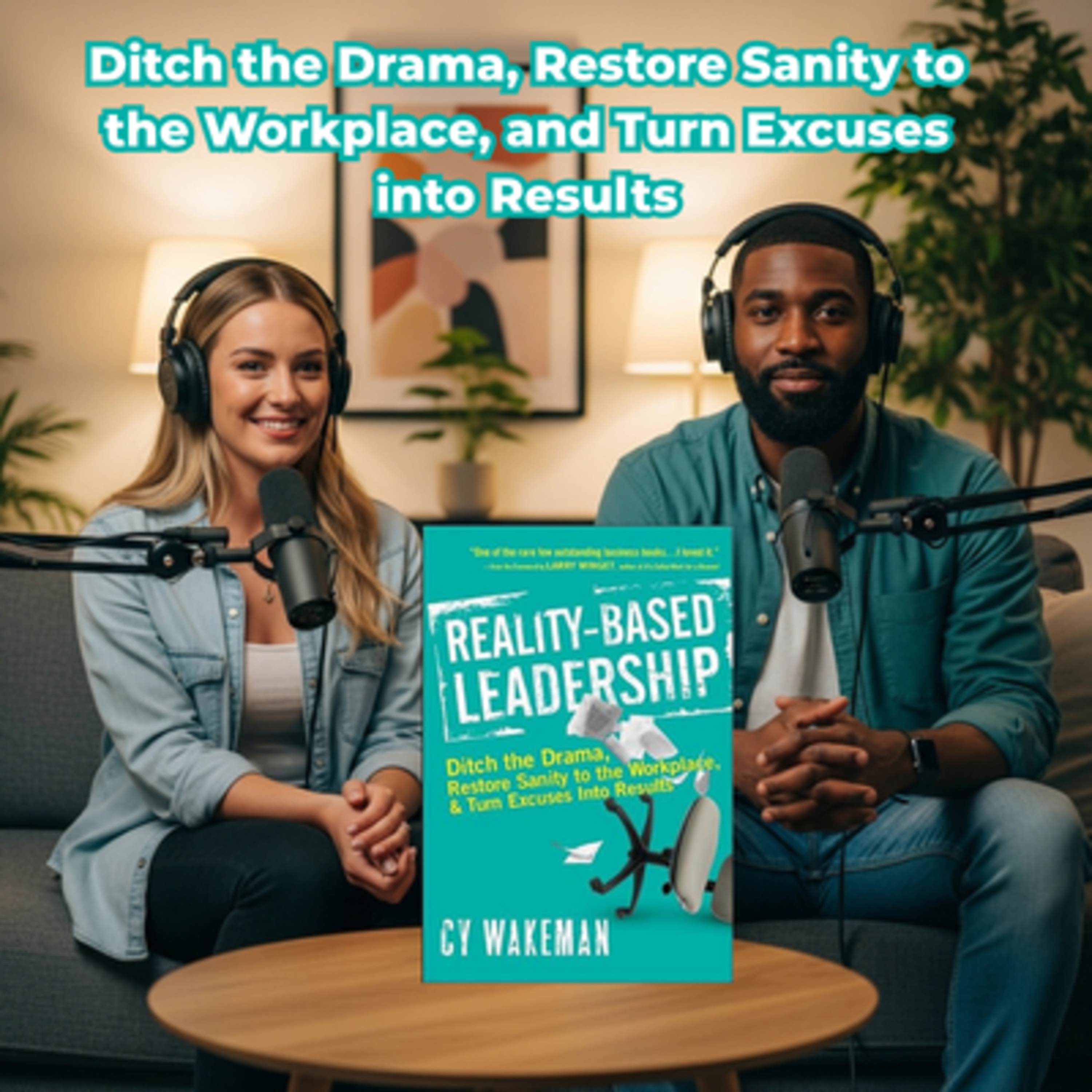
In this episode, jay and stephanie outlines the core principles of Reality-Based Leadership, a philosophy designed to eliminate workplace drama by encouraging employees to embrace their current circumstances. The author argues that professional suffering is often self-inflicted, stemming from a futile desire to resist uncontrollable realities rather than focusing on actionable solutions. To foster a high-performance culture, individuals must prioritise collective success over the need to be personally right and remain highly adaptable to constant change. Leaders are encouraged to shift their focus from micromanagement to mentoring, specifically investing their energy into motivated team members who are willing to grow. Ultimately, the source advocates for a mindset shift where personal accountability and logic replace emotional complaints to drive meaningful results.
Leadership strategies grounded in reality and focused on results
Recent polls show that 70% of workers think about quitting their jobs every day. That number would be shocking―if people actually were quitting. Worse, they go to work, punching time clocks and collecting pay checks, while completely checked out emotionally.In Reality-Based Leadership, bestselling author and leadership expert Cy Wakeman reveals how to be the kind of leader who changes the way people think about and perceive their circumstances. This no-nonsense guide shows you how to deal with the facts, give helpful and clear feedback to employees, and kindly help others focus their effort on their personal contribution, not the rampant workplace drama.Filled with dynamic examples, innovative tools, and diagnostic tests, Reality-Based Leadership shows you how to become a Reality-Based Leader:
- Uncover destructive thought patterns within yourself and others
- Diffuse drama and lead the person in front of you
- Empower others to focus on facts and think for themselves
- Stop managing and start leading
If you're ready to lead more and manage chaos less, Reality-Based Leadership will empower you to do so!
#productivityhacks #personaldevelopment #successstrategies #businessinsights #leadershipskills #leadership #ambitiousprofessionals #businesstips #self help #scaling business #businesstactics #professionaldevelopment #startupgrowth #entrepreneurship #businessmindset #growthstrategies
We all know that feeling, right? Oh, absolutely. You you open your inbox and there it is. Another policy is shifted. A critical deadline just got moved out or. A key resource you were counting on just poof, vanishes. Exactly. And you feel that that immediate friction that you know, that weight of just wishing things were different, that second guessing that can just paralyze you. It really is the defining struggle, I think, in a modern workplace. And the sources we're digging into today, they come from Cy Wakeman's Reality Based Leadership Framework.
And her thesis is well, it's pretty radical. She argues. The stress we feel isn't really caused by those events. It's caused by our reaction to them. That's it. That's the core. Of it. So that's the heart of this deep dive. Our mission here is to pull out five essential lessons from this framework. And these aren't, you know, just management tactics. Not at all. They're fundamental shifts in perspective. The goal is to help you eliminate all that workplace drama and move from making excuses to actually getting results.
The focus is 100% on shifting your internal narrative. You know, moving away from feeling like a victim of circumstance. Right, like bad luck just follows you around. To feeling empowered. To acknowledging that you have total control over where you put your energy. So let's start with the toughest lesson, the one that really unlocks everything else. OK, let's do it. So lesson #1 and this one is designed to be a bit of a shock to the system. It is. You are the cause of your suffering. Now, when you first hear that, it sounds, I don't know, a little harsh, a little punitive.
It does, but the sources argue it's actually the most liberating idea in the entire system. Also, well, Wakeman defines suffering as the emotional price we pay when we fight against reality. You know, when we just wish things were different instead of just accepting what's right in front of us? So it's all the energy. We've been thinking this shouldn't be happening or why me? Exactly. And think about how much mental energy that loop consumes. That whole narrative is just, it's organizationally toxic and it's personally exhausting.
And it's so tempting because, you know, we get a little reward for playing the victim. Sometimes we get sympathy from our colleagues. You get to vent for sure. But that little bit of relief, it costs you your long term agency. If I'm fighting what's already happened, I'm basically just saying I'm powerless. Precisely. If you really trace your stress back to its source, the event itself, the delayed project is almost always less stressful than the story you tell yourself about it. The drama you layer on top.
That's it. The moment you can say OK, my reaction is what's causing this pain, you instantly get the power back to stop it. So practically, what does that look like? The application is what radical immediacy? That's a. Great way to put. It the next time a project runs behind you, just you stop the whining, You stop the internal monologue. And you just ask a simple question. What is the situation right now and what is the very next thing I could do to address it? Yes, you bypass the emotion and you jump straight to what you can actually influence.
The difference must be huge. I mean, imagine you get really tough criticism on a presentation you worked on for weeks. We've all been there. The drama cycle is this isn't a fair. They just don't get my vision and you're just stuck in that frustration. Right, but the reality based approach is to just ask, OK, what specific feedback can I use here? How do I get better results next time? You're trading that feeling of being insulted for an actual strategy for growth. And the source has really emphasized this.
Your anxiety just plummets because you're not trying to change the past anymore. You're building a future you can actually control. And that makes you a role model for everyone else who's still stuck in that why is this happening to me cycle. Which leads us perfectly into the second principle. It really builds on the 1st. It's that it is a waste of time to argue with reality. Oh, I love that phrase because we all do it. We hold these little mental press conferences in our heads. Complaining to an imaginary audience.
Complaining about a new policy, a market shift, you know, things we have absolutely 0 control over. And that resistance, while it feels natural, it's just it's completely unproductive. The key here is the cognitive load. I mean when you're complaining you're not problem solving but you are firing up stress hormones and burning through mental energy. Energy that should be going towards strategy. Exactly. The source is basically define this resistance as just waiting, waiting for the world to change before you decide to act.
And in today's world, if you're waiting, you're losing. So if your boss pushes up a deadline and you can't change it, the reality based leader skips the two hour event session with their team. They do. They just ask, OK, this is the new reality. What do we have to do to succeed within these new lines? The source material gives this really intense example of a company restructuring. Yeah, the one where your workload basically double S overnight, right? And while everyone else is in the hallway for two days talking about how unfair it is, the reality based person accepts it as the new normal on day one.
And immediately pivots to action. OK. What do I need? What can I delegate? How do I have to reprioritize to make this work? The advantage is just speed while everyone else is still debating if it should have happened. You've already got a plan. Combining those first two lessons is really about taking back control. Control of your time, your focus, and your emotional state. You become the calm center in the storm. And once you have that self ownership, you can start applying these ideas to how you lead your team.
Which brings us to lesson 3. Leave first, manage second. And this one points to a huge blind spot, especially for high achievers. OK, we often confuse being right with being successful. We get so wrapped up in defending our plan, our idea. That we lose sight of the actual goal, which is just getting the best result for the company. That's it. It requires a pretty big dose of humility. It does, doesn't it? It means consciously letting go of needing that personal validation that I told you so moment.
Exactly. The key question to ask yourself in any debate over strategy is just do I want to be right or do I want us to succeed? Because sometimes the best path forward means you have to be flexible or even adopt A plan that wasn't yours to begin with. OK, but let me push on that a little bit, because good leadership also requires having conviction, right? If I'm always the one conceding just to keep the peace, don't I risk looking weak? Or, you know, picking a worse plan just to make someone feel good.
That's a really fair question, and the sources are clear. This isn't about just giving in all the time, it's about using objective filters. So a teammate suggests a different approach. You're not debating them as a person, you're just evaluating their plan against the goal. So maybe their suggestion is more work upfront, but you realize it'll save the team a huge headache two months from now. Exactly. So you drop your plan not to be nice, but because their plan gets a better result. So you're prioritizing the objective reality of the outcome over the subjective feeling of your own preference?
Yeah. And this extends to things like letting your team take the credit for a win. Even if you gave most of the guidance. If they shine, the team wins. And the benefits for the organization are just huge. Decisions get made faster because you cut out all the defensive arguing. And you build stronger teams. When people know their leader cares more about the result than their own ego, they stop protecting their turf and they start collaborating. So the first three lessons are really about your internal state control and ego.
Right. And the final two are more about strategy, yeah, about growth and about where you choose to invest your time as a leader. And lesson 4 is that strategic shift, adapt or perish. Change is a constant. Now we've all heard that phrase, but it's application here is what's key. It defines real leadership as not just overseeing tasks, but actively growing your people. So many managers just get stuck in the day-to-day grind. They become glorified box checkers instead of leaders. But this framework insists a leader's main job is to guide and uplift their staff so they can meet new challenges.
Which means you have to prioritize your team's growth, sometimes even over their immediate output. So you're asking coaching questions, not just giving orders. Exactly. Instead of just solving a problem for someone, you ask what do you need from me to succeed here? Or how can I support you in figuring this out? That's a huge shift. It puts the responsibility back on the employee. It creates this environment where they feel empowered to find their own solution, but they know you have their back. The framework is key.
So the classic example a team member is really struggling to hit deadlines on a big project. The old school manager instinct is to just jump in, take over and fix it, right? Solve the immediate fire. The reality based leader resists that. They ask. What's really getting in your way here? What's the resource or knowledge gap I can help you fill? So you're helping them, but you're not doing it for them. You're developing a problem solver, not just solving one problem. You got it. And that focus on development leads right into the final, and maybe the most controversial lesson.
Which is. Actions speak louder than words, which is then clarified as invest in the willing. OK, now this is where it gets tricky because invest in the willing. Sounds a bit like you're telling leaders to give up on people who are struggling. It can sound that way. I mean, isn't a good leader supposed to lift up their entire team? That's the ethical dilemma we feel, but the framework presents it as a simple economic reality of your time and energy. The point is that you have to prioritize your resources, your time, your mentorship on the people who show they are ready to change and grow.
You're investing where you'll get the biggest U-turn. So it's not abandonment, it's strategic allocation of your most limited resource, which is you. Precisely. You figure out who on your team is hungry, who is receptive to feedback, and you pour your extra effort into them. Doesn't mean you ignore everyone else, but you direct your most intense focus where it will have the biggest effect. The example of a new software rollout makes this so clear. You've got 10 people, 2 are excited, 8 are digging in their heels.
A tale as old as time. If you spend all your energy trying to convince the 8 skeptics, the whole project just stalls. But if you invest heavily in those two willing people, they take off, they get quick wins, they create positive momentum. And they become champions for the change to their peers. Exactly, and that momentum creates a new standard. The others are then forced to either step up to that new level of intensity or well, they realize this isn't the right place for them anymore. That's how you build a high performance culture.
So to wrap this all up for you, the listener, the ultimate goal of reality based leadership is really to create a work life that's defined by action, cooperation, and just radical personal responsibility. You stop fighting things you can't control and you just start leading from where you are. And by taking these five principles to heart, you get more than just better productivity. You get an escape from that constant emotional overload. You stop wasting all that precious mental energy wishing things were different.
And you redirect it toward winning in the reality you actually have right here, right now. We spent the whole deep dive talking about leadership in the workplace, but this core lesson is it's universal. Suffering comes from fighting reality. So your final provocative thought, think about this. Where in your life, outside of your job, maybe in your relationships or with your personal goals, Where are you wasting energy right now just wishing things were different? And what is the one small reality based question you could ask yourself right now to turn that wasted energy into actual progress?
 Apple Podcasts
 Castbox
 Castro
 Goodpods
 Moon FM
 Overcast
 Pocket Casts
 Podbean
 Podcast Addict
 Podcast Republic
 Spotify