New Rules of Engagement for a Complex World | Team of Teams by General Stanley McChrystal, Tantum Collins, David Silverman and Chris Fussell
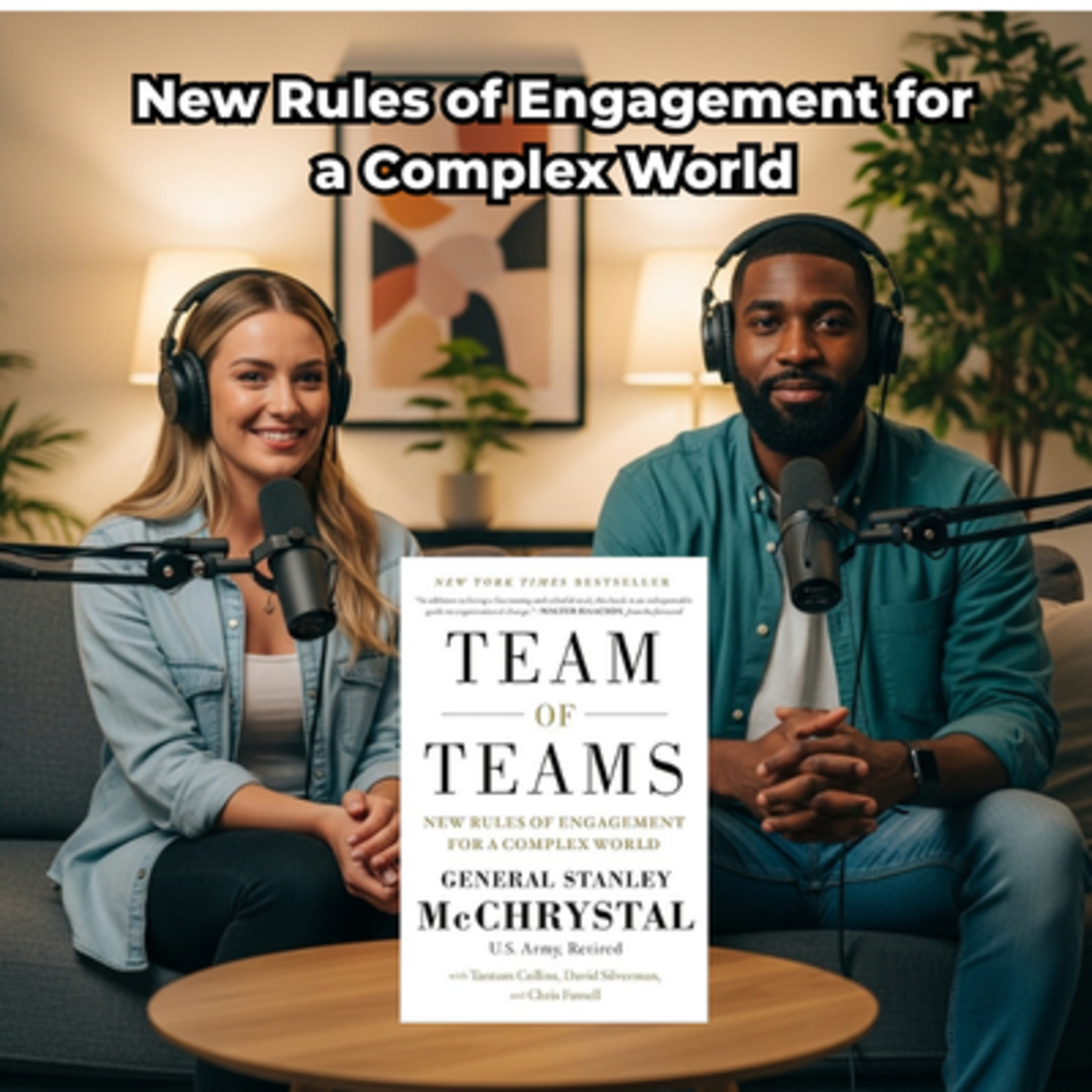
When General Stanley McChrystal took command of the Joint Special Operations Task Force in 2004, he quickly realized that conventional military tactics were failing. Al Qaeda in Iraq was a decentralized network that could move quickly, strike ruthlessly, then seemingly vanish into the local population. The allied forces had a huge advantage in numbers, equipment, and training—but none of that seemed to matter. To defeat Al Qaeda, they would have to combine the power of the world’s mightiest military with the agility of the world’s most fearsome terrorist network. They would have to become a "team of teams"—faster, flatter, and more flexible than ever.
In Team of Teams, McChrystal and his colleagues show how the challenges they faced in Iraq can be relevant to countless businesses, nonprofits, and organizations today. In periods of unprecedented crisis, leaders need practical management practices that can scale to thousands of people—and fast. By giving small groups the freedom to experiment and share what they learn across the entire organization, teams can respond more quickly, communicate more freely, and make better and faster decisions.
Drawing on compelling examples—from NASA to hospital emergency rooms—Team of Teams makes the case for merging the power of a large corporation with the agility of a small team to transform any organization.This episode outlines a management framework designed to foster resilience and agility within modern organizations by transitioning away from rigid hierarchies. It emphasizes embracing complexity rather than attempting to control it, encouraging teams to experiment and learn from failure. Central to this approach is the development of a shared consciousness, where transparent communication ensures every member understands the broader organizational goals. By decentralizing authority, leaders empower local teams to make rapid decisions without waiting for top-down approval. The episode further advocates for cross-functional integration to break down silos and leverage diverse expertise for creative problem-solving. Finally, it suggests that leaders should act as supportive gardeners, nurturing an environment where autonomy and collaboration can flourish.
#productivityhacks #personaldevelopment #successstrategies #businessinsights #leadershipskills #leadership #ambitiousprofessionals #businesstips #self help #scaling business #businesstactics #professionaldevelopment #startupgrowth #entrepreneurship #businessmindset #growthstrategies
We often kick off a project, you know, aiming for this perfect consensus, this quiet collaboration. Right, the idea that a smooth, quiet workplace is the goal. Exactly. But what if that smoothness is actually a sign that you're stagnating? Our sources today, they really dive into a philosophy that just flips that whole idea on its head. They do. They argue that this prevailing view that you should always avoid intellectual conflict is just plain wrong. It's not a problem you have to manage, it's actually a tool for, well, for real creativity and for solving really high Stix problems.
And what's so fascinating here is that the ability to use that constructive disagreement, it doesn't just happen because a leader says so. No, the authors of our source material, they realized that the traditional, you know, the Super efficient 20th century hierarchy was actually built to avoid this kind of conflict. Which made it totally unfit for modern challenges. Precisely so. The structure itself is the critical piece. You need systemic change to get this kind of high performance debate going.
Exactly. So what's the blueprint for that change? Today we are diving straight into the principles from the Landmark Book Team of Teams. New Rules of Engagement for a Complex World. That's the one by General Stanley McChrystal and his team, Tantum Collins, David Silverman and Chris Vessel. And the goal of this deep dive is to distill the core actionable lessons for you so you can build teams that can handle the most complex, challenging tasks without getting, you know, paralyzed by that old school bureaucracy.
The first lesson they lay out is it's absolutely vital because it completely redefines the world we're all operating in now. Embrace complexity. The main idea is just to stop trying to control chaos. Stop trying to simplify everything down into some predictable flow chart that well, it might have worked in the industrial age, but not anymore. Because the reality is our workplaces, whether you're launching an app or managing a supply chain, they throw these incredibly difficult problems at us that just they defy those easy fixed solutions.
And this is where we really have to dig into a philosophical distinction that underpins the whole book. Oh right, the difference between a complicated problem and a complex 1. Exactly a complicated problem. Think of it like like launching a rocket or building a skyscraper. It has a ton of moving parts, but it is ultimately solvable. You can predict the outcome if you just follow the expert checklist. And that's what most of our organizations were built to manage, right? Lots of departments, lots of experts, lots of handoffs.
Precisely. Now contrast that with a complex problem. Think of an ecosystem, or the fight against a global threat, or or the unpredictable nature of an emerging market. Where everything effects everything. Yes, the interactions are always shifting, the outcomes are unpredictable, and yesterday's solution might actually create tomorrow's problem. No single expert can solve it. So trying to enforce simple top down control in that world, it's futile. It just slows you down. So instead of trying to simplify the world, the real mind shift is about developing an adaptive attitude within the team.
What does that actually look like for you, our listener? It means we have to actively push our teams to experiment fast, to think critically about the whole system they're in, and maybe most importantly, to draw really deep lessons from their mistakes. So mistakes are no longer failures, no. The second you accept that the world is complex, you realize mistakes are actually the most valuable data points you can possibly get. You're building resilience. And the practical benefits of that mindset are just huge.
I mean, when you embrace complexity, you get more flexibility, more speed. Which immediately translates to better decision making, especially when you're dealing with a lot of uncertainty. It's like building organizational muscle memory for adapting on the fly. Let's use an example from the books Ethos. Imagine a deaf team introducing a new product. Instead of locking into a rigid 18 month plan that dictates every single move, they use a rapid cycle approach. They hold frequent brainstorming sessions where everyone, and I mean everyone, contributes, even if the ideas seem unconventional.
And by embracing that deviation, that complexity, they find new market angles, new technical solutions. Things they would never have found. By just sticking to the original fixed path, you're accepting reality and using it as a creative force. And once you accept that complexity is the new baseline, your whole team structure has to change. Which brings us right to our second big lesson. Establish a shared consciousness. So if the old hierarchy was built for efficiency in a complicated world. This new structure is built for visibility and adaptability in a complex 1 The goal is radical systemic transparency.
OK, radical transparency. That's easy to say. But in a big organization, how do you actually do that without just causing information overload? You know, if I give the sales team all the raw code reports from the developers, that's not understanding, that's just noise. That is the critical challenge. It's not about blasting raw data. It's about synthesizing and sharing relevant information and doing it quickly. The sources point to two big structural fixes. They go way beyond just, you know, shared dashboards.
First they talk about embedding liaison officers or Ln OS. Ln OS. Tell me more about those. These are key people, high performers who are physically pulled out of their specialty and embedded in another team. So the logistics expert might spend 6 months sitting inside the marketing department. Oh wow. They become the human conduit. They translate the jargon, they spot disconnects before they happen, and they make sure the overall intent flows horizontally, not just up and down. It's a human solution to a silo problem.
That sounds, I mean, it sounds expensive, but incredibly effective. It forces those personal connections across the functional boundaries. So that's the horizontal flow. What about the rhythm? How do you make sure everyone from the frontline to the top has the same picture? That's the second structural fix, a mandatory universal meeting cadence. Often it's a daily or weekly Operations and intelligence or Oni meeting. And this isn't just another status update. Not at all. It's a mandatory forum where every single part of the organization reports on progress, on challenges, on shifts in the environment, all at the same time, in a short synthesized format.
So it's not just about having the information, it's about everyone getting the context on a shared platform at the same time. Exactly, and that shared awareness builds trust and accountability at the same time. Teams that see the full picture and see how their colleagues are contributing. They feel bonded to the goal and to each other. They trust the information and they trust the people they're working with. Which is what you need for fast creative decision making. And let's look at this in action.
Take that Oni concept. Imagine a marketing group launching a big campaign instead of each little subteam, social media, print, whatever, working in a vacuum. And just sending reports up the. Chain right? Instead, they do a daily 15 minute stand up where everyone shares key metrics, progress and most importantly, any unexpected challenges. So they can react in real time. Instantly, they might see one platform's budget efficiency just dropped 20%. They can immediately identify that bottleneck and shift their strategy as one unified team.
The campaign launches without a hitch because everyone's operating from the same reality every single morning. That seamless knowledge flow. It brings us to a lesson that feels totally counterintuitive to traditional management. It's encouraging teams to make decentralized decisions. Absolutely. If you've built that shared consciousness, the next logical step is to distribute the authority, trusting the people on the ground to take swift action without needing to, you know, run every little thing up the flagpole.
And this is where organizations get nervous. Giving up control is scary. It is. I mean, if you truly empower the frontline, doesn't that just invite chaos? How do you guarantee that 100 different local decisions are all pulling in the same strategic direction? That feels like a huge risk. That's the critical question, and the book hits it head on. Decentralization only works if leaders establish this pervasive culture of trust that's guided by a really powerful framework. They call it Commander's Intent.
I remember that being so central to the book. What is Commander's intent? But, you know, in a business context. It's the highest level, most concise strategic objective. It's not how you achieve the goal, it's what you absolutely must achieve and why it matters. So the leaders job shifts from telling people what to do. To rigorously defining the intent, the desired end state. And once every single team member understands the commander's intent perfectly, they are empowered to make those snap tactical decisions locally, knowing that they will automatically align with the bigger mission.
Because they have the why and they have the real time what from the shared consciousness. Exactly. So you trade the slow, safe control of the complicated world for the rapid aligned response you need in the in the complex world, the leader gives the team the intent and the tools, and the team takes responsibility. And the benefits are huge. Teams that are empowered react instantly to opportunities and challenges. Here's a powerful illustration. A major software launch is happening and a remote support team member finds a weird technical glitch on one specific operating.
System something no one saw coming. Right. Instead of logging a ticket and waiting days for a supervisor to analyze it, this empowered team member who understands the commander's intent is to maintain customer experience at all costs. They can act. They immediately talk to their embedded LNO and a product expert. They implement an approved workaround on the spot, they act without delay, they avoid a public mess, and they keep the launch on schedule. All because the decision making authority was local and informed.
And that local authority is made exponentially stronger by our fourth key lesson, promote integration and collaboration. And natural follow on. It is, and the core thesis here is just so critical. Uccess in today's world requires deep integration. We simply cannot afford the friction, the delay, and the loss of perspective that comes from working in silos. It's just too costly now. This is where you kill that classic throw it over the wall problem. Marketing finishes, their plan throws it to sales.
Sales finishes, throws it to fulfillment. In every single handoff introduces delay and misunderstanding. Every time information goes over the wall, there's filtering, there's translation, there's a loss of fidelity. You have to intentionally design your organization to reduce those handoffs. So how do we break those silos down? What are the methods the source suggests for really forcing that integration? You structure the team so those functions are permanently mixed together. You form dedicated cross functional teams where people with different expertise, engineering, finance, customer service, they sit together, they work on the same problem and they share the same goal.
And you? Use collaborative tools so everyone sees everything. Exactly. You make it so information asymmetry literally cannot exist. You know, I think the most compelling idea here is how this changes the quality of the solution. When you have that kind of intentional collaboration, the teams just generate more creative solutions because they're bringing all these different viewpoints and constraints to the table from day one. And it cultivates cohesion. If the engineer understands the salesperson's quota and the salesperson understands the engineering limitations, that friction just melts away.
They're forced to see each other's reality. Think about a company launching say complex new B to B software instead of marketing and sales just waiting for the dev team to be done. They're in the room from the start. From the very early sprints, the marketing team gives real time feedback on messaging. The sales team shares objection data from beta tests. This continuous cross functional exchange produces a product that actually solves the customer's problem better and needs way less fixing after launch.
Why? Because they built it together. And now for the final and maybe the most profound lesson. It's the capstone that holds it all together. Adapt your leadership style. If you have shared consciousness, decentralized decisions, and deep integration. The leader's job has to change radically. And they use this wonderful analogy and the sources to explain it. The Gardener The gardener leader should become more like a gardener caring for plants rather than just a general ordering troops around. That analogy is perfect because it captures the required shift in focus.
The traditional 20th century leader was the chess master. They knew all the pieces. They made all the moves. In a complex world, the leader has to be the gardener. They have to foster a culture of growth and autonomy. But it's not just about being nice, is it? It sounds like a really hands on structural shift in what you actually do all day. Absolutely. It means being more personable, yes. Genuinely hearing out ideas, yes. But the core function is environmental. Your job is making sure the team has the tools, the resources, and the clarity that commanders intend to succeed.
You guide the system, you manage the boundaries, you don't control the internal actions. You provide the light, the water and the soil. The plant grows itself. And when leaders do that, team members feel appreciated, they feel trusted, they feel empowered. And that translates directly to higher morale and better productivity because the team owns the outcome. It encourages initiative, idea sharing, teamwork, all because the leader has deliberately created a safe space for growth and even for necessary failure.
We see this when a team hits a wall on a tough project. Instead of the leader jumping in and directing every step, they shift into that gardener role. They don't give the solution. No. They set up a workshop. They foster discussion. They help the team create its own solution by using that shared consciousness they built. The leader doesn't take ownership, They inspire the team to take ownership and that leads to this massive self-sustaining boost and engagement and motivation and the project gets done truly owned by the team itself.
So if you look back at the whole framework, we've got the five interconnected lessons from team of teams. First, you have to embrace complexity. Realizing the world is more complex than complicated. Which demands that you establish a shared consciousness for visibility. That visibility then allows for decentralized decision making to get you speed. Which requires promoted integration and collaboration to kill the friction. And finally, none of it works unless the leader is willing to adapt their leadership style to be that gardener.
Put together, these aren't just best practices, they build real organizational resilience and they supercharge your problem solving capabilities in this fast moving world. So what does this all mean for you? The goal of this deep dive was to give you the most essential, actionable insights on modern teamwork from these sources. This systemic framework is really a shortcut to creating teams that are not only effective, but are fundamentally adaptive to any challenge you can throw at them. And we talked about the profound advantages of the leader as a guide, not a controller, that Gardner role.
But here's the challenge to think about as you wrap this up. We know the Gardner has to provide resources and guide the environment. But what happens when the pressure is at its absolute highest? When the timeline is impossible and the stakes are existential? The real test of leadership is determining when and how a leader shifts in a crisis from that supportive Gardner role to making a definitive unilateral decision. How they do that without completely shattering the culture of autonomy and trust.
The team has worked so hard to build that recise balance. That is what defines truly resilient leadership.
 Apple Podcasts
 Castbox
 Castro
 Goodpods
 Moon FM
 Overcast
 Pocket Casts
 Podbean
 Podcast Addict
 Podcast Republic
 Spotify