How to Create a Best Place to Work Culture | The WOW Factor Workplace by Deb Boelkes
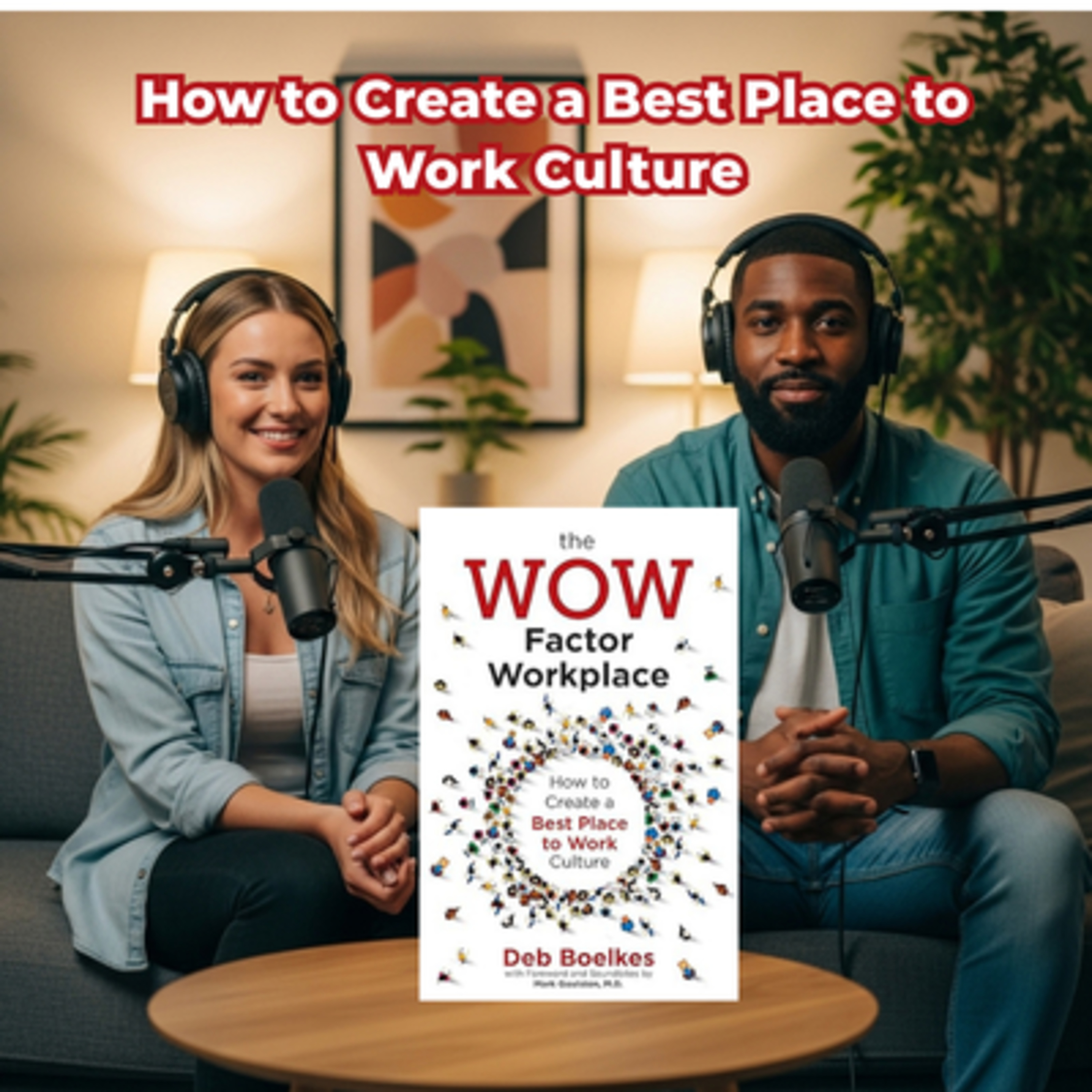
Are You a Best-Ever Boss? If No, Would You Like to Be One? Then be A WOW! Employees can be cynics and skeptics. Both have much in common—they’ve been disappointed, deceived, and at times, devastated. Most workplaces are loaded with the working wounded—men and women who have been let down by their leaders, their managers, their coworkers, even the culture of their workplace. They live for Fridays. • Could that be yours? • Is your workplace one where employees can’t wait to clock out? • Would you like to discover how you can create a workplace where the best and most talented people line up to get in? You can. Within this book are the strategies, tips and tools to make it so. The WOW Factor Workplace shows it’s possible to create a workplace that not only WOWS everyone who works there, it WOWS everyone who hears about it. Yes, you can create a workplace where the best and most talented people line up to get in. A workplace where every time top talent comes into your company, they say WOW! And, a workplace when employees are asked, “What’s it like to work at your company?” the response is, “I think I won the lottery!” People join companies and leave bosses. Get ready to become a WOW boss in a WOW factor workplace. WOW is within your reach with The WOW Factor Workplace: How to Create a Best Place to Work Culture.
This episode outlines the fundamental principles for establishing an extraordinary corporate culture as detailed in Deb Boelkes' book regarding the "WOW factor" at work. It emphasizes that supportive leadership and authentic engagement are the bedrocks of a thriving professional environment where employees feel truly valued. Managers are encouraged to inspire passion by aligning individual strengths with specific roles and providing immediate mentorship rather than waiting for formal reviews. The guide further highlights the importance of high standards and personal accountability, suggesting that a culture of excellence leaves no room for excuses. Finally, the source serves as a call to action, urging leaders to implement small, courageous changes today to foster long-term innovation and productivity.
#productivityhacks #personaldevelopment #successstrategies #businessinsights #leadershipskills #leadership #ambitiousprofessionals #businesstips #self help #scaling business #businesstactics #professionaldevelopment #startupgrowth #entrepreneurship #businessmindset #growthstrategies
If you're currently managing A-Team, leading a company, or you know just thinking about what makes a workplace truly exceptional, this deep dive is for you. We're not just talking about keeping employees satisfied, we're focused on what it takes to cultivate the WIW factor. What does it really take to create a company culture that people genuinely look forward to being a part of? And that's exactly where we're headed today. We've been diving deep into Deb Bulky's book, The WLW Factor Workplace, which it basically lays out a strategic playbook for moving beyond just standard corporate expectations.
OK, so our mission here is to distill the core actionable intelligence from this framework. Because if you're an employer, a manager, you need the shortcut. You do. You need to know how to build an environment that doesn't just feel better, but actually is more efficient, boost productivity, and frankly, becomes a magnet for top talent. And we should be really clear here, The Wild W Factor isn't just about happiness surveys or, you know, trendy office perks. The sources define it as a powerful nine part strategic framework and it's built specifically to achieve 3 really crucial business goals, maximizing productivity, boosting customer satisfaction, and of course, attracting and retaining the best talent out there.
We're going to try and unpack all nine of those critical areas. OK, let's do it. Let's unpack this, starting with the absolute foundation, which is the quality of leadership itself. Chapter one in the material, it focuses on the qualities of the best ever boss. And we often think of leadership in terms of like metrics and assigning tasks. But Bulky's observes that great leadership is about something far more fundamental. It's about staff development and personal well-being. What's so fascinating here is that the foundation of great leadership and even just competence, it's authenticity.
Authenticity. Yes, the most effective managers are the ones who are just undeniably genuine and approachable. And this means being honest, you know, about challenges, actively listening to a team member's worries without judgement, and really encouraging the open, safe expression of thoughts from everyone. It sounds so simple, but just think about how rare that actually is in practice. It is. In so many places, communication just flows one way down. The book really stresses that supportive leadership is is vital.
It's the difference between a manager and a true mentor. A manager delegates tasks. Right. But a mentor. They provide direction and they actively foster the team's growth. They create customized chances for people to advance and develop their skills. And that whole point about mentorship is, well, it's pretty useless if it's delayed. Which brings us right to Chapter 5. Mentor in the moment, OK? This concept demands timely guidance, and the practical insight here is profound. Effective leaders have to take action immediately.
They offer advice when it is most needed. Not, you know, waiting for those clunky scheduled yearly reviews. That's a huge operational difference. It shifts feedback from being this dreaded bureaucratic thing to being a genuine, immediate tool for improvement. But how does a busy manager actually do that? This mentoring in the moment without constant interruption. It requires what the book calls observational leadership. It means leaders need to constantly be looking for those small teachable moments that just, you know, strike out of the blue.
So, for example, if you notice A-Team member struggling with a specific piece of software, you don't wait for their performance review six weeks from now. You step in immediately, offer a quick 5 minute solution, or maybe you pair them with an expert colleague right then there. So that immediacy signals that their growth is a priority right now, not just some item on a checklist. Exactly. The metric isn't how many formal meetings you have, it's how quickly you address a development gap. The source material suggests that managers who dedicate a real portion of their time, say 20%, to active real time coaching.
Not just delegate. Not just delegate. They see measurable drops in employee churn and these dramatic jumps in teen competence. That's a hard business case for being the best ever boss. Absolutely. So if we connect that kind of leadership to the outcomes, that lands us right in Section 2, which is where the WWE experiences are actually made. Chapter 2 is called Take Their Breath Away and it gives the core full These WOW moments happen when expectations are routinely surpassed, and this is key that applies to customers and to your internal staff.
It's all about elevating the ordinary into something extraordinary, and the framework gives two really powerful, practical ways to do this. 1st, the general principle. Just always go the extra mile. Turn routine things. Whether it's onboarding a new client or just processing an expense report, turn it into a positive surprise by consistently going above and beyond. But this is where it gets really interesting, right? The customization part. The book argues pretty strongly against one-size-fits-all perks.
Oh, absolutely. The truly effective move is to customize your experiences for individuals. That's the magic ingredient. So instead of a generic $50.00 gift card for everyone. Right. Instead of that, a true Wow W fanager remembers a specific detail. They know an employee is a huge fan of classic films, so maybe they arrange a small personalized thing like a rare movie poster. It doesn't have to be expensive. No, because it's the thought that counts. Yeah, the small, thoughtful actions make the biggest impression because they prove you've actually paid attention.
Exactly to that person's actual life outside of work. And that shifts the whole perception of the workplace from being just transactional to being truly human. Yeah, But I have to ask, if we're setting the bar this high with custom service, immediate mentoring, doesn't this culture of constant going above and beyond eventually just exhaust people? That is the perfect question, and it brings us to the necessary other half of this, which is in Chapter 6. Expectations are high. This chapter tackles that exact tension you just brought up.
The framework is very clear that you cannot build a high performing culture just on customized kindness. You have to couple that with rigor. So the well W factor is not just about fun, it's about demanding excellence and setting a really high bar. Precisely. People are motivated when expectations are high. When a leader trusts in their team's abilities and sets audacious but achievable goals, that team is way more likely to step up. But what Bulkis stresses is the crucial counterbalance. Leaders can't just set high standards and walk away.
They also have to provide the tools, the training, the time and the support for the staff to actually meet them. Otherwise it's just a recipe for burnout, like I said. Exactly. High standards without that robust support structure is just cruelty. So the leader becomes a partner in the achievement, not just a demanding boss. That makes sense. And that takes us into the next section on shared vision and talent alignment, starting with Chapter 3. Love what you do. This gets at the internal drive. The sources argue that highly enthusiastic workers performed dramatically better.
Why? Because they bring that that discretionary effort. And that starts way earlier than their first day. It starts in recruiting. It has to. You have to get smarter about hiring. It's not just about filling a role, it's about matching passion to purpose. So you're looking beyond the resume? You have to, the framework suggests. Interviewers must actively look for candidates who are genuinely enthusiastic about the specific work. So if you're hiring a software developer, you look for signs. They tinker with code for fun, not just that they got good grades.
And then once they're hired, the work continues with role matching. You have to make sure their responsibilities align with their natural interests and strengths. Yes, because if someone is an amazing public speaker, but you stick them in a data entry role, you're just wasting their passion, you're killing their engagement, and their productivity dies with it. And this individual passion, it has to feed into something bigger, right? A collective purpose. Right, which is Chapter 4, Envision WW. Together, it connects that individual spark to a shared motivating vision for the future.
This is where the whole company starts moving in. The vision isn't something that's just handed down from the executive suite in a memo. It's Co created. Absolutely. A powerful vision requires working together. Staff members at every level have to be involved in either crafting it or refining it. That's the only way to guarantee everyone's daily work is reflected in where the company is going. That involvement creates real ownership. OK. But in a big, messy organization, how do you actually make that vision clear and motivating enough to, as the book says, inspire hope?
Well, the vision needs to pass 2 tests. First, is it aspirational? Does it make people excited to come to work and build something bigger than themselves? And the second, is it clear enough that a person in finance or marketing or operations can explain their specific part in achieving it? If your team doesn't buy into the map, they just won't walk that extra mile you need for Wow W. That makes perfect sense. And that kind of dedication requires integrity and trust, which brings us perfectly into the final section on accountability and action.
Let's start with Chapter 7. No excuses. And this chapter makes a pretty stark claim that justifications or excuses, they actively harm trust and they impede achievement. This is a foundational pillar of trust. You have to actively promote an environment where people willingly take ownership of choices and results, both the good and the bad. The moment people start deflecting blame, trust just erodes. It's so easy for a culture to default to finger pointing when a deadline gets missed. How does a manager pivot that scenario?
The sources are relentless on this. Steer clear of assigning blame. The focus must be instantly and relentlessly shifted to solving problems. So what does that sound like in practice? A manager might say, OK, the deadline slipped, let's accept that now let's spend 0 minutes on why and 20 minutes on what. We can adjust immediately so this specific failure doesn't happen again. Accountability is the cornerstone. The blame game is just an obstacle course. But taking ownership like that, it often requires something really difficult.
It requires courage, which I guess leads us to Chapter 8. It takes courage. It does, and what's fascinating here is that creating this high trust, high performance culture requires bravery from everyone from the newest hire all the way to the CEO. What does that kind of corporate courage look like? Are we talking about big dramatic gestures? Not always. The framework highlights 2 really crucial types of courage. First, promoting measured risk taking. A Wow culture has to let people experiment and learn from both success and failure.
Because if the culture instantly punishes any failure, even an honest one, people will just play it safe. They'll play it safe and you'll never get to Wow W so management has to absorb the cost of a learning failure as long as the risk was calculated. OK. And the second type of courage? It's about having tough talks. It's the bravery to speak truth to power or to give honest, challenging feedback to a colleague. You have to encourage a respectful atmosphere for those difficult conversations so people feel safe speaking up.
It's the difference between a place where people whisper about problems and a place when they solve them out loud. Exactly. Respectfully, but out loud. That level of trust is the ultimate goal. And that leads us right to the final call to action in Chapter 9. While W is now, the message here is that you can't wait for the perfect moment or a crisis to force your hand. This is the practical capstone of the whole approach. The book stresses that big changes do not have to happen dramatically. You just have to start small and start now.
Begin with modest but significant adjustment. Like the mentor in the moment idea. Exactly. Or implementing customized recognition. Those small things can pave the way for bigger changes. Be proactive. Start building a ball of W culture now rather than waiting for a competitor to steal your best people because they figured this out first. The framework is an immediate road map, not a long term dream. Absolutely. So let's kind of bring this full circle for everyone listening. We've covered these nine critical areas from the sources.
We started with that foundation of genuine supportive leadership. We talked about customizing the employee experience and balancing that with high expectations. We connected individual passion to a shared vision. And then we anchored it all in a culture of accountability and courage. All underscored by the urgency to act now. Right. And the ultimate payoff is tangible and simple. When employees feel genuinely motivated, deeply engaged, and truly appreciated, everything improves. Productivity spikes, retention stabilizes, and your organization becomes the place where the best people want to.
Be it's true. Creating a joyful, engaging workplace is the ultimate hard business strategy. It results directly and increase productivity, higher customer satisfaction, and the ability to attract top talent in a way that just throwing more money at the problem never, ever could. So since all these principles emphasize starting small and being proactive right now, here is the final provocative thought for you to chew on somebody to take away from this deep dive and maybe act on immediately. What is the single smallest adjustment to your personal leadership behavior, your team's communication style, or your approach to recognizing effort that you could implement today, right now, to begin building your own WOW culture?
 Apple Podcasts
 Castbox
 Castro
 Goodpods
 Moon FM
 Overcast
 Pocket Casts
 Podbean
 Podcast Addict
 Podcast Republic
 Spotify