Moonwalking with Einstein by Joshua Foer | Summary
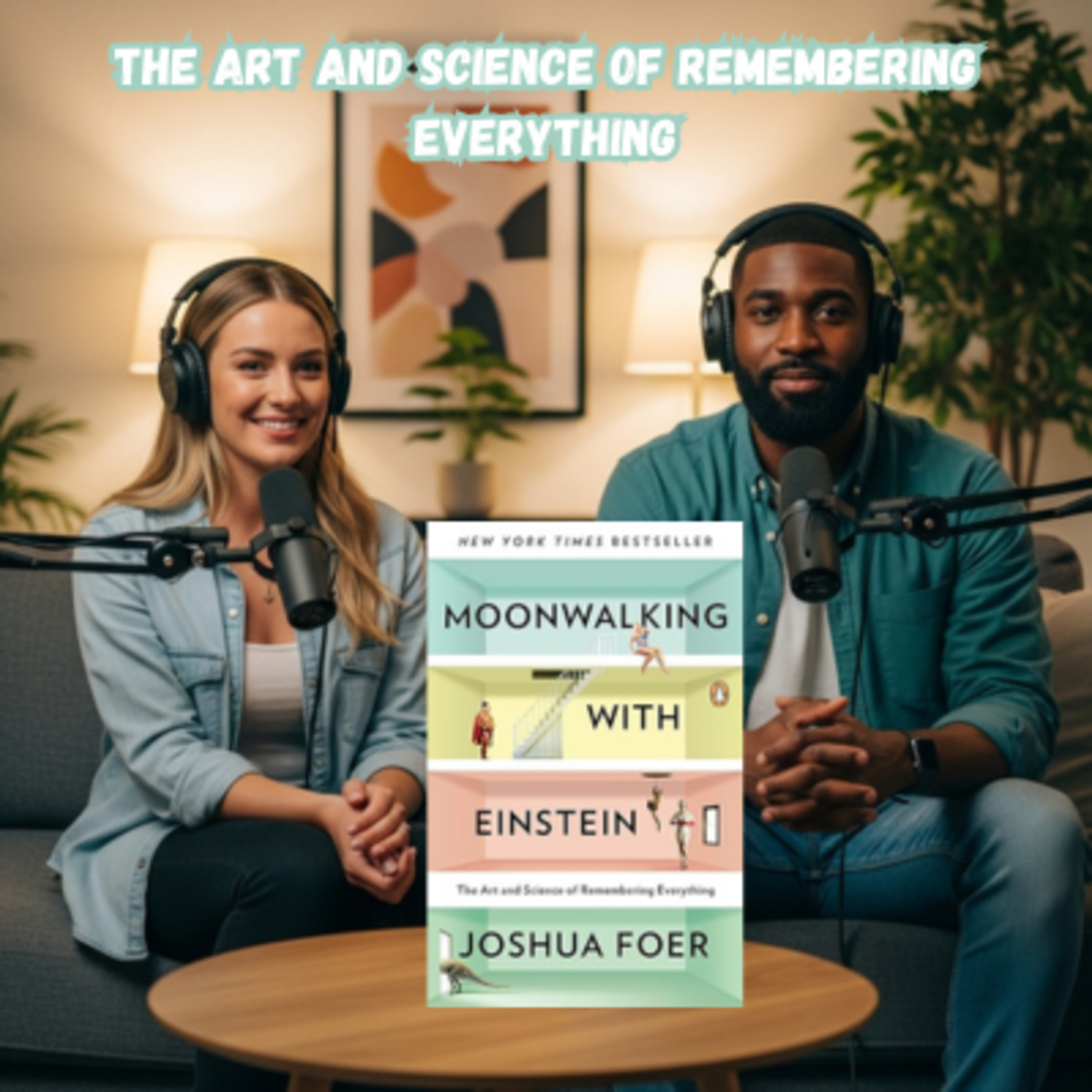
In this episode, we dive into Moonwalking with Einstein by Joshua Foer, a captivating exploration of how memory really works and how much of it is a trainable skill rather than a fixed talent. Foer chronicles his surprising journey from an average, forgetful journalist to a competitor in the U.S. Memory Championship, guided by elite “mental athletes” and ancient mnemonic techniques. Along the way, the book blends neuroscience, psychology, history, and storytelling to reveal why modern life weakens our memory, how attention shapes what we remember, and why imagination is the secret weapon of extraordinary recall. This episode unpacks practical memory strategies, the limits of the digital brain, and the deeper truth that our memories don’t just store our lives — they define who we are.
Welcome to the Deep Dive. This is where we take the source material you've shared with us. Articles, research, maybe even just your notes and what we plunge right in. Yep, we pull out the most important insights, the key takeaways. Think of it as your shortcut to getting really informed on a topic. Hopefully have a bit of fun too find some surprising connections along the way. Exactly. We guide you through it, help you see what connects, what really matters, and maybe why it matters now. And for this deep dive, we're tackling something huge, really fundamental, but maybe something we take for granted.
Memory. That's right. Specifically, we're digging into ideas from Joshua Foer's book Moonwalking with Einstein. Based on the source material you sent, looks like it's framed as a summary, maybe from a video about the book. Yeah, that's it. And our mission here isn't just to list facts, it's to really understand the core ideas, the techniques for improving memory that Foer talks about. And why it's maybe more important than ever. We want those aha moments for you, Not just a draw, a summary. Definitely.
And the source kicks off with this really powerful idea. Extraordinary memory isn't some magic gift. It's not something you're just born with. Right, it suggests it's learnable, something anyone can potentially achieve if they put in the work. OK, let's unpack that. Let's dive in. So First things first, the source material really attacks this common belief, doesn't it? This idea that memory is fixed. Absolutely, that's core idea #1 memory is a trainable skill. So many people think, you know, I just have a bad memory.
Yeah, like it's set in stone. But the source completely challenges that. It argues memory is much more like a skill, like learning an instrument or even riding a bike. Something you can actively develop. Precisely, It takes learning the right techniques and then, of course, practice. I like the analogy. The source uses memory as a muscle. It might feel weak, but with the right exercises. It gets stronger. Even simple tricks, simple practices start to build it up. It requires that consistent effort.
So the big take away here, according to the source, is it's not about innate talent, it's about technique and practice. Anyone can improve? That's the message. It's about using your brain more effectively, not needing a different brain. OK, so if we accept that memory can be trained, how do we actually do it? What's the first step to making things you know stick? Well, the source jumps right into a really powerful tool, the power of visualization. Ah, the idea that our brains love pictures. Why is that so effective according to the source?
It seems our brains are just fundamentally wired for visuals, the source says. We remember images much, much better than abstract stuff like words or numbers. And the crazier the image, the better. Exactly. The more vivid, bizarre, funny, maybe even slightly shocking the images, the more it embeds itself in your memory. It becomes stickier. Right, the source has those great examples, like remembering to buy milk. You don't just think. Milk. No. You picture something wild, like a giant cow break dancing in your kitchen, spilling milk everywhere.
It's something unforgettable. Or meeting someone named Rose. And you instantly imagine. Imagine a huge, maybe slightly ridiculous rose growing right out of the top of their head. It sounds silly, but those examples really show the principle, don't they? They absolutely do. By turning boring information into these dynamic, maybe even absurd mental pictures, you're giving your brain something really solid to latch onto. Recall becomes way easier, way faster. And that focus on visualization naturally leads into another major technique the source highlights, embracing the memory palace.
Yes, the method of loci ancient technique. Sounds kind of grand, maybe a bit intimidating. What exactly is it and how does the source explain it? It's actually quite ingenious because it taps into something our brains are already brilliant at spatial memory, remembering places. OK, so you take a place you know extremely well, like your own house, your childhood home, maybe your walk to work. A familiar route. Exactly. And then you mentally place the things you want to remember as vivid images in specific spots along that route or within in that place.
And the source uses for his own experience, right? Memorizing cards. It does. He apparently used his own house so he'd mentally walk through it. And for, say, the King of Clubs, he picture Michael Jackson moonwalking in the living room. Wow, OK. And maybe for the King of Diamonds. He pictured Albert Einstein sitting on the kitchen counter. You know, looking thoughtful. So you link the item to remember with a crazy image in a specific location. Precisely, it combines visualization with that spatial mapping.
Your brain can then walk the route mentally to retrieve the information. The source presents it as this really creative, almost easy way to organize and recall huge amounts of stuff. OK, so memories. Trainable visualization helps. The memory palace is a structure, but the source also drills down on something more basic. Focus is key. Yes, this is absolutely crucial and may be overlooked. Why is simply paying attention so vital for actually forming memories? Well, the source puts it very clearly.
Distraction is basically the enemy of memory if your brain is trying to do too many things at once. Multitask. Yeah, or even just letting your mind wander. The information doesn't get encoded properly, doesn't get logged in, so to speak. You can't recall something that wasn't really registered in the first place. That makes total sense. The example from the source is so relatable. Meeting someone new while you're glancing at your phone. Right. Their name just vanishes instantly, doesn't it? Yeah, because you weren't fully present.
You weren't focused on receiving that information. So the practical advice from the source is pretty direct then. Very direct. To remember better, you have to work on your focus. That means actively cutting out distractions. Like putting the phone away when you're trying to learn something. Exactly. Turn off notifications, give your full attention, even if it's just for short bursts. The source mentions things like timed focus sessions like those 25 minute pomodoro timers as a way to train that attention muscle.
Focus is the bedrock. OK, so you're focused, you're maybe trying visualization and you've got your memory palace mapped out. How do you actually improve? How do you get better at using these? That brings us to the next key idea from the source Practice deliberately. Deliberate practice. What does that mean here from memory? Is it just repeating things over and over? Not quite rote repetition helps a bit, but deliberate practice, as the source describes it, is more focused. It's about intentionally pushing yourself just beyond your current abilities.
Stepping outside the comfort zone. Exactly. It's about identifying where you're weak, targeting specific skills, and pushing the difficulty level just a little bit each time, not just doing what's easy again and again. And for his own journey is the prime example and the source right? He wasn't born a memory champ. Not at all, the source says. He started out struggling to remember even like 10 random numbers in sequence. But he didn't just practice remembering 10 numbers. He pushed himself. OK, can I do 12?
Can I do 20? He deliberately increased the challenge. 50 numbers, 100, eventually thousands. It was methodical, intense effort. So the insight here is that memory improvement is like, say, learning guitar or getting good at a sport. Precisely. It demands regular, focused effort. The source suggests starting small. Use visualization for your grocery list. Try the memory palace for three key points from a meeting, then consciously up the ante. And each little success kind of builds momentum. It does.
It's about that intentional effort, constantly challenging yourself just a little bit more. Now the source shifts perspective a bit, moving from the how to to something deeper. It talks about how memory shapes who we are. Yes, this is a really profound point. Memory isn't just about storing facts like a computer. It's more fundamental than that. Much more, the source argues, our memories are essentially the building blocks of our consciousness, our identity. They shape how we think, how we feel, the choices we make, who we are as largely built from our remembered experiences.
The. Strengthening memory isn't just a practical skill. In this view, no. It's about strengthening your connection to yourself, to the experiences that have shaped you. The source brings up that fascinating, if slightly cautionary, tale of S, the man with the almost perfect photographic memory. Right. And for him it was almost a curse. He couldn't forget anything. Trivial details, painful moments, everything stayed vivid. Which highlights how memory isn't just about storage, but maybe also about managing, filtering, forgetting.
Exactly. It implies that a healthy memory system, maybe one developed through the kind of focused effort we've been discussing, involves not just recall, but also perspective and integration. And the source connects this directly to the listener to you. It points out that conditions like amnesia or Alzheimer's show us what happens when that connection is lost. It's a stark reminder our memories hold our life story, our emotional connections, the lessons we've learned. The Force suggest that taking care of your memory, actively working it is a way of keeping those vital parts of yourself alive and accessible, keeping you connected to who you are.
And then there's the final point the source raises, which feels incredibly relevant right now. Our reliance on technology weakens memory. Yeah, this one hits close to home for many of us, I think. It's a direct challenge, isn't it? It really is, the source basically says. Look, we're constantly outsourcing our memory, phone numbers, birthdays, appointments, directions, facts, it all goes on to our devices. And because we can, we do. And the consequence, the source argues, is that our own internal memory muscles are getting weaker.
We're not exercising them because the technology does the heavy. Lifting the Source contrasts this with the past, right before smartphones, before even widespread writing sometimes. Yeah, think about oral traditions, epic poems, histories, complex knowledge passed down purely through memory. People had to have sharp memories. It was essential for daily life, for culture. That constant use kept their skills incredibly honed. Whereas now our first instinct is often to save it externally and not commit it internally.
Exactly. We Google it again instead of trying to recall it. We type the list instead of using a memory palace. So the challenge from the sources, use it or lose it. Pretty much make a conscious effort to use your own memory more often. Try memorizing a few phone numbers. Again, use these techniques for your shopping list instead of just relying on the app. The point isn't that tech is bad. But over reliance might be letting a crucial skill atrophy. That's the warning your brain needs that workout.
According to the source, active recall is exercise. OK wow, so pulling all these ideas together from the source. Memory is trainable, Visualization and the memory palace are key tools. Focus is essential, deliberate practice, build skill. It shapes our identity and D we need to be wary of relying too much on tech. That's a great summary. So what's the practical path forward for you, the listener? How do you actually start applying these lessons step by step based on what the source suggests? OK, the source implies a pretty clear starting point.
First, just try the memory palace. Don't make it complicated. Pick one room in your house. Just one room. Yeah, keep it simple and try to play say three things from your To Do List in there as really vivid, maybe silly images. Then monthly walk through the room later to recall them. Just experiment. OK, manageable. What's next? 2nd tackle focus. Just identify one thing that usually distracts you when you're trying to learn or remember something. Your phone buzzing maybe? Probably the phone. Yeah.
OK, so for just 15 minutes, consciously remove that distraction. Put the phone on silent, out of sight. Give your full attention to whatever task is at hand, the source suggests. Even these short focus sprints help retrain your brain. Right then visualization. Make it a conscious habit when you encounter something new. You want to remember someone's name, A new concept? A grocery item? Pause for just a second. Try to create a weird mental picture for it. Sillier the better. Often, yes. Make it memorable.
And deliberate practice. Start small, but be consistent. Maybe try memorizing the first line of a poem each day for a week, or one important phone number. Or use the memory palace for your three main tasks for the day. The key is regular intentional effort, gradually increasing the difficulties you get comfortable. OK. And the technology point? Just challenge yourself occasionally. Next time you reach for your phone to save a simple date or a shortlist, pause. Ask yourself, can I try committing this to memory using one of these techniques first?
Start building that internal reliance backup little by little. It sounds like the source is saying that when you do all this when you work on your memory. You're doing more than just improving recall. Right, You're actually sharpening your focus overall, boosting creativity, perhaps deepening how you engage with everything. That's the bigger picture the source paints, yeah. It's not just about remembering where you put your keys, though that's useful too. Definitely useful. But yeah, the ultimate take away from our deep dive into this source material seems to be that improving memory isn't magic.
It's absolutely achievable. It's a. Skill set. A skill set you can learn and master. It's about fundamentally changing how you pay attention and how you process information. Taking control. And the source is pretty optimistic. It suggests that with practice, focus and these kinds of techniques, anyone can really unlock a much greater potential in their own mind, turn an average memory into something wow extraordinary. It's an empowering message, it really. Is which leaves us with a final thought to ponder, especially considering that point about technology, given how much we do rely on external devices now to remember for us what essential part of our cognitive toolkit, maybe even our sense of self, are we potentially letting fade away if we don't actively choose to exercise these incredible natural memory abilities we all possess?
Something to think about.
 Apple Podcasts
 Castbox
 Castro
 Goodpods
 Moon FM
 Overcast
 Pocket Casts
 Podbean
 Podcast Addict
 Podcast Republic
 Spotify