Make Smart Choices: Learn How to Think Clearly, Beat Information Anxiety, Improve Decision Making Skills, and Solve Problems Faster
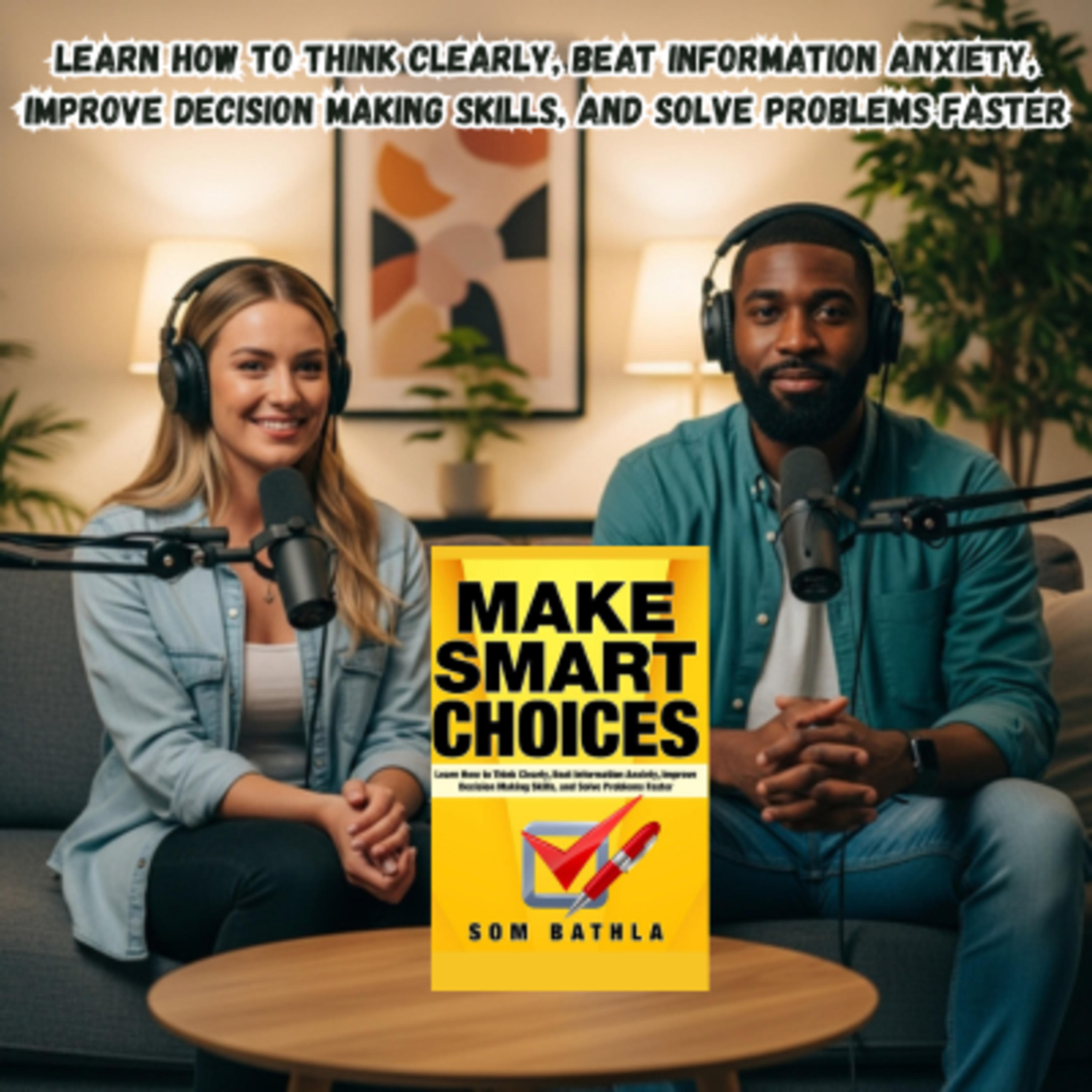
Every day, your life is shaped by the choices you make—or avoid. In Make Smart Choices, bestselling author Som Bathla teaches you how to cut through confusion, beat information overload, and make clear, confident decisions that actually move your life forward.
This episode dives into the psychology behind how we make decisions, why we fall into mental traps, and how to overcome bias, fear, and indecision. You’ll learn simple frameworks to clarify your goals, filter options, and build habits of fast, effective thinking. Whether you’re choosing a career path, business move, or personal direction, you’ll walk away knowing how to think sharper, decide quicker, and act smarter.
Because in the end, not deciding is still a decision—and it’s often the worst one.
If this episode helped you think clearer, follow BookTunez for more life-changing insights every week. 🎧
Share this episode with someone who struggles with indecision—and remind them that clarity is a skill anyone can build.
Because every great life is built one smart choice at a time.#MakeSmartChoices #SomBathla #BookTunez #DecisionMaking #CriticalThinking #MentalClarity #Productivity #SelfImprovement #Mindset #ProblemSolving #Overthinking
Hey everyone, ready for a deep dive into making smarter choices? I'm ready. OK, awesome. We're going to be looking at some Baffle's book and make smart choices. So using the excerpts that you sent in, it's a it's a book that's absolutely packed with advice and it's all about helping you unlock your full potential. So let's jump right in. Let's do it. So Baffle starts out like right away in chapter 1 talking how complex decision making really is. Right. It's not easy. Oh, absolutely not. Think about like, even just like your own life, right?
Like choosing a career, buying a house. All those big ones. I was even thinking like deciding to get a pet. Oh yeah, sure. There's so many factors that like, go into those decisions, Yeah. It's so easy to feel overwhelmed. Yeah, it is. And I think, you know, one of the things that Bethel does a really good job of is he sort of lays out the different, you know, factors and uncertainties involved. And he talks about the fear of making the wrong choice, you know, the opinions from family and friends.
Oh yeah. Totally. And how the stakes just get higher and higher depending on what kind of decision you're making. Exactly. Yeah, the pressure is real. OK, So then in chapter 2, he gets into like, why we make bad choices, right? Because, you know, we've all been there, right? So let's talk about these cognitive traps that he describes. What are some of the big ones that like stand out to you? Well, the first one that I always think of is the anchoring trap. You know how like the first piece of information you get about something really can influence your whole perception?
Yeah, yeah. Like, like, have you ever noticed how like when you see a price for something for the first time, that like, you know, sways how you think about the value of that thing? Like, that's the anchoring trap. It can be really powerful, especially when you're thinking about like big purchases, Bafla says. That's so. Sneaky. It's like our brains just, like, latch onto that first piece of info and then like, it's like, that's the standard now. That's it. Yeah. And it can really throw everything off.
And then there's the the status quo trap. You know, we humans, we love our routines. We do. Even when they're not really doing us any favors. Yeah. Think about it like your tech habits, you know? Like, are you holding onto an old phone? Oh. OK, Yeah. Outdated software. Yeah, I feel personally attacked right now. That's the status quo trap, right? Those comfort zones, they can really cost you. Ouch. Yeah, I guess upgrading isn't always about just getting the shiny new thing right? It's also about like making sure you're not stuck in the past.
Exactly, Yeah. OK. So that one, that one hit a little close to home. Yeah. What other what other traps should we be aware of? Well, we can't forget about the confirming evidence trap, especially online these days. It is just so easy to surround yourself with information that like, just agrees with what you already think you know. It's like an echo chamber, but that can really stop you from seeing the full picture. Yeah, it's like confirmation bias, right? Like you're just like cherry picking the data to support your own biases.
OK, so knowing about these traps, that's like step one. Right. Yeah. But how do we actually like become better decision makers? Well, one of the things that Bafla talks about is this concept of like decision maker archetypes, OK. And he lays out, you know, 4 main types, the maximizers, the satisficers, the perfectionists, and the optimists. Oh, I like this. Yeah, there's like a personality quiz for decision making. Exactly. And he really argues that it's about understanding your own tendencies, like what are your patterns and how do they influence your choices?
So like the maximizers, they're the ones who are all about finding the absolute best option. They're going to do tons of research, weigh every pro and cons. Yeah, I can see how that could be like both a blessing and a curse, right? I mean, they might make really great choices in the end, but it can be exhausting. Yeah, and it can take a while, right? Absolutely. Yeah. And then you have your satisficers, OK? These are the folks who are all about efficiency, you know? OK, They're gonna go with the first option that just meets their basic needs.
So they're all about just like getting it done. Getting it done, yeah. OK, what about the perfectionists? Oh, the perfectionists. They sound a little intense. Yeah, well, they're aiming for flawless decisions, right? That's it. They set really high standards, which can be great, but it can also lead to procrastination. Oh yeah, and difficulty actually making any choice at all. Because, like, what if it's not perfect, right? Exactly. Yeah, fear of making a mistake is huge for them. I. Could see how that would be totally paralyzing yeah OK and then we got the optimists the.
Optimists. They sound like a breath of fresh air. They do, They really do, yeah. They approach decisions with a really positive outlook. Okay, focus on the benefits, the potential good things, which could be great, right? Yeah, for motivation, absolutely. But sometimes you need a little dose of realism too. Yeah, like a reality check. A reality check? Exactly. So it's really with all of these archetypes, it's about balance, balance. It's recognizing those strengths and weaknesses that you bring as a decision maker.
OK, so we've got these archetypes and we know about the traps, but how do we actually, like, combat those unconscious biases that can, like, totally mess us up? Well, that's where, you know, I think Chapter 4 comes in really handy. Baffling gives us some techniques for what he calls eradicating erroneous thinking. He really digs deep into those, you know, biases, those sneaky biases that can just cloud our judgement, things like unconscious association. Unconscious associations. OK, so give us an example.
OK, well think about like, have you ever had a bad experience with a certain brand? Yeah, totally. And then from then on you just kind of unconsciously avoid all their products, even if it was like just a one time fluke, you know, that's unconscious associations at work. So it's like our past experiences can like totally color our perceptions. We do. Without us even realizing. Without us even realizing it. Yep. What other biases should we be watching out for? Well, there's one that's called liking or mirroring bias.
Liking or mirroring bias? OK, which basically means, you know, we tend to be drawn to people and ideas that are similar to our own. Yeah, that makes sense. Which is natural, but it means that we might, you know, we might favor information that just kind of already fits with our worldview. Yeah, even if it's not really accurate. Yeah, so it's like we're seeking out echoes of our own beliefs instead of really like, being being open to different perspectives. Exactly. It's like, it's like we're looking for people to agree with us instead of actually listening.
Right. So how do we, like, break free from these biases and start thinking more clearly? Well, one of the things Bathless suggests is to try to adopt what he calls an observer's perspective. OK, like, imagine that you're giving advice to a friend who's facing the same decision by, like, detaching a bit from our own emotions. Yeah, we can get a little bit more objective. That's a great strategy. It's like stepping outside of ourselves to like see things from a fresh angle. Exactly. OK, I like that.
Now let's talk about information overload, because. Yeah, that's a big one these days. Huge. I mean, in today's world, we're just bombarded with data from every direction. Every direction. Like more information must be better, right? Well, not necessarily. That's actually what Chapter 5 is all about. Too much information, he argues, can actually lead to paralysis. Oh wow. OK. Like, we get bogged down in all those details we struggle to prioritize. Yeah. And we end up just more confused than ever.
So how do we like navigate this information overload without like drowning in data? Well, one of the things that he does is he challenges the idea that decisions always have to be like a yes or no. Oh, interesting. He says sometimes it's more helpful to, like, look at a range of options. OK, a spectrum. Yeah, yeah, I like that. Can you give us like a real life example? Sure. Yeah. So let's say you're thinking about, like, changing careers. OK, right. Instead of just being like, should I stay or should I go?
You might ask yourself, like, what are different ways that I can incorporate my passions into my work? Okay, right. Maybe it's a new role, maybe it's more training, maybe it's starting your own business. Yeah, yeah, totally. You know, it doesn't have to be just black and white. Right. It's like shifting from black and white thinking to like a whole rainbow of options. Exactly. I love that. What other tips does he have for handling like information overload? Well he talks about multi tracking information.
OK, so don't just rely on one source you know. Read articles, talk to experts, really explore different viewpoints. Yeah, yeah. Get all sides. Yeah, get all sides, but at the same time avoid getting lost in the weeds You. Know right? Balance is key. So it's like being a detective, Yeah. Like, you're gathering clues from different sources to, like, try to get the full picture. Yeah. But then also knowing like when to stop investigating and make a decision. Exactly. Because sometimes too many options, it can be really overwhelming, yeah.
For sure. All right. So we've tackled those cognitive traps and we've got some strategies for dealing with information overload. Right. Now get ready for A twist, because Chapter 6 brings in this concept of ancient intelligence. Ancient intelligence, yes. OK, this sounds really. Interesting. It really is. So what? Like what does ancient intelligence even mean? Well, he's really exploring this idea that, you know, timeless wisdom, the principles that have guided people for centuries, OK, can still be really relevant to our modern decisions.
OK, I'm intrigued. Like, how does this ancient intelligence actually help us make, like, smarter choices today? Well, he introduces this methodology called Pro Act. Pro act which? Stands for problem, objectives, alternatives, consequences, and trade-offs. Wow, that's a mouthful. OK. So break that down for us a little. Bit OK, sure. So first, you clearly define the problem you're trying to solve. OK, so start with the problem. Start with the problem, then you identify your objectives. So like, what do you actually want to achieve?
Exactly. And then you brainstorm alternatives like what are the different paths that you could take? OK, what are your options basically? So far so good. Yeah, it's like creating a road map for our decision. Exactly, Yeah. OK, what comes next? Then you consider the consequences. Of each alternative. Of each alternative, what are the potential outcomes, both positive and negative? OK, yeah. And finally, you weigh the trade-offs. What are you willing to sacrifice? What are your non negotiables? OK, so that's a pretty thorough approach.
It is. It's like covering all the bases. Yeah, but how does this connect back to ancient intelligence? Well, what Bakla argues is that these principles, you know, they've been used throughout history, think about leaders, strategists, military commanders. They've always had to grapple with, you know, making tough decisions, right? So by drawing on this like historical wisdom, we can gain a lot of valuable insights. It's like tapping into this well of collector knowledge. Exactly, Yeah. So by using Pro ACT, it's like we're not just like making a decision, we're participating in a process that's been refined over generations.
I like that. That's a great way to put it. Welcome back to our deep dive on making smart choices. Last time we were talking about those cognitive traps and those decision making archetypes. Yeah, the the personality quiz for decision making. I loved that. Right. It's all about recognizing how your own tendencies can kind of trick you into making choices that maybe aren't the best. Totally. But once you're aware of those tendencies, it's like you can you can start to make more conscious decisions.
Exactly. Yeah. And we even talked about that perspective hindsight thing, right? Yeah, it's like having a time machine to help us make decisions in the present. Right, it's all about aligning our choices with our long term goals with who we want to be down the line. So cool. Now I'm curious, have you ever noticed how after a long day of making decisions, big or small, you just feel mentally wiped out? Oh my gosh, all the time. Like by dinnertime, even deciding what to eat feels like a huge effort.
Yeah, well, that's decision fatigue in action. Decision fatigue? Is that a real thing? It is, Bathla explains, that our brains, they actually have a limited capacity for decision making. As we make more choices throughout the day, you know our mental energy gets depleted. Makes sense? And we're more likely to just give in and make impulsive choices, you know, not the best ones. Like our decision making muscle gets tired. Exactly. So what can we do about it? Well, one thing Bathla suggests is to streamline your routine.
Go ahead, automate those everyday choices as much as you can. You know, things like meal prepping for the week. Oh yeah, good. Or laying out your clothes the night before. Anything to kind of reduce that mental load. That's a great tip. It's like putting your decision making on autopilot for those everyday things. Right, you free up space for the bigger decisions. Makes sense. What else can we do to, like, conserve that mental energy? Prioritize. Tackle the most important decisions when your energy is high, you know, usually earlier in the day.
OK, and then take breaks. Don't forget to take breaks. Even a short walk or a few minutes of meditation can really help you recharge. Yeah, like hitting the reset button. Exactly. So those are some practical things we can do to combat decision fatigue. Yeah, definitely. Now, shifting gears a little bit, what about the emotional side of all this? Oh yeah, our feelings got a factor those in, right? Absolutely. Bethel actually dedicates a whole chapter to emotional intelligence, which he defines as, you know, the ability to understand and manage not only our own emotions, but the emotions of others as well.
So it's not just about being logical, it's about being aware of how our feelings are kind of mixed in with our choices. Exactly how do we develop that that emotional intelligence, you know, that superpower well, he says. Start with self-awareness. Self-awareness. OK. Pay attention to your emotions. What triggers those strong reactions? How do your feelings influence your thoughts and behaviors? It's like becoming an observer of your own emotional landscape, kind of. Exactly. And then there's empathy, the ability to understand and share the feelings of others.
You know, by putting ourselves in their shoes, we can make decisions that consider everyone involved. So we're not just making choices in a vacuum. Right, exactly. We're thinking about like the ripple effects on the people around us. Absolutely. And finally, he talks about emotional regulation, being able to manage those emotions so they don't hijack your decision making. OK. So finding healthy ways to deal with stress and all of that. Exactly so it doesn't cloud your judgement. So finding that sweet spot between logic and emotions.
Now let's talk about something we all have to face at some point. OK, what's that? Uncertainty. Life is full of the unexpected, you know. Oh, tell me about it. Sometimes it feels like uncertainty is like everywhere. Yeah, it can be really overwhelming. So Bafla has a chapter on embracing uncertainty. And it's about, you know, learning to view the unknown not with fear, but as a chance to grow and learn new things. OK, that sounds great. It does. But in practice, it's like, how do you actually do that?
Well, one strategy is to focus on what you can control. OK, instead of dwelling on all the what ifs, all the things you can't change, identify the areas where you can actually take action. So shift your focus from worry to action. Exactly. Another thing he suggests is cultivating a growth mindset. So instead of seeing challenges as setbacks, see them as opportunities to learn. So even when things don't go your way, you can learn something from it. Yeah, it's all about reframing those failures into valuable data points, you know, helping you make better decisions in the future.
And be patient with yourself. That's a big one. Uncertainty can be intense. Practice self compassion. Remind yourself that you have the strength to get through it, even if you don't have all the answers right now. That's good reminder we don't have to have it all figured out. We don't. We're all learning as we go. Now, what about intuition? Have you ever made a decision based on gut feeling? Oh. Absolutely. All the time. Baffled dedicates a whole chapter to the power of intuition. You know, while logic and analysis are important, he says, our gut feelings often have a wisdom of their own.
I totally agree, but how do you know when to trust your gut and when to stick with logic? It can be tricky to tell the difference. That's the $1,000,000 question, right? Well, he says to pay attention to those subtle cues from your body. You know those feelings of excitement, unease, that sense of knowing that something is right or wrong. It's like our bodies are trying to tell us something if we just listen. Exactly. Practice mindfulness. Become more aware of those sensations. He even suggests keeping a journal to track your intuitive hits and misses.
Oh wow, that's a good idea. You can start to see patterns. Do you tend to be right when you get a certain feeling or wrong? That can help you learn to trust your gut more and then make space for reflection for solitude. Oh yeah, that's so important in today's world. It's so easy to just be constantly plugged in. It is, yeah. Carve out time for quiet contemplation, meditation, walks in nature, anything that helps you reconnect with that inner voice. It's like giving your intuition a chance to be heard amongst all the noise.
Exactly. Wow, I'm starting to see decision making in a whole new light now. What about values though? Like, shouldn't our values be guiding our choices? You're absolutely right. Bathla dedicates a whole chapter to aligning decisions with your core values. He argues that when your choices are in harmony with your deepest beliefs, you know the things that are truly important to you. You'll find more fulfillment, a sense of purpose. So it's about like walking the walk, not just talking the talk like.
Yeah, but first you have to figure out what those core values actually are, which can be tough. Yeah, how do you even do that? Well, he says, think back to times in your life when you felt the most alive, the most yourself, the most fulfilled. What values were at play in those moments? So it's like looking for clues in those peak experiences, trying to figure out what made them so meaningful. Exactly. He also says to think about your legacy. Like what impact do you want to have on the world? What values do you want to embody?
Once you have a handle on those core values, you can use them as a compass, you know, to guide your decision making. It's like having a personal mission statement that informs your choices. That's a great way to put it. This has been another amazing part of our deep dive. We've covered so much decision fatigue, emotional intelligence, embracing uncertainty, and now aligning choices with our values. A lot to think about. All right. Welcome back to our deep dive into Make Smart Choices. It's our final part and we've covered a lot of ground so far.
Yeah, we have. From those sneaky cognitive traps to the importance of emotional intelligence and even, you know, tuning into our intuition. It's been amazing, but I'm really excited for this part because now we get to like, put it all. Together. Yeah, the rubber meets the road now. Exactly. We've got all these tools in our decision making toolkit, so let's learn how to actually use them. Well, Bevila really emphasizes decisive action in this last part of the book. OK, decisive action. It's not enough to just think about things endlessly, you know.
Oh. I know that feeling, just getting stuck in overthinking mode. Right, we have to take concrete steps to move forward. So how do we break free from that? Well, he suggests setting clear deadlines. Deadlines. Sometimes we need that external pressure to actually get us going. OK, Yeah, I can see that. It's like having a launch date for a project, you know? Right. It creates that sense of urgency. Exactly. It focuses the mind. He also recommends breaking down those big, overwhelming goals into smaller, more manageable steps.
Oh yeah, that's a classic. But it's so helpful. It is. It's like instead of trying to climb Mount Everest all at once, you focus on getting to base camp first. I like that analogy. And then you celebrate those small wins along the way, which like, keeps you motivated to keep going. Exactly. Yeah, create that momentum. Now, what happens when things don't go exactly as planned? Yeah, the inevitable setbacks. We've all made decisions we later regretted. Oh yeah, for sure. What does Bathla say about learning from those mistakes?
Well, he actually emphasizes that setbacks are just an inevitable part of the journey. OK, the key is to see those so-called failures not as personal defeats but as learning opportunities. So it's all about perspective. Exactly. Instead of beating yourself up, take some time to reflect what went wrong. What could you have done differently? So it's like turning those mistakes into data points to make better decisions in the future. Yeah, exactly. He also recommends getting feedback from others. You know, Oh yeah, sometimes an outside perspective can be really helpful to see things that we might have missed.
Are you like a mentor or trusted friend? Someone who can give you honest feedback. Absolutely. Now let's talk about fear for a minute. Oh yeah, fear. I think we all experience fear, especially when making big decisions. It can be really paralyzing. Totally like those inner voices that tell you you're not good enough for enough. Oh, I know those voices well. Bathla acknowledges that fear is natural, especially when you're pushing yourself outside your comfort zone. OK, but he says we don't have to let it control us, OK.
Easier said than done, right? So how do we manage it? Well, one powerful technique is to reframe how we think about fear. OK. Reframe fear. Instead of seeing it as a sign that we're on the wrong path, what if we saw it as a sign that we're growing? So like turning that I'm scared feeling into I'm excited for this challenge. Exactly. It's a reminder that you're pushing your boundaries. OK, I like that. He also suggests challenging those negative thoughts, you know, the ones that fuel our fears. A lot of times they're based on like old stories or assumptions that aren't even true anymore.
So put those fears on trial. Yeah, gather the evidence. Are they really valid? And you know what else can be really powerful? Visualization. Oh, visualization. Yeah, imagine yourself successfully navigating that situation that you're afraid of. Picture yourself overcoming those obstacles and achieving your goal. It's like giving yourself a mental pep talk. Exactly. It builds confidence and makes those fears feel a little less scary. I love that. So we've reached the end of our deep dive into Make Smart Choices.
It's been quite a journey. It really has. And you know, I think one of the biggest takeaways for me is that making smarter choices is a process. Absolutely. It's ongoing. It's not about being perfect, it's about constantly learning and growing. Yeah, and being kind to ourselves along the way. Exactly because mistakes happen, it's what we do with them that matters. And remember, you don't have to do it alone. Oh right, the support system. Reach out to mentors. Connect with people who inspire you.
It's like having a team of cheerleaders and coaches in your corner. That's a great way to put it. So to wrap it all up, every choice we make is a chance to shape our future. That's a powerful thought. Well, that's it for our deep dive into Make Smart Choices. We hope you feel empowered to make decisions that align with your goals, your values, your dreams. And most importantly, to enjoy the journey. Until next time, happy deciding everyone.
 Apple Podcasts
 Castbox
 Castro
 Goodpods
 Moon FM
 Overcast
 Pocket Casts
 Podbean
 Podcast Addict
 Podcast Republic
 Spotify