Law Of Success
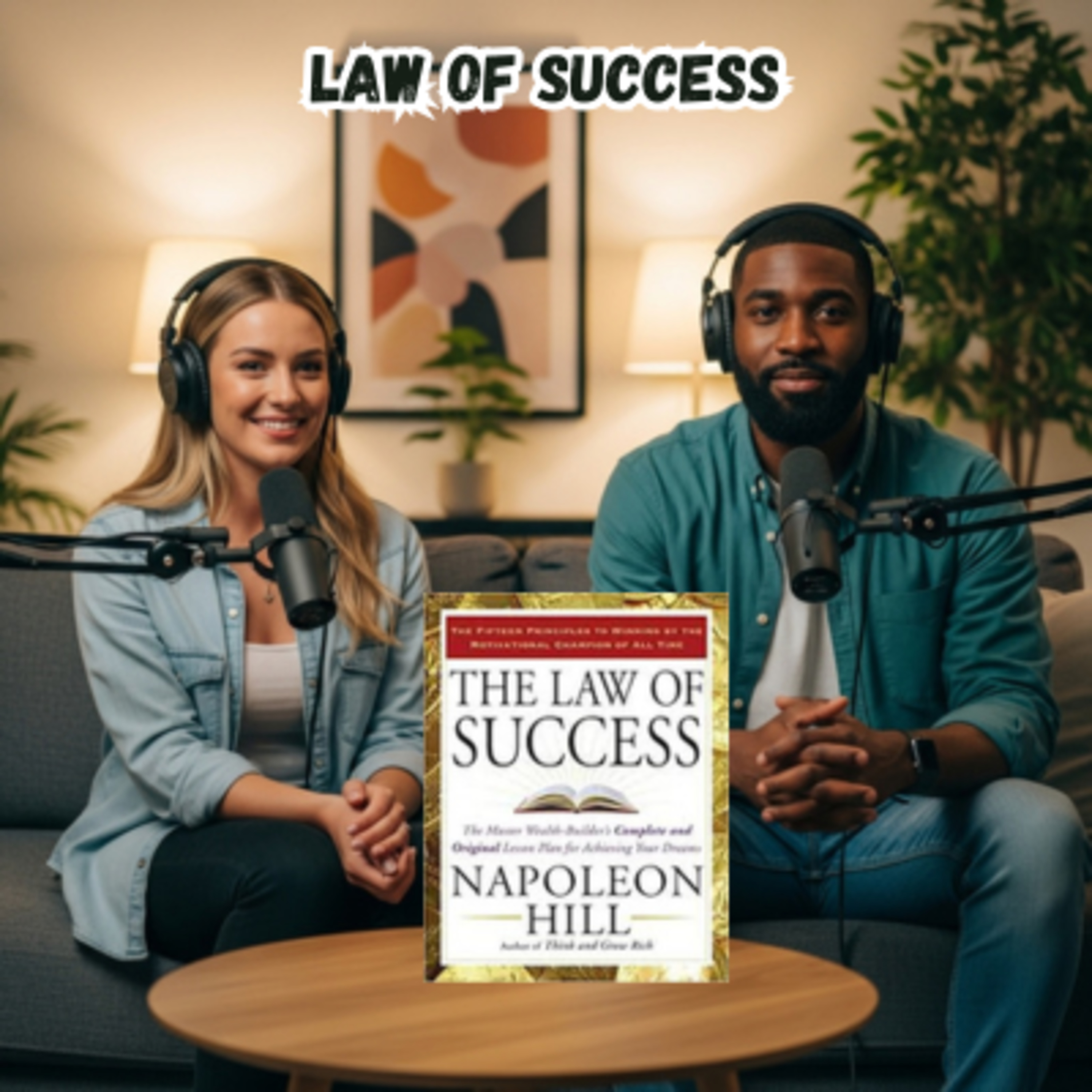
Before Think and Grow Rich, there was The Law of Success—Napoleon Hill’s original blueprint for building wealth, influence, and personal mastery. This timeless classic lays out the 16 universal principles that have guided some of the most successful people in history, from Andrew Carnegie to Henry Ford.
In this episode, we explore how Hill’s foundational ideas about desire, faith, persistence, and organized planning still shape modern success stories. You’ll discover why mastering your thoughts is the first step to mastering your destiny—and how belief, discipline, and purpose can turn even the smallest idea into lasting achievement.
These are not just lessons—they’re laws that never expire.
If this episode inspired you, follow BookTunez for more classic success wisdom and modern insights every week. 🎧
Share this episode with someone chasing their dreams—and remind them that the mind is the starting point of all achievement.
Your success story begins when you start thinking like one.
#LawOfSuccess #NapoleonHill #BookTunez #ThinkAndGrowRich #SuccessPrinciples #Mindset #PersonalDevelopment #WealthBuilding #Motivation #SelfMastery #EntrepreneurMindset
Hey everyone and welcome back. Are you ready to unlock some serious success secrets? I know I am. Today, we're diving deep into Napoleon Hill's The Law of Success. Yes, a classic. This book is like a treasure chest overflowing with wisdom gathered straight from over 500 super achievers that Hill studied. It's amazing just how many people he interviewed for this book. Right. And here's the thing, it's not just about, you know, like hustling 24/7. It's about changing the way you think. It's like rewiring your brain for success.
It's about installing a winning mindset. Exactly. You know what's really fascinating is that Hill wrote this almost a century ago. Wow. And all of his insights about thoughts and beliefs are the foundation of what we call mindset today. Oh, that's so true. It's like he was ahead of his time. Right. He cracked the code by going straight to the source, the people who had already climbed the mountain. He distilled 16 chapters of pure gold. 16 chapters. Each one a unique piece of the success puzzle.
We're going to break down those core principles, the ones that can truly change the game for you. What's so cool is it's not just about the what of success, it's the how and the why. Hill really gives you the mental tools and strategies to apply these principles to your own life. That's great no matter what you're striving for. OK, so let's just jump right into Chapter 1, The Mastermind. All right? Now I have to admit, when I first heard that term pictured like some super secret society. Oh yeah.
I can see that. But it's actually much more practical than that. It is. It's all about the power of collaboration. OK, but not just any collaboration. Yeah, imagine a group of people, each with their own unique genius, coming together with a shared purpose. So it's not just teamwork, it's like a fusion of brilliant minds. Exactly. It's about creating this synergy where the whole is greater than the sum of its parts. Yeah. And Hill says there are three key elements to a successful mastermind. OK, harmony, a shared purpose.
And this is crucial. Diverse perspectives. Think about it, if you had a tech expert, a marketing guru and a financial whiz all laser focused on the same goal, what could they achieve? Now that you mention it, I'm starting to see masterminds everywhere. Like successful startups, it's rarely just one person with a brilliant idea, right? It's a team with complementary skills, pushing each other, filling in the gaps. Exactly. And the best part is you don't have to be a CEO to benefit from this. You could create a mastermind for anything really.
Launching a side hustle, writing a book. Wow, even training for a marathon. This is making me think about who I'd want in my mastermind. That's a good exercise. OK, I'm already getting ideas, but before we go down that rabbit hole, let's move on to Chapter 2, A definite chief aim. This one really hit home for me because it's all about transforming those vague someday dreams into clear, actionable goals. It's about moving beyond wishing and hoping and actually defining what success looks like for you, Hill says.
This is the starting point of all achievements, so it's like programming your internal GPS for success. I love that analogy. It's like without a destination, you're just driving around aimlessly hoping to stumble upon something good. But with a definite chief aim, you have a road map, a direction, a purpose. And Hill breaks this down into three key takeaways. OK, first your goal needs to be crystal clear. No more wishy washy. I want to be successful. What does that even mean? Instead, think I will launch my online coaching business by December, generating $5000 in monthly revenue.
Yeah, see the difference? Whoa, yeah, it's like night and day. The second take away is about focus, right? Like a laser beam aimed at one specific target. Exactly. Having that definite aim eliminates distractions and allows you to channel your energy towards what truly matters. OK. And the third take away the motivation and direction that come with knowing exactly where you're headed. It's like having a compass guiding you through the thickest jungle, always pointing you towards your true north.
So instead of feeling overwhelmed by a million possibilities, you're energized, driven, because you know exactly what you're working towards. OK, I'm already feeling more focused just thinking about this. The powerful stuff. But I have a feeling Chapter 3 self-confidence might be the rocket fuel we need to actually launch those goals. Ah yes, self-confidence. This one's all about that deep seated belief in your ability to achieve. Yeah, that inner voice that whispers you've got this. It's not about being arrogant or cocky.
No, it's about having a quiet but unwavering conviction that you have what it takes to succeed. So it's like the difference between, say, I hope I can do this and I know I can do this, and that subtle shift in mindset can make all the difference. Self-confidence is a game changer. It fuels action. It helps you overcome the fear of failure. And get this, it actually makes you more attractive to others. Wait, what confidence is a magnet? Think about it, if you're trying to pitch an idea, launch a business or even ask someone out on a date, your level of self belief.
It radiates outwards. People are drawn to confidence because it signals competence and trustworthiness. So it's not just about feeling good internally, it's actually a tool that can influence how others perceive you. It is and open doors to opportunities it can. OK, I'm officially adding cultivate more confidence to my To Do List. Good idea. Speaking of tools, Chapter 4, the habit of saving feels like a practical 1. Yes, very practical. It's about building that financial foundation, but I'm guessing there's more to it than just stuffing money under your mattress.
There is Hill was a huge advocate for saving OK. He believed it was a cornerstone of success, and not just for the obvious financial reasons. OK, so tell me more. See, saving isn't just about accumulating wealth. It's about developing A crucial skill that translates to every area of life. No, I like that. Self-discipline. OK, so it's like a mental muscle you're building. Exactly. By making a conscious choice to save, you're training yourself to delay gratification. Prioritize long term goals over immediate desires and resist those tempting impulses that can derail your progress.
This is making me think about all those times I've impulsively bought something I didn't really need. Maybe those weren't just financial slip UPS. Oh yeah, but missed opportunities to strengthen myself, discipline, muscle. I think you're right. So saving isn't just about building a financial safety net. It's about building that inner strength that helps you achieve any goal. Precisely. And he'll believe that this habit of saving, even starting small, had a ripple effect. It could transform your relationship with money, yes, but also your mindset, your decision making and ultimately your entire approach to achieving success.
OK, I'm definitely rethinking my spending habits after this. But before I cut up all my credit cards, let's talk about Chapter 5, initiative and leadership. These feel like qualities we often associate with, well, leaders with fancy titles. But I have a feeling Hill has a different perspective. You're right on the money. He believed that true leadership wasn't about a position or title. It was about action and influence, regardless of your role. So it's less about barking orders from the top and more about rolling up your sleeves and leading by example.
Exactly. Imagine you're in a meeting and everyone's stuck on a problem. You can sit back and wait for someone else to take charge, or you could be the one who says, hey, what if we tried this? Oh, OK. You're not the boss, but you're demonstrating initiative and potentially leading the team to a solution. That's a perfect example. It's those everyday moments where we can choose to be passive or step into that leadership role, regardless of our official title. Exactly. OK, I'm sensing a theme here.
Hill seems to be saying that success isn't just about some grand destiny. It's about those daily choices, those small but powerful actions that add up over time. It is. You're catching on quickly. Thank you. And that brings us to Chapter 6, imagination. Now, when I first read this, I thought, isn't that for artists and dreamers? But Hill argues that imagination is a superpower we all possess. OK. And it's essential for achieving any goal. So you're saying my daydreams about winning the lottery actually have value?
Well, maybe not those specific daydreams, but the ability to imagine possibilities, to visualize your desired outcomes. It's incredibly powerful. He'll actually distinguishes between two types of imagination, synthetic, which is about recombining existing ideas, and creative, which is about conjuring up entirely new concepts. So synthetic imagination is like remixing a song, while creative imagination is like composing a whole new Symphony. You got it. And both are essential for success. OK, Think about it.
Before any invention, any business, any work of art, there was someone who imagined it first. Oh yeah, that's. True, they saw the potential, they picture the possibilities, and that vision fueled their actions. So how do we actually UES our imagination to achieve our goals? Is it about creating vision boards and chanting affirmation? Well, those can be helpful tools, but the real magic happens when you combine imagination with action. When you vividly imagine your goals as if they've already been achieved, you're essentially planting a seed in your subconscious mind.
And that seed, nurtured by your actions and beliefs, can begin to sprout and grow into reality. So it's not just about daydreaming, it's about using that imaginative power to fuel our efforts and keep us motivated. Exactly. Hillsong imagination is this bridge between the world of dreams and the world of reality. Oh, I like that. It's the spark that ignites creativity, fuels innovation, and ultimately empowers us to achieve the extraordinary. Wow, OK, I'm definitely going to be paying more attention to my daydreams from now on.
I. Think that's a good idea? But before I get lost in a fantasy world, let's move on to Chapter 7, Enthusiasm. Now this one seems pretty straightforward. Just be excited about what you're doing. But I have a feeling he'll has a deeper perspective. You're absolutely right. Enthusiasm is more than just a feeling. It's a force, a contagious energy. They can amplify your efforts and inspire those around you. So it's like that spark that makes work feel less like work and more like a passionate pursuit.
Exactly. Think about it. Have you ever worked with someone who's genuinely passionate about what they do? Oh yeah, for sure. Their energy is infectious. It elevates the entire team. Yeah, it's like they light up the room with their excitement. I know exactly what you mean. Yeah, I once had a colleague who was so enthusiastic about this project we were working on, it was impossible not to get swept up in her energy. It made the whole process more enjoyable and productive. That's the power of enthusiasm.
Hill believed it was a crucial ingredient in leadership, sales, teamwork, practically every aspect of success. So it's not just about feeling good, it's about influencing others, inspiring action and creating a positive ripple effect. Exactly. This is making me rethink my whole approach to work. Maybe I need to inject a little more enthusiasm into my daily routine. I think that's a great idea. But before I start doing cartwheels in the office, let's talk about chapter 8, self-control. Now this one feels like the opposite of enthusiasm.
It does a bit, doesn't. It it's all about restraint, discipline, resisting temptation. But how does that fit into the success equation? This is where Hill's wisdom really shines. Yeah, He understood that true success requires balance. OK, You need the passion and drive of enthusiasm. Yes, but you also need the discipline and restraint of self-control, right? To stay focused, make smart decisions, and avoid those impulsive actions that can derail your progress. So it's like having a powerful engine but also strong brakes.
Exactly. Think about it. How many times have you made a rash decision based on emotion that you later regretted? All the time. Or indulged in a temptation that sabotaged your progress towards a goal. Oh yeah, definitely been there. We've all been there, but Hill reminds us that self-control is like a muscle. The more you exercise it, the stronger it becomes. It's about making conscious choices aligned with your long term goals, even when faced with tempting distractions or immediate gratification.
So it's not about denying yourself pleasure or living a life of strict deprivation. It's about finding that balance between passion and discipline, knowing when to push the gas pedal and when to hit the brakes. Precisely, And he'll believe that this ability to regulate your emotions, to respond rather than react impulsively was crucial for making sound decisions, building healthy habits, and ultimately achieving lasting success. This is making me think about all those successful people we admire.
They're not just driven by passion, they also have that incredible discipline and self-control to stay focused, make smart choices, and avoid those tempting distractions that can lead us astray. You're absolutely right, and that's a perfect segue into our next chapter, Chapter 9 doing more than paid for. OK, now this one might sound a bit not intuitive. Isn't that just setting yourself up to be exploited? Yeah, I was wondering about that too. Well, it's not about becoming a doormat or working yourself to exhaustion.
Hill was talking about a strategic approach to exceeding expectations. OK, a way to stand out, gain valuable experience, and create opportunities that wouldn't have existed otherwise. So it's like a long term investment in yourself and your reputation. Exactly. Think about it. If you consistently deliver more than what's expected, you build a reputation for reliability, diligence and commitment, right? And that kind of reputation opens doors, attracts opportunities, and positions you as the go to person for advancement.
It's like that saying go the extra mile, it's never crowded. Exactly. And he'll believe that this habit of exceeding expectations was a key differentiator between those who achieve mediocre results and those who achieve remarkable success. OK, so it's not about being a workaholic or people pleaser. It's about strategically going above and beyond to create a positive ripple effect that ultimately benefits you in the long run. That's it. This is making me think about all those little things we can do to exceed expectations, even in our everyday interactions.
Like what is? Instead of just sending a quick e-mail, we took the time to write a thoughtful note. Or instead of just completing a task, we looked for ways to improve the process. Those are great examples. It's about that mindset of always looking for ways to add value, to make a positive impact, to go above and beyond the bare minimum. And those seemingly small actions can have a huge impact on your reputation, your relationships, and ultimately your success. I'm loving this idea of creating a ripple effect of positivity and exceeding expectations in all areas of life.
Yeah, OK, I'm feeling inspired. Me too. But before I go overboard and start baking cookies for my entire neighborhood, let's talk about Chapter 10, A Pleasing Personality. Now, this isn't just about being nice, right? It's about cultivating those qualities that make you likable, relatable, and someone people genuinely want to be around. You're spot on. He'll believe that a pleasing personality wasn't about superficial charm or putting on a fake smile, OK. It was about developing genuine empathy, adaptability and a positive attitude.
So it's more about connecting with people on a deeper level, understanding their perspectives and making them feel valued. Exactly. Think about those people you instantly feel drawn to. It's not always the most attractive or the most accomplished. It's the ones who radiate warmth, kindness, and a genuine interest in others. I know exactly what you mean. It's like they have this magnetic energy that makes you feel comfortable, at ease. He'll believe that cultivating A pleasing personality wasn't just about making friends, it was a crucial skill for success in any field.
It's about building rapport, fostering trust and creating win win situations where everyone feels respected and valued. This is making me think about all those times have been in meetings or negotiations where the atmosphere was tense, adversarial. Imagine if everyone involved had approached the situation with a more pleasing personality, a genuine desire to understand each other's perspectives and find a solution that benefited everyone. Yeah, the outcome could have been so much more positive. You're absolutely right.
A pleasing personality can de escalate conflict, build bridges and open doors to opportunities that might not be available to those who are abrasive or difficult to work with. Yeah, it's about creating that positive ripple effect that benefits not just yourself, but everyone around you. OK, I'm officially adding Cultivate a More pleasing personality to my To Do List right next to Cultivate more confidence. I like you, but before I start practicing my smile in the mirror, let's move on to Chapter 11.
Accurate thought. Now this one feels like a bit of a shift from the previous chapter. It does. It's less about social skills and more about like, clear thinking, right? You're exactly right. Hill believed that accurate thought was crucial for avoiding costly mistakes. OK, making sound judgments and navigating a world full of misinformation and biased perspectives. So it's about being able to separate facts from opinions, to think critically and base our decisions on sound reasoning rather than emotions or assumptions.
Precisely. It's about questioning everything, seeking evidence, being willing to change your mind when presented with new information. This is making me think about all the times I've jumped to conclusions or made decisions based on like, gut feelings rather than taking the time to gather all the facts. Think things through carefully. Yeah, those impulsive decisions rarely lead to positive outcomes. You're not alone. We all have biases, we all make assumptions, and we're all susceptible to emotional reasoning.
True, but Hill reminds us that accurate thought is a skill that can be cultivated. OK, it's about developing a healthy skepticism, seeking out diverse perspectives, and being willing to challenge your own beliefs. This feels especially important in today's world. Absolutely. Where we're constantly bombarded with information from all sides, it's so easy to get swept up in the latest trends or to blindly follow the crowd. You're absolutely right. The ability to think critically, to analyze information objectively and form our own informed opinions is more crucial than ever.
So true. It's about becoming discerning consumer rumors of information, separating the signal from the noise, and making decisions based on reason and evidence rather than fear or hype. OK, I'm officially adding practice accurate thought to my To Do List right next to cultivate a more pleasing personality and cultivate more confidence. But before I go full on Sherlock Holmes and start investigating every headline, let's move on to Chapter 12 concentration. Now this one seems pretty straightforward.
It does it's focus right, But I have a feeling Hill has a more nuanced perspective. You're catching on. Hill believed that concentration wasn't just about willpower. It was a skill that could be developed, a habit that could be cultivated. He saw it as the ability to direct your mental energy towards a single goal or task without getting sidetracked by distractions or giving into mental fatigue. So it's like training your mind to be a laser beam, focusing all its power on one specific point. Exactly.
And in today's world, where we're constantly bombarded with distractions, phones, social media, the endless stream of information, the ability to concentrate deeply is more valuable than ever. This is making me think about all those times I've sat down to work on a project, only to get sidetracked by emails, social media notifications, or even just my own wandering thoughts. It's like my mind is a butterfly flitting from flower to flower, never settling on one for too long. We've all been there, yeah.
But Hill reminds us that concentration is a muscle that can be strengthened with practice. OK? It's about creating a conducive environment, minimizing attractions, and developing strategies to refocus your attention when it inevitably wanders. So it's not just about willpower, it's about being strategic and intentional about how we manage our attention and energy. Exactly, and he'll believe that mastering the art of concentration was essential for achieving any worthwhile goal. Whether you're writing a book, building a business, or even just having a meaningful conversation, the ability to focus your mental energy is crucial.
OK, I'm definitely adding practice concentration to my To Do List. Oh, good idea. It's right up there with cultivate a more pleasing personality, cultivate more confidence, and practice accurate thought. But before I go full on monk mode and disappear into a silent retreat, let's move on to chapter 13, Cooperation. This one feels like a shift from the previous chapter, which was all about individual focus. Now we're talking about the power of teamwork, right? You got it. Hill was a firm believer in the power of collaboration.
He understood that we can achieve far more together than we ever could alone. He emphasized the importance of creating win win situations where everyone involved benefits from the collective effort. So it's not just about working together, it's about working together effectively in a way that maximizes everyone's strengths and creates A synergistic outcome. Exactly. Think about a sports team. Each player has their own unique skills and talents, but it's their ability to cooperate, to play as a cohesive unit, that determines their success.
That's a great analogy, and it applies to so many areas of life and does not just sports. Think about successful businesses, communities, even families. It's their ability to work together, to support each other, and to leverage their collective strengths that allows them to thrive. You're absolutely right, and he'll believe that cooperation wasn't just about achieving practical outcomes. Interesting. It was also about creating a more harmonious and fulfilling experience for everyone involved. It's about fostering a sense of community, shared purpose and mutual respect.
I love that it's not just about getting things done. It's about getting things done in a way that feels good, that builds strong relationships, and that creates a positive ripple effect. Exactly. OK, I'm definitely adding practice cooperation to my To Do List. It's right up there with cultivate a more pleasing personality, cultivate more confidence, practice accurate thought, and promise concentration. That's great, but before I start organizing group hugs and team building exercise, let's move on to chapter 14, Profiting by Failure.
Now this one sounds a bit counterintuitive. It does, doesn't it? How can you? Profit from failure? Isn't failure the opposite of success? That's the brilliance of Hills approach. He saw failure not as the opposite of success, but as a stepping stone to it. He believed that every set back, every mistake, every challenge was an opportunity for learning and growth. So it's about reframing our perspective on failure, seeing it not as a sign of weakness but as a valuable feedback mechanism. Exactly. Think about it, every successful entrepreneur, inventor, athlete, artist, they've all faced their fair share of failures along the way.
But it's their ability to learn from those experiences, to adapt their approach and keep moving forward that ultimately led to their success. This is making me think about all those times I've given up on something after facing a sub back or making a mistake. Yeah, maybe I was too quick to label myself a failure instead of seeing it as an opportunity to learn and grow. It's a common experience, yeah, But Hill reminds us that failure is an inevitable part of the journey. It's not about avoiding failure.
It's about embracing it as a valuable learning experience and using it to fuel our growth. So instead of getting discouraged and giving up, we need to ask ourselves, what can I learn from this? How can I do better next time? Exactly, and he'll believe that developing this resilience, this ability to bounce back from setbacks, was a crucial ingredient in achieving lasting success. OK, I'm officially adding profit from failure to my To Do List right next to practice cooperation, cultivate more pleasing personality, cultivate more confidence, practice accurate thought, and practice concentration.
It's. Getting along, isn't it? I know, right? But we're almost done. But before I go out and intentionally make a bunch of mistakes just to learn from them, let's move on to Chapter 15, Tolerance. This one feels a bit different from the previous chapters, which were more about like, individual skills and mindsets. Now we're talking about our interactions with others. Right, you're spot on. He'll believe the tolerance was not just a moral virtue, but a practical necessity for success in a diverse and interconnected world.
So it's about respecting and accepting opinions, practices and beliefs that differ from our own. Exactly. It's about recognizing that we don't have all the answers, that our perspective is just one of many, and that by being open to different viewpoints, we can expand our understanding, learn from others, and make more informed decisions. This is making me think about all the times I've been quick to judge or dismiss someone's opinion because it differed from my own. It happens. Maybe I missed an opportunity to learn something new or to see the situation from a different perspective.
It's a common human tendency, but Hill reminds us that tolerance is not about agreeing with everyone, OK? It's about creating a space for respectful dialogue and recognizing the value of diverse perspectives. So instead of getting defensive or shutting down when we encounter different viewpoints, we need to be curious, open minded, and willing to engage in constructive conversations, even when those conversations challenge our own beliefs. Exactly, And he'll believe that cultivating tolerance not only made us better individual, but also created a more harmonious and productive society.
It's about building bridges instead of walls, fostering understanding instead of division, and recognizing that we're all interconnected. OK, I'm officially adding practice tolerance to my To Do List. It's right up there with profit from failure, practice cooperation, cultivate a more pleasing personality, cultivate more confidence, practice accurate thought, and practice concentration. Wow, that's quite the list. I know, right? But one more to go. OK, before I go out and hug everyone I disagree with, let's move on to chapter 16, the final chapter, The Golden Rule.
This one feels like the culmination of all the previous chapters. It does, isn't. It the ethical foundation upon which true success is built. You're exactly right. He'll believe that ethical conduct was not just morally right, but also essential for lasting success. So it's about treating others as we would like to be treated, even in the pursuit of our own goals and ambition. Precisely. It's about recognizing that our actions have consequences, not just for ourselves but for others, and that by making ethical choices, we create a positive ripple effect that benefits everyone.
This is making me think about all those times I've been tempted to cut corners, to take advantage of someone, or to prioritize my own needs over the needs of others. Maybe in those moments I lost sight of the bigger picture, the long term impact of my actions. It's a common human temptation, but Hill reminds us that true success is built on a foundation of integrity, fairness and respect. Yeah, it's about making decisions that align with our values, even when it's difficult or inconvenient. So it's welcome back.
OK, I'm ready for more. It's amazing how these chapters, while each powerful on their own, yeah, really create this intricate web of interconnected principles. It's like Hill is giving you the blueprint to building not just a successful life, but a fulfilling 1. Yeah, it's like we've laid out all the ingredients for a delicious success recipe, but now we need to figure out how they all go together. And I have a feeling there's more than one way to combine these principles. Absolutely. Think of it less like a recipe and more like a jazz ensemble.
Oh. OK. You've got your core musicians, each with their unique instrument style. Yeah, but the real magic happens when they improvise, they riff off of each other, and they create something new and exciting in the moment. I love that analogy. So we're not just following a rigid formula. No. We're taking these principles and making them our own, figuring out what works best for our unique goals and personalities. Exactly, and the beauty of Hills work is that he provides so many tools and strategies that you can mix and match to create a personalized success Symphony.
OK, so let's start jamming. What are some of the key connections you see between these principles? Well. One that jumps out immediately is the link between the mastermind and cooperation. Yes, they both highlight the power of collaboration, but from different angles. Exactly. The Mastermind focuses on that synergy of minds, that spark, that ignites when you bring together individuals with shared goals but diverse expertise. It's about leveraging each other's strengths, filling in the gaps, and creating something truly innovative.
While cooperation broadens the scope to encompass teamwork in a more general sense, emphasizing the importance of clear communication, shared purpose, and mutual respect. It's like Mastermind is the spark that ignites the fire, and cooperation is the steady flow of oxygen that keeps it burning bright. I love how you're weaving these metaphors together. I try. It makes the concept so much more vivid and memorable. Well, I'm a firm believer that learning should be engaging and enjoyable, but let's not get too distracted by metaphors.
We've got more connections to explore. Right. And I'm particularly interested in the relationship between a definite chief aim and concentration. Yes, this one's crucial. You can have the grandest vision, most ambitious goals, but without the ability to focus your attention and direct your energy effectively, they'll remain just that, visions and goals. It's like having a powerful engine in a car but no steering wheel. Oh yeah, you might have all that horsepower, but without the ability to steer you'll end up going in circles or crashing into a wall.
That's a perfect analogy. A definite chief aim sets the destination, gives you that clear road map. But concentration is what allows you to stay on course, to navigate through distractions, and to reach your destination effectively. And then there's the link between self-confidence and both of those principles. Yes, the fuel that powers the engine and keeps the driver focused on the road ahead. Exactly. You can have a destination and a steering wheel, but without the confidence to actually get behind the wheel and start driving, you're going nowhere.
Imagine trying to climb a mountain without believing you can reach the summit. You'd likely give up at the first sign of difficulty, but with self-confidence, you push through those challenges knowing that you have the strength and resilience to overcome them. So self-confidence is like the foundation upon which we build all the other principles. I think so. It's that belief in ourselves, that inner conviction that we can achieve our goals, that empowers us to set those goals in the 1st place and to stay focused even when things get tough.
Absolutely, and it's a reminder that cultivating self-confidence isn't the luxury, it's a necessity for achieving any level of success. OK, this is making me think about my own journey. I've definitely had moments where my lack of self belief has held me back from pursuing my goals. Yeah, maybe it's time to revisit Chapter 3 and give that self-confidence muscle a good workout. That's a great idea. Remember, self-confidence is like any other skill. It can be developed and strengthened with practice.
Speaking of practice, let's talk about the more practical aspects of success, like the habit of saving. This one feels so foundational, almost like the bedrock upon which we can build everything else. Hill was adamant about the importance of saving not just for emergencies, but as a consistent discipline, a way to build a solid financial foundation and develop that crucial self-discipline muscle we talked about earlier. So saving isn't just about stuffing money away in a bank account. It's about developing a mindset of delayed gratification, prioritizing long term goals over immediate desires, and resisting those tempting impulses that can derail our progress.
Exactly. And those skills, that mindset, it translates to every area of life. Imagine you're working on a big project, but you're constantly tempted to check social media or get distracted by other things. That's where the self-discipline you develop through saving kicks in. Oh, OK. You're able to resist those temptations, stay focused, and keep moving forward. This is making me think about all those times I've impulsively bought something I didn't need or procrastinated on a task because it felt too overwhelming.
Maybe those weren't just isolated incidents, they were missed opportunities to strengthen my self-discipline muscle. It's all connected. He'll believe that the habits we develop in one area of life inevitably spill over into others. That makes sense. So by developing a habit of saving, even if it's just a few dollars a week, yeah, you're not just building a financial cushion, you're building that inner strength that will help you achieve any goal. OK, this is making me rethink my whole approach to finances.
I'm glad to hear that. Maybe I need to start seeing saving less as a chore and more as an investment in my overall success. Exactly. And don't underestimate the power of those small, consistent actions. Just like a planty seed can grow into a mighty tree, those small savings over time can accumulate into significant wealth and more importantly, a rock solid foundation for achieving your dreams. OK, I'm officially inspired to start saving, but before I go open a million savings accounts, yeah, let's talk about some of the other connections between these principles.
I'm particularly curious about the relationship between enthusiasm and accurate thought. They seem like such different qualities, almost opposites in some. Way yes. This is where Hill's emphasis on balance really comes into play. He understood that you need both passion and reason to succeed. OK, you need that fire in your belly, but you also need the clarity of mind to make sure you're headed in the right direction. So it's not enough to just be enthusiastic about something. You need to be able to think critically, to gather information, and to make sure your actions are aligned with your goals and values.
Exactly. Imagine you're incredibly enthusiastic about starting a new business. You've got all these ideas, You're excited to get started, but you haven't taken the time to research the market, analyze the competition, or to create a solid business plan. That unchecked enthusiasm could lead you down a path of costly mistakes. Oh yeah. And ultimately, failure. It's like that saying enthusiasm without knowledge is like a runaway horse. Exactly. On the flip side, you could be a master of accurate thought.
You could have all the data and knowledge in the world, but without that spark of enthusiasm, without that passion to fuel your actions, you might never actually get started. You could end up stuck in analysis paralysis, overthinking every decision, and missing out on opportunities because you're too afraid to take a risk. So it's about finding that sweet spot, that perfect balance between passion and reason, between enthusiasm and accurate thought. Precisely, he'll believe that these two qualities, working in harmony, could create a powerful synergy that propelled individuals toward extraordinary achievements.
This is making me think about my own decision making process. I tend to be very analytical, sometimes to the point of overthinking things. Maybe I need to inject a little more enthusiasm into my decision making, to trust my gut more and to take action even when I don't have all the answers. That's a great insight and remember, it's about finding the balance that works for you, right? There's no one-size-fits-all approach, right? The key is to be aware of your own tendencies and to make conscious choices that aligned with both your head and your heart.
This is making me think about all the other connections between these principles. Yeah, like how does doing more than paid for tie into this balance of enthusiasm and accurate thought? That's a great question. I think doing more than paid for is a perfect example of how enthusiasm and accurate thought it can work together to create extraordinary results. OK, imagine you're working on a project and you're not just content to meet the bare minimum requirements, right? You're enthusiastic about the work.
You want to go above and beyond. Yeah, but you're also using accurate thought to ensure your efforts are aligned with the project's goals, right? It will actually add value, OK. You're not just working hard for the sake of working hard. You're being strategic and intentional about your efforts. So it's not just about being a busy bee, it's about being a smart bee. I like that you're using your energy and enthusiasm wisely, guided by accurate thought to make sure your efforts have the greatest impact.
Exactly. And that's a perfect example of how Hill's principles, when combined and applied strategically, can truly elevate your work and lead to remarkable achievements. This is making me think about all the other connections between these principles. Like how does a pleasing personality tie into this whole mix? Yes, a pleasing personality is like the social lubricant that makes all these other principles work more smoothly. I love that analogy. So you're saying that having a positive attitude, being empathetic, and treating others with respect can actually enhance your ability to collaborate effectively, to lead with influence, and to achieve your goals?
Exactly. Think about it. People are naturally drawn to those who are kind, respectful and genuinely interested in others. They're more likely to trust you, to support your ideas, and to want to work with you. So it's not just about being nice for the sake of being nice. No, it's about creating an environment where people feel valued, respected and inspired to do their best work. Precisely, and that kind of environment is essential for achieving any kind of collective success, whether you're working on a team project, leading a company, or even just trying to build strong relationships in your personal life.
OK, this is making me rethink my whole approach to interactions with others. It's not enough to just be competent and driven. We also need to cultivate the social skills, that ability to connect with others on a deeper level, create a positive and supportive environment. You're absolutely right, and he'll believe that a pleasing personality wasn't just about innate charm, it was a skill that could be developed and refined through conscious effort. So we can actually train ourselves to be more empathetic, more patient, more understanding.
Exactly. It's about developing self-awareness. Yeah. Paying attention to how our words and actions impact others and making a conscious choice to cultivate those qualities that make us more likable, relatable, and trustworthy. OK, I'm adding cultivate, a more pleasing personality to my ever growing To Do List. It's right up there with practice tolerance, profit from failure, practice cooperation, cultivate, innovate more confidence, practice accurate thought, and practice concentration. Get along, isn't it?
I know, OK, But before I go out and start handing out compliments and baking cookies for everyone I meet, let's talk about how all these principles connect to the big picture, De Hill's overall philosophy of success. Yes, the grand finale. He'll believe that true success was not just about achieving material wealth or outward accomplishments. It was about living a life of purpose, meaning and contribution. So it's not just about what we achieve, it's about who we become in the process. Exactly. And he'll believe that by embodying these principles, by cultivating self-confidence, setting clear goals, working diligently, treating others with respect, and contributing to the greater good, we not only achieve success in the traditional sense, but also create a ripple effect of positivity that benefit ourselves and those around us.
This is making me think about all those people we admire, those who we consider truly successful. They're not just wealthy or famous, they're also kind, compassionate, and driven by a desire to make a positive impact on the world. You're absolutely right. They've achieved that balance between personal fulfillment and contribution to the greater good. They've understood that true success is not a 0 sum game, it's a collaborative effort where everyone wins. OK, my mind is officially blown. I'm starting to see the law of success not just as a guide to achieving individual goals, but as a blueprint for creating a better world.
That's exactly what Hill intended. He believed that by embracing these principles, we could create a world where success was not just about individual gain, but about collective well-being. A world where everyone had the opportunity to thrive and contribute their unique talents. Wow, that's a powerful vision. But how do we actually bridge that gap between individual success and collective well-being? How do we make sure our own pursuits contribute to a greater good? That's a great question and one that we'll explore in our next segment as we dive deeper into the practical applications of these principles.
OK, we'll look at how you can use these principles to achieve your own goal while also making a positive impact on the world around you. OK, I'm officially on the edge of my seat. This is making me think about my own goals and aspirations. I'm starting to see them not just as personal pursuits, yeah, but as opportunities to contribute to something bigger than myself. That's the beauty of Hill's work. It empowers us to see our own potential, not just as individuals, but as agents of positive change.
OK, I can't wait to explore these applications and figure out how I can use these principles to create a more meaningful and impactful life. Stay tuned because things are about to get really exciting. OK, I'm so ready to put all of this into practice. Me too. It's time to get down to brass tack. Yeah, we've explored the 16 principles. We've seen how they're all beautifully intertwined. But how can our listeners actually apply these powerful concepts to their own lives? Well, you know, it's not enough to just understand these intellectually, right?
It's about integrating them into your actions, your habits, like your very being. OK, so let's start with a big one, that concept of the Mastermind from chapter 1. If you were building your dream team, your own dream team of brilliant minds, who would be on it? What qualities would you look for?
I think you've got to start by thinking about like, your goals, your strengths, and even your weaknesses, OK? Who could like, complement your skill set? Who inspires you? Who challenges you to think differently, to step outside your comfort zone? Maybe it's a mentor who's already blazed the trail, a colleague who has like a totally different perspective, or even a friend who's always been your biggest cheerleader. I'm already picturing my ideal mastermind and it's making me realize I need to be more intentional about the people I surround myself with.
It's not just about surrounding yourself with yes people though, right? You need those voices who will offer constructive criticism, who will push you, but who will also celebrate your victories. Yeah, and you know, a mastermind doesn't have to be a formal thing. It could be a casual group of friends who meet for coffee once a month to just share ideas, support each other's goals. The key is to create that space for Synergy. Where everyone benefits from that collective wisdom and energy. Exactly.
So let's shift gears a bit and revisit Chapter 2. A definite chief aim. What's 1 specific goal that you are working towards right now? And to be honest, is it truly a definite aim or is it still a little fuzzy around the edges? Yeah, this is where we need to get laser focused. Instead of saying I want to write a book someday, Yeah, think I will finish the first draft of my novel by December 31st. Feel the difference? Yeah, that clarity, that specificity, that's what transforms A vague dream into an actionable plan.
Exactly. Gives you something concrete to work towards, a target to aim for. You know a deadline to keep you motivated. I think we might need a little boost of self-confidence for chapter 3 to really make those goals a reality though. Yeah. What's 1 area where you could use a little more self belief? I think this is about identifying those areas where you might be like holding yourself back. You know those whispers of self doubt that keep you playing small. Maybe it's public speaking, asking for a raise, or even just starting that creative project you've been dreaming about.
You know, confidence is like a muscle. Yeah. The more you use it, the stronger it gets. Yeah. What's one small step you can take today to flex that confidence muscle? I like that. Maybe it's signing up for a public speaking workshop, having that conversation with your boss about your career goals, or simply committing to like 30 minutes working on your creative project, even if it feels a little scary. These small actions, those little steps outside your comfort zone, can have a huge impact on yourself.
Belief. And you know what? Celebrate those wins. No matter how small they may seem. Each step forward is a victory I. Love that. OK, let's get real for a moment. We've all faced setbacks, challenges, maybe even outright failures on our journey. So let's revisit chapter 14, Profiting by failure. What's 1 lesson that you've learned from a recent obstacle? This is about shifting your perspective, seeing those so-called failures not as the end, but is valuable feedback that can guide us toward even greater success.
It's about asking yourself, what can I learn from this? How can I use this experience to make better decisions, improve my skills, become even more resilient? Yeah. It's like that saying every master was once a disaster. Exactly, and the path to success is rarely a straight line. Oh, that's for sure. It's full of twists and turns, ups and downs, you know, unexpected detours, but it's in those moments of challenge, those times when we stumble and fall, that we have the greatest opportunity for growth.
I'm so glad you said that. This is making me feel a lot better about those inevitable bumps in the road. Instead of seeing them as failures, I'm starting to see them as valuable learning opportunities, those essential stepping stones on my path to success. Speaking of stepping stones, let's revisit Chapter 15, Tolerance. In a world that often feels increasingly divided, this principle feels more relevant now than ever. So how can we cultivate more tolerance in our own lives, even when faced with differing opinions or beliefs?
You know, it's about recognizing that everyone's perspective is shaped by their own experiences, and that even when we disagree, we can still choose to engage with respect and understanding. So it's about listening with an open mind, seeking to understand rather than judge, and remembering that our own perspective is just one piece of a much larger puzzle. Exactly. And imagine the possibilities if we could all embrace this principal more fully. What if, instead of arguing and debating, we get engaged in constructive dialogues where we learned from each other, expanded our perspectives, and found common ground even in the midst of disagreement?
That is a beautiful vision, one that starts with each of us making that conscious choice to cultivate more tolerance in our own interactions. And you know, it's not about compromising your values or agreeing with everything you hear, right? It's about creating a space for respectful dialogue and recognizing the value of diverse perspectives. It is this is making me rethink my whole approach to conversations, especially those that involve like sensitive topics or differing opinions. Maybe I need to be less focused on, you know, winning the argument and more focused on truly listening and understanding the other person's perspective.
And remember, tolerance is not just about our interactions with others, it's also about being tolerant of ourselves. Yeah, that's so important. We all make mistakes, we all have flaws, and we all have moments of weakness. So be kind to yourself. Embrace your infections and remember that growth is a process, not a destination. That is such a powerful reminder. OK, I'm adding Practice Tolerance to the top my To Do List, but before we go out and start hugging everyone we disagree with, let's bring it all home with chapter 16, The Golden Rule.
This feels like the ethical cornerstone of Hill's entire philosophy. It really is. Treat others as you would like to be treated. It's a simple concept, but the implications are so profound. He'll believe that true success wasn't just about achieving your goals, but about doing so in a way that benefited others and made a positive contribution. So it's not just about what we achieve, it's about how we achieve it. It's about making sure our actions are aligned with our values and our success doesn't come at the expense of others.
Exactly. It's about recognizing our interconnectedness, understanding that our actions have ripple effects, and choosing to create those ripples that spread kindness, compassion, and integrity. This is making me think about my own ambitions, my own desires for success. You know, I'm starting to see them not just as personal pursuits, but as opportunities to make a positive impact. To leave the world a little bit better than I found it. That's the beauty of the Law of Success. It's not just a guide to individual achievement.
It's a blueprint for creating a world where success is defined not by competition and greed, but by collaboration, empathy, and a shared commitment to the greater good. Wow, what a powerful and inspiring journey this has been. We've explored the 16 principles of the Law of Success, we've seen how they all connect, and most importantly, we've discovered how we can apply them to our own lives to create a more fulfilling, meaningful and impactful experience. And remember, this is just the beginning.
The real work starts now as you take these principles and make them your own, integrating them into your daily actions, your thoughts, your very being. Yeah, so go out there, set those audacious goals, cultivate that unshakable self belief, and never stop learning. And. The power to achieve extraordinary things lies within each and everyone of you. It really does. And as you embark on this journey, remember that you are not alone. You have the wisdom of Napoleon Hill, the support of your mastermind, and the power of these timeless principles to guide you.
Thank you for joining us on this deep dive into the law of success. We hope you've been inspired, challenged, and empowered to create a life of purpose, meaning, and lasting success. Until next time, keep striving, keep dreaming, and keep making a positive impact on the world.
 Apple Podcasts
 Castbox
 Castro
 Goodpods
 Moon FM
 Overcast
 Pocket Casts
 Podbean
 Podcast Addict
 Podcast Republic
 Spotify