Organization Design: The Practitioner’s Guide by Naomi Stanford
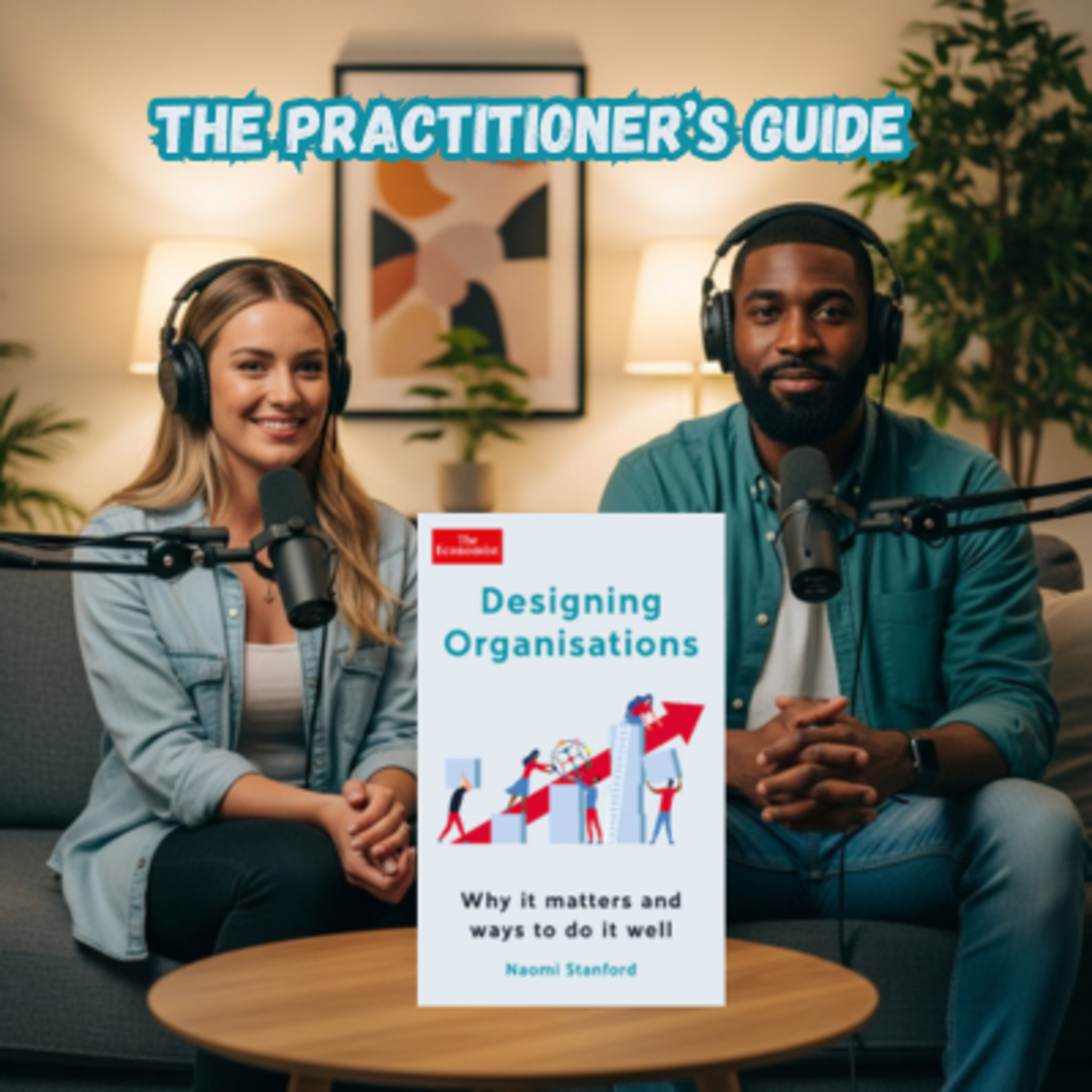
In a world of constant change, how do you build an organization that doesn’t just survive—but adapts, evolves, and thrives? In Organization Design: The Practitioner’s Guide, Naomi Stanford offers a masterclass in reshaping companies to be more agile, ethical, and human-centered.
This isn’t just theory—it’s a practical roadmap for leaders, consultants, and entrepreneurs who want to align structure with strategy, people with purpose, and culture with performance. From designing inclusive workplaces to leading through change, Stanford reveals how effective organization design can boost collaboration, decision-making, and long-term value.
Tune in as we break down the key principles and actionable steps that help organizations move from rigid hierarchies to responsive, resilient systems ready for the future.
If this episode opened your eyes to the power of design in leadership, follow BookTunez for more thought-provoking business insights every week. 🎧
Share this with a leader or HR professional who’s ready to redesign their organization for impact and inclusivity.
Because the best organizations aren’t just built once—they’re designed to keep evolving.
#OrganizationDesign #NaomiStanford #BookTunez #BusinessStrategy #LeadershipDevelopment #OrganizationalChange #AgileOrganizations #WorkplaceCulture #InclusiveLeadership #ChangeManagement #FutureOfWork
Welcome back everyone. We're diving into something super relevant today, organization design. Yes, the architecture of a successful company. Exactly. We're using Organization Design by Naomi Stanford as our guide, and she really emphasizes that it's about so much more than just like a basic hierarchy, you know? Yeah, it's about how all the pieces fit together. Yeah, how the company actually functions to reach its goals. She uses a really interesting example in the book. Imagine a tech startup that's experiencing crazy growth, right?
Oh, I can see where this is going. Suddenly that whole everyone wears multiple hats thing just isn't working anymore. Right, they need to start specializing, defining roles, maybe even create entirely new departments. And that's where organization design comes in. It's. Fascinating how Stanford emphasizes that this isn't just a one time fix though. Oh. Absolutely. It's not like you just reorg once and you're good to go. It's an ongoing journey, kind of like She compares it to a retail chain expanding to new regions.
OK, I'm intrigued. New markets, new products, new customers, it all requires this constant restructuring and refinement. So they have to adapt their structure to keep up with all that growth. Exactly. It's a continuous process. It makes you think. Even in my own workplace, I can see how it's changed over time. Oh yeah, for sure. New roles pop up, depart, merge processes get streamlined. It's this constant dance of adaptation. It is, but you know all this change, it could become chaotic without someone guiding the process, wouldn't you say?
That's a great point. You need someone at the helm. Exactly. Stanford dives deep into the skills of a successful organization designer. What kind of skills are we talking about here? Well, strategic thinking is a big one, Yeah. It's not just about moving boxes around in an org chart. No, it's deeper than that. You have to understand the company's goals, their vision, and then figure out the structure that will best achieve those things. So it's like being an architect, but instead of designing a building.
You're designing the framework for an entire company. I like that analogy. She even gives an example of a company bringing in a consultant specifically to boost productivity through restructuring. And happens all the time. Sometimes you need that outside perspective, but I'm. Curious, where do you even begin with something so complex? That's where a clear starting point is essential, and Stanford really emphasizes this. OK, so what's the first step? You have to define your objectives, meaning what are you actually trying to achieve with this redesign?
Yeah. Is it about boosting productivity? OK. Yeah. Improving communication, Fostering growth. So it's like laying the foundation before you start building. Exactly. You need a blueprint. Didn't she talk about a midsize company reorganizing their departments in the book? She did. And you know what they did? First, they gathered employee feedback. Interesting. So they went straight to the source. They wanted to understand what was and wasn't working, identify the existing problems. And then? Then they set very specific goals for the redesign.
They didn't just jump into restructuring. They took the time to figure out what they were actually trying to achieve. Exactly. That makes a lot of sense. But let's say you've got those goals, you've got your blueprint. How do you go from those abstract ideas to like a concrete structure? That's the real design phase. Stanford gives this great example. A growing online retailer wants to improve their customer service. OK, a common challenge. They could just say we need better support thought they go deeper.
They define workflows, create specialized teams for different issues and even introduce roles like Customer Support manager. So they're translating those big picture goals into actual roles, responsibilities, processes. Exactly. That's design thinking in action. And what I find so interesting is how this then impacts the customer experience, right? Huge impact. It's something we can all relate to, even outside of like the corporate world. For sure, good design makes a difference everywhere. So we've got this amazing new structure, but now what?
How do we actually get everyone on board? That's where transition comes in, and let me tell you, it can be tricky. Oh, I can imagine. Stanford actually dedicates a whole chapter to it. She stresses the importance of a smooth transition because because even if your new structure is better, if the rollout is bumpy. People are going to resist it. Exactly. It can lead to all sorts of problems. Well, I've been through some reorgs that were not handled well. It's painful. So what does she recommend? Yeah, what's the secret?
Well, she uses the example of a tech company developing a new structure. OK, they realized they needed a detailed plan with timelines, clear communication to keep employees informed, training programs for new roles. So you're not just throwing people into the deep end? Nope. You need support systems and even contingency plans for potential hiccups. Like what? Think of it like moving a whole office. I see you need boxes, labels, a truck. Maybe some pizza for when everyone's exhausted. Exactly. You can't just expect everyone to teleport to this new structure without guidance or support.
It's a process. A very human process, but you know, even when you get past the initial move, it's not over, is it? That's what I was thinking. Is there ever really an end to this? You're right, optimization doesn't end after the transition. Stanford emphasizes ongoing refinement. So are we talking constant restructuring? Not necessarily. Think of it like fine tuning an engine. Little tweaks. Here and there you're constantly making small adjustments to improve performance. So what does that look like practically?
Well, she uses an example of a manufacturing company. They've just finished a big restructure. OK, Do they just sit back and relax? I'm guessing not. No way. They start gathering feedback, analyzing performance data, trying. To find any kinks in the system. Exactly. Maybe they need to tweak a process. Maybe a certain department needs additional support. Or maybe a role isn't quite working as intended. It happens. So it's more about continuous improvement. It is, and you know that's a concept anyone can apply.
Absolutely. Whether you're running a company, managing a team. Even just trying to be more productive in your own life. It's a great mindset to have, yeah. But you know, we've talked about structures, data, all that, right? But there has to be more to it than that, right? What are you? Thinking what about the human? Element. Oh, that's essential. You can have the most brilliant structure in the world, but. If the people aren't on board. Going to fall apart. Stanford dedicates a whole chapter to this the role of leadership, communication, engagement.
Because you can't just dictate change. Nope. People need to feel involved. It's like having a beautifully designed car with no engine. Perfect analogy, yeah. What good is it if it can't actually go anywhere? Exactly. And that's where leadership comes in. Leaders have to set the tone. They need to communicate the why behind the changes, explain the impact on staff, highlight the benefits of the new design. Make people feel like they're part of the solution. Stanford gives this compelling example of a healthcare institution undergoing a major reorganization.
Wow. Healthcare high stakes. Absolutely. And they were doing this to improve patient care, so really important stuff. In that kind of environment, clear communication is essential. You said it, and in this example, the leaders actively involve employees throughout the entire process. They provided regular updates, held feedback sessions. Wow, so they really made an effort to make sure everyone felt heard. They did and understood because ultimately organizational change is about people. Exactly. You're asking people to adapt, sometimes in really big ways.
So they. Need to understand why it matters. And feel like they're part of the process. Makes sense. It's not just about avoiding chaos during the transition. It's about creating an environment where people feel valued, empowered, motivated to contribute their best work. Which brings us to a pretty crucial question. I like where this is going. So given all this, what would you say is the biggest challenge to successful organizational change, especially in today's, you know, fast-paced world? That's a good question, especially after diving into all these concepts.
You know, there's so many things to consider, but I think it always comes back to people. People, you can have the most elegant structure, the most efficient processes, but if you don't have the right people in the right roles, and if those people aren't engaged and motivated, it all kind of falls apart, you know? We're absolutely right. It's about creating an environment where individuals can actually thrive, where they feel valued, empowered to contribute their best work. Exactly. It's not just designing a structure, it's designing an experience, one that should be like positive and empowering for everyone.
Couldn't agree more. Thinking about this whole journey of organization design, what are some of the key takeaways from the book that really stood out to you? Well, one of the biggest ones is definitely the emphasis on continuous improvement. Scanford really drives this point home. It's not about finding that perfect design and just sticking with it forever. The business landscape is constantly changing, technology is evolving, so organizations need to be ready to adapt. Adapt. Exactly. And that ties into another big take away flexibility.
Oh, interesting. Stanford talks about how organizations need to be built to handle unexpected challenges to be able to seize new opportunities as they come up. That makes a lot of sense, especially today. Everything's moving so fast, you know, new technologies, new market trends, even global events you couldn't have predicted. Exactly. You have to be able to adjust. And that's where leadership plays such a critical role, don't you think? Oh, for sure. They need to foster a culture that embraces change, that encourages experimentation.
A culture where people feel empowered to adapt and innovate. It's not just about reacting to the present, it's about anticipating the future and designing an organization that's ready for. Whatever comes next, yes. Ready for the unknown? Because let's face it, the unknown is coming, whether we like it or not. Exactly. It highlights the proactive nature of good organization design. Stanford really encourages leaders to think ahead to anticipate those future trends and design their organizations to be prepared for those potential challenges.
But you can't predict everything. Of course not. The future is never completely predictable. So it's a balance then between having like a solid structure and being flexible enough to adapt when those unexpected curveballs come your way. You got it. Too much rigidity and the organization can't respond to change. Too much flexibility. And you risk chaos. Chaos and inefficiency. It's about finding that sweet spot. OK, so if I'm trying to wrap my head around all this, would you say successful organization design boils down to, let's see, defining clear goals, gathering information and understanding the current state, Designing a structure that aligns with those goals, Managing the transition smoothly?
Don't forget that one. Constantly optimizing and refining the design. It never ends. And of course, strong leadership and communication throughout the entire process. That's a fantastic summary. You really capture the essence of it. And remember these principles, they could be applied at multiple. Levels right? Totally. Like from huge corporations. Into small teams. Even personal projects. That's what's so cool about it. It's like a toolkit anyone can use to create a more effective, adaptable structure, no matter what they're building.
Actually makes me think about those early stage startups we talked about earlier. Oh. Interesting. How so? They might not have a like formal organization design process, right? But they're inherently going through these steps as they grow, aren't they? You're absolutely right. They're figuring out their goals, experimenting with different roles, and constantly adapting as they learn what works. It's like organization design in its most organic form. I like that. But as a company scales, that organic approach might not be enough anymore.
You. Hit the nail on that on the head. At some point they need a more deliberate, strategic approach to design. And that's where having someone with expertise in this area can be so valuable, right? Totally. They can help guide the process, avoid those common pitfalls, and ensure the structure is aligned with the company's long term goals. It's like having an architect help you design your dream home. Perfect analogy. They have the experience, the knowledge. And they can help you create something truly special.
Exactly. And it really highlights how how important it is to have someone who understands those nuances of organization design. For sure. It's not just about rearranging boxes on a chart, it's about understanding how those changes impact. People processes. The success of the entire organization, Yeah. And Speaking of impact, we talked about transitions. But there's another key concept Stanford brings up contingency plans. Oh, contingency plans, Yeah, those are crucial for navigating the unexpected.
So basically backup plans for when things don't go as smoothly as you'd hoped. Exactly. It's like having an insurance policy for your organization. You might not need it, but if something goes wrong. You'll be glad you have it. You got it. So it's about anticipating those potential problems and actually having a plan in place to address them. OK, so like what kind of things are we talking about here? Well, she gives this really great example in the book. She talks about this manufacturing company and they're implementing a new inventory management system.
Oh wow. As part of a bigger reorganization. Right, makes sense. But they knew, they anticipated that there might be some pushback from employees. Yeah, I can see that happening. People who were used to the old system. Totally. Change is hard. Exactly. So they developed this whole training program specifically designed to address those concerns. Oh, that's smart. To help people get comfortable with the new technology. So it's not just about having like a Plan B for when things go wrong, right? It's about like, anticipating those potential roadblocks and proactively addressing them.
You got it. And that level of foresight can make a huge difference. Oh yeah, And how smoothly a transition goes, for sure, And how quickly the organization can start reaping the benefits of that new design. It all comes back to that human element. Huh. It does. Change can be unsettling for people, so it's important to manage it in a way that minimizes disruption, you know? To support the people who are going to be affected. Absolutely. It's almost like you're not just designing a structure, right?
You're designing an experience for the people who are actually going to be working within that structure. That's a great way to put it, and the more you can anticipate the needs and concerns of your people. The better it's going to go. The more successful that experience will be. This has been so fascinating. It has to really like, unpack all of this with you today. I know. I feel like we've gone beyond just like summarizing the book we have. We've really explored those core principles of organization design.
Yeah. And how they can be applied in so many different contexts. It's been a pleasure diving deep into these ideas with you. Likewise. I hope our listeners are walking away with a deeper understanding of not just how organizations are structured, but why it matters. Absolutely. It's not just theoretical, no, it have real world implications for businesses, for teams, even for our own personal lives. It does. So as we kind of wrap up this deep dive into organization design, yes. Is there a final thought that you want to leave our listeners with today?
Ooh, that's a good one. I would encourage them to really embrace this idea that organization design is a journey, not a destination. You know, I like that the world's constantly changing. It is, and organizations need to be ready to adapt. Adapt or die, right? Well, maybe not die, but you know. Become obsolete. There you go. But by understanding the principles we've discussed today and being willing to experiment and refine their approaches, they can create structures that are not only efficient but also really empowering for everyone involved.
That is a fantastic take away, thank you. It's about being proactive, being adaptable, and ultimately creating organizations that can thrive in the face of change. Well said. And on that note of embracing change, yes, we're going to wrap up this episode of The Deep Dive. It's been fun. A huge thank you to Naomi Stanford for providing such an insightful guide to this world. Yes, thank you, Naomi. And of course, thank you to you, our listeners. We appreciate you for joining us on this journey of discovery.
It's been a pleasure diving deep with you all. Until next time, keep those minds curious. And those organizations thriving.
 Apple Podcasts
 Castbox
 Castro
 Goodpods
 Moon FM
 Overcast
 Pocket Casts
 Podbean
 Podcast Addict
 Podcast Republic
 Spotify