Little Book of Mindfulness by Patrizia Collard
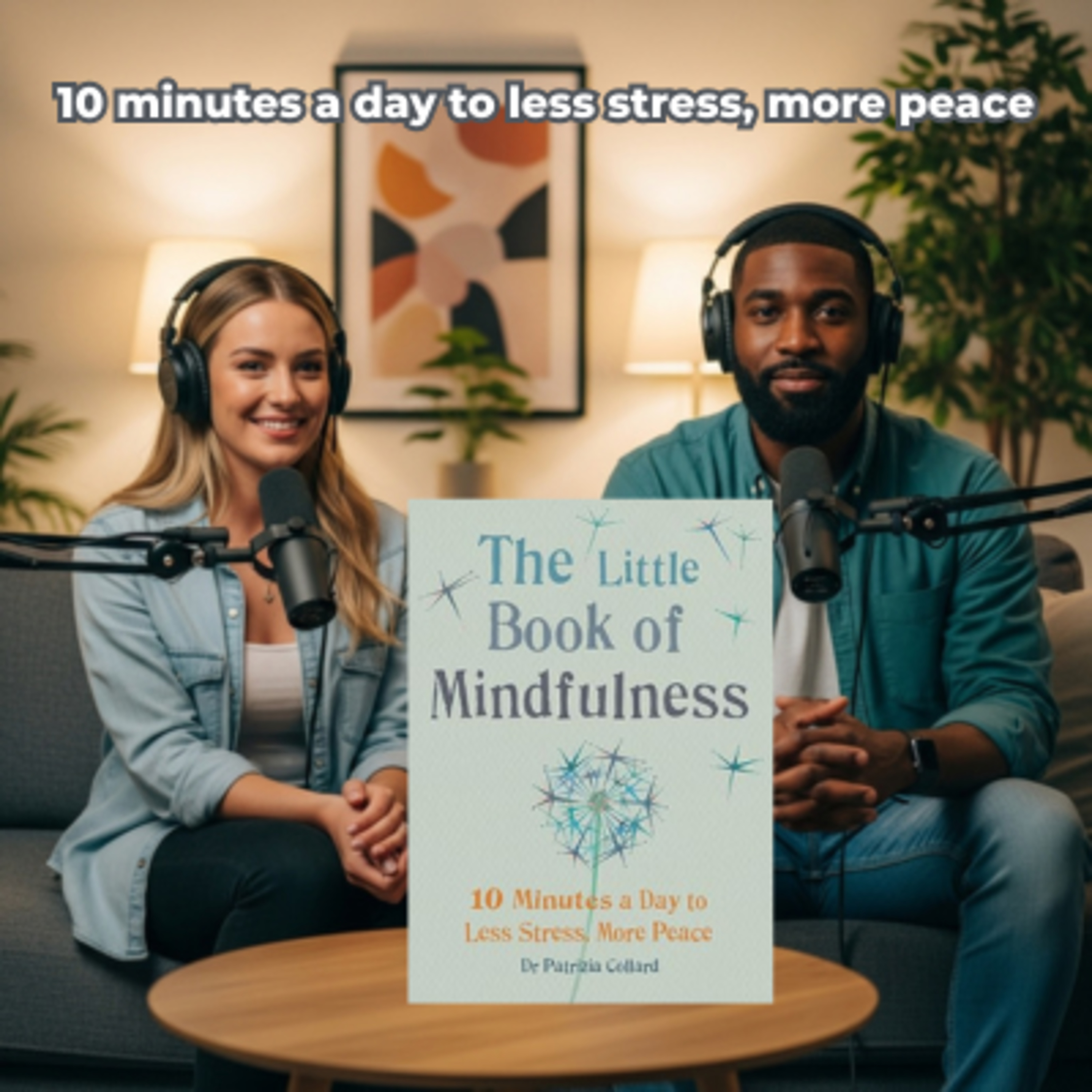
This episode provides a summary of Dr Patrizia Collard’s book, which serves as a practical guide for incorporating mindfulness into a hectic modern lifestyle. It outlines several core lessons, such as living in the present moment, practicing gratitude, and adopting mindful eating habits to enhance daily well-being. The text encourages readers to accept uncontrollable situations calmly and to view their own negative thoughts with critical detachment rather than blind belief. By focusing on simple breathing exercises and routine tasks, the author suggests that anyone can achieve greater mental clarity and emotional balance. Ultimately, these teachings highlight that small, intentional shifts in awareness can significantly reduce stress and foster a deeper sense of peace.Mindfulness is the easy way to gently let go of stress and be in the moment.
It has fast become the slow way to manage the modern world - without chanting mantras or finding hours of special time to meditate.
Dr Patrizia Collard will show you how to bring simple 5- and 10-minute practices into your day in order to free yourself from stress and, ultimately, find more peace in your life.
This beautifully illustrated book will set you and your family on the road of mindfulness so you can lead a more mindful, peaceful and relaxed life. Find long-lasting happiness with The Little Book of Mindfulness!
CONTENTS:
1. Being in the Now
2. Accept and Respond
3. Making Your Mind Up
4. Simply Be
5. Mindful Eating
6. Gratitude and Compassion
7. Everyday Mindfulness
#LittleBookOfMindfulness #Mindfulness #PatriziaCollard #MindfulLiving #PresentMoment #MentalWellness #StressRelief #SelfCare #MindfulnessPractice #Wellbeing #PersonalGrowth #BookSummary #InnerPeace #EmotionalWellness #MindfulLife
You are sitting at the dinner table with your family. You know you are physically in the chair looking right at them, right? But you haven't heard a single word anyone has said, and you have absolutely no idea what the food in your mouth actually tastes like. Yeah, you're chewing on autopilot. Exactly. Because mentally, yeah, you are 1,000,000 miles away. You're running 1,000,000 miles a minute, stressing about like an e-mail you have to send tomorrow morning. Oh wow, yeah, that hits close to home.
Right. You are suffering from this, this illusion of presence, and you just desperately want to find a button somewhere to hit pause on your own life. It is an incredibly uncomfortable, yet you know, completely universal modern feeling. That profound sense of being constantly in motion, physically present in a room, but entirely absent from your own life. That exact feeling is why we are doing this today, why we're jumping right into our source material. We are looking at the Little Book of Mindfulness Lessons for Daily Calm by Doctor Patrizia Collard.
It's a fantastic little book. It really is, and our mission for this deep dive is highly specific, like we want to extract the most actionable, surprising, less simple tools from her work. Just the really practical stuff. Right. We are looking for the mechanisms that can genuinely bring a sense of balance, clarity and calm to your very busy life without adding yet another massive chore to your already overflowing To Do List. Which is, I mean, that's a crucial distinction. We need to clarify right at the top what this deep dive is not about.
OK, yeah, lay it out. Because the moment you hear the word mindfulness, it is so easy to roll your eyes and picture. Like buying an expensive meditation cushion. Oh, absolutely. Or burning incense, right? Or needing to retreat to a silent mountain ashram for two weeks. Which nobody has time for. Exactly. That is definitely not what Collard is advocating here. This is a highly practical, gritty guide to living with less stress in the actual real world. So no mountaintops required. No mountaintops.
We are talking about finding calm while you were at work in your messy kitchen or, and this is a big one, even when you are literally trapped in bumper to bumper traffic. OK, let's unpack this, because the first major theme we encounter is a fundamental rethinking of the where and the when of mindfulness. Yeah, that paradigm shift. Right. And I have to be honest here, I am totally guilty of treating mindfulness like going to the gym. Oh, that's a really good way to put it. Like a chore. Exactly.
I view it as this separate, somewhat grueling activity. It is this thing I have to somehow carve out an extra 30 minutes for, put on the right clothes for. And then what happens? Well. Then my schedule blows up, I can't find that time, and I just feel intensely guilty about failing at it. Right. You feel like you failed at relaxing, yes. So does this framework essentially prove that whole gym assumption wrong? It completely dismantles it. I mean, the gym analogy implies that Peace of Mind requires a separate location and scheduled time, right?
But Collard introduces a concept called everyday mindfulness which argues the exact opposite. So it's not a scheduled event. Not at all. You do not need to carve out an extra 30 minutes because you can weave mindfulness directly into the mundane tasks you're already forced to do every single day. So no extra time required. Tired, but how does that actually work in practice? Because if I am scrubbing a pan, I am just trying to get it over with. Let's use that exact example. Take washing the dishes.
OK, normally when you're standing at the sink, it is merely a physical obstacle standing between you and the couch, right? 100% it's just a barrier to Netflix. Exactly so. Your hands are moving, but your mind is racing. You are drafting emails in your head or replaying a frustrating conversation you had yesterday. Yeah, you are anywhere but at that sync. Right, the task is on autopilot so my brain can go worry about more important things. Exactly. But the suggestion here is to deliberately flip that dynamic.
Instead of letting your mind run wild into the future or the past, you force your focus entirely onto the physical sensations of the task. At hand. Wait, like really focusing on the dishes? Yeah, you deliberately feel the warmth of the water on your skin. You actively listen to the sound of the plates clinking together. You notice the slippery texture of the soap. Oh, wow. And there is a similar example about brushing your teeth, right? Same logic. The exact same logic. You pay attention to the rhythmic sounds and the movements of the brush against your gums.
You consciously notice the minty taste. So you're just totally locked in on the mint. Right. And whenever a distracting thought about the day ahead pops up, you acknowledge it, let it go, and bring your attention right back to just brushing your teeth. See, that sounds almost too simple. It does, but it's powerful. But there is an observation here about modern life that really struck me, explaining why something so simple is actually so difficult for us. Yeah, we're not wired for simple anymore.
Right, we are quite literally, always doing something. We are working, checking our phones, running errands. Endless stimulation, yeah. You have a massively busy day. You finally get home. You sit down on the couch and what happens? You immediately feel this burning anxious need to check your e-mail or. Start making a grocery list. Or scroll social media. It feels impossible to just transition into REST. Yes, the inability to tolerate a lack of stimulation. And the fix suggested for this is fascinating.
Fascinating. You are supposed to set a timer for just 5 minutes to do absolutely nothing. Just 5 minutes. No phone, no work, no lists, just quiet time. But I have to push back on this on behalf of anyone listening who is highly stressed. OK, let's hear it. If I set a timer and just sit on my couch doing nothing for 5 minutes my anxiety is going to spike. I'm just going to be hyper aware of the laundry I am not doing. How is doing nothing supposed to help? What's fascinating here is the underlying mechanics of that 5 minute break, and why it feels so incredibly uncomfortable at first.
Because it definitely feels uncomfortable. Absolutely. In our productivity obsessed culture, our brains are heavily conditioned to view sitting and doing nothing as wasted time or even a threat to our survival. Wow. So we first sit down. Of course your anxiety spikes. That is literally the withdrawal symptom of a constantly stimulated brain. OK, that makes a lot of sense. But allowing yourself to push through that initial discomfort and just be is actually a radical, necessary reset. So. It's not a waste.
No, you aren't wasting time. You are physically halting the endless cycle of sensory input and cognitive output. You are giving your nervous system permission to stand down. And exit the fight or flight mode. Exactly, even if it is just for a few brief minutes. Here's where it gets really interesting, because once you understand the value of that five minute reset, or the value of being elbow deep in warm dishwater, you have to figure out how to consistently pull your wandering mind back into that present moment.
Which is not easy. No, because as we just established, wrestling your own attention away from tomorrow's problems is incredibly hard. It is the absolute core challenge of the human condition. Which brings us right back to that dinner table scenario we started with. Yes, the illusion of presence. You are physically at the table, but mentally you are completely hijacked by tomorrow's stress. You are missing the laughter across the table. Exactly. You aren't tasting your meal. How do we break that illusion when our brain so desperately wants to time travel?
Well, the solution Collard presents is deeply biological, OK? Genuine peace comes from experiencing the now, and the only vehicle you possess that actually exists in the now is your physical sensory system. So like the five senses, Yeah. Your physical senses are your anchor. Because my brain can simulate what might happen next week, but my hands can only feel what they are touching right this exact second. Precisely. Your physical body cannot time travel, so to snap out of your worries you have to physically ground yourself.
So how do we do that? A great example from the material is taking a walk. Yeah, if you are walking and caught in a spiral of anxiety, you don't fight the thoughts, you shift your attention to the concrete beneath your feet. Oh, so you just focus on the physical contact? Right. You actively notice the temperature of the air hitting your face. You tune into the ambient sounds of the neighborhood. And this physical grounding completely reframes the dinner table scenario, especially regarding mindful eating.
This was a massive take away for me. Mindful eating is huge. Think about how often we eat dinner while simultaneously scrolling through a feed on our phones. Or watching a loud television show. In those moments, your attention isn't on the food at all, it is entirely surrendered to a screen. Completely surrendered. And the mechanical result of that is that you do not actually taste the meal you are eating. And worse, because your brain is distracted by the screen, it misses the biological signals from your stomach.
So you overeat. Yeah, you don't even notice when you are full. You just keep blindly shoveling food into your mouth on autopilot. It's so. True, the incredibly practical fix here is to put the phone in another room entirely, turn off the television, and actually savor the experience. Pay attention to the complex flavors. Right. The textures, the specific smells of each individual bite. Not only do you actually get to enjoy the meal you paid for or cooked, but you naturally stop eating when you were truly satisfied.
Because you were finally listening to your own body. Exactly. The underlying logic tying The Walking and the eating together is brilliant. As we said, your physical senses, taste, touch, smell, hearing, sight, only operate in the present tense. They don't know the future, no. You cannot physically taste a meal you are going to eat next Tuesday. I wish I could. Right. And you cannot physically feel the pavement you walked on three years ago. By deliberately forcing your focus on to the taste of your dinner or the ground under your shoes, you are physically cutting off your brain's processing power to worry.
That's amazing. You're cornering your mind into the only place where future stress literally cannot exist. The present moment. So what does this all mean when things go horribly wrong? What? Do you mean? Let's be brutally honest for a second. It is relatively easy to be present and mindful when the moment involves feeling soothing dishwater or eating a fantastic meal or taking a stroll on a breezy day. Sure, when the present is nice. Right. But what happens when the present moment is an absolute, undeniable disaster?
We can't exactly just focus on the lovely texture of our food if we are in the middle of a life crisis. And that is the crucial pivot in this entire philosophy. We have to move from physical grounding to mental framing. OK because you are absolutely right. Sometimes the now is highly stressful and focusing on your physical senses won't fix a broken down car. It really won't. To navigate those moments, we are introduced to a mental framework called Accept and Respond. Accept and respond. And it revolves entirely around a single vital question you have to train yourself to ask in a stressful moment.
Can I control this? Which is a tough pill to swallow, because usually the honest answer is no. Often, yes. Think about the classic scenario being stuck in gridlock traffic when you are running late for an incredibly important meeting. Oh, the worst you. Were sitting there watching the clock tick past the start time and the natural physiological reaction is to get incredibly angry. Oh, your heart rate spikes. You grip the steering wheel. You seethe. Exactly. But let's apply the question can you control the traffic?
No. No getting angry. Elevating your blood pressure does not make the cars in front of you move one inch faster. Oh, but it's not like I can just turn off the anger like a light switch. What am I supposed to do instead of seething? You accept the unchangeable reality of the situation. You acknowledge I am stuck. Just say it out loud. Yeah. And then you deliberately shift your focus away from the uncontrollable obstacle and entirely on to what you can control, which is your response. So actionable steps.
You can choose to calmly call your office to say you will be late managing your expectations. Or instead of sitting in silence fuming, you can use that trap time to listen to a deep dive like this one. I love that. You reclaim your agency in a situation where you previously felt helpless. There is another fantastic example of letting go of control involving weather. Oh, the picnic example. Yes, you spend weeks planning a beautiful outdoor picnic. You get the food ready, you go to the park, and right as you are laying out the blanket, it just starts pouring rain.
You cannot control the weather. You can sit in the car and be miserable, ruining the afternoon for yourself and everyone else. Or you can accept the rain, let go of the rigid expectation, and actively choose to have an indoor picnic on your living room floor instead. It is entirely about reducing the friction between what you want to happen and what is actually happening. Yeah, that friction is painful. Suffering lives in that friction. And a huge part of reducing that friction is dealing with our own internal monologue, which the material calls Making Your Mind Up right.
It introduces this incredibly powerful, albeit difficult, concept. Thoughts aren't facts. That is a profoundly difficult concept for human beings to grasp simply because our thoughts feel so authoritative. They really do. They originate in our own brains, so we implicitly trust them. Exactly, we assume that if we are thinking it, it must be true. I was trying to wrap my head around this and the best analogy I can come up with is comparing our negative thoughts to spam emails. Oh, I like that. We have all gotten those emails in our inbox right?
The ones that say your bank account has been compromised or a foreign Prince wants to wire you $1,000,000. Yes, the classic phishing scams, right? Now, just because that spam e-mail successfully landed in your inbox, you don't automatically open it, read it, and blindly wire your life savings away. Obviously not. You look at it, you recognize that the sender address is a bunch of random numbers. You realize it is junk and you delete it. You don't let it ruin your day, right? But when her own brain sends us a panic alert, we don't check the sender.
We just click the malicious link and let the anxiety download. That is a phenomenal way to visualize it. The scenario provided here is having a big presentation coming up at work. You are preparing and suddenly that little voice in your head chimes in and says you are completely unprepared. You are going to mess this up and everyone is going to judge you. And we panic. If we treat that like a fact, we spiral into a panic attack. But instead, the lesson is to pause and interrogate the thought. Like a suspicious e-mail.
You ask yourself, is this thought actually helpful? Is there any evidence that this thought is true? Interrogate the thought. And then you literally label it. You tell yourself that is just a thought, it is not a fact. By labeling it, you strip it of its power, dismiss it as spam, and return to your preparation with confidence. If we connect this to the bigger picture, what Collard is really teaching here is a redefinition of power. How so? True control in life isn't about bending the unpredictable external world to your will.
You cannot control the traffic gridlock right, You cannot control the rain clouds, and frankly, you cannot even always control the random anxious thoughts that pop into your own head. No matter how hard we try. True control is entirely about mastering your internal response to those triggers. It is recognizing that while you do not choose the stimulus, you absolutely own the reaction. And mastering that reaction leads us perfectly into the final major step of this framework. The kindness buffer.
Yes, because once you know how to neutralize those negative thoughts, once you delete the spam e-mail and accept the bad situation, you can't just leave a void. You have to actively replace that neutralize negativity with grace. That's a beautiful way to phrase it. This is called the kindness buffer and it relies heavily on gratitude and self compassion. And to illustrate this, there is a nightmare scenario that I know for a fact every single person listening has experienced in some form. Ah yes, the infamous coffee spill.
The coffee spill. Imagine it, you are rushing. You have a massive career defining meeting in exactly 10 minutes and you somehow spill hot coffee all over the front of your crisp, clean shirt. Just reading that stressed me out. Let's be real, in that moment I am not thinking about mindfulness. My immediate default reaction is brutal self criticism. I'm calling myself clumsy. I'm calling myself stupid. I am furious with myself. This raises an important question. Why are we so universally cruel to ourselves in moments of accidental failure?
Why are? We the evolutionary default of the human brain is to hyper fixate on the negative as a survival mechanism, but in modern life that just translates to self abuse over a stained shirt. It's so. Disproportionate. The practice here urges us to intercept that default reaction. In that exact moment of panic, consciously choose to treat yourself the way you would treat a good friend. A. Good. Friend, if your best friend spilled coffee on themselves right before a meeting, you wouldn't stand there yelling at them and calling them an idiot.
No, of course not. You'd hand them a napkin and try to calm them down. Exactly, you would say, take a breath, it's OK, accidents happen, let's figure this out. We are being asked to be just as gentle and forgiving with our own mistakes. And it goes one step further, pushing beyond just forgiveness and actually bringing gratitude into that messy, stressful moment. Which is hard. Which again, sounds wildly difficult. You are standing there with a ruined shirt, panicking about a meeting, and you are supposed to find something to be grateful for.
But it works. But the examples show how it changes your perspective. You actively look for a silver lining, like being thankful that you work with supportive Co workers who will just laugh off the stain with you. Or realizing you are incredibly lucky because you happen to toss a backup gym shirt in your car that morning. Exactly, it's totally flipping the script. It is about forcefully changing the lens through which you view the stressor. Instead of a catastrophe, it becomes a manageable inconvenience.
And to build that specific reflex to rewire your brain so it automatically looks for the positive instead of instantly defaulting to the catastrophic. There is a very specific daily challenge recommended. The daily gratitude habit, yes. Collard recommends making it a non negotiable daily habit to think of exactly 3 things you are grateful for every single day. Three things. I know that can sound a bit cliche, but neurologically it is profound. You are systematically training your brain to scan your environment for the good, rather than constantly bracing for the bad.
You are basically building up that mental muscle in times of peace so that the reflex is already there when the coffee inevitably spills in times of stress. Precisely, it is preventative maintenance for your mindset. Which really brings us back to the core thesis of this entire deep dive. When we look at everything we have extracted from the Little Book of Mindfulness, the absolute most comforting take away is that finding calm doesn't require you to uproot your existence. No, not at. All you don't have to quit your job, move to the woods and adopt massive, sweeping lifestyle changes.
The entire philosophy is built on micro adjustments. Right. The biggest realization here is that profound balance and joy don't come from a week long silent retreat. They come from incredibly small, almost invisible shifts and how you interact with your day. It is having the courage to set a timer for a 5 minute break to do absolutely nothing. It is consciously noticing the warmth of the dishwater on your hands instead of worrying about tomorrow's inbox. It is having the self-awareness to pause, interrogate, and dismiss a negative thought about an upcoming presentation like it's a spam e-mail.
And it is choosing to be kind and forgiving to yourself when you spill your coffee. Powering realization that peace is readily accessible in the mundane reality of your current. Life. Exactly. And the best part of all of this is that you do not have to wait until tomorrow or until your schedule clears up to start. You can start right now. You can start this very second. You can start just by noticing the feeling of the ground under your feet wherever you happen to be sitting or standing right now, or by taking one slow, intentional deep breath as this audio comes to an end.
And I think that leads to a final thought worth pondering, building on everything we've explored today. Leave us with it. We live in a modern world that is practically engineered to constantly steal our attention. Our phones buzz relentlessly. Our inboxes ping, our to do lists are endless and demanding. They really are. In a landscape like that, choosing to put the phone down and be fully present for just a single bite of food, or giving your undivided attention to a brief conversation with your family, Well, maybe that isn't just a simple Wellness trick.
Yeah, maybe in today's chaotic world, finding that ause button and choosing to inhabit the present moment is the ultimate act of reclaiming ownership over your own life.
 Apple Podcasts
 Castbox
 Castro
 Goodpods
 Moon FM
 Overcast
 Pocket Casts
 Podbean
 Podcast Addict
 Podcast Republic
 Spotify