How to Deal With Difficult People: Smart Tactics for Overcoming the Problem People in Your Life
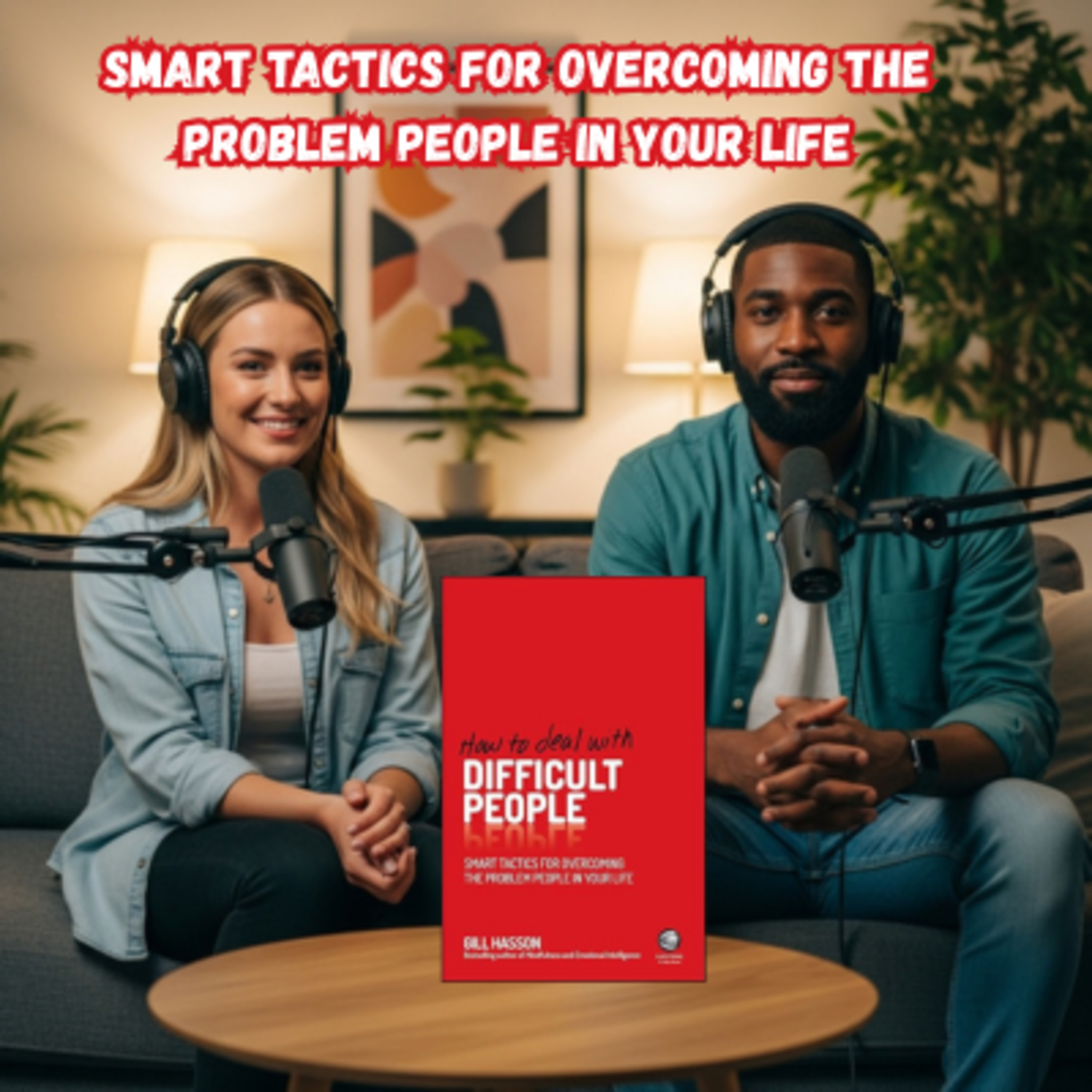
Difficult people are everywhere—at work, at home, and sometimes in our own circle of friends. In How to Deal With Difficult People, Gill Hasson offers practical, compassionate, and strategic tools to stay calm, confident, and in control no matter who you’re dealing with.
In this episode, we explore why certain personalities trigger us, how to set boundaries without guilt, and how to protect your peace in emotionally charged situations. From overly critical family members to manipulative coworkers, you’ll learn how to understand their behavior, choose your responses wisely, and walk away when necessary.
This isn’t about changing difficult people—it’s about changing how you handle them. And that’s where your power lies.
#HowToDealWithDifficultPeople #GillHasson #BookTunez #EmotionalIntelligence #CommunicationSkills #Boundaries #ToxicPeople #ConflictManagement #SelfControl #StressManagement #PersonalGrowth
If this episode helped you take your power back, follow BookTunez for more life-changing communication and emotional resilience insights every week. 🎧
Share this with someone who’s dealing with a challenging person—and remind them: you can’t control others, but you can master yourself.
Your peace is worth protecting.
Ever wish you had like, a tool kit, you know, for handling those tricky relationships, the ones that always seem to pop up? Well, today we're going deep into Gil Hassan's How to Deal With Difficult People to unpack exactly that. Yeah, And you know, what's so fascinating about this book is it's not just like a bunch of quick fixes. It really digs into like, the psychology behind why people act the way they do, and it gives you practical strategies to not just survive but thrive, you know, in those challenging situations.
OK, so one of the things that really jumped out at me was Hassan's focus on shifting focus from the person to the behavior instead of saying, oh, they're difficult, you 0 in on the specific actions that are causing the friction. And that's actually rooted in some pretty powerful psychology because when we label someone like that, our brain immediately goes into like this threat response mode. And then it makes rational problem solving almost impossible. Interesting. But when you focus on the behavior, you kind of depersonalize the conflict, right?
And that opens up a space for communication. So it's like taking the heat out of the situation before it even has a chance to boil. Over exactly. She uses this great example of Sarah and Jack in a meeting. So Sarah's constantly getting interrupted by Jack and it's driving her crazy. But instead of blowing up right, she realizes that it's not Jack himself that's the problem, it's the interrupting. Exactly. And that realization allows her to address the issue right without making it a personal attack.
Right. She might say something like, Hey, Jack, I've noticed that you've been interrupting me during these meetings. Yeah. And it's making it hard for me to, like, share my thoughts. Can we maybe find a way to work on this together? And what's so interesting is that Jack wasn't even aware he was doing it right. It makes you wonder how many of us are contributing to difficult dynamics without even realizing it. For sure. Which brings us to another key take away from the book. OK, self-awareness. Hassan really drives home this point that sometimes we are the ones unknowingly making things harder.
Yeah, we might be doing things that trigger negative reactions in others, or we might be misinterpreting their intentions. Yeah, it's like that whole you can't see the forest for the trees thing, right? You're so focused on the other person being difficult, right, that you miss your own role in the dynamic. Yeah. Has some use of the example of Alex and Emma, who just can't seem to communicate effectively. OK, Alex is convinced that Emma is the problem, but then he starts to realize that he's constantly interrupting her and not listening.
And it's not about placing blame, it's about taking responsibility. Absolutely. So Alex realizes that if he wants things to change, he needs to change his behavior. And even small adjustments like making a conscious effort to listen more intently or reflecting back what Emma is saying can make a huge impact on the whole dynamic. I haven't. Thought about it that way, but it makes you wonder if sometimes those difficult people are actually mirroring back some of our own blind spots. That's a good point.
Now, Speaking of communication, that seems to be a recurring theme in the book. Hassan dedicates a whole section to how the way we communicate can either escalate or de escalate a situation. Huge, right? Hassan even writes the way we phrase our concerns can be the difference between a productive dialogue and an all out war. Wow. So it's not just about what we say, yeah, but how we say it. It's about being direct, but also being mindful of our tone and approach. For sure. Hassan uses the example of Lisa and Dave, who are having this major disagreement about workflow.
OK, Lisa feels like Dave is being difficult, but when she steps back, she realizes that she's been approaching the conversation in a very accusatory way. It's all you did this and you did that. Right. And that immediately puts Dave on the defensive. But when Lisa shifts her language from you're wrong to let's explore some options, the whole dynamic changes. It becomes collaborative, you know, focusing on finding solutions together rather than assigning blame. I can see how that would make a huge difference.
It does. I'm guessing this is especially important when dealing with people who tend to get defensive easily. Yeah, it's about being assertive, but not aggressive. Exactly. And that leads us to another crucial skill has some highlights. OK, setting boundaries. And this isn't about being mean or controlling, right? It's about self respect and communicating your needs clearly. I'm really curious about this because I think setting boundaries can be tough. It can be. Especially if you're like a people pleaser.
Hassan gives this example of Mark, who's boss Susan has this habit of criticizing him in front of the whole team. It's humiliating and makes him feel totally undermined. And Mark's initial instinct is just to suck it up and avoid confrontation. But then he realizes that by not setting boundaries, he's essentially giving Susan permission to continue treating him that way. Exactly. So instead of getting defensive or snapping back, he decides to talk to Susan privately. OK. And he says something like, I appreciate your feedback, but I feel really undermined when it's given in front of others.
Could we maybe talk about this one-on-one in the future? He's stating his needs clearly and calmly, right? Without attacking or blaming Susan. And what's interesting is that Susan had no idea her behavior was having such a negative impact on Mark. It happens all the time. It goes back to that self-awareness piece, right? Sometimes people just aren't aware of how their actions are affecting others. Yeah, and a clear, respectful statement of boundaries can be a real wake up call. Definitely. So we've covered shifting focus, self-awareness, communication and boundaries.
That's a lot. Is there anything else we should unpack in this first part of our deep dive? Well, there's one more strategy that I think is particularly relevant for anyone who's ever dealt with passive aggression. Passive aggression. Confrontation. It's like the ultimate communication puzzle. It is, you know something's off, but you can't quite put your finger on it. Exactly, it's so frustrating. It's often used as a way to avoid direct conflict. Hassan uses the example of Anna who has a Co worker Rachel OK who is a master of the passive aggressive comment.
Oh yeah, Anna's is constantly annoyed, yeah, but she's not sure how to address it without things blowing up, right? So what does she do? Does she just ignore it and hope it goes away? Well, actually, Hassan suggests tackling it head on. OK, but in a way that encourages open dialogue. OK, so the next time Rachel makes a Snyder mark, Anna decides to address it directly. OK. She says something like, Rachel, I noticed you made a comment about my workload earlier. Do you have any concerns about it? So she's not accusing Rachel, she's just opening the door for an honest conversation.
Exactly. And I'm guessing Rachel was totally caught off guard. Yeah, but it actually worked. Wow. Rachel realized that Anna was being sincere and they were able to have a productive conversation about the root of the problem. That's great. It turns out Rachel was feeling overwhelmed with her own workload and just didn't know how to express it directly. Wow, that's a perfect example of how addressing the behavior rather than the person can lead to a real breakthrough. It is. Instead of getting stuck in a cycle of passive aggression, Anna and Rachel were able to get to the heart of the issue.
Exactly. It's about addressing the root of the problem, not just the surface behavior, right? And that can be so powerful in any relationship. I agree. So, you know, building on this whole idea of understanding the root of the problem, Hassen dedicates a whole section to recognizing different personality types. It's like having a CHEAT SHEET to decode why people act the way they do. Oh, that's fascinating because we've all encountered those classic difficult personalities, right? Like the Know it All who always has to be right?
Or the drama queen who thrives on chaos. Exactly, and instead of getting frustrated or trying to change them hasn't suggest understanding their underlying motivations. OK, so for example with a know it all, instead of getting into a battle of egos, you could try approaching them with curiosity. Ask questions, acknowledge their expertise and appeal to their desire to be seen as knowledgeable. So instead of saying you're wrong, you might say something like. That's an interesting take. Could you tell me more about why you see it that way?
Exactly. It's about finding common ground and validating their need to feel heard right. It might not change their personality, but it can definitely make the interaction less combative. OK, that makes sense. What about the drama queen or king? Those folks who always seem to be in the middle of some crisis. Yes, the masters of emotional turbulence. With them, Hassan advises staying calm and detached. Don't get sucked into their emotional vortex. So resist the urge to play therapist or get caught up in trying to fix their problems.
Right. It's about setting clear boundaries and refusing to engage in the drama. OK, you might say something like, I understand you're upset, but I'm not going to get pulled into this right now. That's a good one. I'm filing that away for future use. Yeah. Now there's another type that I think a lot of us can relate to. The victim, that person who always sees themselves as being wronged or taken advantage of. It's important to be empathetic with the victim, but also to avoid enabling their negativity.
Hassan suggests gently redirecting the conversation towards solutions. OK, instead of dwelling on the problems. So you might say, I hear how frustrating this is for you, but what are some steps you could take to address the situation exactly? It's about empowering them to take ownership instead of getting stuck in a cycle of complaining. OK, that's super helpful. And then of course, there's the controller, the one who always needs to be in charge and micromanages every detail. The control enthusiast?
Yes. With them, it's crucial to assert your autonomy and establish those clear boundaries we talked about earlier. Don't let them dictate your every move or make you feel like you have no control. So it's about standing your ground and saying this is my decision and I'm going to handle it this way. Precisely. And remember, it's not about being disrespectful, it's about respectfully but firmly asserting your own authority. What's so valuable about Hassan's approach is that it's not about putting people in boxes or labeling them as bad.
It's about understanding the underlying motivations that drive their behavior so we can interact with them more effectively. It's like that saying hurt people hurt people. Sometimes those difficult behaviors are really just a defense mechanism or a cry for help. Absolutely. Now beyond understanding personality types hasn't also provide some really practical communication strategies for navigating conflict. OK, one technique that stood out to me was the use of I statements. Oh yes, I've heard about those.
They're all about taking ownership of your feelings without blaming the other person, right? Exactly, so instead of saying you're always late and it's so disrespectful, you might say I feel frustrated when I'm left waiting because it makes me feel like my time isn't valued. That's a much less accusatory way of expressing the same feeling. It's about taking responsibility for your own emotional response without putting the other person on the defensive, right? And that shift in language can make a huge difference in how the other person receives your message.
Yeah, it creates a space for understanding and empathy rather than blame and judgement. This is making me realize how much our language shapes the way we experience our relationships. It does. It's not just about what happens, it's about how we talk about what happened. Precisely. And that brings us to another essential communication skill that has an emphasizes active listening. OK, so active listening is more than just sitting there nodding your head and pretending to pay attention, right? Definitely.
It's about truly being present and engaged in the conversation. It's about listening to understand, not just to respond. So it's about putting aside your own thoughts and judgments and really trying to see things from the other person's perspective. Exactly. And it often involves reflecting back what you've heard to make sure you understand. You might say something like. So what I'm hearing you say is. That not only shows that you're listening, but that you're making a genuine effort to understand their point of view, right?
And sometimes simply feeling heard and understood can be enough to de escalate a conflict. Another technique has and suggests is finding common ground. That's interesting, because even in the middle of a disagreement, there's usually some point of agreement, right? Absolutely, and focusing on shared goals or values can help shift the energy from combative to collaborative. So if you're arguing about how to handle a project, you might start by saying we both agree that the goal is to deliver a high quality product on time, right?
Precisely, it's about finding that common ground and using it as a springboard for finding a solution that works for everyone. That makes a lot of sense. It's like reminding yourselves that you're on the same team, even if you disagree on the strategy. Exactly. And finally, there's the importance of compromise. OK, it's rare that one person is completely right and the other is completely wrong. Right. Most situations are nuanced and there's usually some little ground to be found, but compromise requires flexibility and a willingness to let go of the need to be right all the time.
Absolutely. It's about finding a solution that meets both of your needs, even if it means not getting everything you want. So it's about understanding that sometimes a good solution is better than a perfect solution, especially if it preserves the relationship. Well said. I think what's so refreshing about Hassan's approach is that it's not about winning or losing, right? It's about finding a way to move forward that honors there's everyone involved. It's about recognizing that relationships are a two way St. Yeah, we have to be willing to give a little to get a little.
Exactly. Yeah, and sometimes that means having those cuff conversations, setting boundaries and advocating for our needs. But it also means being open to hearing the others perspective and finding a way to meet in the middle. As much as I love all these strategies for communication and understanding, you know there's a part of me that wonders, what about those situations where the other person just isn't willing to change? What about those truly toxic relationships that drain your energy and leave you feeling worse off?
That's such a good question. Yeah. And you know, while Hassan offers a lot of tools for like building bridges and improving communication, right, She also acknowledges that sometimes the healthiest choice is to walk away. That must be a tough pill to swallow, especially if it's a relationship. You've invested a lot of time and energy in it. Can be, but sometimes recognizing that you can't change someone who doesn't want to change right is a crucial step in protecting your own well-being. It's like trying to fit a square peg in a round hole.
Yeah, at some point, you just have to realize it's not going to work, right? But before we get to the point of walking away, Hassan talks about the importance of setting firm boundaries, especially when dealing with people who are consistently disrespectful or manipulative. And remember, setting boundaries isn't about controlling the other person, right? It's about protecting yourself. OK? Hassan uses this great analogy of offense. Oh, OK, Offense isn't meant to shut people out completely, right?
It's about defining your space and what you're willing to tolerate. That's a great visual. So how do we actually go about setting those boundaries? Is it as simple as just saying no more often? It can be that simple sometimes, but hasn't suggest being clear, direct and consistent. OK, so instead of beating around the Bush or hoping they'll get the hint, state your limits calmly and confidently. So, for example, if you have a friend who's constantly dumping their problems on you, but they never seem to have time to listen to your concerns, right, you might say something like, I care about you and I want to be supportive, but I also need time for myself.
I'm happy to talk for 15 minutes, but then I need to get going. Exactly. And what if they try to push back or guilt trip you or make you feel bad for setting that boundary? That's where the consistency piece comes in. Exactly. You have to hold firm, even if it feels uncomfortable. It's about recognizing that you have the right to protect your time and energy, right, and that saying no doesn't make you a bad person. It's about prioritizing your own well-being without feeling obligated to fix everyone else's problems.
Yeah, now what about those people who are masters of emotional manipulation? The ones who use guilt trips play the victim or even resort to veiled threats to get their way. Yes, the Emotional Puppeteers has some dedicates a whole section to recognizing those manipulation tactics OK and learning how to not fall prey to them. Because it's so easy to get sucked in, especially if you're someone who's naturally empathetic or conflict diverse. Absolutely. It's like they have the 6th sense for finding your emotional weak spots, right?
But Hassan reminds us that we have the power to choose how we respond, OK? We don't have to let their drama dictate our emotions. So instead of getting defensive or giving in to their demands, we can take a step back and say I recognize what you're doing and I'm not going to play that game. Exactly, and sometimes that might mean physically removing yourself from the situation. If the conversation is escalating and you're feeling yourself getting pulled in, just excuse yourself and say you need a break.
It's like taking a time out to regain your composure and assess the situation. Now, I know we've talked about walking away from toxic relationships, but that can't be an easy decision. How do you know when you've reached that point? That is the $1,000,000 question, and there's no one-size-fits-all answer, but Hassan suggests asking yourself a few key questions. OK, is this relationship consistently draining your energy? OK, are you constantly feeling anxious or stressed or resentful? Are you walking on egg shells or sacrificing your own needs to try and keep the other person?
Happy Exactly. And if the answer to those questions is yes, then it might be time to seriously consider whether this relationship is serving you. And that might mean having some very difficult conversations, setting some very firm boundaries right, or even ending the relationship altogether. It can be incredibly painful, especially if it involves family or people you've known for a long time. Yeah, but sometimes it's the only way to protect your own emotional and mental health. It's about recognizing that you deserve to be in relationships that are supportive, respectful, and fulfilling.
Absolutely. And if a relationship is consistently causing you pain, it might be time to let it go. You know, I think one of the most powerful messages in Hassan's book is that you have the right to choose who you let into your life, right? And how you allow them to treat you. It's about taking back your power and refusing to settle for anything less than you deserve. Absolutely. And while dealing with difficult people can be one of the most challenging aspects of human interaction, you can also be an incredible opportunity for growth.
Because it forces us to become more self aware, to hone our communication skills, and to set healthy boundaries. Exactly, and ultimately, those skills will serve us well in all of our relationships, not just the difficult ones. So to all our listeners out there, remember you're not alone in this difficult people are a part of life, but we don't have to let them control us. We have the power to choose how we respond, to set boundaries, and to create relationships that bring us joy, not drama. And with the insights from Gil Hassan's How to Deal with Difficult People, you'll have like a whole toolkit to navigate those tricky dynamics with grace and confidence.
I love that. Thanks for joining us on this deep dive. We'll see you next time.
 Apple Podcasts
 Castbox
 Castro
 Goodpods
 Moon FM
 Overcast
 Pocket Casts
 Podbean
 Podcast Addict
 Podcast Republic
 Spotify