Emotional Intelligence 2.0
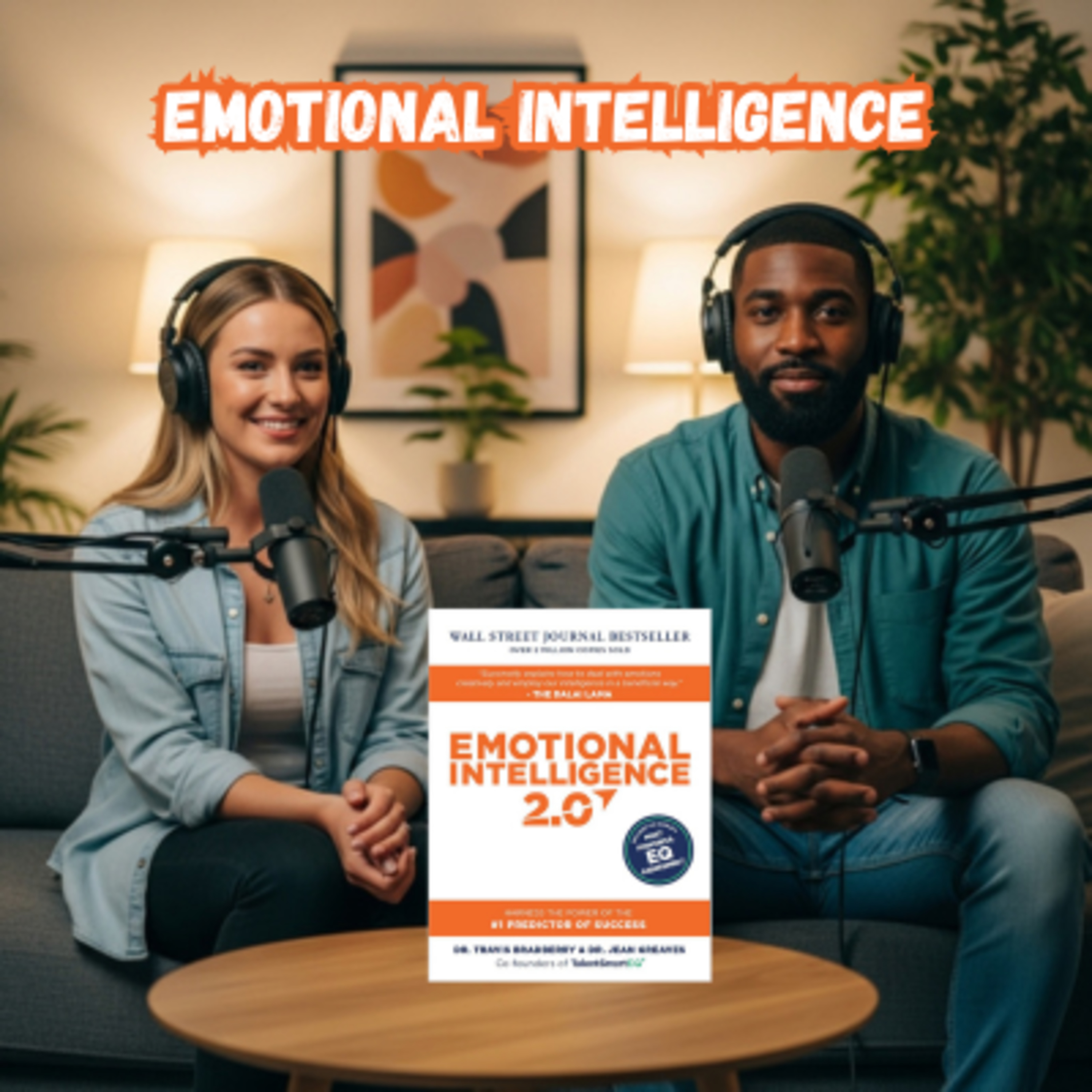
In a world overflowing with noise, competition, and constant change, one skill still separates top performers from the rest: emotional intelligence. In Emotional Intelligence 2.0, Dr. Travis Bradberry and Dr. Jean Greaves offer a research-backed, practical guide to mastering the four EQ skills that drive 90% of high performance: self-awareness, self-management, social awareness, and relationship management.
In this episode, we break down why EQ—not IQ—is the strongest predictor of success, and how simple daily practices can radically improve the way you think, react, connect, and lead. With 66 strategies tested across millions of users, this book shows how to understand your emotions, regulate them, read others better, and build relationships that help you thrive at work and in life.
Because times may change, but your ability to manage emotions—yours and others’—will always be your greatest advantage.
#EmotionalIntelligence #EQ2_0 #TravisBradberry #JeanGreaves #BookTunez #SelfAwareness #LeadershipDevelopment #CommunicationSkills #EmotionalMastery #Teamwork #PersonalGrowth #RelationshipBuilding
If this episode helped you understand yourself—or others—more deeply, follow BookTunez for powerful insights every week. 🎧
Share this with someone who wants to communicate better, lead better, or live with more emotional clarity.
Because when you elevate your EQ, you elevate your entire life.
Hey everyone, welcome to our deep dive and today we're all about emotional intelligence. EQ Right. You got it, EQ. Yeah. And we're going deep with this awesome book, Emotional Intelligence 2 Point O by Travis Bradbury and Jean Greaves. I'm super curious to get your take on this, especially how EQ plays out in leadership roles. Oh yeah, totally. And how it connects with relationships and even, you know, making the world a better place. Absolutely. Like, how do we use this stuff to actually make a difference?
O First off, what struck you about this book's approach to EQ? Well, I think what's really cool is that it makes EQ seem like doable. Doable. Yeah. Like it's not just this fuzzy tucky feely thing, they present it as a practical skill set, something you can actually learn and improve. Like building a muscle, right? Totally. And they make this really interesting comparison to IQ. Oh yeah, yeah, they say that like IQ is pretty much fixed, but EQ you can actively develop and strengthen over time. I like that.
So where do we even begin? Where does this book take us on this EQ journey? Well, they start with this super vivid analogy. Have you ever been like totally surprised by something? Like imagine you're surfing and all of this is in Bam, a shark. Oh wow, right. Total shock. They compare our emotional reactions to that kind of shark attack. Interesting. So what they're saying is. It's like our brains are wired to feel 1st and think later. Oh I see. Like in that shark attack moment, your emotions take over before you can even process what's happening.
Exactly. And, you know, think about it, how many times has that happened in your own life? All the time like saying something in the heat of the moment and instantly regretting it, or making a decision based purely on emotion and later realizing, oh, maybe not the best move. Right. We've all been there. The big take away is recognizing that we tend to lead with emotions. That's the first step to actually, you know, taking control. And that's where EQ comes in. Got it. So how does this book breakdown EQ?
What are the like key elements? They talk about these four key pillars. They call them the Four Musketeers. The four Musketeers. I love that. OK, so who are these Musketeers? Let's. See, there's self-awareness, self management, social awareness, and relationship management. OK, 4 pretty powerful Musketeers it sounds like. And just like the Musketeers, each one is essential. But you know, self-awareness is the foundation. Without it, the others kind of crumble. Right, makes sense. So self-awareness, that's being able to recognize your own emotions, why you feel the way you do.
But how do we get better at that? I mean, it sounds pretty like internal and abstract. The book gives some really practical tips like journaling, practicing mindfulness, paying attention to how your body physically reacts to different emotions. Oh, that's interesting. So it's like our bodies are giving us clues all the time. Yeah, exactly. Like if you start paying attention to those clues, you can understand how your emotions affect your thoughts and behaviors. They have this great example. I think it was about a friend calling with good news when you're having a bad day.
Oh yeah, I remember that. And without self-awareness, you might accidentally like rain on their parade because you're so caught up in your own negativity. Totally, but with self-awareness, you'd see your own state, and you could choose to celebrate with your friend without letting your bad day get in the way. Right. You could be present even when it's tough. So we've got this foundation of self-awareness, but what about self management? How does that fit in? Think of self management like the bridge between awareness and action.
It's about choosing how you respond to your emotions instead of letting them control you. OK, I love you. The book uses this analogy about being stuck in traffic, right? Your first reaction might be to just get frustrated, honk the horn, but. Yeah, road rage. Right, but with self management, you take a breath, maybe put on some music, and choose not to let that frustration take over. So it's not about like suppressing your emotions, it's about choosing how you respond to them. Exactly. It's about recognizing that you have a choice in how you react.
And I imagine this is where it starts to get really interesting, right? Because self management isn't just about our inner world, it affects how we interact with others, especially in leadership roles. That's something you mentioned you were interested in how EQ shows up in leadership. What does the book say about that? One of the biggest things is leaders with high EQ. They create this environment where people feel safe to speak up. Yeah, like a psychologically safe space where people can express their concerns, their ideas without being judged.
And that kind of leadership, it builds trust. It encourages collaboration. And you know, ultimately it leads to better results. That makes sense. So it's not just about being a boss, it's about creating a space where everyone can thrive. Exactly. Wow, we've covered so much ground already and I'm already seeing how these skills could be applied in my own life. From managing stress to communicating better, it's pretty exciting. I know, it's amazing how these like seemingly simple concepts can have such a huge impact.
OK, so we've explored self-awareness and self management, those first two Musketeers. What's next? Well, stay tuned because next time we'll dive into social awareness and relationship management, those other two Musketeers. Can't wait? We'll discover how EQ can help us connect better with others and create a, you know, a better world. See you then. Welcome back to our Dee dive into emotional intelligence. Last time we talked about self-awareness and self management, those first two key pillars of EQ.
Those first two Musketeers. Musketeers. So now I'm really excited to get into the other two social awareness and relationship management. It's like we're moving outward now, right from understanding ourselves to understanding others. Yeah, totally. And it seems like this is where EQ can really, like shine, you know, not just impacting ourselves, but how we connect with everyone else. Absolutely. And those two pillars really build on that foundation we talked about last time. That foundation of self-awareness.
Exactly, without it understanding and responding to the emotions of other people. It's so much harder, right? So much harder. Yeah. It's like, it makes me think of that saying, like, walk a mile in someone else's shoes, right? But if you don't even understand your own emotional landscape, how can you possibly navigate someone else's? Exactly, and as you develop that self-awareness, it naturally kind of expands outward and becomes social awareness. Oh, like that. You start to pick up on those subtle cues and others.
You know their body language, their tone of voice, even their energy. You're more tuned into their emotional state. Yeah, totally. And the book talks about how it's not just passively observing, right? It's about actively engaging with their emotions, understanding their perspective, and responding with empathy. So it's about more than just like seeing how someone feels, it's about like actually getting it. Exactly. And that's where relationship management comes in. OK, so how does that piece fit into all of this?
It's about using your emotional intelligence to build those really strong, healthy connections with people. So it's about communication. Communication. Yeah. Conflict resolution creating those win win situations where everyone feels heard and respected. OK, I'm following you. So let's say you have a misunderstanding with a friend. How does EQ help you handle that? Instead of reacting defensively or letting your emotions escalate the conflict, you would pause. Take a breath. Take a breath, yeah, and try to see your friend's point of view.
Put yourself in their shoes. Exactly. You would listen carefully, acknowledge their feelings, and then express your own in a calm and assertive way. So the goal is to find a solution that works for both of you. Right, a solution that strengthens the relationship instead of breaking it down. I like that it's almost like turning conflict into a collaborative thing instead of a battle. That's a great way to put it, and the book has some really helpful tips on how to do this. Rick, what for example, they talk about using I statements when you're expressing your feelings interesting and focusing on the behavior and not the person.
So instead of saying you always do this, you'd say I feel hurt when this happens. Exactly and actively looking for common ground. That makes so much sense. Yeah. And these skills are useful everywhere, right? Not just in our personal lives, but at work too. Absolutely, especially in leadership roles. You mentioned earlier that you were interested in that aspect of EQ, how it plays out in leadership. Yeah, leaders with high EQ, they're really good at building trust and encouraging teamwork. So it's not just about being the boss.
No, it's more than that. They're invested in the well-being of their team members. They understand that happy and engaged people are more productive and successful, right? So we've talked about personal relationships and leadership, but you're also interested in EQ's role in making the world a better place. For sure. And honestly, this is the part that gets me really excited. The book talks about global empathy and social responsibility. It's like as we develop our own EQ, it extends outward to our communities and even globally.
That's powerful it. Is it's about recognizing that we're all connected and that even our small actions can have a ripple effect. They had this really great example in the book about a community project. Oh yeah, I remember that one. Where people from all different backgrounds came together to address this environmental issue. And because they approached it with empathy and understanding, they were able to overcome those differences and work together. And ultimately achieve their goal. That's what makes EQ so relevant today.
We face all these complex challenges. Climate change. Social injustice. Political polarization. Yeah, and now more than ever, we need people with the emotional intelligence to navigate those challenges. To build bridges and create positive change. Exactly. I'm already feeling inspired to take action. You know, I can see how these principles can be applied my own life. It's about those small steps, those conscious choices. But are there any specific specific strategies or techniques we can use to actually put these concepts into practice?
Absolutely. And that's exactly what we'll be discussing next time as we wrap up our deep dive into emotional intelligence. Stay tuned for Part 3, where we'll explore practical ways to bring EQ into your daily life and discover how those small changes can make a big impact. Welcome back to the Deep Dive. We've been talking about those 4 pillars of emotional intelligence, self-awareness, self management, social awareness, and relationship management. The Four Musketeers. Musketeers. And I've got to say, I'm really excited about how EQ can change not just our own lives, but the world around us too.
It's pretty amazing, right? Like we've been saying, EQ is something you can learn and develop and the benefits are like, huge. Absolutely. But how do we actually put all of this into practice? What can we do every day to like, make these concepts real in our lives? Right. OK, so the book Emotional Intelligence 2.0, it actually offers a ton of practical advice on that. OK. One of the key things they emphasize is that developing EQ. It's a lifelong journey, you know? Yeah, it's not about reaching some like perfect level of EQ, It's about constantly growing and improving.
Exactly. It's all about having that growth mindset, staying curious, and being open to learning new things about yourself and others. It takes the pressure off, right? It's about progress, not perfection. Totally. And the book suggests adding specific EQ practices into our daily lives. Oh. OK, like what kinds of practices? One that's really simple but powerful is mindfulness. Mindfulness. It's taking a few minutes each day to focus on your breath and be present in the moment. That can help. It can really increase your self-awareness.
You know what, I've actually been trying to do that more, be more mindful. And I think it really does help. I'm more aware of my emotions and I noticed those early warning signs of stress or, you know, frustration before things get out of control. That's fantastic. And another helpful practice is journaling, taking time to reflect on your day, writing about your experiences and emotions. It's almost like becoming a scientist, but for your own emotion, yeah. You're gathering data, analyzing it, and using that information to make positive changes.
I like that, and the book also talks about the importance of feedback. Right, Getting feedback from others. It's so important, yeah. Asking your friends, family, or colleagues for their honest opinions about your strengths and weaknesses. It can be tough to hear sometimes though, right? Yeah, but it can give you such valuable insights into your blind spots, those areas where you might need to work on your EQ a bit more. Sometimes we need that outside perspective to really see ourselves clearly. And remember, it's not about being defensive, it's about being open to learning and growing.
And the book even has tips on how to receive feedback without getting all, like, defensive and upset. Totally. It's all about having an open mind and being willing to learn. And the good news is even small, consistent actions can make a big difference over time. It's like building a muscle, the more you practice, the stronger you become. So these practices aren't just good for us personally, they also affect our relationships, right? Exactly. The book goes into how to use EQ to improve our communication, strengthen our connections, and handle conflict better.
I'm really interested in that conflict part, it always feels so tricky. Well, one of the most important things is empathy, really trying to understand how the other person is feeling. Putting yourself in their shoes. Exactly. And when we do that, it creates a safe space for open and honest communication. We build trust and connection. And how do we actually do that? Put ourselves in someone else's shoes when we're in the middle of a disagreement. The book gives some great advice, like really listening attentively, asking questions to clarify things, and not interrupting or dismissing what the other person is saying.
It's about truly being present and engaged in that conversation. Right, and the book has some strategies for that too, like using I statements to express your feelings. Oh like I feel hurt when. Yeah, and focusing on the behavior, not the person, and actively looking for solutions that work for everyone involved. It's about turning that conf flicked into an opportunity to grow closer, not further apart. Exactly. You mentioned earlier that you're interested in how EQ effects leadership. Yes, I'm fascinated by that.
Well, the book argues that leaders with high EQ. They aren't just good managers, they're also really inspiring mentors. They create a culture of trust, collaboration and innovation. They do that by making sure everyone feels safe to take risks, share their ideas and even make mistakes. It's about psychological safety, making people feel comfortable to be themselves and contribute their best work. And that kind of leadership, it doesn't just boost morale, it also leads to better problem solving and greater success.
Totally. This is all so inspiring. I feel like EQ is this superpower we can all develop to create positive change. It's not just a nice to have, it's an absolutely essential skill set for navigating today's world. It's about understanding and managing our emotions, connecting with others, building strong relationships, and making a difference. So as we wrap up this deep dive into emotional intelligence, I want to leave our listeners with a little challenge. What's one small step you can take today to apply these ideas to your own life?
Maybe try practicing mindfulness for a few minutes, journaling about your day, or even just really listening to a loved one. Remember, even small actions can make a big impact. Embrace the power of EQ and start making a difference today. It's a journey and we're all in this together. Thank you so much for joining us on this deep dive into the world of emotional intelligence. We hope you've learned some valuable insights and are feeling inspired to put them into action. Keep exploring, keep learning, and keep diving deep.
 Apple Podcasts
 Castbox
 Castro
 Goodpods
 Moon FM
 Overcast
 Pocket Casts
 Podbean
 Podcast Addict
 Podcast Republic
 Spotify