Recruitment and Selection by Carrie A. Picardi | Strategies for Workforce Planning & Assessmen
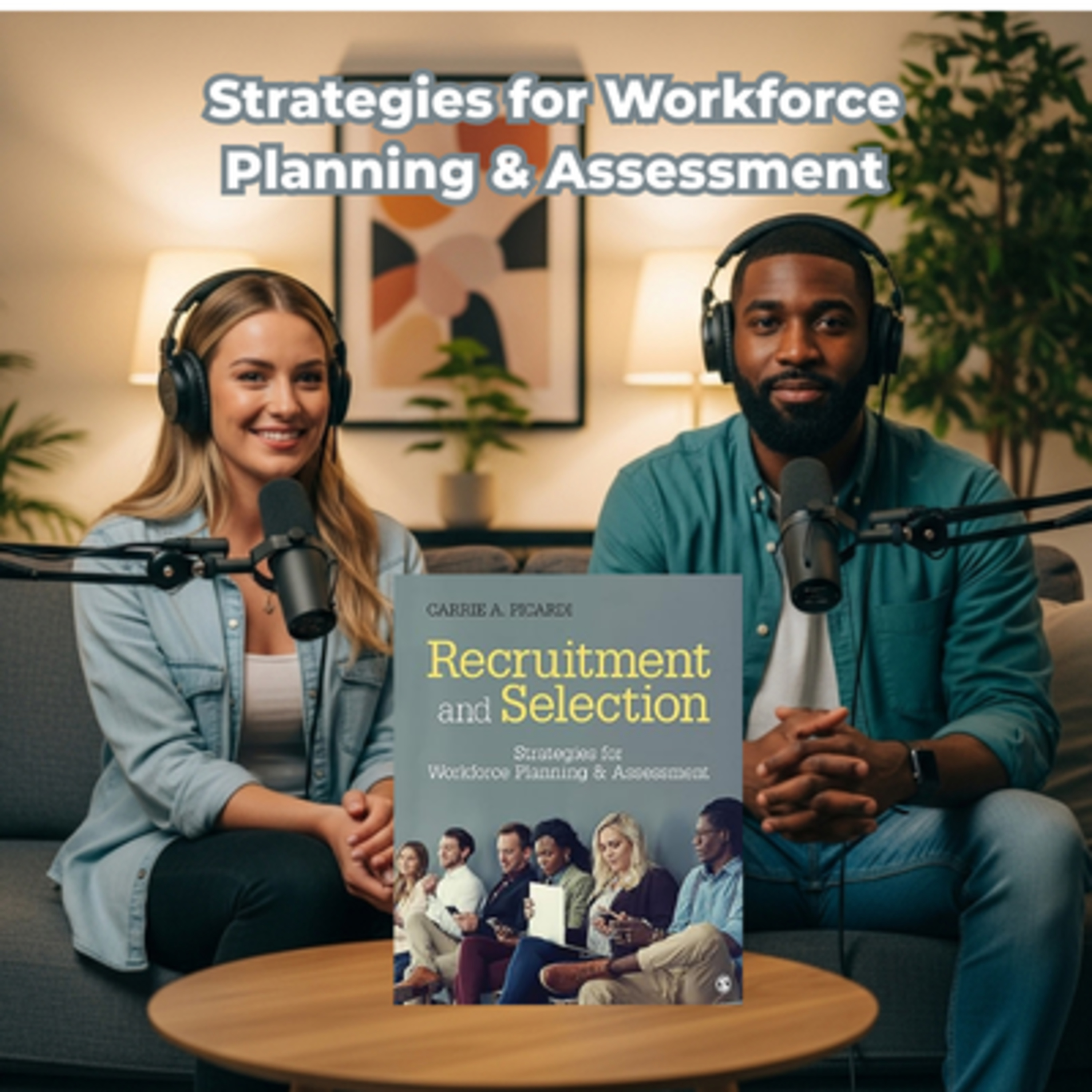
The workforce is changing and talent management is more important than ever. Recruitment and Selection: Strategies for Workforce Planning & Assessment unpacks best practices for designing, implementing, and evaluating strategies for hiring the right people. Using a proven job analysis framework, author Carrie A. Picardi uses her academic and industry experience to teach students how to assess candidates in an accurate, legal, and ethical manner. With clarity and relevance, this book truly bridges theory and concept with practice in an engaging manner and will benefit students who need to hit the ground running to successfully manage workforce needs and activities in a myriad professional settings.
This episode outlines the fundamental principles of workforce planning and talent acquisition as presented in Carrie A. Picardi’s professional guide. The source emphasizes that successful hiring begins with a comprehensive job analysis and the creation of clear competency models to define organizational needs. It stresses the importance of maintaining legal compliance and ethical standards to ensure fairness throughout the recruitment cycle. Furthermore, the material explores various selection strategies, such as structured interviews and simulations, to accurately assess a candidate's fit. The final sections highlight that onboarding and data-driven evaluation are essential for long-term employee retention and continuous operational improvement. Overall, the text serves as a roadmap for building a high-performing team through systematic evaluation and strategic alignment.
#productivityhacks #personaldevelopment #successstrategies #businessinsights #leadershipskills #leadership #ambitiousprofessionals #businesstips #self help #scaling business #businesstactics #professionaldevelopment #startupgrowth #entrepreneurship #businessmindset #growthstrategies
Welcome back to the Deep Dive. We're here to cut through the complexity and give you the strategic insights you need pulled directly from the best source material out there. Today we're going deep on strategic workforce planning. We're talking recruitment assessment, all based on the framework from Carrie at Bacardi. Our mission here isn't just a summary, it's to give you a shortcut, a way to really strengthen your hiring, make it smarter and, you know, more effective. We want you to walk away ready to make a change.
OK, let's unpack this. Great. And the core idea here is really about efficiency and and justice comprehension. How do you otimize 2 things. First, you have to figure out how to arrange all the duties in the organization, the work itself, the work itself, and 2nd, what's the most efficient way to staff those duties? It sounds simple, but this is where HR plays its its crucial role and it stops the chaos. Really. And you? Can't build a house without the blueprints, right? So the first strategic pillar here is workforce planning and assessment.
And the first lesson is just so fundamental. Know the work. We're not just talking about, you know, listing duties on a page. The real insight is knowing the job not just as it is today, but how it needs to evolve. Exactly. I mean, if you only document what someone did last quarter, you're already behind. Strategic planning means you have to plan backward for the skills you'll need in, say, two years. Right. What tech are they going to be using? What tech? What responsibilities will be automated?
That kind of forward-looking analysis stops you from hiring someone whose skills are, you know, going to be obsolete in 18 months. And to get that efficiency across the whole organization, the framework really pushes for joke families. This is kind of a genius shortcut, just grouping similar positions together. It is, and it's more than just being organized. It's about standardization when you create job families, like grouping all your entry level data analysts together, you can standardize qualifications, training, even pay scales.
Which have to speed things up. It dramatically expedites the whole process. It cuts down the administrative load every single time a new role opens up. OK. So once you have that strategic groundwork, you have to connect it to the real world, which means, you know, connecting it to the law. Immediately legal compliance is basically the guardrail for this entire system. The framework puts a huge emphasis on strictly abiding by Equal Employment Opportunity standards. And avoiding any kind of discriminatory behavior.
Any trace of it? This isn't just, you know, an abstract principle. It's about mitigating massive financial and reputational risk. It's not a one and done audit is it? The recommendation is to regularly evaluate your recruiting procedures. Constantly. You have to make sure your compliance isn't just something written in a manual somewhere. It has to be happening in the interview room, in your applicant tracking system, everywhere. This is where it gets really interesting for me because we move from structure to like deep investigation, job analysis.
This is the heavy lifting. It is finding out exactly what a job involves, every duty, every responsibility and the specific skills you need. And this analysis is the backbone. I mean, if your job analysis is flawed, everything that comes after it, the job description, the pay, the selection criteria, it's all going to be flawed too. It guarantees you're clear on what you're looking for. It does. Without it, you just end up hiring based on a vague wish list or worse, the personality of the last person who had the job.
And to get that clarity, data gathering is essential. You have to compile really in depth information. And this is where a lot of organizations get lazy. They might just interview the top performer and then write a job description for a superhero. And the problem with that superhero analysis is that it sets an impossible standard. The framework demands you triangulate your data. You have to use observations of the average successful employee, interviews with supervisors, industry data. Not just the outlier.
Never just the outlier. If you only talk to the best, you're defining the role in a way that makes it impossible for a normal, qualified person to succeed. OK, so once you've done the analysis, you move into definition and the first output is the job description. The big take away here is that boilerplate descriptions are frankly useless. You have to be explicit. So explicit, a good description removes all doubt about what's expected, and importantly, it becomes your legal defense for why you're asking certain questions or requiring certain qualifications.
And this is where the process gets an upgrade, right? Beyond just listing tasks, we get into competency models. Yes. So traditional hour focus on what we call Ksaos, knowledge, skills, abilities and other characteristics. Very task focused competency models are different. They highlight the specific behaviors and abilities you need for success. That distinction feels really strategic. You're shifting from defining what someone does, like processes invoices, to defining how well they do it. Exactly like it demonstrates meticulous attention to detail and efficiency under pressure.
That's a huge shift. It is, and it makes these models predictive. You're screening candidates based on behaviors, resilience, communication, critical thinking that actually show future potential, not just checking boxes on past experience. So if we connect that definition to the bigger financial picture, we get to job evaluation. We've analyzed the work, we've defined the skills, now we have to figure out the relative value of that position inside the company. Because not all jobs are equally important to the mission, this evaluation process it determines the internal hierarchy, and it is absolutely vital for retaining talent.
The first goal is equitable remuneration. Fair pay. Fair pay. It ensures the pay scale matches the value the job contributes. If a super complex Critical Role is paid the same as a simple admin function, your whole structure is just unstable. Which leads right into the 2nd and I think more tricky challenge, internal equity, making sure similar jobs are paid similarly inside your own company. This is where companies run into so much conflict because achieving internal equity sometimes means you have to resist paying top market dollar for a high demand role.
Can you give an example of that? Sure. Let's say you have to pay a top software engineer way more than a finance manager who has the same tenure and contributes similar strategic value. That kind of difference can just erode morale across the whole organization. But it's a balancing act. It is maintaining that internal fairness is crucial for your culture, even if it means you're slightly below market for one. Hot skill in the short term is a strategic choice, not a panic buy. That makes a lot of sense.
So now we're moving from all this analysis into the actual execution recruitment strategy. The book really hammers this point. Recruitment isn't a separate function. It has to be matched to the organizational objectives. You're solving A strategic problem, you're not just filling a chair. And that strategic approach requires multi channel recruitment. Right, you can't just post on the company careers page anymore. That is no longer effective. You have to use a whole range of channels, professional networking sites, niche job boards, internal referrals, university partnerships.
It just raises the likelihood of finding the right people faster. And then there's the decision where to look internal versus external. And this can't be a default choice, it has to be an objective one. If you need brand new skills or you're trying to shift the culture, you look externally. But if you want to reward loyalty. If you want to reward loyalty, build institutional knowledge, and manage talent development you promote from within, Every single recruitment decision has to align with a specific goal.
OK. So moving into the actual selection, the selection strategy itself is key, especially for fairness. Absolutely. A structured selection process is, I would say, imperative because it reduces cognitive bias when every candidate gets asked the exact same behaviorally based questions. And they're related against the same. Scale rated against a predefined scale based on that competency model we talked about, you really minimize the influence of a hiring managers, you know, gut feeling. It guarantees equity.
And that structure should use multiple methods, right? You need a kind of three-dimensional view of the candidate. Just relying on an interview seems like a huge mistake. It's a recipe for error. That's why the framework recommends a mix. Structured interviews, standardized evaluations or work samples. Really thorough reference checks. Background checks. Each method checks a different facet of the candidate. Their skills, their fit, their actual history. Right. It gives you a reliable picture that can actually withstand scrutiny.
But the strategy doesn't stop when the offer is signed. It moves right into the post tire phase onboarding. And this is where all that investment and recruitment pays off. Or, you know, it fails spec. Actually, we've all had that miserable first day just sitting at a desk waiting for a laptop. Oh, absolutely. And you have organized onboarding that's planned and efficient. New hires are just so much faster. It lowers attrition and gets them productive, you know, rapidly. And it's more than just the paperwork.
Cultural integration is so important for long term success. It's vital new hires need to understand the unwritten rules. How are decisions really made here? How do we resolve conflict? What's a win in this company? That knowledge is the difference between a high performer and someone who's gone in 18 months. Which brings us back around to the ethical framework, especially with all the testing and data we use now. And this raises a big question for modern companies, right? How do you ensure fairness when you're collecting so much personal data?
It's a huge issue. It's not enough just to avoid discrimination anymore. Companies have to abide by modern laws on data privacy. You know, things like GDPRCCPA. In California, if you click candidate data, you are legally on the hook to protect it. That's just part of the hiring process now. It is, and transparency is everything, and ethical hiring process guarantees its merit based If a candidate understands why they're being tested on certain things and how their data is being used, you build trust even for the people you don't end up hiring.
Bringing it all full circle, the final part making the hire reminds us that this isn't a one time thing, it's a process that needs continuous improvement. The market changes too fast. It has to be a cycle of review and refinement to stay effective. And you can only improve what you measure. Exactly. Metrics matter. Monitoring key metrics lets you see if the system is even working. We all focus on time to fill how long a job was open, but the really strategic metric is quality of hire. Quality of hire.
That's the real bottom line, isn't it? How successful is that person six months, a year down the road? Are they performing against the competency model? Are they still with the company? Are they driving revenue? Analyzing quality of hire tells you which recruiting channels, which interview questions, which tools are actually predictive of success. So what does this all mean? I think the take away from this entire framework is pretty clear. Strategic workforce management. It's not an admin function.
It is a critical organizational structure. It's about building a system that reliably finds the right skills and the right person who fits your team and your culture. You have to control the process. You can't just rely on chance. That's the summation right there. It's all about structure and linkage. It's a clear chain of logic from knowing the work through job analysis to knowing the value of that work through job evaluation, defining the expectations with those competency models and ensuring fairness the whole way through.
It's a holistic, non optional investment. And for our final thought for you to chew on, given how important that internal equity and pay is, which we said is vital for morale, and how competency models define an ideal skill profile, how might a detailed competency Model 1 designed for hiring be used proactively to find and close internal pay gaps before they become huge fairness issues? I mean, if you can define the objective value of behaviors, can you build a pay structure that's actually immune to bias?
Something to consider. We hope this deep dive gave you the insights you need to start building that smarter, stronger workforce today.
 Apple Podcasts
 Castbox
 Castro
 Goodpods
 Moon FM
 Overcast
 Pocket Casts
 Podbean
 Podcast Addict
 Podcast Republic
 Spotify