How Social, Cultural, and Environmental Capital Changes Brands | The Business of Aspiration by Ana Andjelic
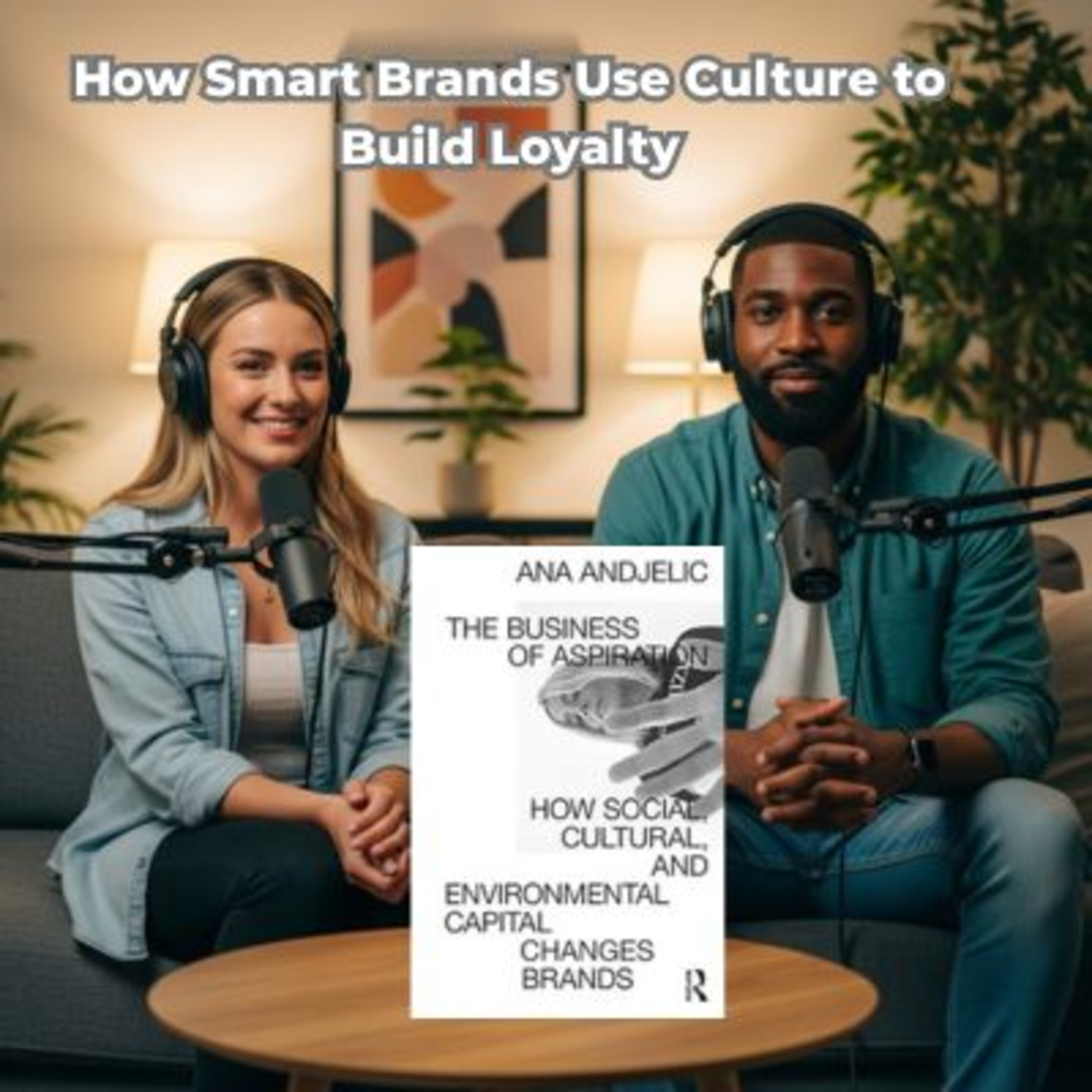
The Business of Aspiration is about how consumers' shifting status symbols affect business and brand strategy. These changing status symbols, like taste, aesthetic innovation, curation or environmentalism create the modern aspirational economy.
In the traditional economy, consumers signaled their status through collecting commodities, Instagram followers, airline miles, and busy back-to-back schedules. By contrast, in the aspirational economy, consumers increasingly convey status through collecting knowledge, taste, micro-communities, and influence. This new capital changes the way businesses and entire markets operate, and yet the modern aspirational economy is still an under-explored area in business and culture. The Business of Aspiration changes that.
In this book, marketers will find examples, analyses and tools on how brands can successfully grow in the modern aspirational economy. The Business of Aspiration answers questions like, "what is good for my brand long-term?", "how is this business decision going to impact our culture?" or "what are the main objectives of our growth?" Marketers will learn to shift their brand narrative and competitive strategy, to create and distribute new brand symbols, and to ensure that their brand’s products and services create both monetary and social value.
This episode examines key principles from Ana Andjelic's The Business of Aspiration, focusing on how modern companies can thrive by integrating into cultural landscapes. It highlights that successful branding requires a deep empathy for consumer values and the strategic use of social influence through trusted community voices. The author explains that targeting specific taste communities allows businesses to foster genuine loyalty rather than pursuing a broad, disconnected audience. Furthermore, the material explores how cultural mimicry and social design help products feel like a seamless part of a buyer's lifestyle. Ultimately, the source suggests that in an aspiration economy, brands must offer meaningful identities and experiences that support their customers' personal goals.
#BrandStrategy #MarketingPodcast #BusinessBooks #Branding #ConsumerPsychology #CreatorEconomy #LuxuryMarketing #CulturalMarketing #BusinessGrowth #MarketingStrategy #PersonalBranding #BookSummary #BusinessPodcast #DigitalCulture #SocialInfluence
If you've ever found yourself, you know, just standing there looking at a product you just bought and wondering why exactly did I choose this one? Like over the 50 other virtually identical options out there, well, you are in exactly the right place. Yeah, it's a feeling we all get. Right. So today we are exploring a concept that honestly, it fundamentally changes the mechanics of how we understand the things we buy. Yeah. And, well, really, the things we desire. Absolutely. It's a huge shift. So we're diving into excerpts from Anna Angelic's book.
It's called The Business of Aspiration Lessons in Cultural Branding, and the mission for this deep dive today is to basically decode the hidden architecture of modern commerce. Which is so much more psychological than people realize. Oh totally. We're looking at how communities, social influence and culture are actively utilized by modern brands to interact with us in a way that actually means something, not just trying to sell us a widget. Right, because the widget itself isn't the point anymore.
Exactly. So we're going to break down the underlying psychology of this shift, and we want to provide you, the listener, with a road map for applying these lessons to your own endeavors, whether you're, I don't know, building a brand, running a business, or just trying to hack your own buying habits. Yeah, just trying to figure out why you bought that expensive coffee mug, right? So, OK, let's unpack this. Because trying to sell a product today without deeply understanding the culture of your buyers, Yeah.
I mean, it is essentially like walking into a crowded party, ignoring the music, ignoring all the ongoing conversations. Just completely missing the vibe. Completely. And then you just stand on a coffee table and immediately start shouting your resume at the top of your lungs. That is, yeah, that's a perfect image, right? Like nobody wants to listen to you because you haven't taken a single second to read the room. You're just making noise. In that party analogy, it really gets right to the core of the issue, because you know you are walking into a space that has its own established rules, its own unwritten language, its own shared values.
Yeah, it's a living ecosystem. Exactly. So when you demand attention based purely on your utility, like, you know, shouting your resume, I'm good at this, I do this, you become an immediate disruption. You're just the annoying guy on the table, right? And what Angelics research makes incredibly clear is that modern consumers, and that includes you, me, everyone listening to this right now, we are operating on a completely different frequency now. How so? Like what's the shift? Well, we are no longer just looking for utility.
We aren't looking for a tool that simply does a job. We are actively seeking alignment. Alignment. OK, meaning what exactly? Meaning we want products that fit seamlessly into the broader narrative of our personal goals, our aesthetics, our worldviews. It's not just does this watch tell time, does this watch say something about who I am? Oh, I love that. OK, so let's start right at the ground floor that concept. Because before anyone even gets an invite to that metaphorical party we were talking about, they have to deeply understand the specific culture they're trying to enter.
Right, you can't fake it. No, you really can't take the scenario in the source material about this small business owner who makes handmade jewelry. We are talking about a fantastic, high quality, meticulously crafted product. Like really good stuff. Beautiful work, yeah. But yet, despite the undeniable quality of the physical product, the business is just flatlining. The sales aren't there. And you know, the traditional instinct for a business owner in that situation is what to buy shinier ads or try to tweak the website's algorithm.
Yeah, run a Facebook ad, do a discount code. Exactly. But the actual missing ingredient here is a deep, empathetic knowledge of the audience's daily reality. Because the physical quality of the product is honestly kind of irrelevant if there is a fundamental disconnect between the creator and the community's culture. Right. It's like having a great resume, but you're speaking the wrong language at the party. Yeah. The solution outlined here? It isn't a new marketing tactic. It's a behavioral shift.
The business owner basically has to stop selling and start participating. Which is hard for a lot of people to do. Oh, it's really hard. They have to physically and digitally enter the client's environment. That means, you know, showing up to local activities, learning the nuances of the hobbies the community actually cares about, and tracking the hyperlocal trends that matter to them. Because marketing customized in a vacuum is just. It's just guessing. Right. It's throwing darts blindfolded. Yeah.
So in the story, the jewelry maker completely pivots. They immerse themselves in the local scene. And then rather than just blasting out macro lens photos of shiny metals and saying buy this, they launch a campaign highlighting the regional artists who serve as the inspiration for their designs. And the reaction to that is just entirely different. It's wild. The shift in consumer reaction is huge because the jewelry it stops being just a pretty necklace. It transforms into like a wearable piece of the community's history.
Yes, the dialogue shifts from pushing a simple transaction to emphasizing a sense of shared belonging. What's fascinating here is the psychological transformation of the object itself. I mean, think about it. The physical product hasn't changed its shape. Right, it's the exact same necklace. Exactly. The weight is the same, the materials are the same, but the neuro associations, like the meaning attached to it in the buyer's brain, have been entirely, entirely rewritten. Oh wow, yeah. When a brand demonstrates that it genuinely respects local history and regional artists, the customer's relationship to the item changes.
They start talking about their own experiences wearing it. It becomes a like a badge of community pride. So the brand is no longer the outsider on the coffee table shouting a resume. It's an insider sharing a meaningful story. Exactly. You've earned your place at the party. OK, I hear that, but let me push back on the reality of this for a second, because what does this actually look like in practice for, you know, the person just trying to keep the lights on? That's a fair question. Like, is this cultural immersion just a highly effective, slightly sneaky form of market research?
Like all I'm going to pretend to care about your local pottery scene so you buy my silver bracelets. Or does the brand actually have to commit to being a genuine, participating member of that community full time? It's definitely the latter. Because one of those is a neat marketing trick and the other is a massive life altering commitment. Yeah, it is a massive commitment and honestly, if a brand tries to fake it as a marketing trick, it will almost certainly backfire. People can smell it. Oh completely.
Consumers today especially have an incredibly highly calibrated radar for inauthenticity if you just mine a local culture for aesthetic insights. Next to stealing their vibe. Exactly, if you steal their vibe and then try to sell their own culture back to them at a premium, it is instantly recognized as exploitative. Oh yeah, we see that on social media all the time and people get destroyed for it. Right, so the foundation here is building real relationships. You have to genuinely appreciate the interests of the the audience.
It requires A fundamental operational shift where you view the community as your actual peers, not just, you know, a target demographic to be extracted from. OK, so assuming a brand does the hard work, they read the room, they become genuine peers and they establish that sense of belonging, the immediate next hurdle is distribution, right? Getting the word out. Yeah, exactly. How do they spread the word without ruining that hard earned authenticity? And the answer the book gives is to ditch the traditional top down advertisements and utilize the voices the community already leans on.
Social influence. Right, there's this brilliant breakdown of a buyer named Alex who is looking for athletic shoes. Now Alex is entirely blind to traditional TV commercials or like magazine spreads. I mean, aren't we all at this point? Totally. I don't even see them anymore. So instead, Alex goes straight to social media to look for peer suggestions, because human choices are overwhelmingly dictated by the people we interact with. And the mechanism driving Alex's behavior isn't just a preference for an app over a television screen.
It's actually a defense mechanism against choice paralysis. I'll. Say more about that. Well, when you have 10,000 identical athletic shoes available at the click of a button, the human brains simply cannot compute the optimal choice based on utility alone. Right, you'd be reading reviews for the rest of your life. Exactly. So we offload the cognitive burden onto the architecture of credibility. From the brand's perspective, instead of pouring millions into faceless broadcast advertisements, the strategy shifts.
They collaborate with reliable voices. Like friends, influencers, local authorities? Yes. People who already possess standing within that specific community. So in the story, the brand partners with a local fitness influencer and this person doesn't just hold the shoe up to a camera and say buy this. They incorporate it into valuable workout advice. They demonstrate its utility and style in a real world high trust environment. And the mental shortcut for Alex instantly becomes, oh, if it's good enough for them, it's good enough for me.
Boom, decision made, cognitive load relieved. Right, it skips the whole evaluation phase. Think about it like getting a restaurant recommendation from your absolute most foodie friend. You know the one. Everybody has one. They know the name of every sous chef in a 20 mile radius, and if they tell you to go to a specific spot, you don't question it. You don't go look at the Yelp reviews. That recommendation carries the invisible heavyweight of trust. Exactly. Now contrast that with driving down the highway and seeing a massive billboard for a diner.
the Billboard is loud, It's taking up your whole fields of vision, but it has 0 credibility. It is quite literally paying for your attention, whereas your foodie friend has earned your trust through years of shared taste. And that invisible weight of trust that is the exact currency of modern influence. Because when a brand buys a billboard, they are initiating a one way uninvited broadcast. Shouting the resume again. Exactly. But when a brand weaves itself into an existing web of trust, it achieves something money cannot directly buy.
It buys validation. Creating an environment where your product is organically discussed by people who mutually respect one another is. I mean, it's exponentially more effective than forced marketing. But, and this is key, those trusted voices aren't just broadcasting into a generic void. They aren't trying to talk to the whole world. They are speaking directly to highly specific, incredibly passionate clusters of people. Yes, the taste communities. Right. The source material refers these clusters as taste communities, and it paints a really vivid picture to explain them.
Imagine a person named Jamie sitting in a neighborhood cafe. Just people watching, OK? Jamie starts observing these distinct groups. One table is intensely debating a specific genre of literature. Another corner is filled with people sketching and comparing drawing techniques. These aren't just random demographic sorted by age or like tax bracket. Right, it's not men aged 18 to 35. No, they are psychological clusters united by a very specific shared passion. And the reason these taste community or the engine of modern commerce is that their shared interest dictates their daily behavior.
It dictates their conversations and ultimately their purchasing decision. So how does a brand use that? Well, the strategic lesson is that trying to create a generic product that appeals to absolutely everyone is fool's errand. Brands must target a particular set of passionate people. Consider the scenario in the text of a company launching a new line of camera accessories. OK, yeah, they actively ignore everyone who just uses a smartphone. They aren't trying to convert them. They launch strictly for dedicated hobbyist photographers, and they go a step further.
They organize a physical gathering for these community members to exchange their work, test the gear, and just connect. Right, and Jamie, who happens to love photography, attends this event. JE genuinely enjoys the accessories and posts about it online which naturally draws in more like minded people. It creates a snowball effect. Now here's where it gets really interesting, and frankly, where it sounds like terrible business advice to a lot of people, right? If your ultimate goal as a company is growth, revenue, and scale, isn't shrinking your target audience down to one specific taste community incredibly dangerous?
Like you are intentionally alienating maybe 90% of the buying public to cater to a tiny niche? How does the math on that actually work? I mean, it is terrifying if you are operating under the legacy rules of mass marketing. We have more eyeballs equals more money. Exactly where sheer volume was the only metric of success. But the math that the modern market relies on the difference between mild interest and rabid advocacy. Rabid advocacy. I like that. Well think about it, when you attempt to appeal to the entire population, you end up with a watered down product.
You might generate a lot of mild Luke warm interest, but nobody champions a product that is just fine for everyone. No one gets a tattoo of a brand. That's just. OK exactly, but when a brand aligns perfectly with a highly specific niche, that taste community doesn't just buy the product, they take psychological ownership of the brand. They make it theirs. Right. They enthusiastically do the marketing for you. They defend it in the comments sections. They evangelize it to their peers. You are essentially trading a massive, apathetic audience for a smaller, fiercely loyal army of advocates.
And that distinction between a customer and an advocate is huge. It's the difference between a million people vaguely recognizing your logo and 10,000 people who will absolutely refuse to buy anything else. Yes. It's an incredibly powerful Moat. But to earn that level of obsession, a brand can't just talk the talk. The actual physical products they make have to reflect the community's deeply held aesthetics and values, which introduces the concepts of social design and cultural mimicry. This is such a fascinating part of the book.
It really is. There's this great breakdown of consumer named Sam, who's out shopping for interior home decor, and Sam starts noticing that a lot of the products across all these different stores look remarkably similar. It's like they're all drawing from the exact same mood board. Exactly. It's as if all these separate, unconnected brands are mimicking one specific cultural trend. And if we connect this to the bigger picture, this kind of mimicry is not about a lack of originality, it is an exercise in acute observation.
They're watching very closely. Yes, take a home decor company that spots a growing cultural shift toward eco friendly, minimalist, nature inspired living. This isn't just a fleeting fad, it's a fundamental shift in the community's values regarding sustainability and mental clarity. The lifestyle change. Right, so the company deliberately engineers a product line that physically matches this philosophy. When Sam, who holds those exact values, sees the product, the purchase is frictionless because the object aligns perfectly with Sam's internal ideals.
So Sam buys it, brings it home, and displays it proudly and honestly. The best way to visualize this is to think of cultural mimicry as a brand's way of adopting the local dress code. Oh, that's a great way to put it. Right. Like if you walk into a highly formal black tie gala wearing ripped jeans and a graphic tee, you certainly stand out. But you stand out as a disruption. You are visually signaling that you do not belong. You don't respect the space. Exactly. When a brand uses social design to match a community's aesthetic, like that raw eco friendly minimalist look we just talked about, it is sending a visual signal.
It tells the customer before they even read the price tag. We are one of you. We prioritize what you prioritize. It's the ultimate proof that the brand is actually listening. By remaining hyper aware of community values and mirroring them in the physical design, the brand ensures its goods feel like a natural extension of the customer's existing life. There's a trap there, isn't there? Oh, absolutely. The danger is the uncanny valley of marketing. If a brand tries to mimic the dress code but gets the details slightly wrong, it screams in authenticity.
Like how do you do? Right, the cringe factor is so high. It is, but when they get it right, the product ceases to be just an object sitting on a shelf. It becomes a physical manifestation of the customer's internal values that creates a bond of loyalty that is incredibly difficult for competitors to sever. Which brings us to the absolute core of this entire deep dive. All of these individual mechanisms we've talked about, you know, immersing in culture, leaning on trusted social influence, finding the right taste communities, and adopting their visual dress code, they all point to a massive, fundamental shift in human behavior.
We are entering a new era. We really are. We have officially entered what is called the aspiration economy, and in this economy we are no longer buying utility. We are quite literally buying a better version of ourselves. This is the real paradigm shift. Look at the scenario of Taylor, who is in the market for a fitness tracker. Taylor is scrolling through endless alternatives, but feels this persistent lack of connection to most of them. Because they all basically do the exact same thing. Right, because for Taylor, the literal utility of tracking steps and monitoring heart rates isn't the actual goal.
The technology alone is insufficient. Taylor is searching for a product that complements A broader lifestyle and personal aspirations. They want to be an athlete, not just someone who walks 10,000 steps. Yes, the brand that ultimately wins Taylor's business isn't the one boasting about the processing speed of their microchip. It's the brand that provides A coherent identity. So the successful fitness tracker brand in this scenario, they completely flip their messaging. They don't list battery life specs.
They highlight true, emotionally resonant accounts of real clients who have used their ecosystem to fundamentally change their lives. They show the aspiration. Exactly. They organize community challenges. They provide motivation and a tangible feeling of inclusion. So when Taylor sees that the reaction isn't, wow, what a sophisticated piece of hardware. Taylor's realization is this brand understands who I am trying to become. That is so powerful. It is if you think about it, there's a fascinating psychology behind why we need a piece of plastic on our wrist to validate our goals in the 1st place.
Historically, humans drew their sense of identity and belonging from traditional community pillars you know, local neighborhoods, civic clubs, religious institutions, the. Places we gathered right. But as those have fractured over the decades, brands have increasingly stepped into the vacuum to provide that sense of identity. Which really raises an important question for anyone trying to navigate this landscape. How does a commercial entity transcend its literal function to become an integral part of a human being's personal life journey?
It's a huge leap to make. It is, and the answer is by acting as a mirror for the audience's highest aspirations. In the aspiration economy, a brand cannot survive simply as a vendor of goods. It must evolve into a partner in the customer's personal development. Partner. Wow. Yes, it must provide the experiences and the communal validation that help the consumer bridge the gap between who they are today and who they want to be tomorrow. So I want you listening to us right now to really think about the last premium item you bought, something you spent time researching, something you really cared about choosing.
Maybe it was a high end jacket, a specialized piece of tech, or even, I don't know, a specific sustainably sourced bag of coffee beans. We all have something like that. Yeah, now be brutally honest with yourself. Did you buy it strictly for its utilitarian function, or did you buy it for what it says about who you are, the taste community you belong to, and the values you want to project to the world? It's almost always the latter. It is a staggering realization when you sit back and recognize. Just how much of our personal identity is outsourced to the objects we choose to surround ourselves with?
It is a profound realization, and it forces us to acknowledge that the businesses succeeding in the modern era are the ones that understand their true inventory. What they're actually selling. Right. They aren't selling microchips, canvas or silver. They are selling a sense of self, a feeling of forward momentum and a designated place to belong. It completely rewrites the rules of engagement. So let's take a moment to recap the road map we've traced today. We started at the Absolute Foundation, moving away from the arrogant approach of shouting a resume and moving toward genuine cultural immersion to foster a real sense of belonging.
The jewelry maker example. Exactly. Then we examined how to amplify that belonging not through loud billboards, but by weaving into the architecture of credibility through trusted social influence. Relying on the voices people already trust. Right from there we explored how that influence is hyper concentrated inside passionate paced communities where the goal is to cultivate rabid advocates rather than just mild consumers. The. Photography. Group. Then we discussed how social design and cultural mimicry serve as the visual dress code that proves a brand is truly listening.
And finally, we saw how all these elements converge in the aspiration economy, where brands step into the void to help us buy our way toward a better version of ourselves. It provides A remarkably clear lens for understanding how meaning is constructed in the modern marketplace. But you know, it does leave us with a final, somewhat unsettling thought, something I think is highly worth mulling over after we wrap up. Lay it on us. Well, if brands are increasingly stepping in to become the communities that shape our identities and house our aspirations, if we are relying on corporate entities to signal who we are to the outside world, what happens to us when a brand we love deeply fails or fundamentally changes its values under new management?
Oh. Man, right? Do we actually lose a piece of our own identity in that corporate collateral damage? Or are human beings resilient enough to simply pack up our aspirations and migrate to a brand new taste community? Wow. That is a heavy, incredibly complex question and honestly the perfect provocative thought to leave on. Thank you so much for joining us as we decoded the intricate world of cultural branding. We hope this deep dive equipped you with some new mental models to view the marketplace through.
And maybe made you look at your own purchases a little differently. Definitely. Maybe you'll critically examine the next thing you buy or the next thing you decide to build. Until next time, take care.
 Apple Podcasts
 Castbox
 Castro
 Goodpods
 Moon FM
 Overcast
 Pocket Casts
 Podbean
 Podcast Addict
 Podcast Republic
 Spotify