Hook Point by Brendan Kane | How_to_Win_the_Attention_War_Now
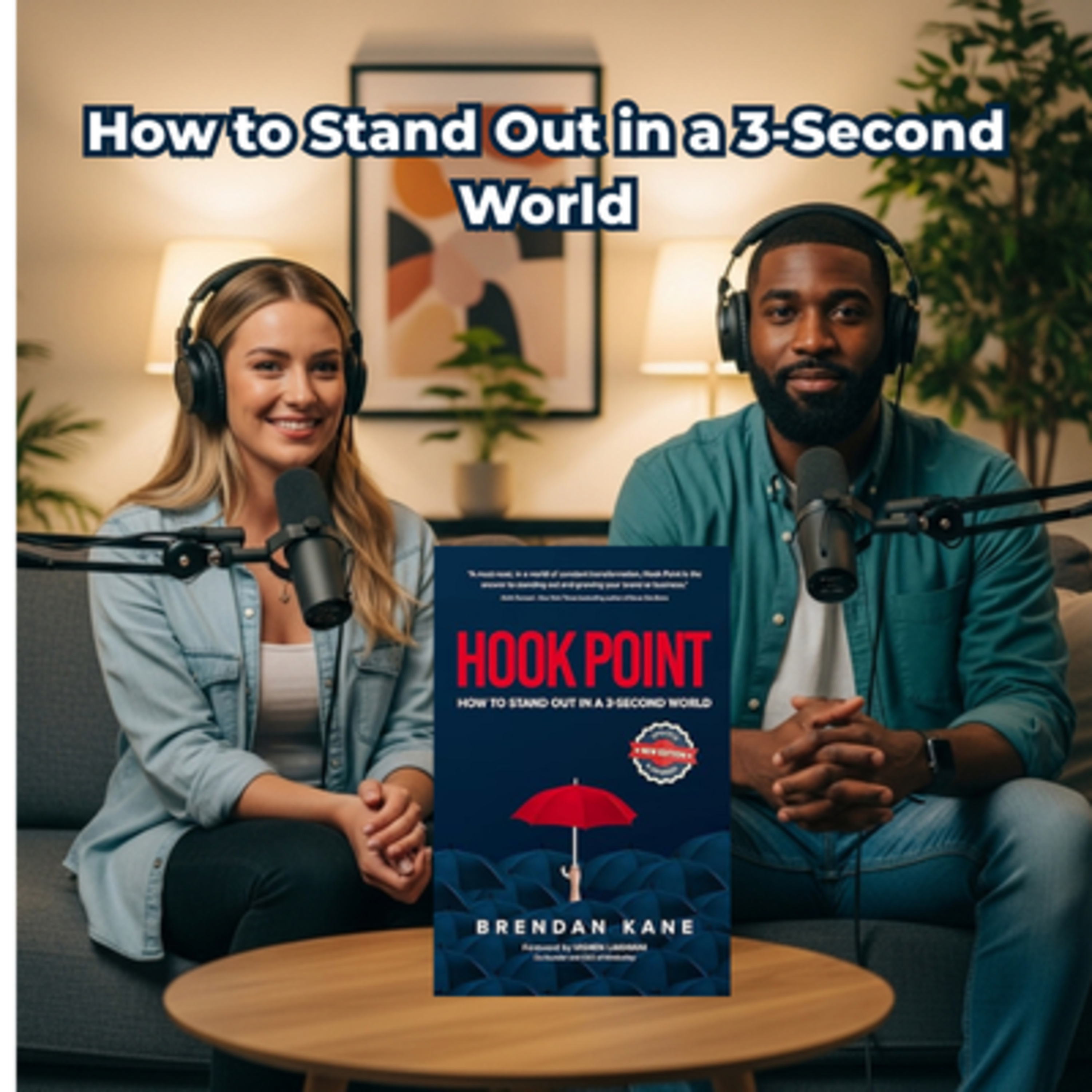
Brendan Kane’s Hook Point provides a strategic framework for capturing attention in a digital landscape saturated with billions of daily messages. The text emphasizes that creators have only three seconds to make a first impression, necessitating the use of psychological triggers like curiosity and urgency to stand out. Beyond initial engagement, the author argues that long-term success requires authentic storytelling, active listening, and consistently delivering high-quality value to an audience. By studying successful marketing campaigns and embracing transparency, individuals can move from simple hooks to scalable brand growth. Ultimately, the guide teaches that while formats and technologies evolve, the core of effective communication lies in human connection and the constant pursuit of creative innovation.
Let's unpack this. You handed us a stack of sources focused, I mean entirely on one thing, winning the modern war for attention. And this isn't just about clicks anymore, is it? It feels more like survival in all this digital noise. It is. It's absolutely about survival. So our mission today, as we do this deep dive, is to give you the operational manual, the way to become, well, instantly noticeable. Yeah, exactly. We're drilling down into this mechanism they call the hook point, and we're going to try and extract the the most critical lessons for standing out.
And it doesn't matter if you're launching a brand or just, you know, trying to get a memo read right. And the core stake here, this comes right from Chapter 1, is speed. The attention window, it's not shrinking. I mean, it's already slammed. Shut so the source material calls the hook point your new essential tool. It's your new covert tool because it forces a stop and that critical threshold is the 3 second rule, 3 seconds. If you don't instantly compel a viewer, they are gone. That first impression, it's the entire ball game.
This is how you cut through that, that immense deluge of daily information. 3 seconds. That feels less like a rule and more like a panic button. If you blink, you're irrelevant. That's a good way to put it. OK, let's unpack the sheer magnitude of the problem we're all up against. We need to define the scope of this attention war. The scoop is well, it's economic. Chapter 3 frames this immediately as the attention economy. It's no longer about just capturing market share. It's about the single most finite resource we all have, which is human focus.
So we're all merchants basically. We're all merchants vying for a slot in the consumer's brain, and that makes the competition, you know, fundamentally brutal. And the sources? They drop a number that makes that competition horrifyingly clear. We aren't just talking about a crowded market. This is a flood. It is a flood. The volume of content we're fighting against every single day, the source material pigs it at a truly staggering 60 billion messages a day. 60 billion. That's the clutter we have to cut through it.
It explains why that 3 second rule is just completely non negotiable. And that #60 billion. It's so critical because it really defines the only viable strategy. It explains the the cognitive load we're putting on audiences. My brain just defaults to ignoring everything. Exactly. If I'm hit with 60 billion potential inputs, my brain defaults to filtering, not consumption. Yeah, it just rejects anything that looks like effort or noise. So anything slow or complex or low quality is what just instantly deleted.
Instantly gone. So the take away then is an immediate pivot away from just trying to keep up with the volume. Absolutely. The foundational wisdom here is you cannot win a volume war against 60 billion messages. You just can't. So you have to shift. You have to shift completely to quality over quantity. The goal is not to contribute to the noise, but to create a high impact pattern interrupt. A pattern interrupt. I like that the sources argue that just one piece of content that genuinely resonates, that cuts through all that filtering is worth 100 mediocre posts that just, you know, add to the daily deluge.
This is about being essential, not ubiquitous. OK, so let's zoom in on the mechanism itself. If quality is the strategy, how do we build the actual device, the hook point that guarantees a stop? Yeah, this is where it gets really interesting for me. We move from the size of the problem to the psychology of the solution. So Chapter 2 it analyzes successful hooks across all these fields. What were the specific repeatable patterns? They found this. Is where we go from theory to like applied psychology, the analysis of campaigns like the famous Tesla car launch right and the grassroots genius of the Blair Witch Project marketing.
Oh yeah, I remember that. It reveals that the hook point isn't just a catchy phrase. It's a it's a structural device designed for cognitive interruption. It demands immediate emotional investment. OK. Give us the breakdown. How does a massive futuristic car launch share DNA with a low budget horror film stunt? Because they both expertly bypassed logic and went straight for primal emotion. The Tesla launch, for instance, it didn't just market an electric motor. It marketed desire and future status.
That primal urge for, you know, technological belonging, then. Blair Witch. The Blair Witch campaign, on the other hand, leveraged fear and curiosity by creating just enough ambiguity to make early audiences think the footage was real. It demanded they investigate further. So the sources argue that all successful hooks tap into these universals. Yes, curiosity, fear or desire. They create an emotional debt that the user will they have to pay it by stopping and engaging. So the three second rule is enforced by the brain prioritizing emotional resolution.
If I'm curious, I have to know the answer. You have to. That leads us right to the craft of storytelling in Chapter 4. If the hook point is that emotional grab, the narrative has to anchor it. Precisely. The hook point arrests the skull. But effective storytelling? That's the true narrative advantage. That's what converts A momentary stop into sustained attention. In chapter 4 says stories work because they're how we've always transferred information. Exactly. They're rooted in universal human experiences.
If your content taps into those shared experiences, it resonates emotionally. It captures attention and it guarantees that lasting impact. OK, so a great hook draws people in, but to hold them, I mean, especially now with the erosion of trust in brands and institutions, you need credibility. You do. You can't tell a compelling story if the audience just doesn't believe you. That's a perfect segue because we have to talk about the foundation of all of this, which is credibility. Right. A clever hook can feel like a trick if it's not backed by genuine intent.
And that brings us to Chapter 5, which has this the provocatively titled How to Avoid Prison Time, a master class in Authenticity, Trust and credibility. Chuckles. Yeah, that one. That title is definitely a hook point in itself, but let's translate that drama. What does avoiding prison time have to do with building content? Well, it's a hyperbolic warning against being insincere if your hook over promises, or it's fundamentally misleading if you're just trying to exploit that fear or desire without delivering.
You burn trust. And the core lesson is that authenticity breeds trust. Without that trust, your hook point is just a one time gimmick. And the sources give specific, actionable tactics for injecting that authenticity. They talk a lot about User generated content, or UGC. What makes that kind of content so inherently powerful? Well, UGC is so persuasive because it's the ultimate social proof. It completely bypasses that polished brand filter that we're all trained to ignore now. It feels real because it is real.
Exactly. When content comes from a peer, it carries this inherent authenticity and credibility. The sources highlight that UGC It just successfully disrupts the expectation of that glossy, authoritative brand voice. OK, but what about the balancing act? If we're aiming for world class content, Chapter 5 also stresses embracing imperfection and flaws. Doesn't that contradict the need for a polished, impactful brand image in those first 3 seconds? That's the nuance you have to grasp. The imperfection shouldn't be in the quality of the idea, it should be in the delivery.
The vulnerability, the shared. Challenge the behind the scenes glimpse. Yeah, perfection. Ironically, it creates skepticism, embracing flaws. It humanizes the brand or the person. It signals relatability. And that instantly lowers the audience's guard. And you can't have connection without listening. Chapter 6 makes this point that active listening is a fundamental skill for crafting these successful humanized hooks. It is. It's empathy and action. Active listening means putting ourselves in the audience's shoes, not just to confirm what we want to say, but to truly understand their requirements, their inclinations, their challenges, their pain point, their specific pain points.
You don't listen first. You're you're just shooting in the dark. You're just adding noise. And the direct operational payoff of listening is that you can then custom tailor the content to be relevant. Exactly. You move from broadcasting generic messages to fostering a a meaningful dialogue. The content becomes bespoke. It solves the listeners problem directly, which dramatically increases the effectiveness of the hook. Point You know which emotional lever to pull. Listening tells you which levers are currently sensitive.
Now, before you even think about scaling that perfect authentic resonant hook, you have to settle the foundational debt. Which is offering value. Chapter 7 has this great title that sums it up. Take everything I have, it's yours for free. That sounds completely counterintuitive to business, but it underlines that whole shift toward giving first, receiving later. Precisely value driven content. It enriches lives. It provides useful info. It solves specific problems by consistently addressing your audience's pain points without immediately asking for a financial return.
You build long term trust and credibility. You demonstrate A commitment to their success, and that is the only reliable foundation on which you can later scale. OK. So once we have that value driven authentic hook that's working, how do we take it nationwide, worldwide? Right. Chapter 8 is tantalizingly titled From Hook to Scale the Secret to $1.6 billion in 48 Months. We need to know what insights power that kind of growth, that 9 figure number. It proves that a well executed hook point, when it's paired with consistent value, can lead to, I mean, exponential results.
The focus here is on amplifying reach and maintaining momentum. The scaling insight is twofold. First, strategic partnerships and collaborations. You have to work with key influencers, complimentary brands or organizations. It's essential for rapid amplification. You tap into their press networks. You tap into established trust networks and dramatically expand your exposure to new, relevant audiences. And second, how do you manage the immense content needs once you hit that kind of scale? 2nd is smart resource management.
Through diversification and repurposing, you maximize the investment that initial high quality piece of content by translating it across every channel, every format. Video becomes audio, audio becomes text. Text becomes info graphics. Exactly. Sustaining momentum requires continuous engagement across all these multiple fronts to capture the diverse attention points of a global audience. And as we master this, we stop aiming for just good and start aiming for world class. Chapter 9 throws down the gauntlet with another one of those titles standing out as world class and how to get Scarlett Johansson to eat hot wings with you.
Chuckles. Yeah, that title uses an extreme example to define the pursuit of mastery. To stand out as world class, you're not just better, you have to be unique and memorable. And mastery requires what, three things? Three things. An unwavering commitment to continuous improvement. Always iterating on your best work. A focus on differentiation and innovations. You're actively pushing boundaries and finally cultivating a strong, distinctive personal brand that embodies your specific expertise. Which enhances visibility and credibility to the point where world class talent wants to collaborate with you.
That brings us to the final necessary lesson, the title of chapter 10. Your hook point is dead. Long live the hook point. It sounds dramatic, but it feels like the core truth of success in this digital age. It is the ultimate lesson in adaptability. The digital landscae moves so fast, the relevance is perishable. You have to remain flexible. You have to adapt your strategies, exeriment with new formats. And be willing to retire what works. Be willing to retire successful content before becomes tired.
This continuous cycle of death and rebirth ensures you stay ahead of the curve. You have to embrace change. But the chapter also gives us a vital anchor. While the delivery in the format must evolve, the sources stress we have to stay true to our core principles. Authenticity. Value Empathy. Yes. That consistency ensures trust remains even as the delivery methods change for sure. So let's synthesize this high level operating manual for you. We started with the the terror of the three second rule.
Yeah, the non negotiable threshold and we mapped out the battle against 60 billion messages a day. The essential lessons are clear. Prioritize quality over quantity, appeal directly to primal emotions like curiosity and desire, and build everything on a bedrock of transparent, value driven authenticity. And by applying these strategies, moving from just grabbing attention to maintaining deep engagement through storytelling, scaling, and continuous differentiation, you are prepared not just to get noticed, but to really stand out and leave a lasting effect.
But let's. Leave you with the ultimate challenge, something to chew on that stems right from that final chapter. If Chapter 10 teaches us that hook points inevitably die and must be replaced, the critical strategic challenge isn't creating the perfect initial hook, it's determining the optimal lifespan of a successful one, right? Given the velocity of change and the crushing volume of content being produced every second, how quickly must you commit to iterating and retiring a piece of content before it stops driving engagement and just becomes part of that overwhelming noise?
That is the knowledge application we leave for you to explore. Keep digging. We'll see you on the next deep dive.
 Apple Podcasts
 Castbox
 Castro
 Goodpods
 Moon FM
 Overcast
 Pocket Casts
 Podbean
 Podcast Addict
 Podcast Republic
 Spotify