Leadership Team Coaching by Peter Hawkins | Hawkins_High_Value_Team_Coaching_Blueprint
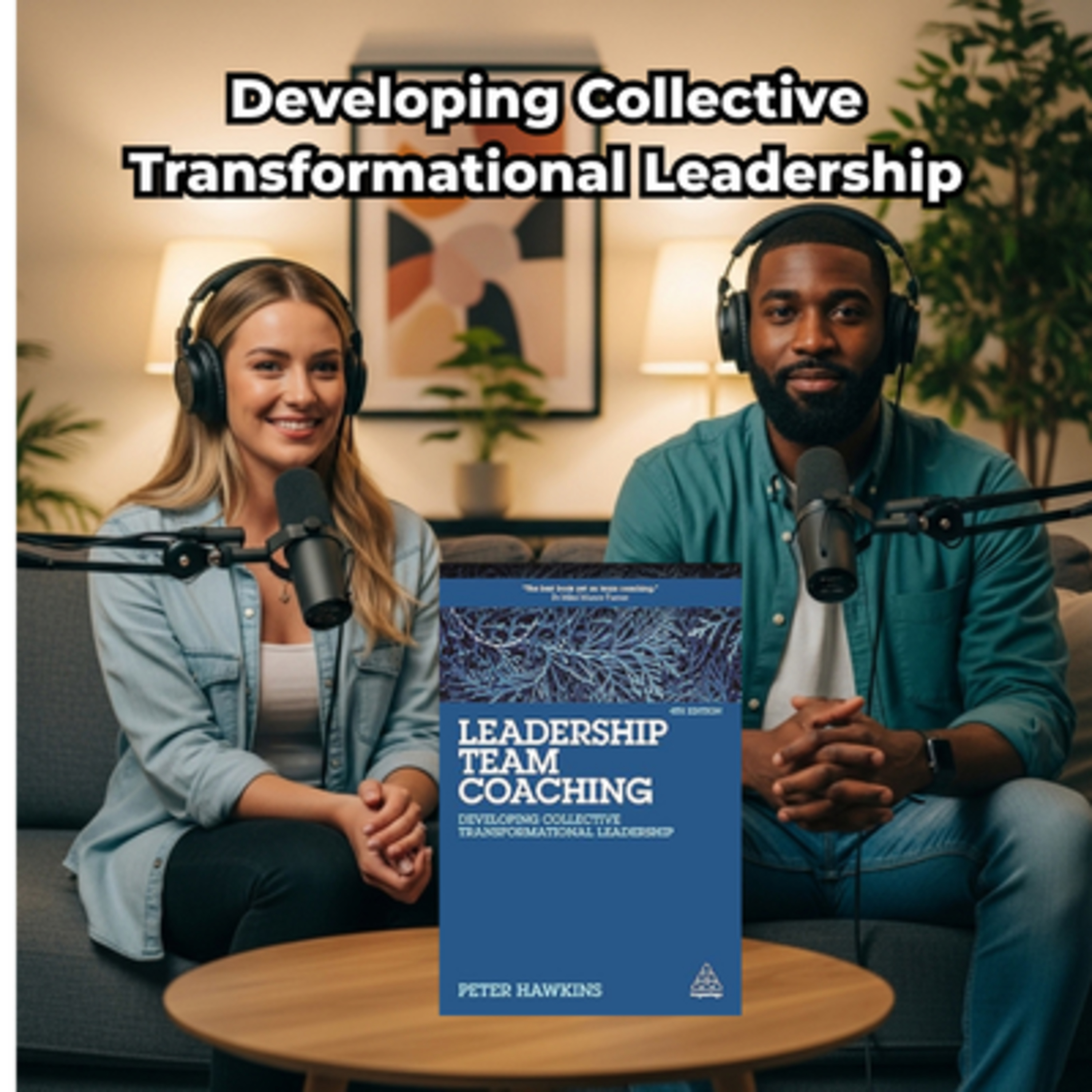
Peter Hawkins’ work explores how collective transformational leadership moves beyond individual performance to create high-value teams that benefit the wider world. By adopting a systemic team coaching approach, organisations can transition from simple task management to innovative, adaptable strategies that align with long-term goals. The text outlines five essential disciplines, including commissioning and clarifying, which ensure every member understands their unique purpose and role. Through the CLEAR model, leaders learn to facilitate structured sessions that foster collaboration, core learning, and strategic connection across various group types. Ultimately, the source serves as a guide for developing cohesive leadership units capable of driving meaningful, systemic change within their industries. This methodology emphasises that sustainable success stems from a team's ability to evolve and create value together.
Organizations are most effective when the teams responsible for their success work together collectively and in a dynamic relationship with the rest of the company. For those involved in developing leadership teams, understanding coaching practices and techniques is essential for enabling the best performance.
Leadership Team Coachingprovides a comprehensive roadmap for team coaching, explaining all the key elements alongside practical tools and techniques for developing international and virtual teams, executive and non-executive boards and project and account teams in all types of organizations. Featuring case studies and insights from organizations including Deloitte and General Electric (GE), it also contains guidance on choosing the best team coach, creating a team-based culture and common pitfalls to avoid.
This fully updated fourth edition of Leadership Team Coaching contains new material on agile teaming, using digital team coaching apps and AI, and training team leaders to coach their own team. It remains an indispensable resource for coaches and senior leaders as well as for those studying coaching as part of a degree or coaching qualification.#productivityhacks #personaldevelopment #successstrategies #businessinsights #leadershipskills #leadership #ambitiousprofessionals #businesstips #self help #scaling business #businesstactics #professionaldevelopment #startupgrowth #entrepreneurship #businessmindset #growthstrategies
Welcome back to the Deep Dive. Today we're digging into some really powerful source material. You gave us excerpts from Peter Hawkins work on collective transformational leadership and systemic team coaching. Yeah, and. This is such a critical topic right now for, well, for decades, we've had this idea that leadership is all about one person. You know, the heroic CEO, the brilliant founder. But Hawkins work, it really challenges that whole model. It really does. So the core idea we're pulling out today is that in this crazy fast-paced world, real impact doesn't come from just one person's genius.
It has to be a collective thing. We're looking at how teams can go from just being good at their jobs to actually changing the game. Exactly. And the mission for you, our listener, is to walk away with a clear framework. We want you to see how your own teams can shift from being high performers, which is, let's be honest, just table space now, to becoming what Hawkins calls high value creators, or HVCTS. It's basically a blueprint for making a real lasted impact. OK, that's a big promise. Let's get right into it.
The starting point is the problem Hawkins sees with most teams today. He says that leadership teams focused only on performance just aren't cutting it anymore. Why is that? Well, it creates what he calls the performance trap. Think about it, performance focused teams, they tend to look inward. Success is all about internal stuff. Like, did we hit our deadline? Did we stay on budget? Exactly. Did we keep the client happy for this one quarter? What we need now are teams that are also highly productive.
And by productive he means generating long term external impact. That's the first step toward becoming a high value creating team. I like that term HVCT, it sets a higher bar, but I mean, why is it so hard for a team that's already performing well to make that jump? What's the big hurdle? The hurdle is switching your focus from internal efficiency to external systemic impact. It really boils down to two key things. First is value creation. This means the team has to focus on making a positive impact outside the company on the wider system, and sometimes that means sacrificing a quick, easy win.
OK, so it's a long game. It's a very long game, and the second piece is radical adaptability. If your only goal is hitting targets, you actually start to resist change because it messes up your plan. But if your goal is creating value in a changing world, you have to embrace it. You have to be ready to pivot. Let's make that real with the IT business example from the sources. So you could have an IT leadership team that's, you know, amazing that you ship features on time. The code is perfect, high performers.
Textbook high performer. But if they aren't looking ahead, if they can't see the next big tech shift coming, they're basically dinosaurs waiting for the meteor. That's a perfect analogy. The HVCT mindset forces that IT team to look up from their keyboards and out the window. They stop just optimizing the next two week Sprint and start thinking about, you know, five year plans, 10 year plans. It completely changes their role from just computing in the market to maybe even defining the future of that market.
That makes the difference so clear. Or what about the project management team example? You know the type. They are Wizards with spreadsheets and deadlines, but are they inspiring anyone? Are they even asking why this project matters in the first place? Right. If they're not, they're just well organized cogs in a machine. A high value mindset gets that team thinking about how their project fits into the company's biggest goals. They become more like internal consultants, finding better ways to do things, motivating other teams.
The success they have is so much bigger and more lasting than just, you know, checking boxes on A to do list. It's about changing the whole culture. It's not just about managing work, but about everyone building the future together. Precisely. And that's the core of transformational leadership. In this collective sense, the team itself becomes the engine for innovation and change, not just the manager. OK, excellent. So we get it. High value creation is the goal. But how do we get there? Let's unpack the blueprint.
What are these five essential disciplines A-Team needs to master? So these five disciplines are the real engine of the whole thing. And what's so important to get is that they're not just, you know, a checklist. They're active practices that all work together. They feed into each other to build that collective leadership. OK, lay them out for us and maybe explain why he calls them disciplines. That sounds pretty intense. Well, the discipline is in applying them rigorously as a system. So we start with Discipline 1, commissioning.
This is all about getting crystal clear on the team's purpose, its objectives, who its stakeholders are, and really why it exists. It's more than a mission statement, it's a living contract. A clear shared purpose makes sense. What's next? Next is discipline. To clarify, this is where you make sure roles and responsibilities are totally clear. But it's deeper than just a job description. It's about making sure every single role directly supports the purpose you define in commissioning. It's about eliminating friction.
Right. So once we know what we're doing from commissioning and who's doing what from clarify, then the work actually starts. And that brings us to discipline 3 Cooperation, or as he often calls it, Co creating. This is the heart of the internal teamwork, fostering psychological safety, encouraging wild ideas, building really solid partnerships inside the team. And then you have to connect that internal engine to the outside world. I'm guessing we have to. That's discipline for connecting. This is about building strong relationships with your external stakeholders.
You know clients, other departments, suppliers, and crucially, learning from them and adjusting what you do based on their input. Without this, the team just becomes an echo chamber. OK. And the last one sounds like the glue that holds it all together. It is Discipline 5 is core learning. Some call it fundamental education. This just means the team has a built in mandatory process for reflection for challenging its own assumptions and adjusting its strategy based on everything it's learned. For the other 4 disciplines, it's the feedback loop that drives improvement.
OK, let's use that marketing team scenario. So they're launching a big campaign. They start with clear goals and audience alignment. That's commissioning. Then they make sure the copywriter, the designer, the social media person, everyone knows their exact part. That's clarifying. They brainstorm together to come up with something really creative. That's cooperation and they work closely with the sales team to make sure the messaging is aligned. That's connecting. And here's the discipline part.
After the campaign is over, they don't just move on. They must have a real debrief. Did we create the value we intended? What broke in our process? What do we change for next time? That's core learning. If they skip that, they're doomed to repeat their mistakes. You can really see how they're all linked. I mean, if the purpose in commissioning was vague, how could you ever clarify the roles properly? You can't. The whole thing starts to fall apart, and that leads us perfectly into the next piece, which is how do you guide A-Team through this?
Because let's be real, this kind of shift almost never happens on its own. Right. And this is where it gets really interesting for me. How does coaching actually support this kind of transformation? Let's talk about systemic team coaching, or STC. So STC is structured help, but it's not just about improving the team's performance, it's about improving its underlying dynamics. You know, how the team relates to itself and to the entire organization around it. It's very different from coaching one person.
How is it different? I mean, if I hire a consultant, they fix my strategy. If I hire an executive coach, they work on my leadership style. Where does an STC fit? The STC sees the team as the client, yes, but also sees the whole organizational system as part of the work. Hawkins talks about a coaching continuum. A continuum. Tell us about that. Well, on one end you have very basic facilitation, you know, helping A-Team have a difficult conversation, manage a conflict. But on the other far end, you have profound systemic transformation.
And what does that profound end look like in practice? It's about tackling the really deep structural problems. So in that nonprofit example, basic coaching might just be helping 2 directors who don't get along to communicate better. But Advanced STC is about looking at why the team's vision is fundamentally clashing with the organization's mission. It's not about fixing the people, it's about redesigning the system they operate in. That's a huge task. So for a coach to take that on, they need a really clear process.
This brings us to the methodology you mentioned, the CID clear process. Yes, CI tier is the road map. It gives the whole process, structure and rigor. Without it, team coaching can just turn into, you know, an expensive unstructured complaint session. Let's breakdown those acronyms for everyone listening. First up, CID. CID is all the prep work. It's context, issues and desired outcomes. This is the critical diagnostic phase where the coach and the team leader work together before any big session.
They figure out the landscape to find the real problems and agree on what success will look like. So the coach never walks in cold and then the actual session is structured by clear. Exactly clear is the flow of the coaching conversation itself. It's contracting, listening, exploring, action and review. So you start by contracting, setting rules and goals for that session, then listening to everyone's perspective, exploring new possibilities, committing to concrete action, and finally reviewing what was learned.
It ensures every conversation leads somewhere. I can picture that with the sales team scenario. Let's say a sales team is struggling because they're all fighting over the same accounts. Right. So a coach would use CID. First, they'd assess the market context, identify the issue which is this toxic internal competition, and said the desired outcome may be a collaborative sales plan within the session. Using CLEAR, they might spend a lot of time on contracting, getting everyone to agree to new rules of engagement.
Then they'd move into exploring why the system rewards that selfish behavior. And it's crucial that the team leader is part of this, right? They can't just outsource it to the coach. Absolutely not. The leader has to be the bridge. They have to champion the new behaviors and reinforce them day-to-day. If the leader isn't bought in, the coaching is just a temporary fix, not a real transformation. That bridge is everything. OK, let's use our last segment to tie this all together. Let's talk about the systemic nature of it all and why one size definitely does not feel.
Yeah, this is the highest level of understanding it. The systemic part means that those five disciplines we talked about commissioning, clarifying and so on, they're not a simple list. They're an interconnected web a system, and good coaching has to address how they all impact each other. If one is weak, it can poison the whole system. Can you give us an example of that that ripple effect? Sure, take a product development team. They might be great performers. They write flawless code. But the products they build keep failing in the market.
They're low value creators, so a coach might find that their internal cooperation is fantastic. They all get along, but their connecting discipline is broken. They never talk to actual customers. OK, I see. And because they're connecting is weak, their core learning is flawed. They only reflect on their internal processes, which means they never challenge their original purpose, their commissioning. So the coach doesn't just say go talk to customers more, they fix the broken link between the outside world and the team's very purpose.
That's it exactly. They fix the whole feedback loop, and because these feedback loops look different for different teams, the coaching has to be specialized. And the sources mention a few different team types. We have project teams, management teams, innovation teams. Right. And you can't coach them all the same way. That's a fatal mistake. Each one has a totally different mission and faces different challenges. So how would the coaching focus change between, say, a management team and an innovation team?
Well, a management team's coaching is going to be heavily focused on things like high stakes decision making and strategic alignment. It's about their impact on the entire organization. Very political, very resource focused. Your project teams are more tactical. Much more, their coaching is about execution, hitting deadlines, managing tasks and making sure the clarifying and commissioning disciplines are rock solid so there's no confusion. And innovation teams, They need something else entirely.
Completely. For them, coaching is all about fostering creativity, deep collaboration, and maybe most importantly, a high tolerance for failure. The coach has to be an expert in the cooperation and core learning disciplines, helping them learn from the experiments that are bound to go wrong. It's a totally different skill set. Wow. OK, we have covered a ton of ground here. We've gone from this big philosophical idea of collective leadership all the way down to the nuts and bolts of how you actually make it happen.
We have. We've moved you from thinking about the high performance trap to understanding the world of high value creation. We gave you the blueprint, those five disciplines, and then the engine to make it work. Systemic team coaching with ACID Clear process. And we've seen that the magic isn't how it all works together as a system, and how the approach has to be tailored to the specific team you're working with. This isn't just theory, it's a real comprehensive framework for building teams that actually lead.
It really is the future of what effective leadership in an organization looks like. So let's bring this home for you, the listener. What does Deep Dive shows us is that creating real, lasting value is all about seeing how those five disciplines interact. So here's the final thought. Think about a team. You know a team you're on or a team you lead. What is its single weakest discipline? Is the purpose fuzzy commissioning? Are the roles a mess? Clarifying. Do they never talk to the outside world? Connecting.
And once you identify that weak link, think about how it ripples out and undermines everything else. How does it stop real learning and cooperation? Because finding that one systemic weakness, that's your starting point for a true transformation. Yeah, ripple effect is where all the leverages. Thank you for joining us on The Deep Dive. We'll see you next time.
 Apple Podcasts
 Castbox
 Castro
 Goodpods
 Moon FM
 Overcast
 Pocket Casts
 Podbean
 Podcast Addict
 Podcast Republic
 Spotify