he Neurodiverse Workplace by Victoria Honeybourne | Explained
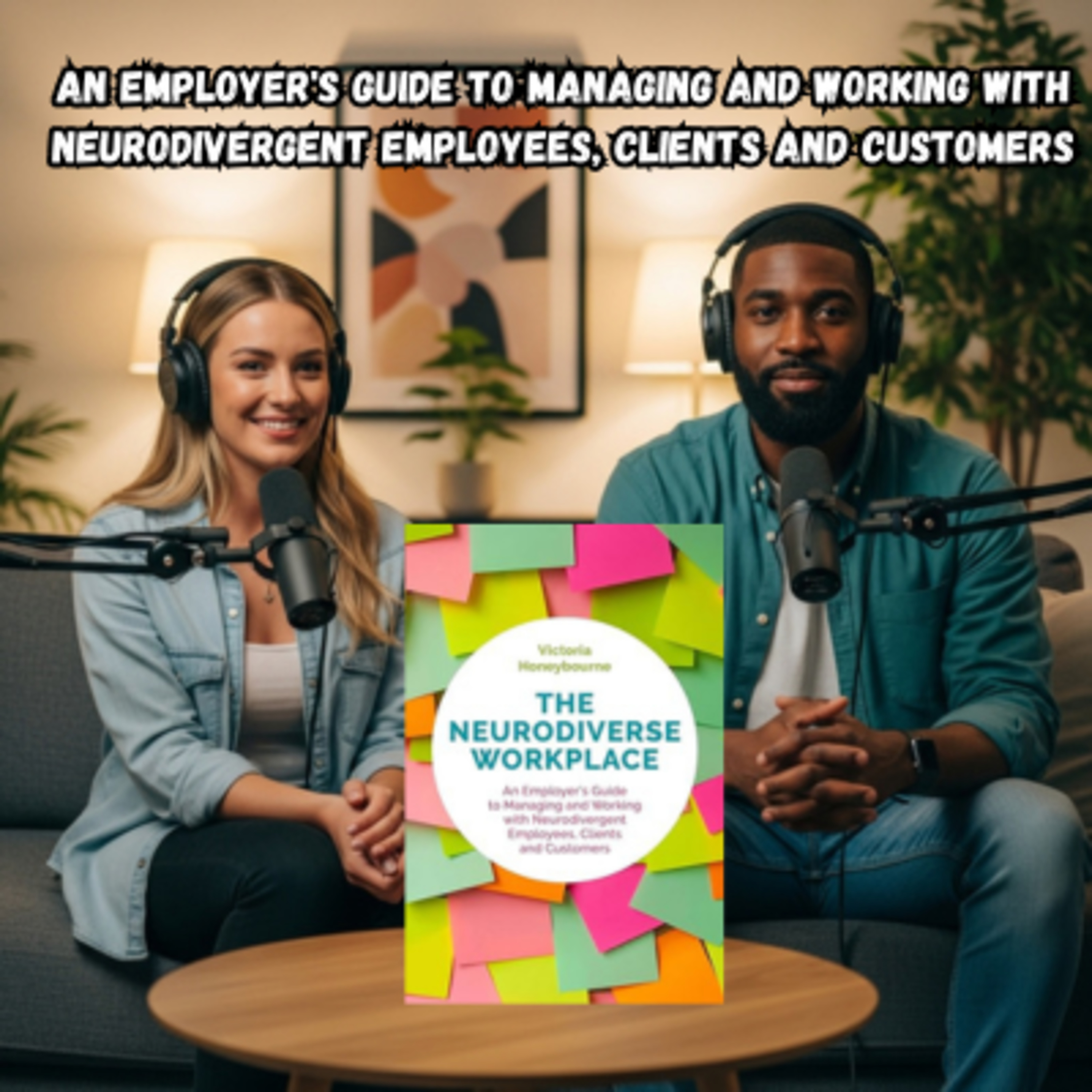
Estimates suggest that up to 20% of employees, customers and clients might have a neurodivergent condition - such as dyslexia, autism, Asperger's, ADHD or dyspraxia - yet these individuals often struggle to gain and maintain employment, despite being very capable. This practical, authoritative business guide will help managers and employers support neurodiverse staff, and gives advice on how to ensure workplaces are neuro-friendly. The book demonstrates that neurodiversity is a natural aspect of human variation to be expected and accepted, rather than a deficit to be accommodated.
Employer responsibilities are highlighted, including the 2010 Equality Act, and a range of strategies and policies are provided, including recruitment advice and the benefits of neurodiverse employees, along with advice on physical environments, interaction and communication, and working with clients and customers. This book is an ideal resource for all employers wanting to support and empower people with specific needs to help create a more inclusive workplace, benefiting both neurodiverse individuals and the companies employing them.This text outlines the fundamental principles of Victoria Honeybourne’s book regarding the integration of neurodiversity within professional environments. It advocates for viewing conditions like autism and dyslexia as valuable assets that enhance innovation and creativity rather than as deficits to be corrected. The guide details how organizations can adapt through inclusive recruitment, clear communication strategies, and sensory-friendly workspaces to better support diverse thinking styles. Beyond internal staff, the material emphasizes the importance of extending these inclusive practices to clients and customers to ensure a broader culture of accessibility. Ultimately, the summary suggests that leadership commitment and ongoing education are essential for moving past mere legal compliance toward a truly supportive work culture. By implementing these proactive policies, businesses can create an atmosphere where every individual's unique strengths are recognized and utilized.
Welcome to the deep dive. You're here because you want to get straight to the point on what is probably the defining topic for the modern workplace neurodiversity. Exactly, and the conversation has moved on. It really has. We're sort of past the philosophical stage now. We know diverse minds are assets. The real question, and I think this is where value is really created, is the practical side. The how? How do we move beyond just good intentions and actually build a measurable, productive environment that works for everyone?
Yes, the how? So today we're doing a deep dive into those practical strategies. We're drawing from excerpts of a guide on Victoria Honeybourne's really influential work The Neurodiverse Workplace. And our mission here is very focused. We want to pull out the actionable road map. You know, how do you adapt the systems, the processes, even the physical office space to unlock all that potential? That is the key, isn't it? Because when we talk about neurodiversity, and that covers a whole spectrum of thinking styles, things like autism, ADHD, dyslexia, we're not talking about minor tweaks anymore.
No, we're talking about a really fundamental shift. A huge shift away from that traditional model that you know, tries to fix the person to fit the system. Right to a new model that focuses on redesigning the environment itself to leverage those unique strengths. And if you look at the core idea in the source material, it really insists on this. It's a foundational shift. The goal is not conformity. The goal is. It's to identify, and I'd say appreciate, the incredible variety of human thought and behavior.
The second you start seeing these differences as specialized capabilities, you stop seeing them as problems to be fixed. And you start seeing them as assets. As inherent assets that can give you a real competitive edge. OK, let's unpack that asset argument a little bit. I mean, why is this more than just a matter of fairness or, you know, doing the right thing? What's the tangible business case here? Well, it's. Fascinating because the advantages mapped directly onto business needs. Organizations that are actively recruiting and retaining neurodivergent employees.
They report measurable increases in innovation. OK. So actual innovation. Yes, and sustained creativity and often really superior problem solving skills, especially in complex sort of niche areas. And that's because the strengths come directly from the neurological differences. Themselves. Exactly. They aren't separate from them, they are a result of them. Can you give us a concrete example of that? Because I think that's the high value insight people need. We can't just lump everyone together. Absolutely.
So let's take individuals on the autism spectrum. They might struggle with some of the conventional, very rapid back and forth social communication, but at the same time many of them show just exceptional skills in pattern recognition, attention to minute detail, and really deep sustained focus. Which makes them perfect for certain roles. Perfect roles like data analysis, quality assurance, cybersecurity, complex coding where those very skills are absolutely essential. A typical employee might just get fatigued or overlook the nuances.
Or you could look at the other end of that spectrum, something like dyslexia. A great example. Traditional academic settings might penalize differences in processing text. Right, they often do. But many people with dyslexia show just phenomenal visual and spatial thinking. Which translates directly into excellence in fields like engineering, design, architecture, any field where seeing the big picture and mentally manipulating concepts is what matters most. So the take away for you, the listener, is that your organization has to get past these generalized labels.
It's all about the individual's unique profile, understanding the specific individual requirements and strengths. That is what lets you optimize that person's contribution. And it shifts the whole focus away from what someone can't do to what they can do exceptionally well. Precisely. Once you've made that philosophical shift, then you have to get to work on the practical stuff, the legal and physical structures of the workplace. And this is where it gets really granular, moving from the idea to the actual measurable adjustments.
I mean, what are the baseline duties for an employer? Well, the sources under score that employers are legally bound to uphold anti discrimination laws. A core part of that is providing what are called reasonable adjustments. Reasonable adjustments. That's a key legal and HR term you really need to know, isn't it? It is. It's about making necessary and appropriate modifications that don't put a, you know, a disproportionate burden on the company. But they ensure a person can perform their job on an equal basis.
It's about equity, not just equality. Exactly. It's about allowing people not just to survive in their roles, but to truly excel. And often these are small modifications that have a huge impact. It's not always about expensive custom overhauls. Not at all, And the sources really highlight the sensory experience here that's critical. The sensory experience. Yes, many neurodivergent workers can be particularly susceptible to sensory overload. Think about a typical office flickering fluorescent lights, constant background chatter, the air conditioning hum.
Things most people find a little annoying, I suppose. Right, but for someone with high sensory sensitivity, it's not just annoying, it can be physically debilitating. That discomfort leads to distraction, exhaustion, and it just drains the cognitive capacity they have for actual work. So what are the solutions? The specific practical things. Well, they're often quite simple, providing quiet workstations, maybe a dedicated low stimulus zone in the office. A quiet room, Basic. A quiet room, yes, Or eliminating high frequency distractions like all the different notification pings from everyone's computers.
And crucially, giving people control over their immediate environment. That's the big one, allowing noise cancelling headphones, maybe letting someone install a warmer lamp at their desk, or just ensuring they have a private clutter free space. Which feeds right into the need for flexible workspaces, doesn't it? A single uniform open plan office? That's just not going to work it. Absolutely will not. The idea is to offer a range of options. You know, quiet sections for deep focus, private rooms for sensitive calls or just to decompress standing desks.
It's about acknowledging that performance is maximized when you let the employee manage their own sensory input. Exactly. But that physical environment is only half the battle. If the processes that get people and the door hiring are flawed, the space doesn't matter. That's a critical link. The source material points out that traditional hiring, which relies so heavily on reading social cues and, you know, performing under the pressure of an interview. It can inadvertently disqualify incredible talent.
Someone might ace the technical test but then fail the social fit part of the interview. Which is often completely irrelevant to their ability to do the job. Totally irrelevant. So we need to adapt machine. The hiring process needs to focus squarely on verifiable talents and competencies. So. What does that look like? It means moving away from relying only on that high stakes conversation. Instead you use skills based challenges or maybe a structured work trial. Like a pre interview assignment. A pre interview assignment is a great example.
It lets the candidate show their true abilities in a less stressful, more focused way. The goal is to let the talent shine through, not get blocked by unnecessary social hurdles. And then once that talent is in the door, the adaptation has to continue with communication of. Course communication is the engine of any company, but we have to recognize how differently people process information. So for many neurotypes, especially those with differences in, say, working memory, breaking down complex jobs into smaller steps is critical.
It's paramount. It reduces the uncertainty that can cause a kind of cognitive overwhelm or paralysis. So a manager giving a complicated multi part instruction at the end of a busy meeting? That's probably not the best. Way. It's probably the worst way for some people. A manager needs to recognize that different people need different methods. Oral instructions are transient. They're easy to forget or miss sequence. Whereas a written memo or a visual flow chart. It provides a permanent external anchor for their working memory.
That flexibility in how you deliver information is absolutely key. And the sources really stressed that companies shouldn't just be reactive, they should have policies that are proactive. That's the sign of a truly mature, inclusive organization. Proactive policies anticipate needs instead of waiting for an employee to have to spend their own emotional energy constantly asking for help. So what are some concrete examples of a proactive policy? Well, aside from sensory friendly spaces being a standard option, you could have adjustments to performance reviews.
How so? Traditional reviews can sometimes penalize behaviors like struggling with eye contact, even if job performance is stellar. Proactive policies make sure that performance is judged on output and competence, not social conformity. That makes sense and things like flexible work schedules being pre approved. Exactly. Or having core hours. That way employees don't have to formally request modifications every single quarter. It's just part of the system. And that kind of support, it has to tie into the overall culture.
This isn't just an HR mandate. It's not. It requires raising awareness and providing continuous training on neurodiversity for management, managers and staff. It's about fostering an environment where these differences are seen as normal, not as some kind of exception. It really connects all the dots, doesn't it? From the physical space to the hiring process, all the way to management just getting it. Understanding the underlying mechanisms, yes. OK. So what does this all mean for the bigger picture?
We focused a lot internally on employees, but does this asset focus mindset stop at the break room? It absolutely must not. The sources are clear that this has to extend outward to your external engagement. You have to recognize and serve your neurodivergent customers and clients. Because if your business is only designed for the statistically average client. You're missing a huge portion of the market, and you're likely creating frustrating experiences for them. So that means rethinking how we present information externally.
A cluttered website? Complex forms Customer service scripts with confusing jargon. All of those are barriers. Barriers for neurodivergent clients who might thrive on clear, succinct, visually organized information. So providing information that is simple to understand becomes a real competitive advantage. It does, and training customer service teams to be patient, to be flexible, to recognize that some clients might need more time or prefer written communication over a phone call. And at the end of the day, all of this, from hiring to the client experience, it all comes back to committed leadership and genuine cultural change, right?
This can't just be a side project for HR. It cannot. A neurodiverse friendly workplace requires a culture of, I'd say, profound acceptance and deep understanding. It's not just about rule. So leaders have to champion it. Publicly, they have to champion it, they have to allocate resources, and they have to hold their managers accountable for inclusive metrics. Their dedication really sets the tone for the whole company. And it's an ongoing journey. It's not a destination you just arrive at. Never.
It requires consistent training, mentorship programs, regular conversations about neurodiversity to keep the awareness high. It ensures the momentum doesn't fade. So if we boil it all down, the final major lesson seems to be that a healthy, inclusive culture benefits everyone. That's it. When you solve for the needs at the edges of the cognitive spectrum, you almost always make things significantly better for everyone in the middle. The whole organization becomes more robust and resilient. And that brings us to the end of our deep dive.
We've gone from reframing differences as assets, to implementing specific physical and procedural changes like quiet spaces and adapted hiring, and finally to driving real cultural change through committed leadership. So here's a provocative thought for you to Mull over if providing specific flexible accommodations like recorded instructions or quiet workspaces leads to demonstrably better problem solving and innovation for an organization. What other areas of your business or even your life might be suffering right now because you're enforcing A rigid one-size-fits-all system?
A system designed for an average person who statistically doesn't actually exist? It's a compelling thought that challenges conformity in every aspect of our work and lives. Thank you for joining us on this deep dive.
 Apple Podcasts
 Castbox
 Castro
 Goodpods
 Moon FM
 Overcast
 Pocket Casts
 Podbean
 Podcast Addict
 Podcast Republic
 Spotify