Manufacturing Consent by Noam Chomsky and Edward S. Herman | Propaganda Filters
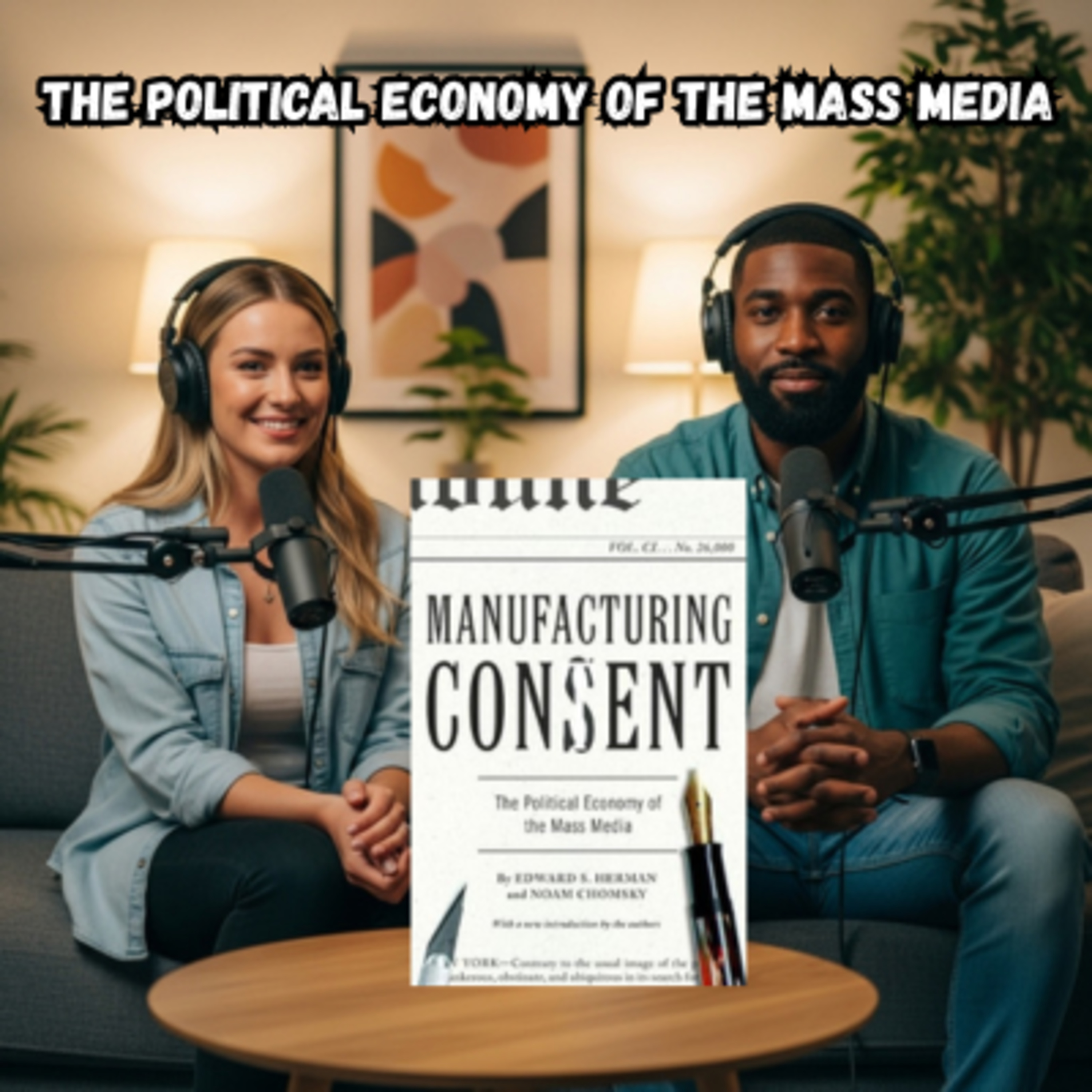
A bold and eye-opening exposé on how power and propaganda distort the news, now more relevant than ever • With an updated introduction
“[A] compelling indictment of the news media’s role in covering up errors and deceptions in American foreign policy.”—The New York Times Book Review
Renowned scholars Edward S. Herman and Noam Chomsky reveal how U.S. news media, far from being independent watchdogs, often function as tools of elite influence. With probing analysis, they present their Propaganda Model, a framework that explains how systemic bias shapes the stories we’re told, the voices we hear, and the truths that remain hidden.
Through deeply researched case studies, from the Vietnam War to coverage of “worthy” vs. “unworthy” victims, Manufacturing Consent exposes the structural forces that drive news organizations to reinforce power rather than question it. It’s a sobering portrait of a media system more interested in maintaining order than informing the public.
This edition includes an introduction updating key examples and expanding the Propaganda Model’s relevance to issues like the coverage of NAFTA, the media’s treatment of global protests, and environmental regulation.
Manufacturing Consent is a powerful assessment of how propagandistic the U.S. mass media are, how they systematically fail to live up to their self-image as providers of the kind of information that people need to make sense of the world, and how we can understand their function in a radically new way.
Whether you’re a student, activist, or citizen looking to see beyond the headlines, this book will transform how you understand the media—and the world around you.
This episode outlines the propaganda model proposed by Noam Chomsky and Edward S. Herman, which suggests that mass media functions to uphold the interests of wealthy elites rather than providing objective truths. By examining various case studies, the summary illustrates how corporate ownership, advertising dependencies, and official government sourcing filter information to shape public perception. The source highlights how the press distinguishes between "worthy" and "unworthy" victims and manipulates the reporting of foreign elections or conflicts to suit geopolitical agendas. Ultimately, the material serves as a call for critical media literacy, urging audiences to seek alternative narratives and recognise the invisible forces that manufacture consent. These chapters explain that news is often a tool for ideological control rather than a transparent window into global events.
Welcome to the deep dive. You know, if you've ever stopped while scrolling through the news and just ask yourself, wait, why is everyone talking about this one story right now but ignoring that other massive thing happening over there, then this deep dive is definitely for you. We're pulling apart the mechanics of news production itself today. We're digging into a text that, well, it fundamentally changed how we view the information we consume. Noam Chomsky and Edward S Herman's Manufacturing Consent.
The political economy of the mass Media. In that book, it's not just a history lesson, it's almost like an operating manual for how power structures can use the media to, you know, manage public opinion. Our mission today is really focused. We want to pull out the key structural insights, the actual tangible procedures that decide which voices get amplified and which facts get buried. So. We're moving beyond just saying media. Bias way beyond. We're trying to understand the actual architecture of control and if you can internalize these concepts, you become a much more skeptical and because of that, a much better informed consumer of news.
Because the whole idea, the entire premise, is that in societies like ours, which are dominated by powerful elites, the mass media operates not really to inform but to support the dominant social, economic and political agenda. This central concept they developed to describe this is the propaganda model. So OK, let's unpack the structural theory. Right. The propaganda model is their systematic framework. It's for explaining how capitalist media, which I mean, let's be honest, essentially all major Western media functions, they argue that you don't really need explicit state-run censorship.
So it's not some guy in a dark room saying don't print that. No, not at all. Instead, it's the simple pursuit of profit combined with a reliance on powerful sources and of course, advertisers. All of this creates these structural filters that just inherently biased the final news product. It sounds, you know, intensely cynical, but they rooted in economics, not in some grand conspiracy, so. What are the key filters they talk about in chapter one that fundamentally shaped this whole flow of information?
They identified 4 big ones and the first one really establishes the base reality, ownership and the profit motive. Major media outlets aren't just newspapers or TV stations anymore. They are massive vertically integrated corporations and they're often owned by even larger conglomerates. Think you know, defense contractors, banking firms, global real estate empire. So the. Point here isn't just that they need to make money, I mean every business does. It's that they have to cover the news in a way that doesn't jeopardize the much, much larger financial interests of their parent company or their major shareholders.
Precisely if your parent company have huge investments in, say, fossil fuels, how aggressively are you really going to cover investigative pieces on climate change regulatory failures, right? Or if your owners are defense contractors, how often are you going to run stories that seriously question the need for more military spending? This corporate structure, it provides the first layer of inherent unstated censorship. And the second filter that just drives it home even more advertising revenue. I mean, if a media outlet relies on massive advertising budgets from corporations to survive, they have to produce two things, right?
Content that doesn't upset the advertisers and an audience that the advertisers want to reach. And just think about the implicit pressure there. It's not just about avoiding stories that are critical of, you know, a specific advertiser. It's bigger than that. Also, it's about avoiding anything that might put the audience in a bad mood, which would make them less likely to buy the products being advertised. So serious, complex or really critical social analysis might be seen as what depressing. Exactly depressing and therefore anti consumer.
The advertiser pays the bills, and anything that hurts the advertisers access to a buying audience, well, it has to be marginalized or softened. It's a really powerful and often invisible pressure that steers content toward the uncontroversial. That makes the third filter, sourcing of news, a matter of, I guess, sheer efficiency married to corporate security. If journalists are on tight deadlines, they need reliable, quick access to information. So where do they get? It they get it from official sources, the public relations departments of government agencies, the press releases from major corporations, and you know, pre vetted institutional experts.
Convenient. It's convenient for the journalist because the information is all structured and easily available. And it's convenient for the powerful because it lets them control the initial framing of the story. But the result for you, the listener, is dangerous. You're mostly just getting the institutional perspective, independent investigative journalism, which is expensive and risky. It gets elbowed out by this flood of institutionally approved narratives which are cheap and efficient. Correct.
And the media relies on these sources not just for content, but for access. If you antagonize a major government agency or a big corporation by constantly challenging their press releases, you're going to lose access. And that's often a death sentence for a fast-paced news desk. And that leads right into the 4th filter, which is probably the most potent because it's the punishment mechanism. Flak and anticipatory self censorship. This is where it gets really interesting. What exactly is Flak? Flak is organized, powerful and sustained negative criticism.
It's designed to punish media outlets that stray from the dominant narrative. So. This isn't just a few angry emails from viewers. No, no, we're talking about organized letter writing campaigns, threats of lawsuits, funding cuts to public broadcasting, or targeted attacks from corporate funded think tanks and PR firms. The goal is to make the economic cost of challenging the status quo way too high. And the result of that constant threat is the second part of it, anticipatory self censorship. Exactly.
Editors and journalists. They know the potential cost of flax, so they learn to internalize the parameters. They don't wait for the government to tell them what not to print. They proactively choose stories and framings that are safe, that won't attract organized punishment, and that align with the established ideological baseline. So it creates this seamless system of bias that's maintained by marketplace pressure, not by a formal sensor. Right. It creates a system where the bias is less about malice and more about, well, survival within that marketplace.
And once you grasp these filters, you start seeing the model in action everywhere. Which brings us to the concept of worthy and unworthy victims. This is where the political use of news coverage really hits home. This section looks at the really stark difference in how violence and injustice are covered, and it's based entirely on who the victim is, and, crucially, who the perpetrator is. Chomsky and Herman argue the key factor is whether the victim's suffering can be politically useful to powerful Western elites.
So if a government that's been labeled an official enemy commits some kind of atrocity, the media coverage is massive, It's detailed, It's emotionally charged. The victims are whirly. Precisely. They become the focus of intense scrutiny, international outrage, you know, endless memorialization. Their suffering is used to mobilize public opinion against the perpetrator and that justifies interventionist policies or sanctions. But then what about the unworthy victims? Those are the victims of atrocities committed by our allies or by our own government.
The authors, they meticulously document that the coverage of these victims is often minimized, its contextualized away, or just, you know, relegated to the back pages. The reports are fleeting, technical and they lack the emotional language and sustained attention given to the worthy victims. It really forces you to audit your own memory. I mean, who do you remember vividly from global conflicts and who's suffering just kind of faded into the background of maybe out of two-minute segment instead of two months of saturation coverage?
And that contrast that is the mechanism of manufacturing consent in action. By highlighting one set of victims and marginalizing another, the media shapes our moral geography. It tells us which injustices we should care about and which we should ignore, all in alignment with pre-existing political agendas. This gets even more concrete when we look at their analysis of global power dynamics in Chapter 3, which focuses on legitimizing versus meaningless Third World elections. They use the specific examples of El Salvador, Guatemala and Nicaragua during the Cold War.
Yeah, this really shows the geopolitical function of the propaganda model. The authors found a very clear double standard in how the media reported on these elections, and it was based solely on whether the outcome aligned with US foreign policy interests. Can you? Just lay out that double standard for. US, absolutely. So you take El Salvador and Guatemala. They were US allies, and they had highly questionable, often fraudulent elections conducted under heavy military influence. The media tended to legitimize these elections, focusing on the appearance of democracy, you know, the pictures of people queuing to vote.
And they downplayed the documented state terror, the human rights abuses and the lack of any real opposition. But. Then you have Nicaragua where the sanities to government was considered a political enemy of the US. And the standard just flipped entirely. The election in Nicaragua was subjected to intense scrutiny. Every minor procedural flaw was amplified. The coverage emphasized alleged government control and focused on opposition parties that decided to boycott, often ignoring the positive assessments made by international observers on the ground.
So the lesson is that the media basically told the public which elections were legitimizing and supported democracy and which were meaningless and therefore required, you know, destabilization or intervention regardless of what was actually happening. It's perception management at the highest level and it raises this really important question, are we seeing genuine democracy reporting or a powerful tool of bias framing designed to reinforce dominant global power structures? And the author stressed that to challenge this, you have to rely on independent analysis groups, not dependent on state or corporate funding, to get the necessary context.
Moving from those big geopolitical frameworks to specific historical cases of, well, outright manipulation, the book gives some compelling, almost shocking evidence. Let's turn to Chapter 4, which looks at the purported KGB Bulgarian plot to kill the Pope John Paul the Second. This case study is so critical because it illustrates how easily a massive disinformation campaign can be seated and sustained by the mainstream media, even when the evidence is extraordinarily thin. And the goal was clearly political right to discredit the Soviet Union and its allies.
Exactly the narrative that the KGB had hired a Turkish assassin to kill the Pope. It served the political interests of those who wanted to destabilize the Soviet. Key sources for the story were often intelligence agencies providing leaks, tips and highly controlled specific information. And the media relying on official sources, that's filter 3 and driven by the desire for a huge enemy focus story, just disseminated this plot everywhere. Right. The media was hungry for a major scoop so they amplified the narrative provided by intelligence agencies.
It blurs the line between journalism seeking truth and journalism serving a strategic anti enemy agenda. It really showed how manufacturing consent through disinformation operates on a massive scale to create fear and justify political stances. And if you connect it back to the filters, the story worked because it was consistent with the established ideological baseline of the time. It didn't attract flak. It generated praise. It was ideologically safe that. Perfectly sets the stage for the book's final massive case studies.
The coverage of the Indo kind of wars, Vietnam, Laos and Cambodia, which spans chapters 5 and 6. This is maybe the most devastating application the whole model. Or coverage is the ultimate litmus test. Herman and Chomsky argued that during the Vietnam era, the media functioned heavily as a mouthpiece for the government. They framed the conflict to justify military intervention and repeatedly downplayed or just ignored the massive human cost of US actions. And you can see the effects of embedded journalism here, even before that term was really a thing.
Yes, the authors pointed out that journalists who are physically tied to military units, who share their experiences and rely on them for safety and access, they inevitably start to internalize that perspective. It's only human and it results in one sided sanitized accounts of war that minimize civilian casualties or strategic failures. The embedded reporter becomes part of the military establishment's narrative structure, their manufacturing consent for ongoing conflict by showing only the quote heroic side.
Then in Chapter 6, they look at selective reporting in places that were less strategically important, like Laos and Cambodia. Why did the media fail so badly to cover the bombing campaigns and the suffering there? Because the suffering in Laos and Cambodia, especially the civilian casualties from US bombing, it, just didn't serve the political utility of the dominant narrative. The media focused on the military battles that confirmed the US story while neglecting the broader context, the atrocities and the sheer scale of the human devastation that was strategically inconvenient to report on.
It shows the structural need to obscure the true human cost when that cost is from actions supported by Western Power. The mainstream narrative just conveniently chose to ignore or downplay all that suffering and injustice because it was inconvenient. And that necessity is what validated the crucial role of alternative media and counter narratives. Independent journalists, dissenting voices, activist groups. They were absolutely essential in providing the real perspective, documenting the suffering and exposing the true scope of the war that the filtered mainstream media just ignored.
So after all this, the filters, the victims, the elections, the war propaganda, what does this all mean for us today, decades after the book first came out? Well, the conclusion remains pretty much the same. The media operates fundamentally within this propaganda model. It serves powerful corporate and government interests, and the pursuit of objective, impartial coverage often takes a backseat to the structural realities of corporate influence, namely ownership and advertising. So the knowledge to take away for you, the listener, is the absolute necessity of critical media literacy.
You just can't afford to consume news passively anymore. You have to constantly ask who owns the platform, who's paying for the ads, which sources are being relied upon, and most importantly, who's suffering is being amplified versus who's is being silenced. Herman and Chomsky's work really encourages us to celebrate and seek out the role of independent media, of dissenting voices, and of activists who are actively working outside of those four filters. Becoming aware of the filters is the first crucial step toward becoming a genuinely informed, rather than just a, you know, knowledgeable news consumer.
That structural awareness is the power we hope you take away from this deep dive. Now here's a final provocative thought for you to consider beating on everything we've talked about with these structural mechanisms. If the economic and political structures that underpin media ownership, the very filters that Herman and Chomsky identified, if they remain completely unchanged, is truly independent and objective mass journalism structurally impossible? What is your responsibility now in seeking out and supporting those alternative voices that the propaganda model inherently tries to marginalized?
The architecture of the news is now laid bare. Go apply this knowledge the next time you see a major breaking story and start asking those tougher questions about its origin and its purpose. We appreciate you telling us to unpack these insights. Until next time.
 Apple Podcasts
 Castbox
 Castro
 Goodpods
 Moon FM
 Overcast
 Pocket Casts
 Podbean
 Podcast Addict
 Podcast Republic
 Spotify