From Individual to Empire by Laura Bull | A Guide to Building an Authentic and Powerful Brand
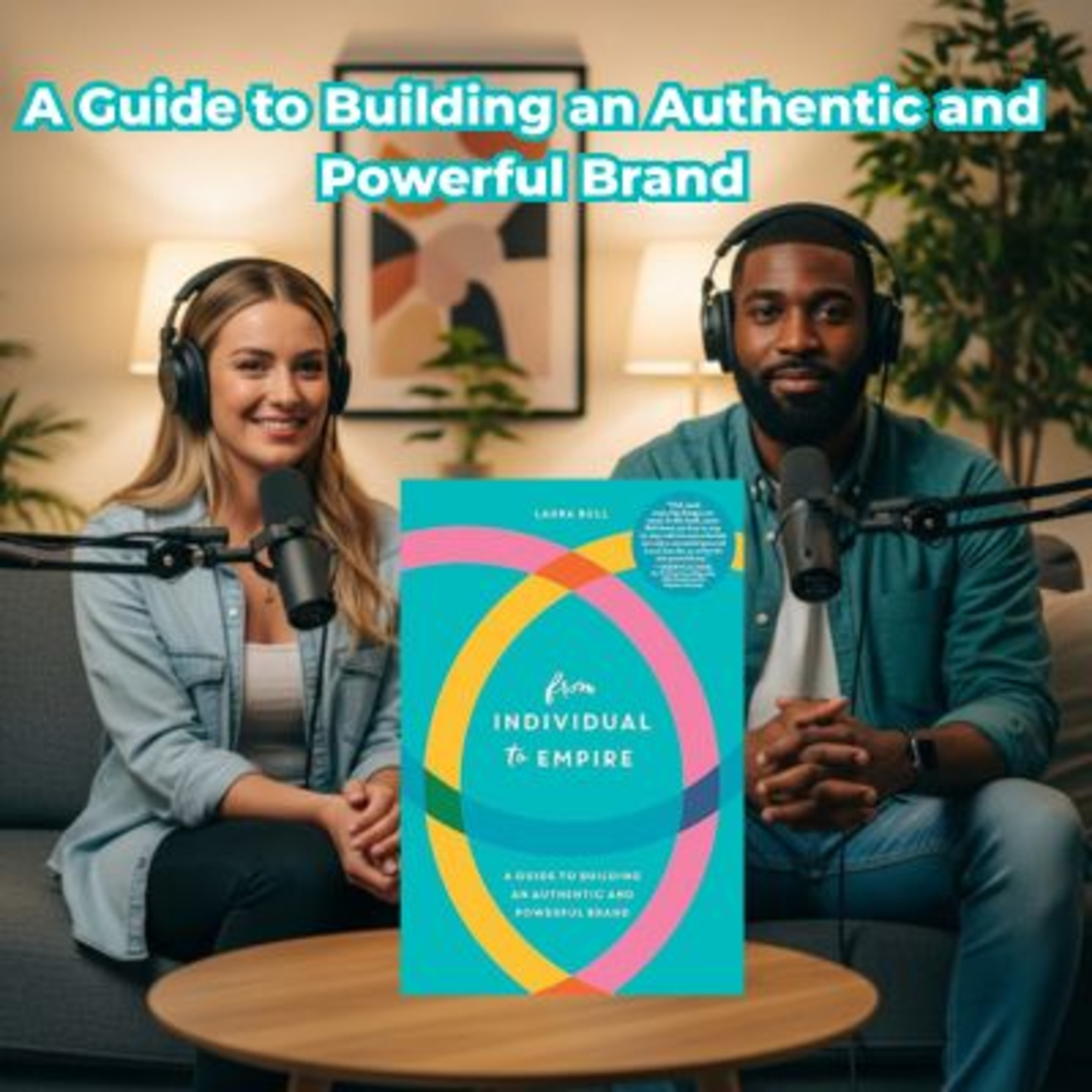
This episode outlines the core principles of Laura Bull’s branding philosophy, emphasizing that long-term success stems from radical authenticity and deep audience connection. To build a powerful identity, creators must move beyond surface-level aesthetics to share vulnerable, personal narratives that foster trust with their followers. The author highlights the Five Ps of marketing—purpose, passion, personality, positioning, and profit—as a strategic framework for standing out in a saturated digital landscape. Additionally, the text stresses the importance of proactive adaptation, urging brand owners to evolve their offerings based on shifting market trends and direct consumer feedback. Ultimately, the source serves as a practical guide for transforming an individual profile into a meaningful and profitable empire.
Unlock the power of your personal brand and build a business empire rooted in authenticity, strategy, and creative influence.
In a marketplace saturated with influencers and entrepreneurs chasing trends, From Individual to Empire offers a bold and necessary alternative: a clear, psychological roadmap for building a sustainable and powerful brand identity that grows with you.
Whether you're a creative entrepreneur, aspiring thought leader, or established business owner ready to evolve your brand, this bestselling guide delivers the strategic tools you need to stand out, scale up, and stay aligned. Author and renowned brand strategist Laura Bull, former music executive and branding expert behind some of the world’s most iconic names, distills decades of expertise into an actionable framework that helps you clarify your message, cultivate influence, and transform your reputation into a revenue-generating brand.
Inside, you'll discover how to:
- Move beyond personal brand buzzwords to develop a lasting, multidimensional brand strategy
- Identify the values, tone, and visual identity that set you apart from competitors
- Balance authenticity with business growth without sacrificing either
- Apply brand psychology and narrative frameworks used by today’s top creators and CEOs
- Shift from inconsistent content creation to purposeful brand development
From Individual to Empire is the go-to resource for entrepreneurs, consultants, artists, content creators, and visionaries who want more than momentary attention, they want influence that endures.
If you're ready to take control of your personal brand, amplify your impact, and build an empire that reflects who you truly are, this book is your blueprint.
Perfect for:
- Creative entrepreneurs, celebrities, and public figure
- Coaches, consultants, and creators
- Influencers ready to grow beyond social media
- Founders seeking clarity in their brand messaging
#fromindividualtoempire #laurabull #productivityhacks #personaldevelopment #successstrategies #businessinsights #leadershipskills #leadership #ambitiousprofessionals #businesstips #self help #scaling business #businesstactics #professionaldevelopment #startupgrowth #entrepreneurship #businessmindset #growthstrategies
Imagine like putting your absolute unfiltered self on the Internet. Oh man. Right. Like the sweat, the tears, the, you know, the chaotic, messy kitchen in the background, all of it. It's. Terrifying. It is entirely terrifying. But what if leaning into that sheer vulnerability is actually the only strategic, viable way to build a massive corporate empire? Cause crazy thought, but yeah. It is. And you are here because you're a learner. You're driven to collect new skills and you know multiple perspectives, and you want to do it without waiting through hours of theoretical noise.
Exactly you want the signal. You want the signal. So today's deep dive is pulling from some core excerpts of Laura Bulls highly regarded book From Individual to Empire, The Architecture of Authentic Branding. Such a great source. It really is, and our mission today is to extract the blueprint for creating a footprint that transcends just, you know, basic marketing. Yeah, this is for whether you're scaling a business or maybe consulting as an industry expert. Or just trying to navigate how to present your professional self in this overwhelmingly loud world.
Right? Right. Which is not easy. Not at all. OK, let's unpack this. Because the very concept of an empire usually conjures up images of massive scale, cold corporate structures and, like, ruthless expansion. Yeah. Skyscrapers and boardrooms. Exactly. Yet the foundational architecture we're looking at today demands that you start with something incredibly intimate and small. It demands that you start with the unpolished version of yourself. And that is a brilliant paradox to anchor our discussion on, because when we study legacy brands, we tend to look at the glossy finish of the skyscraper.
We don't look at the dirt it was built on. But the bedrock of this entire architectural framework is the self, and specifically the sincere self. You simply cannot sustain A lasting external structure if the internal foundation relies on, you know, a fabricated, hyper curated persona it. Just crumbles. It absolutely crumbles before any transaction happens, before you sell a product or a consulting hour. Big idea. You are essentially selling your identity. Yeah, and the modern consumers radar for inauthenticity is like more sophisticated than ever.
Oh completely. They can spot a manufactured persona from a mile. Away they really can. And that radar is precisely why, by the conventional wisdom of fake it till you make it seems to be feeling spectacularly right now. It's. Completely backfiring, yeah. If you want a durable connection, you have to lead with your actual values and your very real flaws. Consider the fitness instructor example. We pulled from the material the immediate instinct for someone entering that incredibly saturated space is to project like God level perfection.
Flawless studio lighting. Exactly. Yeah, Unattainable physiques, perfectly executed routines with not a single drop of sweat out of place. Which is what everyone else is doing. Right. But the strategy here argues the exact opposite. It advocates for documenting the entire messy journey. The. Good and the bad. Yeah, showing the days where the alarm goes off and you just want to throw your phone across the room. Showing the reality of trying to meal prep when your kids are screaming and your life is just completely chaotic.
What's fascinating here is the underlying psychology of why that vulnerability actually converts into commercial and brand loyalty. Yeah, explain that because it feels counterintuitive. It does, but sharing the struggle is not about trauma dumping or, you know, complaining just for the sake of attention. It functions as a highly strategic trust building mechanism. OK, think about the power dynamic. When a fitness creator projects absolute perfection, they place themselves on a pedestal. They become this intimidating, unattainable ideal.
And the viewer feels a sense of deficit, like they're failing. Exactly. But the moment that creator admits they skipped a workout because they were exhausted, the audience breathes a collective sigh of relief. The pedestal is dismantled. Yeah, the creator shifts from an unattainable deity to a relatable guide who is simply, you know, a few steps ahead on the same difficult path. And that relatability breeds trust. Exactly, and trust is the ultimate currency translates into stronger ties, deeper loyalty, and an audience that will actively defend and support your brand.
I look at it like the difference between a highly produced corporate television commercial and an unexpected FaceTime call from a close friend. That's a great way to put it. Like when a commercial interrupts our day, our psychological guard immediately goes up. We cross our arms, we tune it out because we know we're being manipulated by this perfectly manicured illusion designed to extract our money. Right, we know we're being sold to. Exactly. But when a friend Facetimes us from their messy living room, we lean in.
We drop our defenses. We inherently crave that genuine, unfiltered human connection. Yes, the goal of the modern brand is to be the FaceTime call. That analogy perfectly captures the mechanism of human trust. Guard up versus guard down. We engage the FaceTime call because the sincerity is palpable, right? However, and this is where the architecture requires a significant pivot, authenticity alone is insufficient. Really. Yeah, if you simply sit in a room and look inward, reflecting on your own flaws and values, you don't have a brand, you have a diary.
Oh wow, that's a huge distinction. It is. A brand cannot survive in a vacuum. It requires an ecosystem. This requires A fundamental shift in focus from the me to the them. You must cultivate an intimate, almost obsessive understanding of your audience. So it's a transition from intense self-awareness to intense audience awareness. Exactly. You have to know who is on the other end of that FaceTime call, and the material stresses that a theoretical understanding of your target demographic won't cut it.
The spreadsheet isn't enough. Right. You have to understand their underlying psychographics, their daily frustrations, their hidden preferences, and the specific pain points they might not even openly articulate. And you can't just guess these metrics in a boardroom. No, it requires active continuous engagement, running targeted polls, conducting surveys, or just spending hours having informal diagnostic conversations in the comment sections of your social platforms. You are essentially building a real time data feedback loop.
By practicing active listening, you are mapping the terrain of your market. The more granular your understanding of what frustrates your audience, or what they secretly aspire to achieve, the more surgically you can tailor your value proposition to serve them. I need to challenge this progression for a second though, because I struggle with this step. OK. Let's hear it. If we spend all our time running polls actively asking the audience what they want to see, and then immediately pivoting to give them exactly that, don't we inherently destroy the authentic, sincere voice we just spent the entire first segment establishing?
That is the $1,000,000 question. Doesn't this approach degrade into simply pandering to the whims of the crowd? That tension you're pointing out is the exact trap that destroys thousands of emerging creators and businesses. It's a vital distinction. OK, listening to your audience does not mean capitulating your identity to them. It's not about changing who you are, it is about adapting your offerings to solve their specific realities. Adapting the offerings, not the identity. Yes, you hold your core values, your distinct personality, and your overarching mission completely steady.
What you change is the specific practical application of those values. Let's ground that in the skin care company example from the research. Oh, that's a perfect example. Right, so imagine you run this boutique skin care brand. Your core identity is built around natural, earthy aesthetics and a philosophy of minimalist beauty. You've got a very clear vibe. Exactly. And through those informal, active listening interactions on your platforms, you discover a recurring theme. A massive segment of your dedicated audience is quietly suffering from severe skin sensitivities and rosacea.
Now, if you were simply pandering, or if you had weak brand architecture, you might panic. Yeah, you might scrap your entire earthy aesthetic and rebrand overnight. Is a sterile clinical dermatology company. Right, just to chase the demand. Exactly, and you would lose your identity entirely. Which is fatal. It is, but navigating this correctly means maintaining your authentic brand voice and your core minimalist philosophy while structurally adapting your product line. So you formulate a new natural serum specifically engineered for sensitive skin.
Precisely, you are communicating to the market. I am exactly who you thought I was, but I am listening to you and I am applying my expertise to solve your specific pain. Oh I love. That, and when consumers realize a brand has evolved to accommodate them without selling out its soul, their loyalty becomes absolute. They transition from passive consumers to vocal advocates. OK, so we have the authentic self as the foundation and we have this deep diagnostic understanding of the audience's pain points as the target.
The architecture now requires a bridge to connect. The delivery mechanism. Yes, and the mechanism for delivering that connection is narrative. You have to wrap the value in a compelling story. Story is the glue that binds the individual to the expanding empire. We have to acknowledge the reality of the modern market. You are almost certainly not the only person selling your specific product, service or insight. Not even close. There are 10s of thousands of fitness coaches, right? Thousands of natural skin care lines competing purely on features or price is just a race to the bottom.
A compelling narrative is often the only proprietary differentiator you possess that cannot be replicated. It communicates your journey in a way that bypasses the logical, analytical part of the consumer's brain and directly strikes their emotional core. Here's where it gets really interesting, because the psychology behind this mimics the exact structure of a comic book origin story. I love this comparison. Think about how we consume superhero media. We honestly don't care that a character can shoot lasers or fly.
Right. A superpower in isolation is incredibly boring. Exactly what rivets our attention is the Crucible. How did they get the power? What agonizing struggles did they endure to master it? What catastrophic failures did they experience? And what profound moral lessons forced them to use that ability for something greater? If we connect this to the bigger picture, you are mapping out the precise storytelling framework that drives human connection. Anthropologically, human beings are hardwired to process information through narrative arcs.
We're looking for patterns. Yes, we scan our environment for sympathetic characters. We intensely analyze the difficulties they encounter, and we wait to absorb the lessons they learn so we can alley them to our own survival. Wow O it's literal survival sychology. It is embedding your brand in a narrative arc fulfills that psychological need. It shifts the consumers disposition from a fleeting transactional interest to a deep invested devotion. Look at the food blog example from the text. If you launch a website and simply upload a database of ingredient lists and baking temperatures, you are a utility.
You are easily replaceable by a simple search engine query. Anyone can find a recipe for cookies. Exactly. But if you lead with the story of standing on a stool in your grandmother's cramped, flower dusted kitchen, if you detail the spectacular burnt disasters of your early culinary experiments and the years of trial and error required to perfect that one specific pastry until it became the centerpiece of your family's holidays. You're no longer a utility. You are an experience. Let's analyze the mechanics of what that specific story achieves.
It immediately deploys the vulnerability we discussed earlier by highlighting the culinary disasters. Right, the burnt cookies. Yes, it delivers tangible value by providing the perfected recipe, but crucially, it wraps that transaction in a rich tapestry of legacy, perseverance and warmth. It. Feels personal. The audience is no longer just baking a pastry, they are participating in the emotional resonance of your family history. That emotional participation completely insulates you from competitors who are just pumping out sterile, optimized recipes.
Yeah, as much as the storytelling and vulnerability aspects resonate, the architectural blueprint requires a pivot here. It does. It can't all be feelings. Right. Sincerity, audience awareness and narrative are potent, but without a rigid structure they collectively amount to a highly time consuming hobby. Exactly. Transitioning from an individual to an empire requires A strategic operational framework. We have to move from in the art of connection to the cold architecture of business strategy. The nuts and bolts.
Yes, and the operational blueprint provided is encapsulated in the five PS of effective influencer marketing. They are purpose, passion, personality, positioning and profit. Five PS. And this is not just a catchy list, it is an interlocking mechanism. It acts as the structural steel that revents a creator from drifting aimlessly in an oversaturated market, ensuring that every piece of content and every product launch serves A unified goal. Let's breakdown the mechanics of these five PS using the lifestyle influencer model.
We start with purpose. The macro level. Why? Right. This is the overarching mission for this creator. The purpose might be dismantling toxic diet culture and promoting holistic, accessible self-care. It's the North Star. And then we have passion. Yes, this is the specific engine that drives the vehicle toward that North star. For them, the passion might be the specific practice of restorative yoga and mindfulness meditation. So the purpose dictates the destination, while the passion rovides the fuel.
I love that. Then we integrate personality, which is the delivery mechanism. This brings us full circle to sincerity. How is this message uniquely delivered? For this specific influencer, they might leverage self deprecating humor, a slightly chaotic aesthetic, and extreme bluntness. Which is very different from the usual Wellness 5. Exactly this specific personality repels viewers looking for pristine, austere Wellness gurus, but acts as a massive magnet for highly stressed professionals who need a laugh with their meditation.
Which naturally creates the 4th P positioning. Because of that unique combination of yoga and chaotic humor, they aren't just another generic Wellness. Right, they have positioned themselves in a completely unique market category, the relatable down to earth anti guru. They've essentially built a Moat around their brand. Exactly. And finally, the structural pillar that artists often shy away from profit. Yeah, people hate talking about money. They do, but if the empire is going to stand, it must be economically viable.
This influencer monetizes their positioning through tiered subscription workshops, targeted affiliate marketing for equipment they actually use, and corporate Wellness consulting. The genius of this specific framework lies in its interconnected ecosystem. It really does. If you remove even one of those pillars, the entire structural integrity is compromised. Let's look at that if you possess blinding passion and infectious personality and unique positioning, but completely ignore the profit mechanisms.
You will inevitably burnout. Yeah, your empire collapses from a lack of resources, right? Conversely, if you optimize heavily for profit and positioning but lose your underlying purpose and passion, you. Hollow out the building, you become a sterile corporate commercial we talked about earlier, and the audience will detect that emptiness and abandoned ship. I want to talk directly to you for a second. Think about your own projects right now. Look at the initiatives you're building. It's a great exercise.
Are you effectively hitting all five of these structural points? Or are you perhaps incredible at projecting passion and personality onto your social channels, but completely lacking the intentional positioning required to stand out from the noise? Or maybe you have the purpose but no viable profit mechanism to make the work sustainable. Right. It's a demanding but absolutely vital audit to conduct on your own operations. It is a non negotiable audit. Once those five PS are in perfect alignment, you have successfully erected the framework of the empire.
It is functional and it is standing. But if we look at the historical timeline of actual empires, an inescapable truth emerges. The moment an empire becomes static, it begins its collapse. Rigidity breeds obsolescence. Exactly. This brings us to the final, and arguably the most difficult architectural requirement, the necessity of continuous evolution. The survival trait, the cognitive flexibility to evolve with or even ahead of your brand. Industries do not stand still. No they don't. Technological platforms change their algorithms overnight.
Cultural zeitgeist has shift entirely, and as we established, the intricate needs of your audience will mature and mutate. And if you lock your carefully constructed brand into a vault, terrified to change the formula that brought you initial success, you will render yourself irrelevant. Sustaining this level of success demands a dual processor mindset. You have to relentlessly scan external market developments. How is artificial intelligence changing content consumption? What are the emerging economic pressures on your audience?
Right? Simultaneously, you must ruthlessly monitor internal alignment. Do the brand objectives you set five years ago still resonate with your current personal vision? Evolving requires you to regularly tap the structural steel of your own empire to check for fatigue. The research highlights an incredibly practical example of this cognitive dissonance. Imagine an online apparel business. They spent years locking in their five PS, focusing entirely on affordable, casual everyday wear. The machine is humming.
Business is good. Exactly. But because they maintain their active listening loops, they begin to spot a recurring growing sentiment in their customer data. Their core demographic is increasingly stressed about the environmental impact of fast fashion and is begging for sustainably sourced options. This is the exact moment where the creator's ego usually fights the data. Yeah, they get defensive. The natural defensive instinct of a static brand is to reject the feedback, they say. That's not what we do.
Our entire positioning is built on basic casual wear. Ignore it. But an evolving brand possesses the humility to recognize a structural shift. Yes, they see the demand for eco friendly goods not as a threat to their identity, but as an opportunity to expand their purpose to meet a newly articulated need. They absorb the feedback and they pivot. They introduce a robust line of eco friendly, sustainable apparel alongside their classic. And the result is exponential growth. Yes, they deepen the loyalty of their existing audience by proving they are responsive, and simultaneously they capture an entirely new market segment that specifically searches for sustainable brands.
It's a win, win. So what does this all mean? It means the greatest threat to your empire is your own paralysis. You cannot let the fear of alienating a few early adopters prevent you from testing novel concepts. If the data and your intuition suggest a better approach, you have to be willing to systematically dismantle parts of your own creation to build something stronger. This raises an important point, though. This raises an important question regarding the deep psychology of the creator. Actually embracing this level of continuous evolution proves to your audience that your brand is a living Organism.
It proves you are on a shared journey with them. But the amount of humility that requires is staggering it. Is it demands that you abandon the comforting illusion that building a brand is a finite task with a finish line where you can eventually rest? There is no finish line, no it. Is a relentless daily negotiation between maintaining the absolute genuineness you started with and adapting to the chaotic realities of a market that will never stop shifting. It is a continuous, challenging loop. We began this deep dive by establishing that the only viable bedrock.
For scale is absolute sincerity, having the courage to show up as your unpolished, authentic self. We mapped the difficult transition from looking purely inward to obsessively studying the pain points of the audience without sacrificing our core identity. A. Tricky balance, but essential. We explored how narrative acts as the emotional bridge connecting our value to their needs. We applied the cold structural logic of the five PS to ensure the art translates into a sustainable business. And finally, we confronted the reality of that true longevity requires the humility to continuously evolve.
It is a comprehensive and masterful blueprint for anyone looking to scale their impact, but it does leave us with one profoundly complex thought to wrestle with long after we finish here. I know what you're going to say. It's a big one. We spent this time outlining how to build a massive external empire on the foundation of your authentic internal self. But human beings are not static. Our core philosophies, our deep seated passions, and our worldview often undergo radical shifts over the course of decades.
You're not the same person you were at 20. Exactly. The person you are 25 is rarely the person you are at 50. So if your entire empire is intrinsically tied to the authenticity of who you are today, what happens to that massive structure when you fundamentally undergo a metamorphosis? That's a scary thought. Can an authentic brand survive the complete psychological evolution of its creator, or does the empire inevitably have to be torn down so a new one can be built in its place? That is exactly the kind of question that forces you to examine the long term reality of what you were building today.
Thank you for joining us on this deep dive. Whether you're laying the first bricks of your foundation or trying to restructure a massive operation, keep learning, keep challenging your own blueprints, and keep looking for those moments of clarity in your own work. We'll catch you next time.
 Apple Podcasts
 Castbox
 Castro
 Goodpods
 Moon FM
 Overcast
 Pocket Casts
 Podbean
 Podcast Addict
 Podcast Republic
 Spotify