Begin With WE by Kyle McDowell | 10 Principles for Building and Sustaining a Culture of Excellence
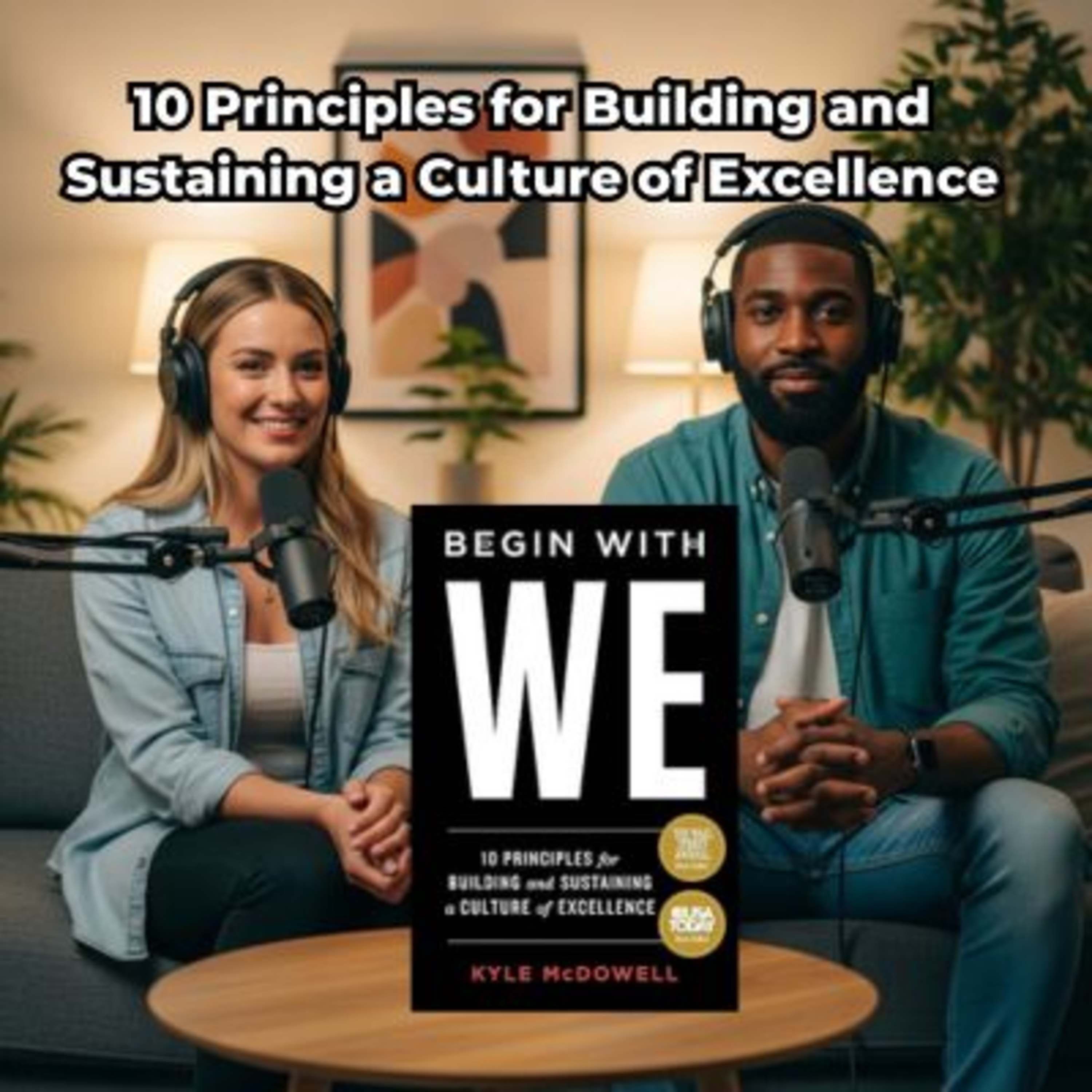
Have you lost the desire for impact and chase for fulfillment WE all brought to the workplace at one point? Are you ready to be the leader you never had?
In Begin With WE, Kyle McDowell draws on three decades inside Fortune 10 organizations—where he led tens of thousands of employees and multi-billion-dollar operations around the globe.
From the outside in, it appeared McDowell had it all figured out. But the only thing that matched his career trajectory was the apathy that overwhelmed him. He began to loathe the environments he was responsible for creating. Tired of the dysfunction and toxicity, McDowell was in search of a better way to lead. He realized:
Culture doesn’t break because people don’t know or disagree with the values. It breaks because leaders fail to define—and consistently model—the behaviors needed to deliver them.
Walk into almost any organization and you’ll see values like integrity, teamwork, accountability displayed proudly on the wall. But watch closely: standards shift, accountability is inconsistent, and leaders tolerate behaviors that directly contradict what they claim to value. Over time, people stop believing the words. They start watching the behavior. And culture becomes whatever leadership allows.
At the heart of the book are The 10 WEs—a set of clear, observable behaviors that turn abstract values into daily actions:
- WE do the right thing. Always.
- WE lead by example.
- WE say what WE’re going to do. Then WE do it.
- WE take action.
- WE own our mistakes.
- WE pick each other up.
- WE measure ourselves by outcomes, not activity.
- WE challenge each other. Diplomatically.
- WE embrace challenge.
- WE obsess over details.
These aren’t slogans. These are observable standards that set the bar for all, from the CEO to the newest intern.
Through practical examples and hard-learned lessons from the trenches, McDowell shows how to create alignment, build trust, and establish a Culture of Excellence where expectations are clear—and performance follows.
It’s time to Begin With WE.
This episode summarizes Kyle McDowell’s book, Begin With We, which outlines strategies for transitioning from an individualistic mindset to a collaborative team culture. The core principles focus on leadership through integrity, encouraging managers to act ethically and fulfill their promises to establish mutual trust. By taking responsibility for errors and prioritising meaningful results over mere busyness, leaders can foster an environment where employees feel safe and motivated. Additionally, the source highlights the importance of constructive communication and mutual support in driving collective success. Ultimately, these lessons serve as a practical guide for anyone looking to build a cohesive, high-performing professional community.
#beginwithwe #KyleMcDowell #productivityhacks #personaldevelopment #successstrategies #businessinsights #leadershipskills #leadership #ambitiousprofessionals #businesstips #self help #scaling business #businesstactics #professionaldevelopment #startupgrowth #entrepreneurship #businessmindset #growthstrategies
Welcome back to another deep dive. Today we are getting into something that, well, I think effects literally everyone who has ever had a job. Oh. Absolutely everyone. Yeah, so I mean, think about it. How often do you hear the word teamwork tossed around as just this? You know, empty corporate buzzword while everyone is secretly just fending for themselves? Way too often. It's usually just a poster in the break room. Exactly, a poster with like rowers on a lake or something. But the reality is usually a totally disconnected me First workplace.
So our mission today is figuring out how to transform that into a collaborative We First powerhouse. And it's not impossible, which is the good news. OK, let's unpack this because our source material today is a review of Kyle Mcdowell's book Begin With We, and it basically outlines these core principles for purposeful leadership. Yeah. And I want to ground the conversation right here at the start because my core belief, and really what the source emphasizes, is that knowledge has to be applied. It can't just be theory.
Exactly these principles, they aren't just high level philosophy for CE OS, they're everyday actions that literally anyone, regardless of their title, can use to build trust. And trust is really the bedrock of all this, right? Like before A-Team can actually work together, you have to have that baseline. You do. You absolutely have to start with the fundamentals, which are integrity and accountability. Doing the right thing. Yes, always doing the right, especially in the little everyday actions.
The review gives us great anecdote about a retail manager. Oh right, the closing shift story. Yeah. So imagine this manager. They are closing up the store, It's late, they're exhausted, and while counting the drawer they find an error in the cash register. Which, let's be real, is the last thing you want to deal with at night. Exactly. It would be so easy to just let it slide, you know, just fix the math, go home, and nobody would ever know. But they don't do that. Right, they don't. Instead, they report the error to accounting, and that seems small, but it makes it safe for everyone else on the team to own their mistakes.
It sets a precedent, like if you face a tough choice, you have to ask yourself what's the right thing do here? Because if the manager hides it, the implicit rule for the whole team becomes hide your mistakes. Yeah, that makes total sense. Yeah, and the source also talks about keeping promises, right? Like treating your word as your bond. Definitely. Lesson 3 in the book is literally say what you're going to do. Which sounds so simple. It does, but think about a project manager who promises a presentation by Friday if they actually deliver it calmly on time Friday morning.
Contrast that with the person who misses the deadline, creates a massive fire drill, and ruins everyone's weekend. Exactly. The frustration that causes is events. You know, it reminds me of the structural integrity of a bridge. Oh, I like that. How? So, well, if you miss one deadline, it's like a loose bolt doesn't fall apart immediately, right? The bridge still stands, but eventually with enough loose bolts the whole bridge collapses under pressure. That is a perfect analogy, and what's fascinating here is the psychological safety this creates.
Because you aren't waiting for the bridge to collapse. Precisely when leaders keep their word, you the listener, the team, you are freed from the anxiety of unpredictability. You don't have to waste energy bracing for impact. Right, you can actually focus all that mental energy on the shared goals instead of managing the chaos. OK, so that establishes the baseline. Trust isn't just built by keeping the promises, you say. It's cemented by the work you actually do. Yes, moving from spoken commitments to physical actions.
That is a crucial transition. Here's where it gets really interesting, because it's the difference between, say, a tour guide who just points at a mountain from the parking lot. And one who actually hikes up the trail with you. Exactly. You have to lead by example. The review talks about shifting from me to we by showing, not telling. Right, the startup CEO example. Yeah, detail that for us because I think it's so powerful. So there's this startup CEO, and the team is up against a massive deadline.
Instead of just ordering them dinner and going home, the CEO stays up late alongside the engineering team to hit the deadline. They're physically in the trenches with them. Exactly proving that they won't ask the team to do something they wouldn't do themselves. But wait, I have to challenge this a bit. Sure, go ahead. Isn't there a risk of the leader doing too much? Like if they are always down in the weeds writing code or whatever, aren't they accidentally micromanaging? Oh, that's a very common fear, yeah, and it's a valid point.
Right, because the CEO shouldn't be the lead engineer. True, yeah, but leading by example isn't about doing the team's work for them permanently. It's about setting a temporary cultural standard. OK, so it's a signaling thing. Exactly. If we connect this to the bigger picture, the leaders action in that moment creates momentum. Momentum to do what? Exactly to take action lesson 4 is all about being ready to take action and not letting ideas just rot in endless meetings the. Analysis paralysis. Yes, the text uses this great example of software engineers who have an idea for a new app feature.
Instead of just putting it on a committee agenda for next month. Right. Instead of just discussing it forever, they quickly build a prototype, they launch it sooner, they get feedback, and it actually drives company growth. So the actionable step for you listening is take at least one small actionable step daily toward your goals. Just do something. Momentum cures the paralysis of waiting for that perfect moment. OK, but taking rapid action inevitably means that mistakes are going to happen. You're going to break things.
Absolutely. Failure is baked into moving fast. So how A-Team handles those failures has to be the ultimate test of a We First culture, right? It is the defining moment, because taking responsibility Lesson 5 is incredibly hard. Yeah, nobody wants to look bad. Think about a good team like a trapeze safety net. I love these analogies. Well, if the leader weaves the first thread of that net by admitting they messed up, they give everyone else the courage to let go of the swing. To try new things without fear of falling to their death, professionally speaking.
Exactly. But So what does this all mean for the listener who is just terrified of looking incompetent in front of their boss? It means reframing what in confidence actually is. Accountability is a massive theme in begin with we because honesty has to be valued over perfection. It's better to be honest than to pretend you're flawless. Exactly. Admitting a mistake isn't a sign of weakness, it's actually a display of strength that actively upgrades the team's resilience. The review highlights that Marketing team leader Right launches a campaign that totally flops.
Yes, and instead of blaming the algorithm or the budget or the junior copywriter. Which is the standard me first playbook. Right. Instead, the leader takes full responsibility for the strategy. And by doing that, they open up a dialogue on how to actually improve, rather than everyone just being defensive. Exactly. It creates a safe environment where true teamwork can happen. Lesson 6 focuses on this, supporting one another when things go wrong. Oh, the restaurant rush hour anecdote. Yes, tell that one.
It's so relatable. So imagine a restaurant getting absolutely slammed during the dinner rush in a bad culture. The bartender only makes drinks, the server's only run food, and everyone is drowning in their own little silo. And blaming each other for the delays. Right, but in a we first culture, the server step behind the bar to grab water. The kitchen staff helps run plates. They step out of their assigned roles to help each other. Ensuring that no one feels stressed or alone in the weeds. So the actionable step here is simple.
Don't shift blame, offer a listening ear or literally a helping hand to a struggling teammate. Because that safety is what allows A-Team to function under pressure. OK, so we've built this incredibly safe, supportive environment. Everyone trusts each other. They are helping each other out. It sounds perfect, right? It does, but how do you ensure the team is actually moving? Forward the trap of just getting along. Yeah, like how do you make sure you aren't just holding hands in a circle of unproductivity?
That is a very real danger, and it brings us to Lesson 7. Measure outcomes, not activities. Because busy does not equal productive. Not at all. I mean, think about an office that is just stuck in endless back-to-back meetings all week. Oh, I've been there. You get to Friday and realize you haven't actually created anything. You just talked about creating things. Right. And the source talks about a new manager who comes into an environment like that and completely shifts the focus. They start asking what did we actually get done?
I always think of it like running on a treadmill versus running to an actual destination. Oh, that's good. Good. Like both make you sweat, both make you feel exhausted, but only one gets you somewhere new. Exactly. You have to evaluate your progress by asking is this task actually contributing to my bigger goal or am I just performing busyness? OK, but to get to those good outcomes, you usually have to challenge each other, right? Lesson 8 is about challenging each other politely. Yes, because if you just agree on everything to keep the peace, the work suffers.
But how can you tell the difference between healthy, polite friction and a toxic argument? Because pushing back can feel really aggressive. This raises an important question because the differentiator there is ego. Ego. OK, explain that. Polite pushback attacks the problem. Toxic arguments attack the person. Yeah, that makes so much sense. The review gives a great example of a design team. They're discussing this really bold, crazy new website. Look in a. Toxic team. Someone would just say, well that's a bad idea.
Right, which immediately puts the designer on the defensive. It becomes a personal attack. The ego gets involved. Exactly. But in a we first team, a teammate asks open-ended questions. Instead they say. What problem are we trying to solve here? Or how can we make sure the users actually understand this bold design? Yes, by framing feedback as suggestions and focusing on the behavior or the project, not the person, it changes everything. You could say, what if we approached it this way next time?
Exactly. Asking those questions allows the best ideas to win without anyone losing face. The ego is removed from the equation. That is such a powerful shift. All right, let's take a second to recap this journey because we've covered a lot of ground today. We really have. We started with the absolute foundation, right integrity and accountability, doing the right thing, keeping your promises and being predictable. Then we moved into action, leading by example and prioritizing momentum over optics.
Showing, not just telling. And then we talked about how to safely handle the mistakes that come from that action. Cultivating safety by owning your errors and stepping out of your job description to support the team. And finally, we just covered how to measure real outcomes running to a destination, not on a treadmill through constructive ego free pushback. It really is a complete blueprint for changing how you work. It is, but before we sign off, I know you had a final thought. Sort of builds on this source material.
Something for the listener to Mull over. I do. So we've spent this whole deep dive talking about transforming an internal Me First culture into a We First team, right? Right, making things safe and collaborative inside the building. But think about what happens when your we first team has to interact with the outside world, say a ruthless me First client or a hyper competitive external market. Yeah, yeah. Does your newly found vulnerability and teamwork become a liability out in the wild, or is it actually your ultimate competitive advantage?
That is a fascinating question. Like does being supportive make you too soft for a cutthroat market, or does it make you an unbreakable unit? Exactly. I'll leave you all to think about that one. I love that. Definitely something to chew on. Well, thank you all for joining us on this deep dive into begin with we. It's been great. Yeah, and as you head back to work today, remember to take that one small, actionable step. Start building that trust. And if you enjoyed this conversation, be sure to like and subscribe so you don't miss our next deep dive.
See you next time.
 Apple Podcasts
 Castbox
 Castro
 Goodpods
 Moon FM
 Overcast
 Pocket Casts
 Podbean
 Podcast Addict
 Podcast Republic
 Spotify