Everybody Matters by Bob Chapman and Raj Sisodia | The Extraordinary Power of Caring for Your People Like Family
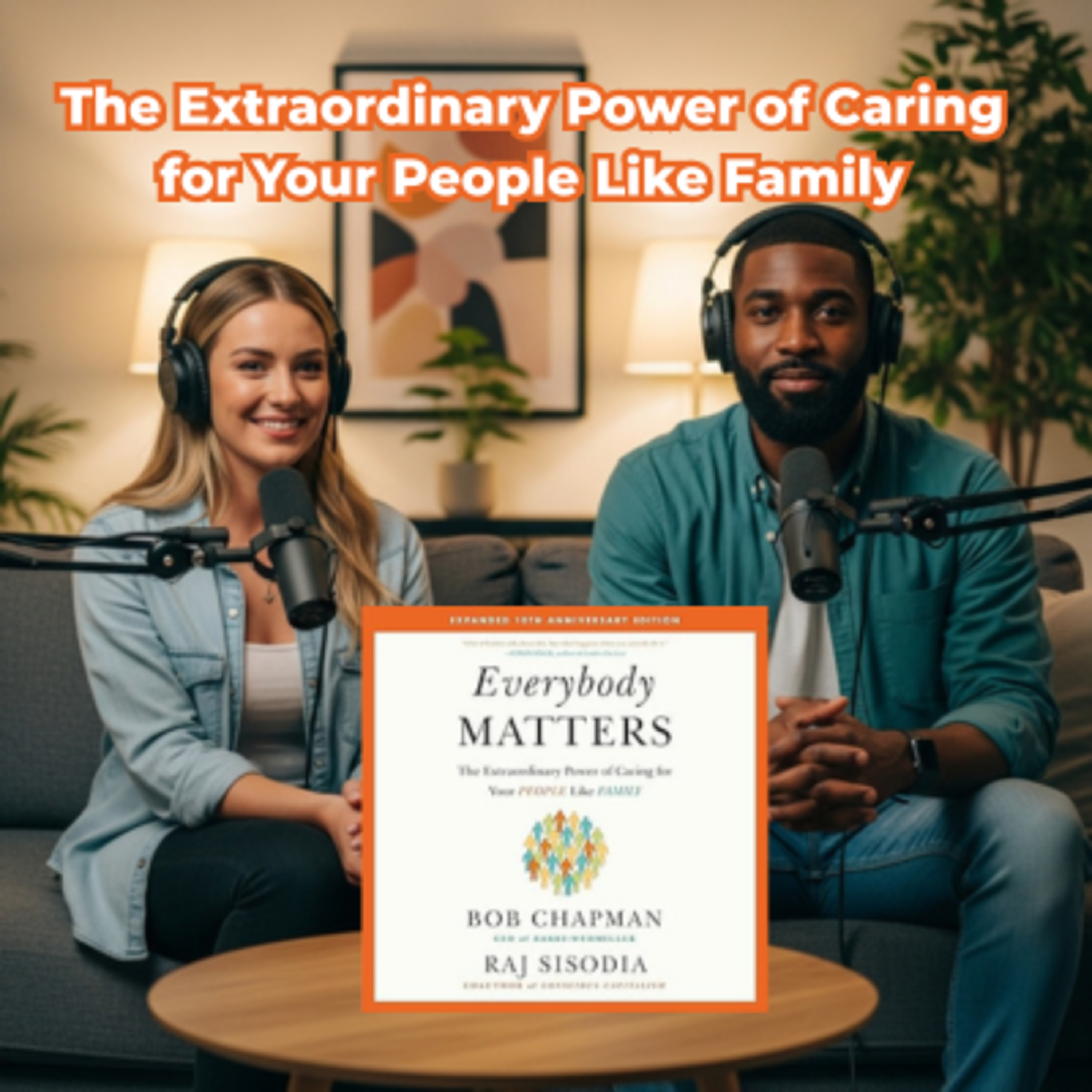
“Bob Chapman, CEO of the $1.7 billion manufacturing company Barry-Wehmiller, is on a mission to change the way businesses treat their employees.” – Inc. Magazine
Starting in 1997, Bob Chapman and Barry-Wehmiller have pioneered a dramatically different approach to leadership that creates off-the-charts morale, loyalty, creativity, and business performance. The company utterly rejects the idea that employees are simply functions to be moved around, “managed” with carrots and sticks, or discarded at will. Instead, Barry-Wehmiller manifests the reality that every single person matters, just like in a family. It’s not a cliché on a mission statement; it’s the bedrock of the company’s success.
It’s natural to be skeptical when you first hear about this approach. Every time Barry-Wehmiller acquires a company whose team members have experienced more traditional management practices, the new team members are skeptical too. But they soon learn what it’s like to work at an exceptional company where the goal is for everyone to feel trusted and cared for—and where it’s expected that they will justify that trust by caring for one another and putting the common good first.
Chapman and coauthor Raj Sisodia show how any organization can reject the traumatic consequences of rolling layoffs, dehumanizing rules, and hypercompetitive cultures. In this tenth anniversary update to Everybody Matters, Chapman and Sisodia share new statistics and analysis on the leadership crisis that continues to plague modern businesses and that only Truly Human Leadership—pioneered at Barry-Wehmiller—can fix. Packed with additional insights gained over a decade as the company has evolved, weathered a pandemic, and grown from $1.7 billion in annual revenue with 100 acquisitions to $3.6 billion with more than 140 acquisitions, this updated classic is needed now more than ever.
As Chapman says, “The way we lead impacts the way people live.” Once you stop treating people like functions or costs, disengaged workers begin to share their gifts and talents in service of a shared future. Uninspired workers stop feeling that their jobs have no meaning. Frustrated workers stop taking their bad days out on their spouses and kids. And everyone stops counting the minutes until it’s time to go home. This is the journey documented in Everybody Matters; now it’s time to transform your own workplace.This episode explores the transformative power of people-centric leadership, advocating for a shift from viewing employees as mere resources to treating them like cherished family members. By prioritising sincere care and open communication, managers can cultivate a culture of trust and belonging that naturally drives higher productivity and staff retention. The author highlights that effective stewardship involves empowering team members through autonomy rather than stifling them with micromanagement. Recognising individual strengths and supporting personal well-being are presented as essential strategies for building a loyal, motivated workforce. Ultimately, the source argues that intentional cultural values and consistent recognition are the foundations of long-term business success.#everybodymatters #bobchapman #rajsisodia #productivityhacks #personaldevelopment #successstrategies #businessinsights #leadershipskills #leadership #ambitiousprofessionals #businesstips #self help #scaling business #businesstactics #professionaldevelopment #startupgrowth #entrepreneurship #businessmindset #growthstrategies
Imagine a piece of metal just kind of spinning in the dark. OK, yeah. It has no aspirations. It never has a bad day, right? It doesn't need a sense of belonging. Right, it's just. A cog? Exactly. It is just a cog in a machine. And that visceral image, you know, feeling completely unnoticed and undervalued at work. That is exactly how a buddy of the author described his daily grind in the origin story of our source material today. It's a heavy image, but very relatable. Oh, incredibly relatable. And if you are listening to this right now, whether you manage a massive team or you aspire to step into leadership, or maybe you're just trying to decode why your own workplace feels so like mechanical, then this deep dive is built for you.
We're we're pulling apart this fascinating text called The Heart of Leadership, Putting People First. Which draws really heavily on Bob Chapman and Raj Sodia's book Everybody Matters. Right. And our mission today is to figure out how shifting from a strictly transactional workplace, you know, to treating your team with the actual care of a family isn't just, like, a nice sentiment. It's not just a poster on the wall. Exactly. It is a rigorous strategic imperative that fundamentally rewires a company's success.
Well, to understand the magnitude of that shift, I mean, we really have to look at the psychological baseline of the traditional business model. Set the stage for us. What does that baseline look like? So the standard framework, right? It essentially treats humans as expendable assets or purely as vectors for output. Like the cog? Like the Cog, you are hired to perform a specific function. You hit your metrics and that exchange is the entirety of the relationship. I give you money, you give me spreadsheets.
Precisely. But the problem is because humans are obviously not cogs. That purely transactional environment creates a massive amount of psychological friction. Which is exhausting. It's so exhausting. So the shift we are exploring today is moving away from that friction and toward a model that is rooted in genuine structural care. And the source material argues that to erase that cog feeling, leadership has to become, well, something entirely different than just organizing tasks and managing quarterly targets.
Yeah, you have to deliberately create a culture of trust. Right, and the text suggests a very specific, almost surprisingly practical place to start, which is your meetings. Oh, the meeting thing is huge. It really is like instead of launching immediately into project updates and hitting the agenda, you open with personal inquiries. You actually ask about them. Yeah, you check in on their career goals, their personal lives, how they are actually feeling before you ever even mention the work. Which breaks the established script of the corporate environment completely it.
Feels almost taboo. Right, it does. But when a leader stops to ask those questions, they are signaling to the employee's brain that they are safe. Oh wow. Yeah, that they are valued for who they are, not just, you know, what they produced that day. The source illustrates this beautifully with the example of an introverted employee. Right, right. Because in a loud, traditional corporate setting. The quiet person. Often it's labeled as like, not a go getter simply because they aren't dominating the conference room.
They just get completely overlooked for new initiatives. Exactly, but a leader practicing genuine care. They implement regular non work focused one-on-one meetings. Just to connect. Yeah, they take the time to learn the communication modalities of their team, and through that they might discover that this quiet employee is actually an exceptional strategic thinker. But only when they are placed in smaller focus groups. Yes, the talent was always there, sitting dormant, but the traditional environment was actively suppressing it.
By caring enough to look past the surface behavior, the manager unlocks a massive strategic asset. OK, let's unpack this because I mean the reality of daily operations is messy. Very messy. Let's say I'm managing A-Team right and we are dealing with a critical high stakes project deadline. The pressure is on. The pressure is on. We are behind schedule. Stopping a crucial strategy meeting to go around the room and ask everyone about their personal lives and their feelings. Yeah. I mean, it feels like a luxury.
We simply cannot. Afford it feels dangerous it. Feels like a direct threat to our productivity. Doesn't that risk derailing everything? What's fascinating here is that the behavioral data completely contradicts that fear. Great, really. Really, it is the most common anxiety for a traditional manager, but the research cited in the sources shows that cultures of care actually increase operational speed and they significantly lower turnover. OK, I understand the turnover part. People don't quit if they like their boss.
But how does talking about someone's weekend make a team physically faster at completing a spreadsheet or a project? It all comes down to cognitive load. OK, explain that. When people operate in a transactional environment, a significant portion of their brain's processing power is like subconsciously dedicated to anxiety. They are worrying about job security, navigating office politics, or harboring resentment because they feel invisible. The. Friction you mentioned earlier. Exactly that is cognitive friction.
But when a leader consistently demonstrates genuine care, psychological safety is established. The employees nervous system essentially down regulates. So you're actually removing the friction you. Remove the friction so when they sit down to tackle that high stakes project, their prefrontal cortex has far more bandwidth for complex problem solving. Wow. You aren't losing time by checking in, you are optimizing the human engines so it can run at peak efficiency. That reframes it completely. You are basically clearing the psychological roadblocks before you ask them to drive.
That's a great way to put it. So once you've done that foundational work, once you know your team's unique strengths, like our strategic introvert we talked about, the entire operational model kind of has to pivot. Right, it does. It has to change completely. You can't just keep handing out step by step instructions, you have to change how you manage them. And the text refers to this shift as stewardship over control. Which is a profound challenge to the ego of a traditional manager. Oh, I bet letting go is hard.
It's incredibly hard. The core argument here is that stewardship equates to true leadership. A leader should view themselves as a caregiver whose primary function is to enable the independent success of their team. Rather than being like a centralized decision maker who dictates every little detail. Exactly. The practical action the text lays out is essentially assign the work to the most qualified people, ensure they have the exact resources they need, and then step back. Just get out of the way.
Right, they use the scenario of a massive upcoming project. The traditional reflex is to hover. Oh yeah, the micromanager. The manager wants to be CC Ed on every e-mail, double checking the margins, basically managing by proximity. Which drives everyone crazy. But stewardship demands that you provide the guardrails, delegate the actual authority, and, yeah, step back. We have to ask why managers have that instinct to hover in the 1st place. Fear mostly. Yeah. It almost always stems from a fear of failure and an over reliance on extrinsic control.
They believe that if they aren't physically managing every single variable, the whole system just collapses. Like if they blink everything falls apart. Exactly. But stewardship operates on a completely different psychological premise. It relies on trust and intrinsic motivation. You know, it sounds exactly like the difference between being a chess player and being a gardener. Oh, I like that. Break that down. Think about a chess board. Every piece is inanimate. A pawn only moves forward because the player physically picks it up and places it on a new square.
Total control. Total control, yeah, but it requires constant, exhausting input. You can't manage people like that because you can't pull on the leaves of a plant to force it to grow faster. You know? You'll just uproot it and kill it. Destroy it, yeah. But as a gardener, your entire job is curating the environment. You test the soil, you make sure there's enough water and sunlight. You prune away the dead branches, meaning you remove organizational obstacles, right? And then you just have to let the plant grow on its own.
That analogy perfectly captures the mechanism of stewardship. You are engineering the environment for success rather than forcing a specific daily output. It makes so much sense. And the direct benefits highlighted in the text are twofold. 1st, when a team operates in that well curated garden, they take psychological ownership of the work. They care about it more. They do. They aren't just blindly executing orders anymore. They become active problem solvers. They develop the self assured creativity because they know they have the latitude to experiment and find the best solution.
And the second benefit has to be what happens to the manager, right? Like if I'm not spending 40 hours a week reading every single e-mail thread and micromanaging the margins of this project, I suddenly have my week back. Your capacity completely. Changes. It's a game changer. Precisely. You elevate yourself from a daily taskmaster to a strategic visionary. You finally have the bandwidth to look at market trends for the next quarter, right? Or to secure better resources for the next fiscal year, and crucially, to spend more time checking in on the well-being of the team.
Stewardship scales micromanagement bottlenecks. That is such a good phrase. Stewardship scales, micromanagement bottlenecks, But OK, if you are stepping back like that, Gardner, you are essentially handing over the keys. You are, you are granting your team a level of autonomy that naturally leads to the next core concept in our sources, which is developing responsible freedom. Yeah. And to a legacy manager, responsible freedom sounds like a total oxymoron. Right, like an invitation for chaos. Exactly, but it is the operational engine of a people first culture.
The premise is that when you prioritize employees holistic well-being, you create a workforce driven by deep loyalty which organically produces long term profitability. The text suggests that practically this means soliciting their opinions frequently and ensuring they have resources for both their professional and personal success. You can't separate them. Right, you can't draw a hard line between the two. Because the human brain doesn't draw a hard line between the two. You don't just stop being a parent or someone managing A chronic illness or someone dealing with a family crisis just because you logged into the company server at 9:00 AM.
Yeah, life doesn't pause for your shift. It really doesn't. The source gives a very pointed example to illustrate this freedom. You have an employee who is actively struggling to balance a personal crisis with their professional obligations. A really tough spot to be in. And a major deadline is approaching now. The traditional response is to pressure them. Right. Oh, absolutely. You remind them of the stakes. Maybe you subtly imply their job is on the line and you demand they stay late to push through, Which?
Just adds to their stress. But the caregiver leader does the exact opposite. They offer flexible hours, allowing the employee to step away, manage their personal life and work outside the standard schedule. Right now, setting aside the human empathy aspect for a second, let's look at this purely from an operational standpoint. OK, let's play devil's advocate. Exactly. Giving someone unstructured, flexible time when a critical project is due in three days feels incredibly dangerous. It does. The instinct is that you are risking a multi $1,000,000 project failing just to be nice.
Like just to be accommodating. Are we risking too much? It feels dangerous if you only understand motivation through the lens of compliance. If people only work out of fear of getting yelled at or missing a deadline, then yes, removing the rigid structure seems like a massive risk. Right, because without the fear, they'll just stop working. But the source argues that supported workers do not abuse this freedom. When you offer flexibility during a moment of profound personal stress, you aren't just adjusting their schedule.
You are demonstrating grace. You are providing tangible proof that their value as a human supersedes their immediate utility to the company. So it completely changes their relationship to the work itself. It shifts them from transactional compliance to intrinsic loyalty. Organizational psychologists often talk about this thing called discretionary effort. What's that? That's the gap between the bare minimum an employee has to do to avoid getting fired and the maximum effort they are capable of giving when they are fully engaged.
Oh I love that concept. Yeah, and you cannot mandate discretionary effort. You can only inspire it. Right, you can't put a metric on caring. Exactly. So when that looming deadline hits, the employee who was given flexible hours doesn't slack off. They are the one who will voluntarily log on at 10:00 PM, highly focused to solve a complex problem. Because they want to. Because they feel a deep personal obligation to honor the trust you placed in them. They protect the team because the team protected them.
It's the ultimate reciprocity. It really is. An investment in their humanity genuinely pays dividends in their output. So OK, we've mapped out this beautiful ecosystem here. I have If you start with carrying check insurance, you curate the environment as a steward and you grant responsible freedom that unlocks that discretionary effort. It sounds ideal. In a small, tight knit team, that makes perfect sense. But the sources acknowledge a massive hurdle here. As a company succeeds, revenue jumps, and you start hiring, you know, 50 people a month, those good intentions usually just evaporate.
They absolutely do. How do you prevent a scaling company from reverting back into a machine of cogs? This is the failure point for countless startups. They assume a culture of care is just selfsustaining. Like it'll just naturally haen. Right, but excellent cororate cultures do not survive by haenstance if your culture only exists because of the personal charisma of a few nice managers. Then it's fragile. It is incredibly fragile. The text makes it very clear that to survive growth, these values must be institutionalized.
They have to be permanently hardwired into the operating system of the company itself. And hardwiring requires moving way beyond just talking about core values at an annual retreat. Oh definitely posters don't work. It requires extreme intentionality in your systems. The source specifically points out that your core values must dictate all operational choices, but most importantly, they must be the primary filter for hiring new staff. Because if you don't use those values as a filter, you get what the text uses as its cautionary tale.
Imagine a business experiencing hyper growth, right? OK, they are recruiting constantly, but their HR department is only screening for technical proficiency, years of experience, coding languages, sales records. The usual stuff. The usual and they assume the new hires will just naturally absorb the people first vibe of the office. Just by being there, right? But instead, those new hires just unpack whatever corporate baggage they brought from their last highly transactional job. Exactly. And almost overnight, the ecosystem degrades.
Projects feel disconnected. Departments build walls and become siloed. Because there's no shared foundation. The spirit of cooperation shatters because you have a building full of people operating on entirely different assumptions about how humans should treat one another in a professional setting. So what does this all mean? If a listener is sitting in their car right now nodding along because they work at a rapidly expanding company that used to feel like a community and now feels like a cold transactional factory, what is the ultimate take away from this source to actually fix it?
If we connect this to the bigger picture, the mechanism for fixing it is systemic alignment. Systemic alignment. Yeah, hardwiring means taking the soft skills of empathy and building them into the hard infrastructure of the business. You don't just ask an interview candidate if they are a team player. Because everyone says yes to. That everyone says yes. You design behavioral rubrics to evaluate their empathy as rigorously as their technical skills, and you completely overhaul your compensation systems.
If your bonus structure only rewards individual cutthroat metrics, you will destroy a collaborative culture. It incentivizes the wrong thing. Exactly. You have to tie executive bonuses and promotions directly to team retention, employee Net Promoter scores, and peer-to-peer recognition. That is fascinating by. Institutionalizing these metrics, everyone from the CEO to the newest hire understands exactly what behaviors are rewarded. That systemic alignment creates an environment where, no matter how massive the company scales, every single person understands they are a vital, valued part of the larger picture.
You are literally coding empathy into the HR protocols. It's brilliant. It's the only way it lasts. Well, as we synthesize everything we've explored in this deep dive, let's just trace the arc of the source material one more time. We started by confronting that exhausting, isolating reality of feeling like a cog in a machine. The spinning metal. Right, We explored the psychological mechanics of why treating a team with genuine family level care lowers cognitive friction and actually unlocks dormant talent.
Getting people out of that state of anxiety. Exactly. Then we saw how true leadership requires the humility of stewardship. You know, curating the soil like a gardener instead of controlling every move like a chess player. Stepping back to let them grow. We dug into the ROI of responsible freedom, learning how supporting a worker's entire life generates the intrinsic loyalty that drives that discretionary effort you talked about. And ultimately, we learned the crucial mechanics of hardwiring those values into the very DNA of a company.
So the culture thrives even under the intense pressure of hyper growth. It is a profound rejection of the idea that business has to be ruthless to be effective. It really is. It is a blueprint for a better reality. Remember the fundamental truth from our authors here? True leadership is never just about assigning tasks and demanding compliance. It's about showing genuine structural concern for the specific human beings who make those accomplishments possible. If you found value in our conversation today, please give this deep dive a thumbs up and share it with someone in your network who is maybe navigating these exact challenges right now.
And I'd like to leave you with one final provocative thought to sit with, building on the mechanics we've just discussed today. Let's hear it. If we truly accept the premise that everybody matters and that the primary role of a leader is stewardship, how dramatically would the corporate landscape shift if boardrooms stopped evaluating managers purely on their quarterly financial EBITDA and instead began formally auditing them on the holistic well-being and personal growth of the human beings under their care?
Oh man, that is a deep dive for another day. Thanks for listening everyone. Take care of yourselves and take care of each other.
 Apple Podcasts
 Castbox
 Castro
 Goodpods
 Moon FM
 Overcast
 Pocket Casts
 Podbean
 Podcast Addict
 Podcast Republic
 Spotify