Equity by Minal Bopaiah | How to Design Organizations Where Everyone Thrives
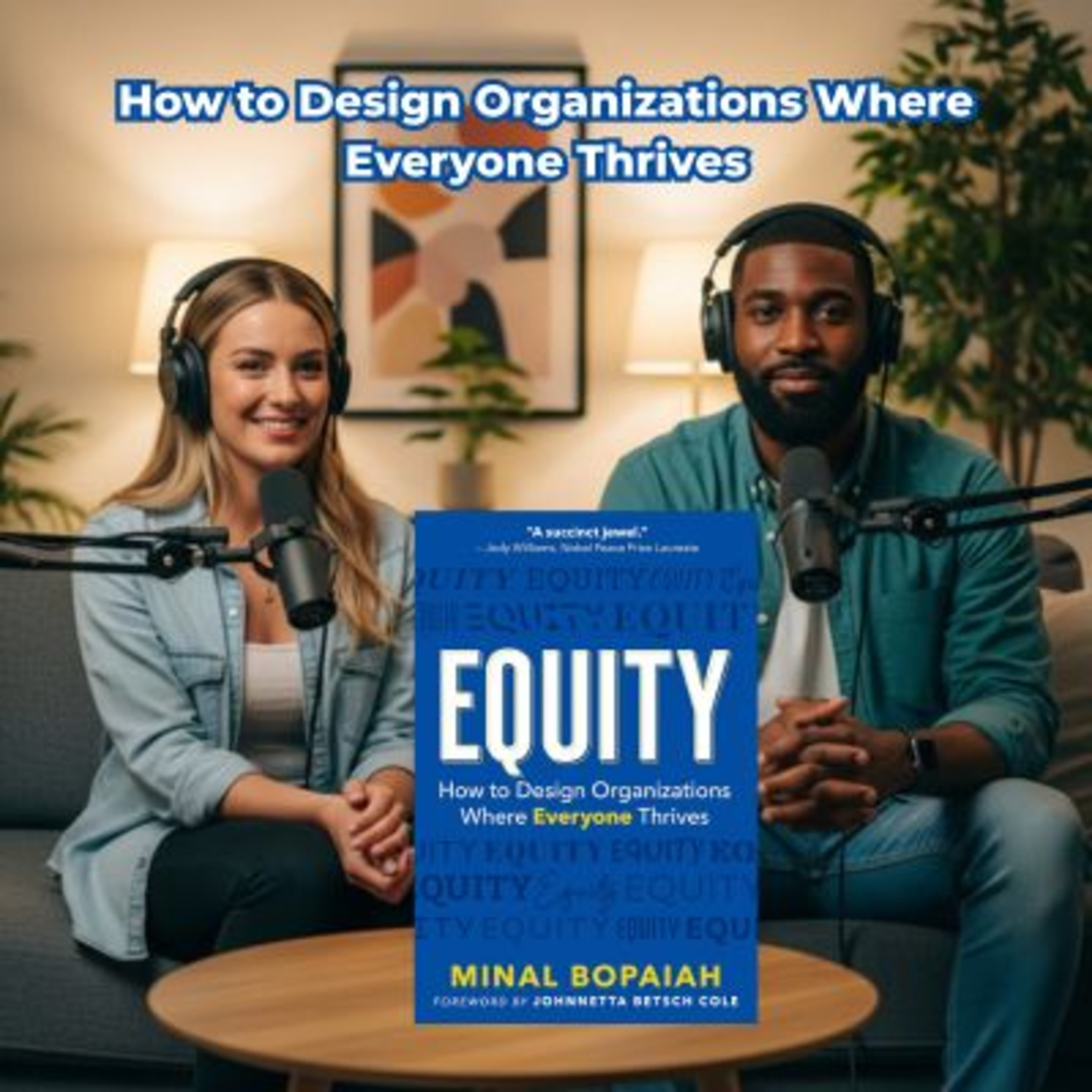
Even the most passionate advocates for diversity, equity, and inclusion have been known to treat equity as the middle child—the concept they skip over to get to the warm, fuzzy feelings of inclusion. But Minal Bopaiah shows throughout this book that equity is critical if organizations really want to leverage differences for greater impact.
Equity allows leaders to create organizations where employees can contribute their unique strengths and collaborate better with peers. Bopaiah explains how leaders can effectively raise awareness of systemic bias and craft new policies that lead to better outcomes and lasting behavioral changes. This book is rich in real-world examples, such as managing partners at a consulting firm who learn to retell their personal stories of success by crediting their systemic advantages and news managers at NPR who redesign their processes to support greater diversity among news sources. This slender book expands DEI past human resources initiatives and shows how leaders can embed equity into core business functions like marketing and communications.
Filled with humor, heart, and pragmatism, Equity is a guidebook for change, answering the question of how that so many leaders are asking today.This episode explores Minal Bopaiah’s framework for transforming corporate environments through the intentional design of equitable systems. It highlights the necessity of identifying hidden biases within traditional hiring and evaluation processes to foster a more inclusive culture. By adopting the IDEA principles—inclusion, diversity, equity, and access—leaders can move beyond superficial changes to create meaningful structural shifts. The source emphasises that equitable leadership and transparent communication are vital for boosting employee engagement and innovation. Ultimately, the author argues that measuring impact and aligning organisational values with concrete actions allows every individual to thrive and reach their full potential.
#Equity #WorkplaceCulture #Leadership #InclusiveLeadership #DiversityAndInclusion #BusinessEthics #OrganizationalCulture #EmployeeEngagement #FutureOfWork #LeadershipDevelopment #DEI #WorkplaceInnovation #BusinessPodcast #BookSummary #PeopleLeadership
What if I told you that the reason you're sitting at your desk, like completely checked out and just going through the motions has absolutely nothing to do with your personal work ethic? Oh, it's such a common trap. Right. I mean, you know that coasting feeling. You log into the virtual meeting. You not at the right times, You do the bare minimum just to keep the machine running. But that internal fire, yeah. It's gone. Totally extinguished. You are entirely disengaged and usually when we hit that wall, we just blame ourselves, you know?
We do. We assume we're burned out. Or we ick the wrong career. Or we just lack discipline. But what if the real issue isn't you at all? What if the problem is the invisible design of the environment you're operating in? I mean, we misdiagnose it constantly. When we feel that deep sense of apathy, we always turn inward. Yeah, it's a natural reaction. But the reality is, human beings are highly responsive to their environments, the unseen structures, the daily routines, even just the way meetings are run.
These things act like an invisible algorithm. An algorithm. Wow, right. And very often that algorithm is subtly signaling that you're full potential. You're unique perspective isn't actually wanted, I know. All the system really wants is your quiet compliance. So that brings us to the mission of today's Deep Dive. We are going to explore how you can break out of that algorithm exactly. We want to look at how you move from that state of absolute disengagement, you know that coasting reality to a place where you are genuinely reaching your greatest potential.
Which is what everyone wants ultimately. Absolutely. So to do this, we are pulling insights from a really fantastic operational blueprint. It's Minal Papaya's book, Equity, how to design organizations where everyone thrives. It's. Such a great. Resource. It really is, because what makes this approach so compelling is that it completely sidesteps the usual academic or theoretical musings. It's a highly practical, tactical guide to redesigning the way we work. Yeah, it's entirely actionable, which is pretty rare in this space, to be honest.
And the core premise we need to establish right up front is a major paradigm shift, creating a work environment where everyone feels appreciated and respected. It isn't just about doing the right thing from some, you know, abstract moral standpoint. Right, it's not just a feel good exercise. No, not at all. It is the fundamental mechanism for unlocking an organization's true potential. When people operate in a system that genuinely sees them, they don't just feel warmer and fuzzier, they perform exponentially better.
They get better ideas. Better ideas, much faster problem solving, and a massive drop in turnover. OK, let's unpack this. Because if we want to build that thriving, high performance workplace, we have to start by figuring out what's currently breaking it down. Exactly, have to find the cracks. Right. I mean, it's like inspecting a house. You can't fix a crumbling wall if you don't realize there's a huge invisible crack in the foundation. And that brings us to the first major hurdle, which is recognizing systems of inequity.
And that's precisely where the real work begins. The underlying principle here is that we can't just wait for massive glaring problems to show up. We have to actively audit our everyday systems for hidden biases. So we're talking about the deep routine stuff. Yes, the processes that govern daily corporate life. You need to look critically at how performance evaluations are weighted or how hiring procedures are structured. Even just team meetings, right? Especially standard Tuesday morning team meetings.
The key diagnostic question the source tells us to continually ask is this Are certain voices always more audible than others? Man, that question really stops you in your tracks. Are certain voices always more audible? But well, actually, let me jump in and push back on this a little bit because it's incredibly easy for an author or a consultant to say, hey, let's just identify our obstacles and uncover our hitting biases. But let's be real about human nature. If you walk into a room and tell A-Team, hey guys, we're going to examine your biases today, everyone's immediate reaction is to freeze up.
Oh, they get intensely defensive. Right. They feel like they're walking into a trap or some sort of, I don't know, corporate witch hunt. So how do you actually pull this off in the real world without putting everyone on high alert? Well, defensiveness is the natural enemy of this kind of systemic change. If people feel they are being personally indicted, the learning just completely shuts down. Right, the walls go up. Exactly. So the way you bypass that defensiveness is by shifting the focus from a personal audit to a systems audit.
OK. A systems audit. Right. You bring the team together, but you consciously design the space so it's deliberately safe. What does that actually mean though, in practice? It means you aren't springing this conversation on people during a high stress quarterly review when their bonuses are on the line. Oh yeah, that would be terrible. Right. Instead, you frame the dialogue around friction in the workflow rather than personal moral failings. You ask things like where is our current process slowing us down?
Or who might we be forgetting to include when we make this specific type of decision? Oh, I see. So if I'm understanding this, you're taking the heat off the individual and putting it entirely on the process. Precisely. It's not Bob, you're biased. It's Hey team, does our current brainstorming format accidentally favor the loudest people in the room? Yes. When you acknowledge these structural flaws openly and you treat them as mechanical bugs to be fixed, rather than, you know, personal sins to be punished, morale absolutely soars.
Because it's a shared problem now. Exactly, People realize they aren't crazy for feeling overlooked, they were just fighting a badly designed system. And when you remove those hidden frictions, the immediate result is vastly improved collaboration. Let's bring this to life with a scenario from the source that really illustrates the payoff here. So imagine you have a diverse team and because you've successfully cleared out that defensive atmosphere, everyone actually feels secure enough to speak up.
Right, the psychological safety is there. Exactly. And you're trying to solve a really complex client problem. One person tosses out a strategy drawn from a completely different industry they used to work in. Then another person chimes in and tweaks that idea using a highly inventive solution that stems directly from their unique cultural background. I love this. Example. It's so good. Suddenly these two completely disparate concepts collide into a brilliant, entirely original strategy. And that strategy literally could not have been generated if either of those people felt their perspective wasn't wanted.
That right there is the compounding interest of equity. Yeah. You aren't just adding different bodies to a room, you are mathematically multiplying the number of perspectives available to solve complex problems. Multiplying, not just adding. That's a great way to put. It but achieving that multiplayer effect. It requires intense intentionality. Once you've identified that your current system is rigged or broken, you can't just apply a temporary patch. Right. You don't just put a piece of take over a check engine light and keep driving.
You have to get under the hood and fundamentally redesign the engine. And that brings us to the concept of designing for inclusion. There's an acronym introduced in the source that acts as a really powerful architectural contextual framework and it's idea idea that stands for Inclusion, Diversity, Equity and Access. It's a vital framework and the sequence of those specific words, it is not accidental. The order matters immensely. Let's hover on that for a second, because that's a massive point. Why does the sequence matter?
Like why does inclusion absolutely have to come before diversity? Well, because if you reverse them, you create a very expensive, very damaging trap. How so? If you focus on diversity first, meaning you just aggressively recruit people from underrepresented backgrounds, but your internal culture isn't actually inclusive. What happens? They probably don't stick around. Exactly. Those new hires arrive, they feel marginalized, their working styles are dismissed, and they leave in six months. You've just built a revolving door.
Oh wow. Yeah, you have to build the inclusive infrastructure first so that when diverse talent arrives, they actually want to stay. I was thinking about it like user experience design in software. If you're building a new app, you don't invite a million diverse users to beta test it if the interface is completely hostile and impossible to navigate. Right, that would be a disaster. You design the navigation, the accessibility, and the user flows before you invite them in. And it's the same with an organization.
You can't just slap a fresh coat of paint on a toxic culture by hiring a few diverse faces. The equity has to be coded into the actual structural design. What's fascinating here is how this completely shifts the paradigm from passive hope to active architecture. You're just hoping equity magically happens because you hire different people. You were engineering it, and the actionable step here is to map out your current procedures. You lay them out on the table and pinpoint exactly where your day-to-day operations lack inclusion.
Let's make that highly concrete for everyone listening. How does this structural redesign look in a practical scenario like, say, hiring? OK, good example. Traditionally, you might have one hiring manager making the call, or maybe a homogeneous group of managers who all have the exact same background, but the structural redesign replaces that with a hiring panel deliberately made-up of individuals with highly diverse experiences. And we need to look at the exact mechanism of why that works. It's about introducing cognitive friction.
Wait, cognitive friction? What does that mean in A room? Well, when a homogeneous panel interviews a candidate, you get false consensus. They all share the same blind spots, so they all just nod along and hire the person who reminds them of themselves. Oh, the classic culture fit trap. Exactly. But a diverse panel forces friction. Yes, because if one panelist dismisses a candidate by saying I don't know, they just didn't feel like a good culture fit, another panelist with a different background can immediately challenge that.
They can say wait is it really a culture fit issue or they just communicating their achievements in a style we aren't used to. Precisely, you are standard cognitive friction as a quality control mechanism. That is so smart. By engineering a process where biases are caught and neutralized by the diversity of the panel itself, you ensure fair judgement, and as a direct result, you end up hiring the absolute greatest talent available in the market, not just the most familiar. But of course you can build the most structurally sound, perfectly equitable process in the world and it will still fail if the people running it have a top down authoritarian mindset.
Oh, completely. A brilliant system run by a terrible manager is still a disaster, and this naturally shifts our focus to the human element running the machine, equitable leadership. The human element is the ultimate bottleneck. The framework emphasizes that equitable leadership requires a complete rewiring of how we view power, right? It's a move away from the traditional command and control model, where the leader is the sole generator of ideas and their only job is to dictate them to the team.
Right, the classic boss. Exactly. A truly equitable leader views their primary job as fostering an atmosphere of empowerment where they they actively work to extract the best thinking from everyone else. OK, here's where it gets really interesting because I can hear some managers out there starting to panic. Oh, I'm sure. If a leader is just endlessly empowering others and listening to everyone else's viewpoints, does that mean they stop making decisions entirely? I have to push back on this because it sounds like a fast track to paralyzing consensus where a team argues for weeks and nothing actually gets executed because the boss doesn't want to step on anyone's toes.
That's a very astute challenge, and it's probably the most common trap well meaning leaders fall into when they try to be more inclusive. Yeah, nobody wants endless meetings. Nobody. But equitable leadership is absolutely not about abdicating your responsibility to make a decision. It's about active engagement before the decision is finalized. OK, break that down for us. What does that engagement actually look like? It means the leader acts as the ultimate filter, not the sole generator. They prioritize regular check insurance.
They pose genuinely open-ended inquiries rather than just asking leading questions that steer people towards the answer the boss already wants. All right. And, crucially, they practice active listening. This isn't just polite nodding, it's proving a sincere interest in the team's lived experiences. The leader absolutely still makes the final call, but they make a vastly more informed, bulletproof decision because they have genuinely crowdsourced the collective intelligence of their entire team. I see.
So it's not a democracy where everything requires a vote, but it is a system where all the evidence is collected before the judge issues the ruling. It's a great way to put it. Let's look at the mechanics of this in a standard team meeting from the source. Imagine a leader walking in to kick off a new project. The traditional way is the leader pulls up a slide deck, talks for 45 minutes and then says any questions in the last two minutes. Which is a classic example of anchoring bias. Anchoring bias.
Yeah, the moment the leader speaks 1st and lays out their vision, the entire room intellectually anchors to that idea. Anyone with a different, perhaps better approach will instantly silence themselves because they don't want to contradict the boss. Exactly. But the equitable leader flips that dynamic. They walk in, present the problem, and then specifically and intentionally ask the team to discuss their ideas first. They moderate the space, making sure they pull thoughts from the introverts, not just the extroverts who always dominate.
And that achieves 2 critical things simultaneously. First, it completely neutralizes that anchoring bias, which means you uncover highly creative, divergent ideas that would have otherwise remained hidden. And the second thing. 2nd, by refusing to dominate the conversation, the leader is actively modeling what inclusion looks like. They are showing the entire organization that they value the best idea, regardless of whose mouth that comes from. It's a brilliant way to unlock the dormant potential sitting right in front of you.
But well, we need to do a reality check here. Always a good idea because you can have well-intentioned leaders and you can try to design these structural processes, but there is almost always a massive, glaring disconnect between an organization's grand, shiny ideals and it's actual messy reality on a random Tuesday afternoon. Oh, absolutely. And that brings us to the final critical pieces of this puzzle, effective communication and measuring impact. The gap between intention and execution is where most equity initiatives go to die.
Wow, yeah. Organizations are incredibly quick to state their purpose. They'll enthusiastically update their company dahlias page, they'll put out a glowing ress release, or they'll launch a new internal initiative. We've all seen the emails. Right, but they utterly fail to connect that stated purpose to rigorous, measurable action. It reminds me of buying a high end fitness tracker. You go out, you buy a $300 piece of tech, you strap it to your wrist, and suddenly you feel like an athlete. Yep, the illusion of progress.
Exactly. You've successfully established the intention of fitness, but wearing the tracker doesn't burn a single calorie if you don't actually get off the couch and do the grueling work of exercising. The physical action has to match the expensive accessory. So what does this all mean for closing that gap in a corporate environment? How do organizations actually start sweating? To close that gap, you have to replace executive guesswork with hard data. You can't fix a problem you haven't accurately diagnosed.
Makes sense? The methodology here requires pinpointing the precise hidden obstacles your people are facing using rigorous tools like, you know, anonymous employee surveys and carefully facilitated focus groups. So you actually have to ask them. Yes, you gather that unvarnished, sometimes uncomfortable feedback, and then you build highly targeted, workable plans based specifically on what the data told you, not on what leadership assumed was the problem. Let's look at a concrete example of closing this gap.
Say a company realizes their hiring pipeline is entirely homogeneous. They just aren't drawing in diverse talent the old way. You know the intention without execution way would be for leadership to sit in a closed boardroom. Guess why it isn't working and maybe just throw more money at the exact same job boards. Right, which changes absolutely to nothing. But the actionable, equitable way, they go straight to the source. They consult their existing employees from diverse backgrounds and ask, where is the friction in our outreach?
How can we do this better? And they listen to the answers. Yeah. And based on that actual feedback, they develop completely fresh outreach programs, maybe partnering with different professional associations or universities. By taking proactive measures based on real input, they prove their dedication. They aren't just philosophizing about equity, they are operationalizing it. If we connect this to the bigger picture, this is where absolute transparency becomes the glue that holds all of this together.
The transparency part is huge. It's arguably the most vital lesson for making this stick. When an organization decides to implement these structural changes, you can't just quietly roll them out in a hidden HR policy update that no one reads. Oh, I hate those. Right. Everyone in the organization has to comprehend exactly what the changes are and far more importantly, why they matter to the health of the business. Because if people don't understand the underlying why, they're just going to view the new policy as another annoying bureaucratic hoop to jump through, right?
It just becomes extra paperwork. Exactly without the. Why change? Just just breed cynicism. Transparency is how you respect the intelligence of your workforce. When you communicate relentlessly across multiple platforms like team meetings, internal updates, town halls, you educate your staff right? And that education is what drives buy in. It fosters a deep reciprocal trust that inspires everyone to actively participate in the new system. I love the town hall scenario used in the source to illustrate this because it shows how a leader can truly land the plane.
It's a great example. Picture a CEO introducing all these new equity metrics to the whole company. They don't just stand behind a podium and dryly read a memo drafted by the legal team. No, that never works. Yes, they bring the hard data from the surveys, but they combine those facts with authentic anecdotes from their own life or stories gathered from the staff. And we should explain the psychology of why that specific combination is so potent. Hard data engages the prefrontal cortex. It proves the problem is mathematically real.
But if you only use data, people will often try to argue with the numbers. However, personal stories engage the emotional centers of the brain. You can argue with a statistic, but you can't argue with a person's lived experience. That's a profound point. By combining the two, the leader isn't just educating the staff's minds. They are deeply motivating their hearts to accept and champion the change. They make the abstract, sometimes sterile concept of corporate equity incredibly human and deeply resonant.
That is the hallmark of an organization that understands that this isn't the compliance exorcist, it's a fundamental cultural transformation. And real transformation always requires both the head and the heart. It really does. So let's take a step back and look at the incredible ground we've covered today. If you're sitting there right now listening to this and you recognized yourself in that disengaged, checked out worker we described at the very beginning, the path to breaking out of that algorithm is actually incredibly clear.
It starts with actively auditing your environment to recognize those hidden systemic biases. It moves into redesigning those procedures using the Ida sequence, building inclusion first so diversity can thrive, creating true equity and access. It requires demanding, equitable leadership that neutralizes anchoring bias by genuinely listening before deciding. And finally, it demands transparent, data-driven communication that closes the massive gap between good intentions and actual reality. It's a comprehensive interlocking blueprint and it reinforces a hard truth.
This work isn't a one time project. It requires continuous, deliberate effort across every single level of the organization. Absolutely, and to you, the listener, we want to leave you with one crucial take away as we wrap up. Embracing this isn't just about checking a box or doing the right thing so you can sleep better at night. Not at all. This is a highly tactical, proven approach to seeing immediate, tangible improvements in your professional life. It's about identifying and dismantling the artificial, invisible barriers that are actively holding you and your team back.
When you fix the system, you finally unlock the ability to realize your greatest potential. Before we go, I want to leave you with one final thought to Mull over. We spent a lot of time today talking about mapping your organization's overarching structures to find inequity. But if you were to rigorously audit your own daily routine, your calendar, your inbox, your quick catch UPS, what invisible design choices are dictating whose voices you hear the most throughout your day? Oh, that is a fantastic, slightly uncomfortable question to carry forward into your week.
Thank you so much for joining us on this deep dive. We hope you take these tactical insights, examine your own systems, and start designing an environment where everyone, especially you, can truly thrive. Until next time, keep questioning the algorithm, keep redesigning, and keep diving deep.
 Apple Podcasts
 Castbox
 Castro
 Goodpods
 Moon FM
 Overcast
 Pocket Casts
 Podbean
 Podcast Addict
 Podcast Republic
 Spotify