Do The Impossible: How to Become Extraordinary and Impact the World at Scale
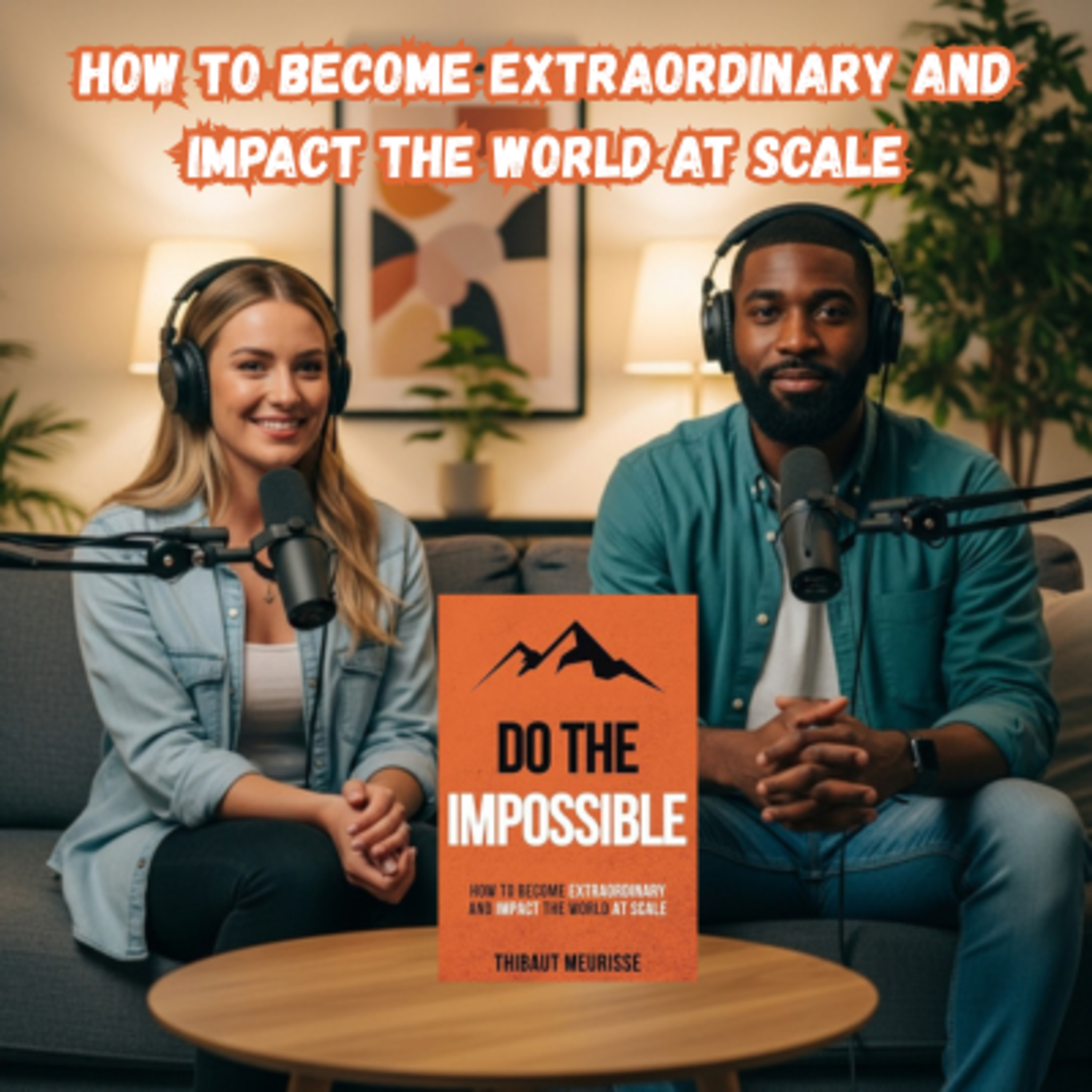
Everyone says they want to change the world—but very few actually do. In Do The Impossible, bestselling author and performance coach Thibaut Meurisse lays out a clear, energetic blueprint for becoming extraordinary and creating impact at a scale most people never experience.
In this episode, we unpack the 8 Truths about human nature, the 3 Meta-Beliefs that reshape your thinking, and the 8 forms of leverage used by the world’s most influential people. From mastering your mindset to amplifying your energy and expanding your influence, you’ll learn how to break past limitations and step into a life of massive contribution.
This isn’t motivational fluff—it’s a practical guide for anyone ready to stretch beyond comfort, challenge what’s possible, and make their work matter.
Because impact begins when you stop aiming small and start doing the impossible.
#DoTheImpossible #ThibautMeurisse #BookTunez #PersonalMastery #ExtraordinaryMindset #SelfDevelopment #HighPerformance #ImpactAtScale #Motivation #GrowthMindset #PurposeDrivenLife
OK, let's kick things off today. We're really digging into some powerful concepts. We are We're using notes and excerpts based on the book Do the Impossible Mindset for a Dream Life by Jason Dries. Yeah, and the main thing we're tackling is, well, potential. How to unlock it? Breakthrough those mental walls we all hit sometimes. Exactly, and how mindset and crucially, action can help you sort of build the reality you actually want. It's about becoming an active creator. In this deep dive, it's really tailored for you listening.
We want to cut through the noise, you know? Get straight to the core insights from this material. Our mission is basically to unpack these ideas and see what they genuinely mean for your life, your goals. So let's start with the absolute foundation here. The big idea that everything else kind of rests on it Is that your mindset, your internal world, it doesn't just influence things, the source argues, It actually will shapes your reality. OK, this is where it gets really interesting for me because it's not just think positive and good things happen, it's deeper than that.
Right, much deeper. The idea presented is that your thoughts, especially your deep seated beliefs, they function like like an architect's plan, a blueprint. A blueprint? How so? Well, if your internal blueprint says this project is impossible or I can't do this. Then you unconsciously act in ways to make that true. Precisely. Yeah. You find reasons it won't work. You don't see the opportunities, maybe you give up easily. It becomes a self fulfilling prophecy. Basically, the belief makes it impossible for you.
Wow. OK, But the flip side. The flip side is the exciting part when you genuinely shift that belief, even just entertaining the possibility that something could work. Your perception changes. Your whole perception can shift suddenly. You might notice resources or ideas or connections. They were completely invisible before because your blueprint didn't allow for them. So if you're feeling stuck and maybe telling yourself I'm not good enough or this never works out. The source suggests that's not just a feeling, it's an active filter.
It's literally blocking you. How? By making you avoid challenges. Yeah, or maybe overlooking chances because you're just not scanning for them, or quitting when things get tough because deep down you expected to fail anyway. It proves the limiting belief right. So the inner belief is like an instruction manual for your behavior. That's a great way to put it and if you change the manual even slightly, start building a belief like success is possible for me or I can figure this out. Then your actions start to change too.
You take more risks. Maybe exactly calculated risks. You put in more effort, you persist longer. It all starts inside with that belief system. OK, so if the foundation is mindset shaping reality, how do we actually, you know, do anything with that? Build something tangible. Right. And this leads straight into a really practical lesson from the material You've got to align your actions with your goals, your daily actions. Ounds obvious, maybe, but it's so easy to miss it. Really is the source oints out how often we say we want X, but our habits, what we actually do all day, are pushing us towards why.
Like the classic example, wanting to start a business but spending hours lost in social media feeds. Or just general busy work that feels productive but doesn't actually move the needle on the main goal. You're essentially paddling against your own current. And that creates that feeling of friction, like you're working hard but not getting anywhere. Exactly. That feeling, the material stresses, that real momentum, that sense of flow where success starts to feel almost natural. It comes when your thoughts, your energy, and critical your actions are all lined up pointing in the same direction.
And Jason Dries himself used. This Yeah, the source uses his story. When he committed to becoming a top coach, it wasn't just a mental decision. He looked hard at his schedule. Then cut things out. Ruthlessly distractions things that weren't serving that specific goal like yeah maybe too much aimless growing or commitments that drained energy and. Replaced them with. The actions that were aligned, dedicated time for practice, actively networking, learning, self improvement. His daily routine started to reflect his ambition.
So the question for you listening is take an honest look. Where might your daily actions be slightly or maybe significantly out of step with what you say you want most? That could be the hidden break. OK, building on that, seeing things differently. The source talks about something called frame shifting. Calls it a superpower. I love this concept. Frame shifting. It's like deliberately changing your viewpoint on something, right? Exactly changing how you look at a situation. Specifically define solutions or opportunities you missed before.
Like looking at a painting from different angles. That's the analogy used. See it head on? You get one impression. Step to the side, look closer, step back. You see different details, different textures. Understand it better. So how does this supply when you hit like a major roadblock, a problem? It helps you reframe the obstacle. Instead of seeing a dead end, you look for the hidden opportunity within it. The source goes an example, doesn't it, about a client. Yeah, a client whose business failed initially, their frame was totally understandable.
I'm a failure. It's over. Yeah, Very negative, very final. But they shifted the frame. They work to shift it, to see the failure not as a personal verdict, but as well expensive market research, incredibly valuable feedback on what didn't work. OK. So it wasn't failure, it was data. Precisely. And with that new frame, they didn't quit. They used the data, adjusted their strategy, learned the lessons, and eventually built a successful venture. So the situation itself didn't change, but their perspective on it did.
And that changed everything that followed their feelings, their actions, the possibilities they could suddenly see. It's about consciously turning those setbacks into fuel for the next step. And this idea of perspective, it links straight into another really core insight from the material, doesn't it, About beliefs? Absolutely. Your beliefs can either limit or empower you. This is huge. Explain that a bit more. Beliefs as limits or empowerment. The source uses a great analogy. Beliefs are like lenses.
If your lenses are smudged with limiting beliefs, I'm not smart enough. I don't deserve success. People like me don't do things like that, that everything looks distorted. Opportunities look smaller, Challenges look bigger. Exactly. The world seems kind of dull, discouraging. But if you clean those lenses, if you cultivate empowering beliefs. Then things look different, brighter. The potential seems clearer. Possibilities open up. The material tells a story about a woman who genuinely believes she wasn't leader material.
And that held her back. For years, because that belief dictated everything. How she spoke up in meetings, what projects she volunteered for or didn't. How she handled feedback. It wasn't just a thought. He was running the show. So what changed? How does she shift that according to the source? It wasn't instant. She had to consciously challenge the belief. Start replacing I'm not a good leader with something like, OK, I can learn the skills, I can grow into leadership. Shifting the belief came first, then the action.
The shift empowered the action. Believing she could grow allowed her to seek training, to practice, to step up even when it felt uncomfortable. The belief unlocked the necessary actions. And the Oprah Winfrey example is used here too. Yeah, as a powerful real world illustration, given her background, the limiting beliefs could have been overwhelming. Poverty defines me. My past dictates my future. But she chose different beliefs. Empowering ones. I am capable. I can create something better, the source emphasizes.
These weren't just wishful thinking, they were the engine driving her incredible work ethic, her resilience, her ability to see and seize opportunities, beliefs, direct action. They either cage you or set you free. OK, following that logic, it makes total sense then why the material presents obstacles as opportunities in disguise. Right. It's a fundamental shift in how you view difficulties. Instead of seeing a problem as something external that's blocking you, you. See it as part of the past, something useful.
Exactly. Essential, even. They're framed as chances to get stronger, to learn something critical you wouldn't have learned otherwise, to build that resilience muscle. Jason Dries apparently faced big hurdles in his business. The source mentions significant setbacks, but the point isn't just that he faced them, it's how he faced them. Not assigns to stop, but his feedback loops. Like, OK, that strategy didn't work. What can I learn? How do I adjust? Precisely each failure became data to refine his approach, making him and the business more robust over time.
And the JK Rowling example fits here too, with all the rejections for Harry Potter. It's a classic example. Those rejections could easily have been framed as nobody wants this, I should give up. But reframed they become. Opportunities to maybe hone the manuscript, to strengthen her belief in the story, to build incredible persistence. The source suggests that overcoming those obstacles actually prepared her and the work for the massive success that followed. So it changes the question from why me to what's the lesson here?
Yes. And that simple shift makes challenges feel less like a tax and more like training exercises for the next level. Flowing from that, another really empowering concept in the material is about consciously creating your reality with intention. This really hits home. It's about not just drifting right, taking the wheel. Taking the wheel is a perfect way to put it. The source uses the analogy of life as a blank canvas, and you hold the brush. You choose the scene, the colors, the strokes. Instead of just letting things happen to you, living on autopilot.
Yeah, which is how many people operate just reacting day-to-day. Intention in this context means knowing what you want to create, even if it's just the feeling you want or the next small step, and then deliberately taking actions that align with that O it's. About being deliberate, focused. Very much so moving from just passively hoping things will work out to actively intentionally building towards a desired outcome. And the benefit according to the source. You stop wasting precious time and energy on things that don't align with your masterpiece.
Every day becomes a conscious choice, an opportunity to lay down another brush stroke towards the life you envision. And maybe the most practical or perhaps encouraging lesson, especially when things feel big and overwhelming, is it. Small alignments create big results. The power consistency, not needing a giant leap right away. Exactly. It counters that feeling of needing to change everything overnight, which can be paralyzing. The source emphasizes that huge transformations rarely happen because of one massive action.
They. Happen hell then. They're almost always the result of lots and lots of small, consistent actions, tiny adjustments, minor course corrections done day after day, all pointing generally in the right direction. Like the tree analogy, you don't just stare at a seat and expect a tree. Right, you water it a little bit consistently. That small regular input is what leads to the big strong tree overtime. The health example's good here too, so. Relatable. You don't have to go from couch to marathon tomorrow.
Just drink one extra glass of water today. Take a 10 minute walk, add one piece of fruit. Seems insignificant on its own. Totally. But do that consistently. Those tiny shifts build momentum. They create ripples over weeks and months. They can lead to massive changes in health and well-being. And the source says the supplies everywhere Relationships, skills, career. Universally, it's the principle of compounding. Small, positive, consistent actions relentlessly applied over time can fundamentally change the entire trajectory of your life.
OK, so we have these powerful ideas, mindset aligned action, frame shifting beliefs, obstacles as opportunities, intentions, small steps. How does the source suggest we actually, you know, do this stuff? Put it into practice day-to-day. It offers some really concrete starting points for shaping mindset. It's just starting your day intentionally, maybe with simple affirmations. Like what? Instead of letting anxieties take over first thing, consciously state empowering beliefs. I am capable. I handle challenges well.
Today holds opportunities just setting a positive tone. OK. And for aligning actions. Write down a key goal, then identify one tiny duble action today that moves you towards it. Goal save money Action Pack your lunch Goal Learn a scale Action Watch 110 minute tutorial small concrete aligned. What about when problems hit that frame shifting? Pause. Don't just react, ask. What can I learn from this? Or is there another way to look at this? Maybe you missed a deadline. Instead of beating yourself up, frame it as feedback.
OK, my time estimation was off. What can I adjust next time? And tackling those limiting beliefs we talked about. First step is awareness. Catch yourself thinking I'm not good enough or this is too hard. Then consciously replace it. Write down the empowering opposite. I'm learning I can figure this out step by step. Saying it or writing it helps rewire things. For obstacles, actively reframe them as training. Fail an exam? It's not proof you're dumb. It's data showing where your study methods need improvement.
It's practice for getting better. Creating with intention? That sounds big. How small can that start? Visualize what you want, yes, but then crucially, paired immediately with one small action. See yourself finishing the project. Great, now open the document and write one sentence. See yourself healthier. Go fill your water bottle. Link the vision to immediate, tangible action. And finally, those small consistent changes. The advice is simple. Pick one thing, just one habit you want to improve slightly.
Read for 5 minutes, meditate for two minutes. Walk around the block, start ridiculously small, focus on consistency and let it build naturally. OK, so wrapping this all up from the source material, it really boils down to a few key things, doesn't. It it seems so. Your mindset is the foundation. Your actions need to be deliberately aligned with what you want. You need to learn how to reframe challenges, see them as helpful, not harmful. And understand that your beliefs are actively shaping your experience, so choose them wisely.
And finally, embrace the power of small, consistent steps. That's where the real transformation happens over time. It's a powerful package. It really puts the control back in your hands. You're not just subject to circumstances, you're actively involved in creating your life. Which brings us to a final thought for you to chew on directly inspired by these ideas. If your reality is being shaped moment by moment, by your mindset and your actions, what's just one small belief you could challenge today, or one tiny, intentional action you could take right now that would begin to nudge your reality closer to the future you truly desire?
What opportunities might suddenly flicker into view once you make that shift?
 Apple Podcasts
 Castbox
 Castro
 Goodpods
 Moon FM
 Overcast
 Pocket Casts
 Podbean
 Podcast Addict
 Podcast Republic
 Spotify