Atomic Habits: An Easy & Proven Way to Build Good Habits & Break Bad Ones
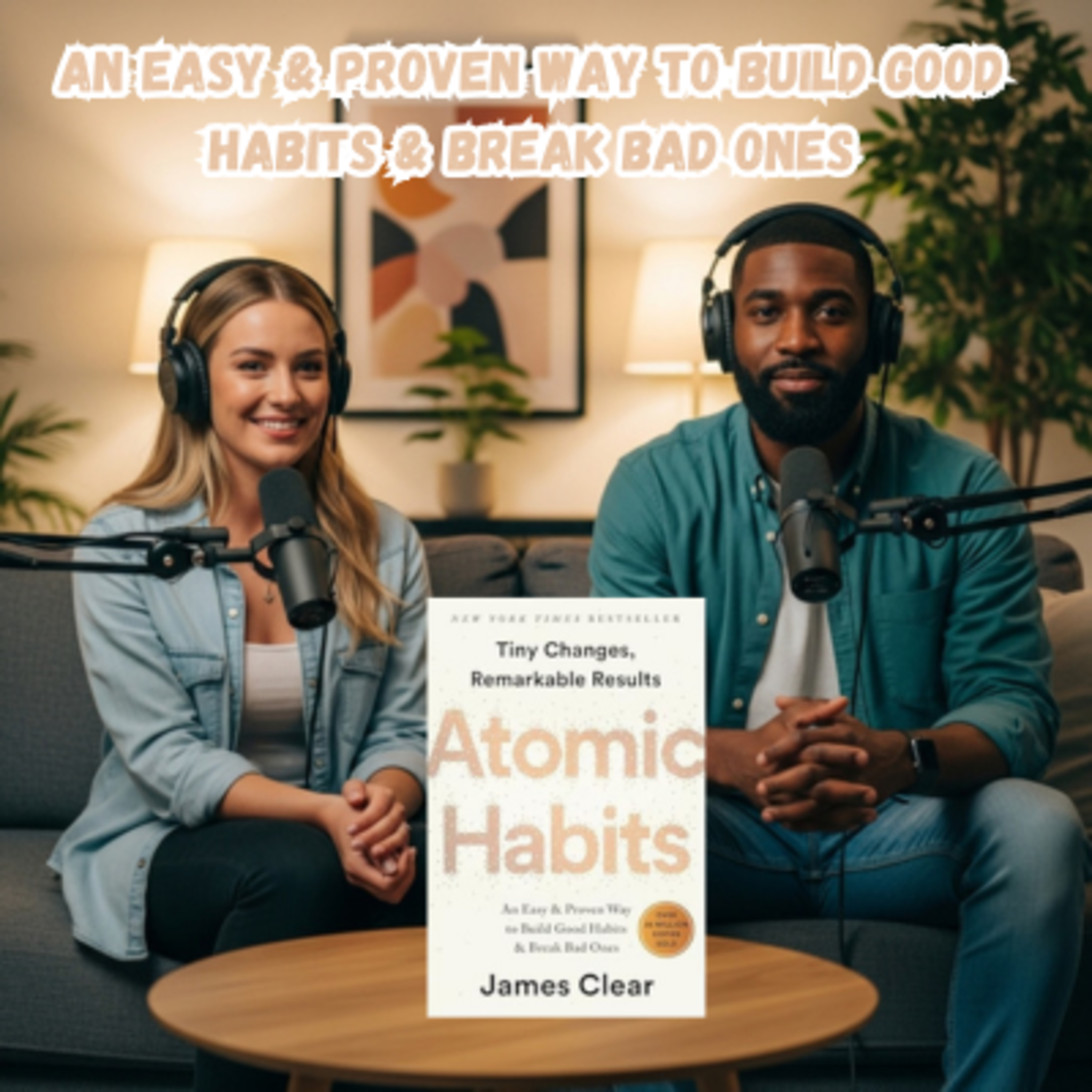
Big changes rarely start big—they start atomic. In Atomic Habits, James Clear reveals how tiny daily behaviors, when done consistently, compound into extraordinary results. With over 25 million copies sold worldwide, this #1 New York Times bestseller has become the ultimate guide to mastering the art and science of small wins.
In this episode, we explore the powerful system behind lasting transformation: how to make good habits obvious, attractive, easy, and satisfying—and bad habits invisible and inconvenient. You’ll learn how to design your environment for success, recover fast when you slip, and build momentum that sticks.
Because success isn’t about motivation or willpower—it’s about the systems you create every day.
#AtomicHabits #JamesClear #BookTunez #Habits #PersonalDevelopment #Productivity #Mindset #SelfImprovement #Discipline #Motivation #GoalSetting #BehaviorChange
If this episode gave you the push to start small, follow BookTunez for more transformative insights every week. 🎧
Share this episode with a friend who wants to break free from bad habits—and remind them that progress isn’t magic, it’s math.
Because small changes, done daily, lead to remarkable results.
All right, so we are going to dive into Atomic Habits by James Clear. We are going to try to unpack some of the key takeaways from this book based on that YouTube summary you sent over. Hopefully you'll walk away with some actual insights so you can actually start building some better habits. It all starts with this idea of these tiny changes adding up the so-called 1% rule, and how those tiny changes can actually end up shaping who you are as a person. You know what's fascinating is how Atomic Habits actually flips the script on this traditional idea of self improvement.
You know, it's not about this massive overnight transformation, but rather just the power of consistently making those small changes over time. Right. It's it's like, what's that quote? What we do every day defines who we are. Except in this case, it's what we do almost every day, that 1% that ends up defining us. It's like building a house brick by brick. You know, each brick on its own might seem insignificant, but if you put enough of them together, you'll have a really solid foundation for lasting change.
Yeah, and the book really dives into the mechanics of how habits work, starting with something called the Habit loop. I have to admit, when I first heard about this, I was pretty skeptical and sounded a bit oversimplified. But the more I thought about it, the more I realized just how powerful this concept is. Absolutely. The habit loop is basically a four stage cycle. Hue, craving response reward. So let's say your cue is walking into the kitchen after a long day at work. You see a plate of cookies on the counter and suddenly you just have a craving for something sweet.
Right, that's the cue triggering the craving. And I think for most of us, the response is pretty automatic. We grab a cookie and we enjoy that sweet reward. But here's the thing, once you understand how this loop works, you can actually start to kind of hack it. Exactly. You know, instead of trying to rely on willpower alone, which could be really exhausting and often ineffective, Atomic Habits teaches us to really kind of outsmart the loop itself. So for instance, maybe the simple act of moving that plate of cookies to a less visible spot, maybe that could be enough to disrupt that automatic response.
Right. Or, or maybe that you could just replace the cookies with like a bowl of fruit so that when the craving hits, you're reaching for something healthier. It's about making those small tweaks to your environment that kind of nudge you in the right direction. Now here's where it gets really interesting. Charter 2 of Atomic Habits goes beyond simply managing our habits. It dives into this idea of identity based habits. Yeah, and I was so struck by this idea that our habits actually shriek bar identity, and that any lasting change really starts with changing our beliefs about who we are.
It's almost like working from the inside out. I think of it this way. Imagine someone who wants to like make exercise a regular part of their life. Instead of focusing on the act of going to the gym, they might shift their mindset to becoming a person who prioritizes their health. So it's not just about doing the action, it's about embodying the identity of someone who actually values fitness. It's like the difference between saying I'm trying to eat healthy and saying I'm a healthy eater. Yeah.
And as you're listening to this, think about a habit that you want to build. What identity would support that habit? Would it be becoming someone who's more organized? Someone who's more creative? Someone who's more present with their loved ones? That's such a powerful question because once you start seeing yourself as that kind of person, the actions, the habits, they naturally start to follow. It's like the story of the sculptor who was asked how he created these beautiful statues, and he simply said, I just chipped away at everything that isn't the statue.
So in the same way, we can chip away at the habits that don't serve us and cultivate those that do. And that leads perfectly into the 1% rule, which Atomic Habits explores in detail in Chapter 3. I really resonated with this idea because it kind of takes the pressure off of trying to make these huge, sweeping changes all at once. Instead, it's about focusing on those tiny, seemingly insignificant improvements that can compound over time. Think about it this way. Imagine trying to run a marathon without any prior training.
You'd probably burn out before you even got to the starting line. But what if instead, you committed to simply walking for 5 minutes longer today than you did yesterday? Right, That feels so much more achievable, right? It's something you could actually build on day after day without feeling overwhelmed. And before you know it, those 5 minutes have turned into 10, then 15, then 30, until one day you find yourself running a marathon. The YouTube summary you sent had a great example of someone applying the 1% roll to their savings habits.
They started by putting away just a few dollars each week, and over time that small, consistent effort grew into this substantial nest egg. Yeah, that's the beauty of the 1% rule. It's not about instant gratification. It's about playing the long game. It's about trusting that those small, consistent actions will eventually lead to remarkable results. What brings us to another crucial concept that Atomic Habits emphasizes systems over goals. It's a shift in perspective that can really make all the difference.
Yeah, Chapter 4 really hammered home the point that successful people, they don't just focus on setting goals, they really focus on building the systems that will almost guarantee that they achieve those goals. For instance, let's say your goal is to write a book. A goal oriented approach would be to fixate on the end product finishing that book. But a system oriented approach on the other hand, would be to focus on building a daily writing habit. Right. So instead of saying I want to write a book, you might say I'm going to write for one hour every morning no matter what.
The YouTube summary contrasted these two approaches, and it was so fascinating to see how the people who focused on building systems were far more likely to actually finish that book. They weren't as attached to the outcome, they were more focused on the process. And ironically, by focusing on the process, they were much more likely to actually reach the outcome. So far our listener, the key question becomes what systems can you build to support your goals? What daily actions, when done consistently, will move you towards what you want to achieve?
It's about creating those automatic processes, those rituals that take the guesswork out of it. It's like building a machine that produces the results, rather than just wishing for those results to magically appear. And Speaking of making things automatic, Chapter 5 introduces this brilliant tool for overcoming inertia and building new habits. The two-minute rule. Yeah. This rule is all about making new habits so ridiculously easy to start that you can't say no. It's about outsmarting that resistance that we often feel when we're faced with a new challenge.
It's like that feeling of I have to work out for an hour. No way. But what if instead you just told yourself, I'm just going to put on my workout clothes? That's it, 2 minutes. Exactly because often once you've taken that tiny first step, the rest becomes much easier. The YouTube summary used the example of wanting to build a reading habit. So instead of aiming for 30 pages a day, just start with one. Make it ridiculously easy to get started, and you'll often find that once you've started, you'll naturally keep going.
So for our listener, the challenge is this. How can you 2 minute a habit you want to start, break it down to the tiniest possible action and just do that. Maybe it's meditating for just 60 seconds. Maybe it's writing one sentence in that journal you've been neglecting. Maybe it's simply standing up and stretching for two minutes. The key is to make those first steps so small and so manageable that you can't talk yourself out of them. And then as you gain momentum, you can gradually increase the duration of the intensity.
Right, it's like that saying the journey of 1000 miles begins with a single step, except in this case it's a 2 minute step. And that's the beauty of these small steps. They can be deceptively powerful. It's like that saying the journey of 1000 miles begins with a single step. Except in this case, it's a 2 minute step. But once we've taken those first few steps, what happens when we hit those inevitable roadblocks? Those moments where it feels like we're not making any progress. Yeah, that's where Chapter 6 comes in.
It's all about the plateau of latent potential, and this idea was a game changer for me because it really reframed my whole perspective on setbacks. Yeah, I have to admit, this was one of the concepts that really stuck with me, too. It's so easy to get discouraged when we don't see immediate results. You know? We start to question if we're doing the right things, whether we're even capable of change. But Atomic Abbot's reminds us that progress isn't always linear. You know, it's not always this upward trajectory.
There are going to be periods where it feels like we're stuck, like we're not moving forward at all. But that doesn't mean we're not making progress. Right. The YouTube summary used the example of learning a musical instrument. You might practice for hours, but it can feel like you're not getting any better. Then suddenly one day something clicks and you're playing a song you never thought you could. It's those moments that make all the struggle worthwhile, and it's important to remember that even when we don't see those breakthroughs, those moments of visible progress, the work we're putting in is still laying the foundation for future success.
It's like planting a seed. You know, you don't see the growth happening underground, but it's happening nonetheless. And then one day, that little sprout emerges from the soil, and you realize that all that time, all that effort, was worth it. So the key take away here is to trust the process. Don't get discouraged by those plateaus. They're a natural part of the journey and often they're a sign that something amazing is about to happen. Speaking of things that are happening beneath the surface, Chapter 7 dives into the law of least effort, and this principle resonated with me on a very practical level.
Yeah, it's all about how we're wired to choose the path of least resistance. We naturally gravitate towards what's easy, what's convenient, what requires the least amount of effort. It's not about being lazy, it's about understanding human nature and using it to our advantage. Absolute think about your workspace. Is it set up to minimize distractions and make focused work the easiest option? Or are you constantly battling temptations? Is your phone with an arm's reach? Are you getting notifications every few minutes?
Right. If we want to make good habits easier, we need to design our environment to support them. The YouTube summary gave the example of someone who wanted to eat healthier, and they realized that whenever they open the fridge, the first thing they saw was this big container of ice cream. Oh yeah? So they moved the ice cream to the back of the fridge and put a bowl of fresh fruit front and center. Such a simple change, but it can make a huge difference. It's about making healthy choices, the easy choices, by removing friction from good habits and adding friction to bad ones.
Right. And if we can make our desired actions the path of least resistance, we're far more likely to stick with them. Absolutely. Now let's talk about finding that sweet spot between challenge and ease. Chapter 8 explores the Goldilocks rule, which emphasizes the importance of finding the just right level of difficulty for habits to stay motivating. I love that the Goldilocks. Rule. We need to make sure our habits are challenging enough to keep us engaged, but not so difficult that they become overwhelming.
It's about striking that balance. The YouTube summary use the example of language learning. If a material is too easy, we get bored. If it's too hard, we get frustrated and give up. The key is to find that zone where we're pushing ourselves just enough to stay motivated and make progress. It's that Goldilocks zone where things are just right. So think about a habit you're currently working on. Is it challenging enough to keep you engaged, or is it too easy to difficult? How can you adjust it to find that sweet spot?
It's all about that fine tuning, that constant calibration to make sure we're staying motivated and making progress. And Speaking of motivation, Chapter 9 introduces what James Clear calls the cardinal rule of behavior change, which is all about making your habits immediately satisfying. OK, this is where we really start to hack our brains reward system. Remember that dopamine hit we talked about earlier with the habit? Loop exactly. We can actually use that to our advantage by making sure our new habits are enjoyable in the moment.
Right, so instead of viewing healthy habits as sacrifices, we need to find ways to make them pleasurable. The YouTube summary had some great examples, like finding a type of exercise you genuinely enjoy or making healthy meals that are actually delicious. Exactly. Think about your own habits. How can you make them more rewarding in the moment? Could you turn your workout into a dance party? Could you add a splash of fancy spice to your veggies? Could you listen to your favorite podcast while you work?
It's about finding those little things that make those positive changes feel good, which reinforces the behavior and makes it more likely you'll stick with it. And finally, we get to Chapter 10, which acknowledges that even with the best intentions, sometimes we slip up. Yeah, this is the part of the book that really resonated with me because it's so realistic. It doesn't pretend that building good habits is easy. It acknowledges that there are going to be times when we fall off track. But the key is to not let those slip UPS derail us completely.
This chapter introduces the Never miss twice principle. I love that. Yeah, the YouTube summer use the example of missing a day of writing. It happens. But instead of spiraling into guilt and self criticism, the key is to get right back on track the next day. It's about minimizing the damage of those inevitable slip UPS. One missed workout doesn't ruin your entire fitness journey. One unhealthy meal doesn't mean you've sabotaged your diet. Right. It's about being kind to yourself and recognizing that perfection is not the goal, progress is.
What's fascinating here is that this principle refrains failure as a learning opportunity. It's not about beating yourself up, It's about using those slip UPS to strengthen your commitment. So the next time you find yourself falling off track, remember the never miss twice rule. Don't let one set back turn into two. Get back on that horse and keep riding. Now let's talk about some of the practical applications of atomic habits. What are some specific examples of how our listener can use these principles to improve their lives?
The possibilities are truly endless. Oh yeah, They can use these principles to improve their productivity, their relationships, their health, their finances, really any area of their lives they want to work on. It's just a matter of finding those specific applications that resonate with them and their goals. For example, if they want to improve their productivity, they could use the habit loop to identify and break bad habits that are holding them back. They could use the 1% rule to make small, consistent improvements to their workflow.
They could build systems to streamline their tasks. They could use the two-minute rule to overcome procrastination. And if they want to improve their relationships, they could use identity based habits to cultivate the qualities of a good friend or partner. They could make time for regular connection rituals like weekly date nights or phone calls with loved ones if. They want to improve their health. They could use the Goldilocks rule to find a form of exercise they enjoy and can stick with. They could use the law of least effort to make healthy eating the easy choice.
And remember, even small changes can have a big impact over time. It's the power of those atomic habits, those tiny changes that compound over time and lead to extraordinary results. It's been a fascinating journey exploring atomic habits. You know, we've covered a lot of ground, from the mechanics of the habit loop to the power of identity based change. We've talked about the importance of systems, the magic of those tiny improvements, and the art of making habits satisfying. It's amazing how much wisdom is packed into this book, and I feel like we've only just scratched the surface right?
But even in this short deep dive, I feel like I've already gained so many valuable insights. I'm curious, what are some of the takeaways that have resonated most with you well? One of the things that really struck me was this idea of identity based habits. You know, it's so empowering to realize that we can actually choose who we want to become and then use our habits to build that identity. I love that it's about shifting our focus from what we want to do to who we want to be, and then letting that vision guide our actions.
And the 1% rule was another big one for me. It's so reassuring to know that we don't have to make these huge, overwhelming changes all at once. We can simply focus on making small, consistent improvements and trust that those will compound over time. It's the power of those tiny wins, those seemingly insignificant actions that, when repeated consistently, can lead to extraordinary results. Yeah, and the two-minute rule, that was a game changer. I've already started implementing it in my own life and it's amazing how much easier it is to get started on things when you break them down into those tiny, manageable steps.
It's all about outsmarting that resistance, that inertia that often keeps us from taking action. And once you get started, it's often much easier to keep going. Exactly. It's like that saying well begun is half done. Now, as we wrap up our deep dive into Atomic Habits, I want to leave you with one final provocative thought that wasn't explicitly covered in the source material. Oh I love a good mind Bender, lay it on me. If our habits truly shape who we are, what tiny changes today could lead to the most remarkable version of yourself in a year's time.
Wow, that's a powerful question. It's almost like a reverse engineering challenge, right? Instead of starting with the habit, you're starting with the identity you want to create, and then working backwards to identify the habits that will get you there. Precisely, It invites us to think bigger beyond just checking off tasks or achieving specific outcomes. It's about envisioning the person you want to become and then allowing that vision to guide your actions. Exactly. That's such a beautiful way to think about it.
It's about aligning our daily choices with our ultimate aspirations. It's about recognizing that even seemingly insignificant actions can have a profound impact on the trajectory of our lives. So to our listener, we challenge you to take this question to heart. Don't just think about the habits you want to build, but about the person you want to become. What tiny changes today could lead to the most extraordinary version of yourself a year from now? Write it down, visualize it, and then most importantly, start taking action.
Remember, even the smallest step in the right direction can create a ripple effect that transforms your entire life. And that's a wrap on our deep dive into Atomic Habits. We hope you've gained some valuable insights and practical tools to upgrade your life, one small change at a time. Remember, the journey of self improvement is ongoing. Keep experimenting, keep learning, and keep growing. Until next time, happy habit building.
 Apple Podcasts
 Castbox
 Castro
 Goodpods
 Moon FM
 Overcast
 Pocket Casts
 Podbean
 Podcast Addict
 Podcast Republic
 Spotify