Ask for More by Alexandra Carter | 10 Questions to Negotiate Anything
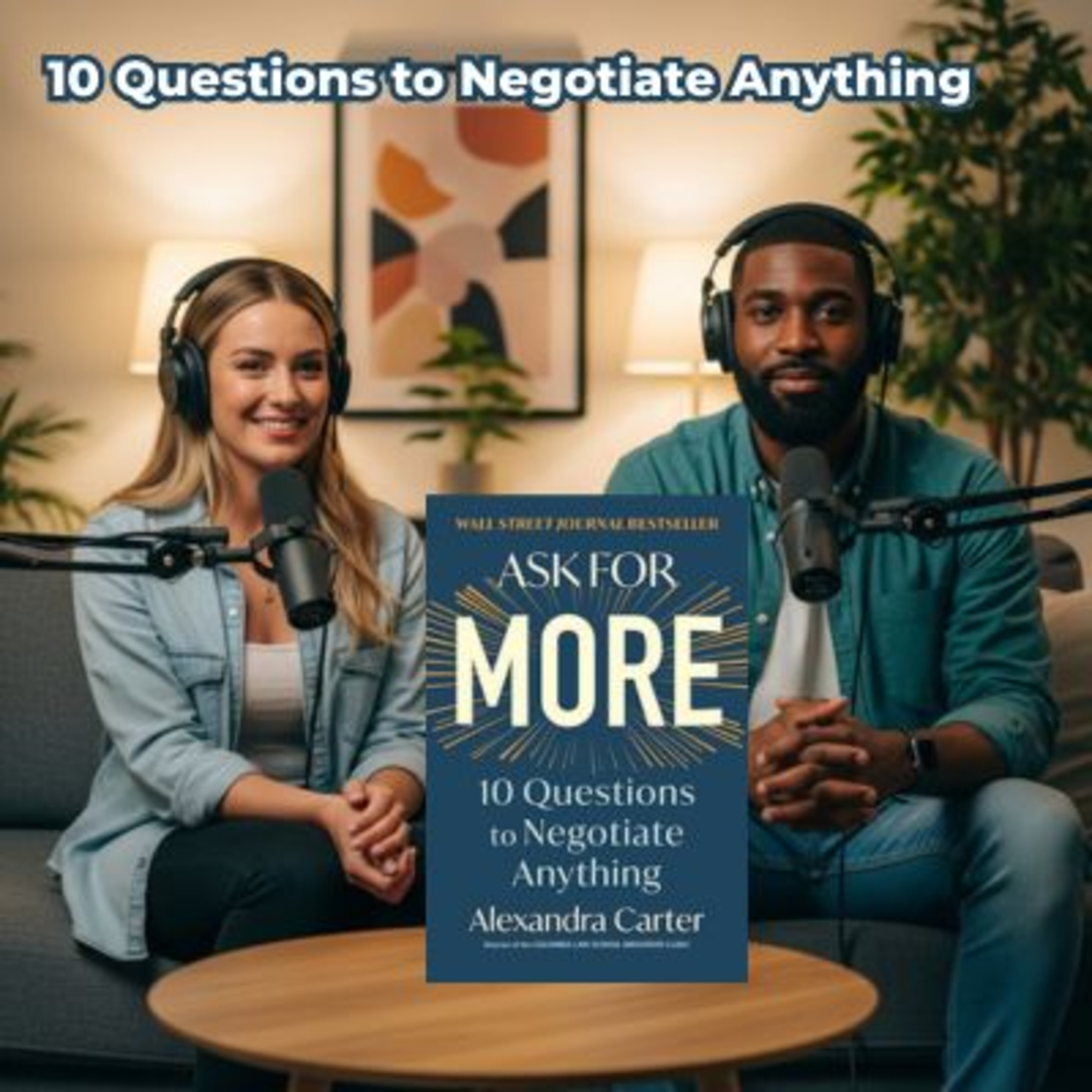
Negotiation is not a zero-sum game. It’s an essential skill for your career that can also improve your closest relationships and your everyday life. Still, people often shy away from it, feeling defeated before they’ve even started. In this groundbreaking new book on negotiation, Alexandra Carter—Columbia law professor and mediation expert who has helped students, business professionals, the United Nations, and more—offers a straightforward accessible approach anyone can use to ask for and receive more.
We’ve been taught incorrectly that the loudest and most assertive voice prevails in any negotiation, or otherwise, both sides compromise, ending up with less. Instead, Carter shows that you get far more value by asking the right questions of the person you’re negotiating with than you do from arguing with them. She offers a simple yet powerful ten-question framework for successful negotiation where both sides emerge victorious. Carter’s proven method extends far beyond one “yes” and instead creates value that lasts a lifetime.
Ask for More is “like having a negotiation coach in your corner” (Linda Babcock, author of Women Don’t Ask) and gives you the tools to bring clarity and perspective to any critical discussion, no matter the topic.Based on the book by Alexandra Carter, this overview highlights a ten-question framework designed to transform negotiation into a transparent and collaborative dialogue. The strategy begins with internal reflection, requiring individuals to define the core problem, distinguish essential needs from wants, and manage their emotional state. By examining past successes, negotiators can build the self-assurance necessary to take manageable first steps toward their goals. The process then shifts focus toward the other party, using active listening to uncover their specific requirements and hidden anxieties. Ultimately, this method fosters mutual trust by empowering both sides to align their interests and commit to concrete actions for a successful resolution.#NegotiationSkills #CommunicationSkills #CareerGrowth #LeadershipSkills #BusinessPodcast #SelfImprovement #Influence #Negotiation #PersonalDevelopment #ConflictResolution #EmotionalIntelligence #BookSummary #ProfessionalDevelopment #Persuasion #MindsetShift
Usually when we talk about high stakes situations, there is this, this almost uncontrollable physical reaction that takes over. Oh, absolutely. I mean, think about the last time you had to ask for something major, maybe a raise or a critical extension on a project. Or even just renegotiating the distribution of household chores with a partner. Right, Yes. Before you even open your mouth, your heart rate spikes, your palms get a little clammy, the throat goes completely dry. Visceral, primal fear.
It really is. It's almost like your body thinks it's under physical threat. And nowhere is that biological reaction more common than when we hear the word negotiation. We immediately picture these 0 sum boardroom battles, you know, aggressive ultimatums and someone inevitably walking away feeling like the loser it. Triggers a very literal fight or flight response in the nervous system because culturally we've been conditioned to treat negotiation like a duel. Like a showdown. Exactly. Sit across from someone, you draw your weapons and you just see who flinches first.
OK, let's unpack this because our mission today is to completely dismantle that fear for you. I love that we are taking the anxiety out of the process and we're replacing it with a concrete question based road map that works in literally any scenario. And this is such a powerful framework. It is. We're drawing on a chapter by chapter summary of Alexander Carter's book. Ask for more 10 questions to negotiate anything The promise here is transforming you from a hesitant participant into a profoundly confident negotiator.
And it does that by completely upending how we traditionally view the negotiating table. To really set the stage for this, I want you to visualize the space I'm sitting in right now. OK, paint the picture. So I'm in a very quiet, deeply organized study. There are tall, neatly arranged bookshelves lining the walls. The lighting is warm. It's a. Very Zen. It is. The entire atmosphere is peaceful, deliberate, and highly intentional. That calm, structured environment that is exactly the cognitive headspace this framework requires you to build.
Because what's fascinating here is that the entire first half of a negotiation doesn't even involve the other person. Wait, the first half doesn't involve the counterpart at all? Not at all. Wow. But I guess you can't effectively ask for what you want if you don't even know the root mechanics of your own problem. Exactly. So before you step up to the table, you have to look in the mirror. Precisely, you negotiate with yourself 1st and this begins with the foundational question, which is what's the problem I want to solve?
Which sounds obvious. Right on the surface that sounds like a throwaway step, but it is actually where most deals fall apart before they even begin. How so? Well, the vast majority of people walk into a negotiation trying to solve a symptom rather than the disease. Oh, that makes sense. Let's ground that though. What does solving A symptom actually look like in a professional setting? OK, imagine someone marching into their manager's office convinced the problem is I need a 15% bump in my salary.
Sure. They've probably spent weeks preparing spreadsheets to prove their market value. Exactly. But if they pause and force themselves to go deeper, which is the absolute mandate of this first step, they might realize the actual source of their dissatisfaction isn't the paycheck at all. What else would it be? Maybe the root problem is that they are doing the work of two people and facing severe burnout. Or maybe they feel their current title doesn't reflect their actual authority, which makes it hard to get compliance from other departments.
I see, so if they just get the 15% raise they walk out feeling victorious for like what about a week? Yep, pretty much. But a month later, they are still burning out and still struggling to get compliance from their team. They essentially negotiated for a bandage when they required a structural fix. Exactly. Defining the primary problem anchors you. When the conversation gets tense or the other party introduces distractions, you don't get pulled off course. You stay focused. Right, you can always measure a proposed solution against that core problem.
Which naturally sets up the second internal question. What do I need or phrase differently? What is necessary? The source material makes a really sharp distinction here between fundamental needs and mere wants. And you know, I look at this the same way I look at going grocery shopping when you are starving and you didn't bring a list. Oh, that is a notoriously dangerous cognitive state to be in, right? It's the worst. You walk into the store, your blood sugar is low, and suddenly you are entirely captivated by what you want in the snack aisle.
The. Shiny objects. Yeah, you're throwing chips and cookies into the cart because the packaging is shiny and it promises instant gratification. But when you get home, you unpack those bags and realize you completely failed to buy the proteins and vegetables you actually need to make dinner for the week. You satisfied a temporary urge, but you failed the fundamental mission. Exactly. In a high stakes conversation, if you don't define your grocery list of absolute needs beforehand, you just get distracted by the snack aisle of petty demands and ego driven wants.
I love that. And your grocery store analogy touches on a well documented cognitive trap. When we are under pressure, our work breaking memory actually shrinks. Oh really? Yeah, we become highly susceptible to those shiny objects. Maybe it's a corner office, a flashy job title, or just winning a minor concession purely to prove we can. Just to win something. Right. By explicitly separating your required ingredients from your optional snacks, you reduce your cognitive load. You know exactly what constitutes a successful outcome.
Which makes it much easier to concede on the wants when necessary, I imagine. Exactly. OK, so knowing your needs is logical. But human beings aren't just logical machines. Even with the perfect grocery list, things get messy. Which brings us to the third internal check. Mm hmm. What do I feel? Right now. Wait, I have to push back hard on this one. Isn't showing emotion usually considered a massive liability in a negotiation? That's a very common belief, yes. Right, because the prevailing wisdom in business has always been to check your emotions at the door, put on a poker face, and just act like a purely rational operator.
Well, the problem is that prevailing wisdom completely ignores basic neuroscience. OK, how so? You cannot simply turn off your amygdala, which is the emotional processing center of your brain. Our decisions are constantly influenced by our underlying emotional state, usually entirely without our conscious awareness. So they're driving the car whether we know it or not. Exactly. If you walk into a room carrying unrecognized resentment toward a vendor or intense anxiety about losing a client, those implicit emotions will leak out.
Even if you think you're hiding them. Absolutely. They will alter your tone, your body language, and your risk tolerance. But the framework isn't suggesting you walk into the room and justice dump those feelings on the table, right? I mean, it's not about using the negotiation as a therapy session. Far from it. There is a critical distinction between acknowledging an emotion internally and projecting it recklessly. The goal of asking what do I feel is internal regulation. If you sit in your office beforehand and admit to yourself I am feeling incredibly defensive about this project timeline, you are taking an implicit invisible driver and dragging it into the explicit light.
You're calling it out. Yes. Once you observe the emotion, you engage your prefrontal cortex. You can analyze it. You manage the emotion rather than letting the emotion hijack your behavior. Because repressing feelings just builds pressure. Exactly. Acknowledging them gives you strategic leverage over your own reactions. It's the difference between ignoring a check engine light and actually pulling over to see what's wrong. You know you can't stop the engine from running hot, but if you know what's happening, you can adjust how you drive.
That's a perfect way to look at it. So we figured out our root problem. We've separated our essential needs from our superficial wants. We've regulated our emotional state. We have total clarity. But clarity in a vacuum doesn't close a deal. Eventually you have to get up for the desk and actually initiate the conversation. Right. Introspection eventually reaches a point of diminishing returns. You have to shift from reflection into action. Which introduces phase two, building internal momentum. We need the psychological velocity to open the door, and that requires the 4th question.
Yes. How have I handled this successfully in the past? So why is this question so important right at this moment? Well, if we connect this to the bigger picture, facing a high stakes conversation often puts the brain into a state of paralysis. We vividly imagine all the ways the dialogue could collapse. Oh yeah, the worst case scenario spiral. Exactly asking how have I handled this successfully in the past forces a deliberate cognitive pivot. It shifts the focus. Yes, by deliberately scanning your memory for prior achievements in similar circumstances, you provide your brain with a surge of dopamine and confidence.
You redirect your focus toward your personal advantages and the specific tactics you've employed before that yielded results. OK, but what does this all mean for someone who feels they've never successfully negotiated before? That's a great question. Right. Like, what if they're entirely new to their field or role? Take a fresh college graduate negotiating their very first salary, or someone navigating a divorce who has never had to mediate the division of complex assets. They look at that question and panic.
Yeah, they think I have 0 past success to draw from here. Well, that anxiety stems from a very narrow definition of what negotiation actually is. We tend to restrict the concept to hostage standoffs or billion dollar corporate murders. Right, the movie version. Exactly. But human beings negotiate constantly. Have you ever convinced A stubborn toddler to eat vegetables by turning it into a game? I mean, yes, that's a daily struggle. Have you ever resolved a deep chore dispute with a resentful college roommate?
Have you ever organized a family vacation where six different people had fiercely competing ideas of what relaxing meant? Oh wow, yeah those are actually highly complex multi party negotiations involving diplomacy, compromise and strategic framing. They. Absolutely. Are you draw on those everyday successes, the stakes or the financial context might change, but the core mechanics, active listening, adapting your tone, finding overlapping interests, they remain identical. That's incredible. You always have a track record of solving human problems.
You just have to recognize it and map those skills onto the current challenge. That reframing makes the process deeply accessible. You already possessed the tools, so once you access that confidence, you encounter question 5. Right. What's the first step? Just the first step. Not the final resolution, not mapping out the entire chess match, just the absolute first step. Because staring at the entire staircase is what triggers the paralysis in the first place. Precisely when we look at a massive, complex negotiation, the sheer volume of variables causes cognitive overload.
By segmenting the monumental task into one granular, doable action, you anchor yourself in the present moment. An action generates momentum. Yes, once you take that single concrete step, whether it's drafting A3 sentence e-mail to request the meeting or just writing down your opening statement on a sticky note, you completely shatter the inertia. All right. So the internal work is done. We understand our underlying problem, our rigid needs, our emotional baseline. We've recalled our competence. We've taken that initial step to get to the table.
The mirror is put away. The mirror is put away. We are finally crossing the table. This is phase 3 opening the floor. And here's where it gets really interesting, because question 6 isn't even a question at all. It is a prompt. 2 simple words. Tell me. Just tell me. In the context of a tense environment, those two words are arguably the most powerful mechanism in this entire framework. When I look at this phase, it reframes the negotiator's role entirely. It's the posture of an investigative journalist rather than a competitive debater.
Oh, I like that comparison. Right, because in a debate, your primary objective is to dominate the airspace, to dismantle the other person's logic, and to prove your superiority. But investigative journalist operates on a totally different frequency. Their goal isn't to win an argument, it's to unearth the full narrative. They're hunting for the why hidden beneath the what. Yes, and adopting that journalistic posture fundamentally alters the chemistry of the room. Tell me his profound invitation.
It opens everything up. Exactly. When you sit down and say tell me about your vision for how this partnership should work, or tell me about the pressures your department is facing right now, you I splish 2 distinct things, OK? What's first? First, you are gathering critical intelligence. You are letting them map out their motivations, constraints, and priorities for you. And secondly, I'd imagine you were bypassing their fight or flight response entirely. Exactly. People walk into these conversations with their Shields raised expecting an attack.
When you encourage candid communication and demonstrate genuine curiosity, you signal that you are not a threat. You disarm them. Right. They realize you aren't there to conquer them, you are there to comprehend them. You establish immediate trust because feeling heard is one of the most fundamental human desires. You are terraforming A combative environment into a collaborative 1. Which flows seamlessly into the next prompt, Question 7. What do you need? And you know the the symmetry here is striking.
This perfectly mirrors our own internal audit from phase one. The framework intentionally reflects itself. Just as you had to undergo the difficult work of distinguishing your structural needs from your superficial wants, you now facilitate that exact same process for them. You make them do the work. Yes, by explicitly asking what do you need, you cut through the posturing. It eliminates the cognitive tax of trying to read their mind or operating on flawed assumptions about what you think drives.
Them they're forced to articulate their absolute bottom line. Yes, and by defining those parameters out loud, you minimize the risk of misinterpretation. You create structural alignment. Once both sets of fundamental needs are on the table, you often realize that your respective requirements aren't mutually exclusive. They can actually fit together, but inevitably those pieces don't always fit perfectly on the first try. Friction is a guarantee. Which brings us to question 8. What are your concerns?
Now this step separates novice negotiators from master negotiators. Really. Why is that? Well, the natural human instinct is to avoid negative friction at all costs. Novices want to focus exclusively on the sunny, optimistic path to a signature. They assume that acknowledging a potential problem will somehow speak it into existence. Like saying Voldemort's name. Exactly. But ignoring a concern doesn't neutralize it, it just lets it fester in the dark. Unspoken concerns breed paranoia and hesitation.
By asking what are your concerns early in the dialogue, you act like an engineer releasing a pressure valve on a highly stressed boiler. You let the steam out, yes. You are proactively inviting the tension out into the open where it can be managed. You are signaling. I am robust enough to handle your doubts and I want to engineer solutions for them. It's basically a verbal pre mortem. You are actively searching for the structural flaws in the deal before you actually try to build a building. Exactly.
Handling the reservations constructively before they calcify into entrenched deal Breakers proves that you are a reliable partner. It demonstrates deep competence and further cements the trust you initiated with the Tell Me prompt. So we've listened without judgement. We've mapped out their concrete needs. We've depressurized their anxieties. We are now entering the final stage Hase 4 empowering the counterpart to close the deal and once again we see the mirror effect from our internal preparation.
Question 9 asks them how have you successfully handled this in the past? Now, this raises an important question regarding the psychology of commitment. Up until this moment, you have been diagnosing the situation and managing the emotional temperature. But for an agreement to actually survive contact with reality, it cannot be a paternalistic dynamic where you act as the savior dispensing solutions to their problems. You must transition the counterpart from a passive participant into an active problem solver alongside you.
Let. Me play devil's advocate for a second here though. Sure, If I'm the one leading this negotiation and I turn to them and ask how they've solved similar things before, aren't I essentially doing their homework for them? Or worse, doesn't that make me look unprepared, like I'm giving up my control of the negotiation because I don't have the answers? It's a very rational fear, but it really misunderstands how influence works. You aren't surrendering control, you are cultivating ownership. Cultivating ownership.
Right. Think about the mechanics of compliance. If I simply dictate a solution to you, you might not and agree to it in the room just to avoid conflict, but your internal commitment to that solution is incredibly low. The minute execution gets difficult, you will abandoned it. Because it's not my idea. I have no skin in the game. Exactly. But if I ask you how have you navigated a complex supply chain bottleneck like this in your previous roles, I am doing for them what question Ford did for you.
Oh wow. I am shining a spotlight on their competence. I am pulling them out of their anxiety and validating their expertise. It shifts the entire architectural dynamic of the room. Yeah, you stop dwelling on the barriers of the current problem and start brainstorming based on their proven historical success. And here's the profound psychological advantage People do not tear down a house they helped build. That is such a great phrase. It's true. When they generate the idea, or even just heavily contribute to the framework of the solution, they become inherently tethered to its success.
They will fight to make it work because it reflects their own competence. So it actually makes your job easier. Paradoxically, empowering them actually reduces your burden. You don't have to carry the entire cognitive weight of having every answer, you just have to be skilled enough to ask the right questions. People do not tear down a house they helped build. That concept completely changes the objective of the conversation. You are actively turning an opponent into a co-author. Yes, which leads us to the final hurdle, Question 10.
What's the first step you can take? We've descended from the high level strategy back down to the granular reality. You possess shared clarity on needs, you've mitigated the fears, you've co-authored A framework for a solution. But all of that profound psychological work is entirely worthless if everyone shakes hands, walks out of the room, and the momentum just dissipates into the void. Question 10 forces execution. It bridges the gap between theory and reality. It verifies clarity, ensuring everyone agrees on what happens next so the conversation doesn't stall.
Yes, and notice the specific pronoun used. What's the first step you can take? You You are anchoring their theoretical commitment into a concrete action item. You aren't leaving the room with vague promises, You are leaving with a shared timeline and mutually distributed responsibility. You know, stepping back and observing the architecture of Carter's entire framework, the symmetry is deeply satisfying. It really is beautiful. You have 5 internal reflective questions. Defining your root problem, separating needs from wants, regulating your emotional baseline, recalling your past competence, and defining your own granular first step.
And then, once your own house is in order, you deploy 5 complementary steps to engage the counterpart. You invite them into the space with open curiosity. You extract their fundamental needs, you depressurize their fears, you validate their historical competence, and you secure their commitment to a shared first step. The ultimate take away here is that asking for what you deserve. Whether you are prepping for a corporate salary review, advocating for resources for your department, or just trying to figure out weekend plans with your extended family.
It does not require you to adopt A hyper aggressive persona. Not at all. You don't need to be a shark, you just need to be relentlessly curious and deeply structured. Curiosity paired with structure is the ultimate strategic advantage. It disarms hostility, lowers biological defenses, and constructs durable agreements. But I want to leave you with a final thought today. Something to analyze long after you finish listening. OK. Let's hear it. We've spent this time breaking down the mechanics of how these questions uncover truth and build trust when you deploy them on an unsuspecting counterpart.
But what happens to the dynamic when the person sitting across the table has also read the book? Oh man, that is a fascinating scenario. Right. If both parties are actively employing this exact framework, does the negotiation collapse into an endless, impenetrable stalemate of mutual questioning? Like, tell me what you need. No. Please tell me what you need. It's the loop. Forever. Exactly. Or does it transcend the concept of negotiation entirely? Does it strip away the posturing and transform into the most honest, efficient, and radically transparent conversation to human beings are capable of having?
I would argue for the latter. When both individuals are entirely committed to uncovering root problems and addressing foundational fears, you stop fighting over how to slice the existing pie, and you begin gathering the ingredients to bake an entirely new one together. Imagine a corporate culture or even just a personal relationship where conflicts is approached with that baseline of radical transparency. It completely reinvents the paradigm. Absolutely. So the next time you find yourself facing a high stakes conversation and you feel that familiar biological spike in your heart rate and your palm start to get clammy, remember you don't need to walk into the room wielding weapons.
You just need a mirror, a genuine willingness to listen, and 10 precisely calibrated questions.
 Apple Podcasts
 Castbox
 Castro
 Goodpods
 Moon FM
 Overcast
 Pocket Casts
 Podbean
 Podcast Addict
 Podcast Republic
 Spotify