Art of Persuassion by Bob Burg | The_Art_of_Ethical_Influence_and_Persuasion |
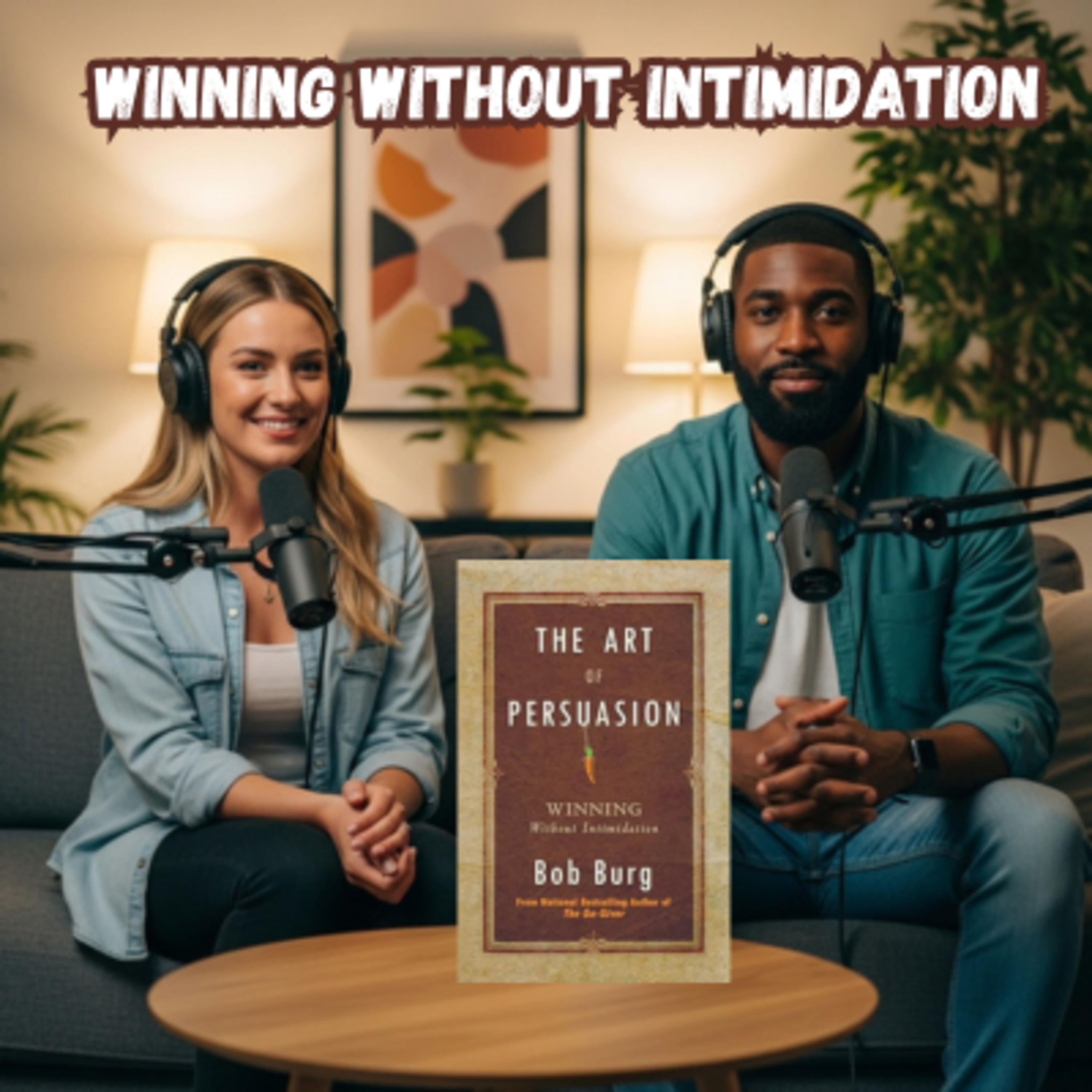
Bob Burg’s guide to effective communication emphasizes achieving goals through mutual respect and genuine connection rather than force or manipulation. The text outlines a strategy for influence built on the pillars of active listening, empathy, and the pursuit of win-win outcomes in every interaction. By focusing on making others feel valued and maintaining personal integrity, individuals can foster trust and build long-term relationships across both professional and personal spheres. This approach suggests that true persuasion is an ethical life skill rooted in transparency and the consistent desire to add value to the lives of others. Ultimately, the source serves as a roadmap for navigating conflicts and negotiating successfully by prioritizing emotional intelligence and collaboration.
The Art of Persuasion teaches you how to get what you want when you want it. You would love to have that ability, right?
After studying some of the most successful men and women in modern history, author Bob Burg noticed how many common characteristics these people have - and shares them all with you.
One trait that stands above all the rest is their ability to win people over to their way of thinking - they were all persuasive. Each of these life winners had a burning desire, coupled with great creativity, and a total, unshakable belief in their mission or cause.
Winning principles you will learn include:
- Making People Feel Important
- Everything is Negotiable
- Dealing with Difficult People
- Persuasion in Action
- What Sets You Apart from the Rest
- Nuggets of Wisdom
Presented in everyday, clear, and often humorous language, The Art of Persuasion leaves an impression on you that will last a lifetime - filled with one success after another!
#productivityhacks #personaldevelopment #successstrategies #businessinsights #leadershipskills #leadership #ambitiousprofessionals #businesstips #self help #scaling business #businesstactics #professionaldevelopment #startupgrowth #entrepreneurship #businessmindset #growthstrategies
Imagine walking into a really high stakes conversation, maybe a cuff client meeting, project review, or even just one of those tricky family discussions and knowing you can get what you want. But instead of it being this draining fight, you leave and the other person feels respected, heard and actually positive about it all. That's the goal. That ability, you know, to influence without force, without being aggressive or manipulative, that's the promise of what we're diving into today. It's really about winning hearts and minds, not just arguments.
It's such a vital distinction it really is because it changes influence from like a 0 sum game into a way to build relationships. And our source material for this is a great summary of Bob Berg's work, The Art of Persuasion, Winning without Intimidation. Our mission here is to just cut straight to the core lessons. A shortcut. Exactly. A high speed shortcut to understanding ethical influence and how to communicate in the way that builds real long term connection, not just transactions. OK, let's unpack this, because the very first idea Berg lays out, it feels like it requires a a bit of a philosophical shift.
If we're not using force, what's the foundation? What are the pillars? They are completely non negotiable for any kind of long term success. The first one is respect. You have to create an atmosphere where the other person feels genuinely valued just for being there. So not for what they can do for you. Not at all. And if someone feels respected, their defenses just, they drop. They become so much more receptive to actually listening to you. OK, so respect is the ticket to entry, but that alone doesn't, you know, close the deal.
What comes next? That leads right to the second pillar, active listening. I mean truly active. You have to understand their needs, their fears, their concerns, and you have to do that before you even think about saying your piece. So. Persuasion isn't about having a great script. No, it's about aligning your solution with what they already need. I get the theory, but let's be realistic. In a tough negotiation, especially in business, isn't win win just a nice way of saying I win slightly more? How do you stick to that third pillar mutual benefit?
Well, Bug is adamant about this. If the relationship is the long term goal, the outcome must be mutually beneficial. If you're always trying to get a little bit more at their expense, that's not influence, that's manipulation. And that will always sour the relationship eventually. Always a genuine win. Win changes the whole dynamic from a competition to a collaboration. Both people feel invested. It's a long term strategy, not a short term win. That reframes it entirely. It's not a tug of war, it's a journey you take together.
But before anyone goes on a journey with you, they have to trust you as the guide. Which brings us to what I think is the real cornerstone of his model, the no you like you trust you triad. This feels like the psychological engine of the whole thing. It is the essential path, yeah. You can't skip steps. You can't just jump straight to trust. It has to be a sequence. First is no You what? Does that mean exactly? It means sharing your true self. The key ingredients here are transparency and sincerity.
People need to feel like they get your motivations, that you're not hiding some secret agenda. Interesting that transparency comes before being liked. You could be transparent about something and not be immediately likable. Precisely. And that leads to the second step, like you. And this doesn't mean you have to be a people pleaser, not at all. It just means you show up in a way that generates positive feelings. Through genuine interest, kindness. Yes, consistency and positive interactions. Yeah, people are drawn to others who make them feel good about themselves.
And then the big one trust you. How do we build that without it feeling, I don't know, forced or manipulative? You don't accelerate it. You can't. You build it slowly and securely. Trust is built over time through consistent, dependable actions. Burke is so clear on this. Reliability and integrity are everything. It's like compound interest for your reputation. That's a great way to put it. One big grand gesture doesn't save you if you're making daily withdrawals of unreliability. You just want to be known as the person who does what they say they'll do, even in the small things.
OK, so we've got the mindset mutual benefit built on a foundation of trust. Now let's get practical. How do we turn that trust into real momentum in a conversation? Through focus, engagement and the core skill here is 1 we mentioned but it's worth diving into. Listen, first you have to understand their perspective so well you could argue their side for them. Better than they could, even. Yes. Only then can you actually align your ideas with their needs and that deep understanding. That's what allows for true empathy.
Which is so powerful. When people feel seen and validated, they believe you actually have their best interests at heart, or at least that you get where they're coming from. And then you can start using insightful questions. This is a technique that moves the conversation forward without you having to push. Instead of just stating your solution, you ask questions that lead the other person to it. So what makes a question insightful in this context? It's a question that helps them see a new possibility.
So instead of saying you need to do this, you might ask if we could get that result you want, but without disrupting your team, what would be your biggest concern? So you're getting them to problem solve with you. You're engaging them, making them focus on the outcome, helping them talk themselves into the solution. OK, so once the ball is rolling, how do we keep that positive cycle going? Berg talks a lot about reciprocity. If I help someone get what they want, they're more likely to help me, but what if they just take the help in a run?
That's a valid fear, but the risk is way lower if you follow his advice. The value you offer to trigger reciprocity should be unexpected or personalized. So it's not transactional. It's not. I did this for you, now you owe me. No, it should be genuine upfront that goodwill creates a kind of positive psychological debt. If you're known as someone who just proactively adds value, your influence grows like crazy. Which? Brings us to the emotional bank account. We hear that phrase a lot, but what's a real deposit versus just, you know, superficial flattery?
Right. It's a very deliberate strategy. A superficial deposit is forced flattery. A meaningful 1 is based on genuine interest. And Berg points to two specific actions that make really deep deposits. OK, what are they? First, sincere compliments and they had to be authentic, focused on effort or character. 2nd, and this one is huge, is empowering others by encouraging them to talk about their interests, their expertise. You turn the spotlight on them. Exactly. You validate their worth, make them feel important, which is a core human need.
If they leave a conversation with you feeling better about themselves, you have made a massive deposit. That connects right into distinguishing yourself. If you're consistently making these deposits, you naturally stand out. It's not about yelling the loudest. It's about being the most tuned in. Your key differentiator is authenticity, but the mechanism is consistent value addition. You have to be constantly looking for ways to add value, even when there's nothing in it for you. Right now it's about giving, not taking.
We've got the foundation of trust, the techniques of adding value. Now for the real test, applying this to high stakes negotiation and dealing with really difficult people, let's start with this idea that everything is negotiable. This is all about reframing negotiations, not some big scary business showdown. It's an everyday interaction. And the first key here is that your mindset matters. You have to walk in believing a solution that benefits everyone is actually possible. If you assume someone has to lose, they probably will.
You'll make it happen. And that belief? It's fueled by empathy. But what's the biggest mistake most people make in these little everyday negotiations? I'm guessing it's not being clear. That's it. Failing to be clear about what they actually want or feeling guilty for asking. Berg says clarity is vital. You have to be open and direct about your needs. It's not selfish, it's just honest. You can't find a mutual benefit if only one person's needs are on the table. OK, so negotiation is one thing, but dealing with a truly difficult person, that is the ultimate test.
How do you stay calm and get a good outcome when the other person is just bringing all this negative energy? So chapter 6 gives us this really clear five step strategy and the first step is so counterintuitive, especially when your adrenaline is pumping. It's listen without planning your response. Oh that is the hardest thing to do, to shut off your own brain and just absorb. It is, but if you do it, it shows immense respect and it immediately starts to defuse the tension. Step 2 is stay calm, obvious but critical.
You have to regulate your own emotions to think clearly. Right, don't react respond. Exactly. Third, seek to understand, dig deeper. Why are they really upset? Is it the thing itself or the principle behind? It so you're gathering intelligence while staying in control, Then what? Then Step 4, which is crucial, find any point of agreement. It can be tiny, microscopic, but you find it and it builds a bridge. It breaks that US versus them. Frame and once you have that bridge. You pivot Step 5. Redirect the negative energy towards something neutral or positive.
You use that point of agreement to pivot towards solutions, shared goals, the future. You reset the whole tone. That's brilliant, turning a potential explosion into a constructive talk O if we zoom out, what are the big repeated Nuggets of wisdom here? Well, synthesizing it all, it comes down to a few things. Active listening is always #1 prioritizing empathy over ego, focusing on the best outcome, not on being right, and consistency standing by your values, your word, day in and day out. Reciprocity just naturally follows from that.
And you can't forget the power of positivity. Right, it's a strategic tool, not just a personality trait. It absolutely is. Positivity keeps the door open for collaboration. Negativity slams it shut. So we've covered professional life, conflict, relationships, but the final chapter, Beyond Business, seems to tie it all together for the long haul. It really does. Berg makes it so clear that these aren't just tricks to, you know, close a deal next week. They are fundamental life skills for building lasting connections in every part of your life, family, friends, community.
And this brings us back to that phrase, ethical influence. It's the moral compass for the whole system, keeping it from becoming manipulation. That is the whole distinction. Ethical influence is built on mutual benefit and respect. You genuinely care about the other person's outcome. Manipulation is about maximizing your own game, often at their expense. One builds relationships, the other burns them to the ground. Which leads to the importance of thinking long term. Every interaction, every time you choose empathy over ego, it's not just a single transaction.
You're building a legacy of trust and cooperation. That's the ultimate take away. True, powerful persuasion is about respect, trust and collaborating to create positive outcomes for everyone. You gain influence not by demanding things, but by understanding needs and consistently offering genuine value. So by applying these principles, starting with know you, like you, trust you, and always putting empathy over ego, you can really transform all of your relationships, making every single interaction smoother, more meaningful, and yeah, more successful.
It's about connection, not just persuasion. We've learned that trust is the foundation built through consistent and dependable actions, and that persuasion is really a life skill. Building a legacy. So with that in mind, here's a final thought for you to consider if you want to start building that legacy of trust right now. What is one single, small, positive action you can commit to being meticulously consistent with this week? Something simple, dependable, and valuable that shows you're reliable.
Start there.
 Apple Podcasts
 Castbox
 Castro
 Goodpods
 Moon FM
 Overcast
 Pocket Casts
 Podbean
 Podcast Addict
 Podcast Republic
 Spotify